Refractory Nephrotic Syndrome in China: How Peking University First Hospital Tackles Treatment Resistance
When 47-year-old Elena from Manchester finished her third round of immunosuppressive therapy with no change in her proteinuria, her nephrologist used a phrase she had been dreading: treatment-resistant nephrotic syndrome. The steroids had failed. The calcineurin inhibitors had failed. Her kidneys were leaking over 8 grams of protein a day, and the edema made walking up a flight of stairs feel like a marathon. Her local specialist suggested she start researching centers with deep experience in refractory protocols. That search led her to Beijing.
She is not alone. Approximately 10-20% of adults with nephrotic syndrome develop resistance to standard first-line treatments, according to data published in the *Clinical Journal of the American Society of Nephrology*. For these patients, the path forward narrows quickly. Repeated high-dose steroids bring side effects without remission. The clock ticks toward declining renal function. Finding a center that sees enough volume of refractory cases to have developed nuanced, multi-drug protocols becomes the single most important decision a patient can make.
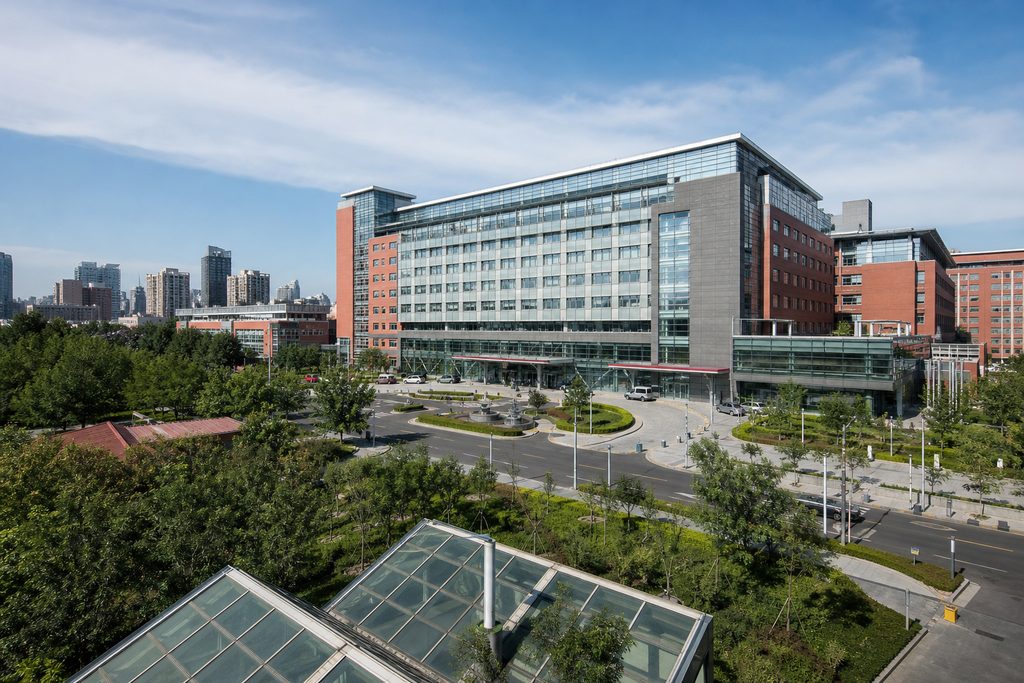
Peking University First Hospital (PKUFH) runs one of the highest-volume nephrology departments in the world. Its renal division handles complex glomerular disease referrals from across China and increasingly from international patients who have exhausted options at home. This article explains what makes the department different, how it approaches treatment-resistant nephrotic syndrome, and what an international patient needs to know about cost, logistics, and realistic expectations.
Key Takeaways
- PKUFH’s nephrology department manages over 1,200 glomerular disease inpatients annually, with a dedicated refractory nephrotic syndrome clinical pathway that integrates renal pathology, immunology, and pharmacogenomics.
- International patients access the department through the hospital’s International Medical Center, which provides English-language coordination, expedited biopsy scheduling, and continuity of care for return visits.
- Treatment-resistant nephrotic syndrome requires a kidney biopsy for precise histologic subtyping before any protocol can be designed — a step that cannot be skipped or fast-tracked by any service.
- Cost for a full diagnostic workup and initial treatment cycle at PKUFH typically ranges from $8,000 to $22,000 USD, depending on biopsy complexity, length of inpatient stay, and medication regimen.
The Problem: When Standard Treatments Stop Working
Nephrotic syndrome is not one disease. It is a pattern — massive proteinuria, hypoalbuminemia, edema, and hyperlipidemia — driven by at least a half-dozen distinct glomerular pathologies. Minimal change disease. Focal segmental glomerulosclerosis. Membranous nephropathy. Each responds differently to immunosuppression. Each carries a different long-term prognosis.
The trouble starts when the first-line therapy does not work.
For minimal change disease in adults, roughly 25% of patients show steroid resistance, per a 2022 meta-analysis in *Kidney International Reports*. For FSGS, the resistance rate climbs higher. Once a patient has failed two different immunosuppressive regimens, they enter what clinicians call refractory nephrotic syndrome territory. At that point, guessing at the next drug without deeper diagnostic information is exactly what causes patients to lose months, and kidney function, to ineffective treatment.
So what does deeper diagnostic information look like? It means a kidney biopsy read by pathologists who see thousands of glomerular disease samples a year. It means electron microscopy to identify ultrastructural changes invisible under light microscopy. It means genetic testing for podocyte gene mutations that make immunosuppression pointless from the start. And it means a clinical team that has managed enough refractory cases to know when to escalate, when to switch classes, and when to accept partial remission as a win.
PKUFH performs roughly 1,000 native kidney biopsies annually. The renal pathology lab processes specimens from across northern China. That volume matters. A pathologist who sees 20 FSGS biopsies a month develops a granularity of classification — tip lesion, perihilar, cellular, collapsing — that directly shapes treatment decisions. A pathologist who sees two a month cannot provide the same level of subtyping.
Who We Are
We are China Medical Services, a medical concierge organization that connects international patients with China’s top-tier hospitals. We are not a hospital. We do not provide medical treatment, clinical diagnoses, or any form of healthcare delivery. Our team handles the logistical architecture of your medical journey: hospital matching based on your specific diagnosis and pathology subtype, appointment coordination through official hospital international channels, bilingual medical companions who translate every doctor conversation in real time, visa guidance, and ground support from airport pickup through post-discharge recovery. Think of us as the bridge. You bring the medical need. We make sure language, bureaucracy, and unfamiliar systems do not stand between you and expert care.
How Peking University First Hospital Approaches Refractory Nephrotic Syndrome
The department of nephrology at PKUFH is not simply a large clinical unit. It is a research-driven center that has contributed foundational work to the understanding of glomerular disease in Asian populations. The department houses a National Clinical Research Center for Kidney Diseases and has published extensively on treatment protocols for refractory nephrotic syndrome, including work on rituximab dosing strategies, tacrolimus pharmacogenomics, and the role of plasma exchange in resistant FSGS.
Diagnostic Precision Before Any Treatment Decision
You cannot treat what you have not accurately diagnosed. This sounds obvious. But in refractory nephrotic syndrome, the difference between a generic FSGS diagnosis and a precisely subtyped one — with immunofluorescence staining, electron microscopy, and PLA2R antibody status — is the difference between a treatment plan that might work and one that targets the actual mechanism of injury.
PKUFH’s renal pathology workflow integrates light microscopy, immunofluorescence, and electron microscopy on every native biopsy. Results are reviewed at a weekly multidisciplinary conference that includes nephrologists, renal pathologists, and immunologists. For international patients, this means the biopsy is not just a procedure. It is the entry point to a team-based diagnostic process that determines whether the disease is immune-complex mediated, podocyte-driven, or something else entirely.
The hospital also offers genetic testing for podocyte-related gene mutations — NPHS1, NPHS2, WT1, and others. If a mutation is found, the treatment logic shifts dramatically. Immunosuppression becomes largely futile. The focus moves to renin-angiotensin-aldosterone system blockade, blood pressure control, and strategies to slow progression rather than chase remission. Avoiding months of unnecessary immunosuppressive side effects is, by itself, worth the diagnostic rigor.
Multi-Drug Protocols Built on Volume Experience
A center that treats 50 refractory nephrotic syndrome patients a year develops protocols. A center that treats hundreds develops judgment. The difference is knowing when a partial response to rituximab should be augmented with a calcineurin inhibitor, versus when it is time to switch to a completely different mechanism of action.
PKUFH has published extensively on rituximab use in refractory nephrotic syndrome, including dosing regimens that differ from Western protocols. Chinese clinical experience with rituximab in glomerular disease has generated data on lower-dose protocols that maintain efficacy while reducing infusion reactions and cost. The department has also contributed to the literature on tacrolimus in steroid-resistant nephrotic syndrome, including work on CYP3A5 genotype-guided dosing that predicts which patients will need higher or lower doses to reach therapeutic trough levels.
For membranous nephropathy specifically, the department’s approach to treatment-resistant cases often involves anti-PLA2R antibody monitoring to guide therapy duration — stopping when antibody titers drop rather than continuing for an arbitrary number of cycles. This biomarker-driven approach reduces cumulative immunosuppression without sacrificing remission rates.
Cost Structure: What International Patients Actually Pay
Let us address the question that brings most patients to this page: what does treatment for treatment-resistant nephrotic syndrome at Peking University First Hospital actually cost?
The answer depends heavily on the diagnostic phase and the specific protocol prescribed. Here is a realistic breakdown based on cases we have coordinated:
| Service Component | Estimated Cost (USD) | Notes |
|---|---|---|
| Initial specialist consultation (International Medical Center) | $200–400 | Includes review of prior records and biopsy slides if available |
| Native kidney biopsy with full pathology workup | $2,500–4,500 | Includes light microscopy, immunofluorescence, and electron microscopy |
| Genetic testing panel (podocyte genes) | $800–1,500 | Recommended for refractory FSGS or young adult patients |
| Inpatient stay (5–10 days for initial workup and treatment initiation) | $3,000–8,000 | Varies by room type; International Medical Center private rooms at higher end |
| Rituximab infusion (two-dose protocol) | $1,500–3,000 | Drug cost plus infusion center fees; biosimilar options available |
| Ongoing immunosuppressive medications (per month) | $200–800 | Tacrolimus, mycophenolate, or cyclosporine; varies by drug and dose |
These figures total roughly $8,000–22,000 for a complete diagnostic workup and initial treatment cycle. Compare this to the United States, where a kidney biopsy alone can cost $10,000–15,000, and rituximab infusions run $15,000–25,000 per cycle. The structural reasons for the cost difference are straightforward: lower hospital labor costs, high patient volume amortizing fixed equipment costs, and government-negotiated drug pricing.
None of this implies lower quality. PKUFH’s nephrology department is ranked among China’s top-tier programs in the Fudan University hospital rankings, a classification reserved for the top 5% of China’s 35,000-plus hospitals. The renal pathology lab processes specimens at a volume that maintains diagnostic acuity. The clinical protocols are published in peer-reviewed international journals. The cost difference reflects economics, not compromise.
What You Need to Know Before Going Alone
Navigating a Chinese public hospital as an international patient without local support is difficult. Not impossible. But difficult in ways that directly affect your medical outcome.
- Kidney biopsy scheduling: In the public outpatient system, a biopsy is scheduled after an in-person consultation, and wait times for the procedure can stretch to one to two weeks. The International Medical Center pathway compresses this — but only if you are working through the correct channel. Walking into the general nephrology clinic without Mandarin proficiency and expecting an expedited biopsy is not realistic.
- Language barrier in pathology discussions: The most important conversation you will have — the one where the nephrologist explains your biopsy results and recommends a treatment protocol — happens in Mandarin unless you have arranged interpretation. A bilingual medical companion changes this dynamic entirely. You ask questions. You understand the reasoning. You participate in decisions rather than nodding through a translated summary.
- Visa requirements: Medical treatment in China requires an S2 visa with documentation from the admitting hospital. The hospital issues an invitation letter only after confirming your appointment and treatment plan. Applying independently means navigating a sequence of hospital administrative offices, often with Chinese-only forms. Get the visa category wrong — applying for an M business visa, for instance — and you risk denial or complications at the border.
- Follow-up continuity: Refractory nephrotic syndrome requires months of monitoring. Medication adjustments based on trough levels. Repeat urine protein quantification. Decisions about tapering versus continuing therapy. If you return home after initial treatment, you need a structured handoff to your local nephrologist — lab result translations, treatment summaries in English, and a clear tapering protocol. The International Medical Center provides this documentation, but only if it is requested through proper channels.
How We Help You Navigate This
These barriers exist for structural reasons, not because anyone intends to make the process hard. A public hospital serving millions of Chinese patients was not designed with the needs of a non-Mandarin-speaking international patient in mind. The International Medical Center bridges some of the gap. We bridge the rest.
Before you travel, we handle the hospital match. This means sending your prior biopsy slides, lab results, and treatment history to the nephrology department for preliminary review. The department confirms whether they can offer a materially different diagnostic or therapeutic approach. If the answer is yes, we coordinate the invitation letter for your S2 visa, schedule your initial consultation, and arrange your biopsy appointment so the procedure happens within days of arrival, not weeks.
During your hospital stay, a bilingual medical companion is present for every significant clinical interaction. The nephrologist’s explanation of your biopsy findings? Translated in real time, with you asking questions as they arise. The discussion about rituximab versus tacrolimus versus combination therapy? You understand the rationale, the side effect profiles, the monitoring requirements. You make an informed decision, not a deferred one.
After discharge, we coordinate follow-up lab work, medication adjustments, and communication with the department. If you need to return for a second infusion cycle or a protocol adjustment, we handle the scheduling. If you are continuing care at home, we ensure your local nephrologist receives a complete, translated treatment summary with clear guidance on monitoring parameters and tapering schedules.
Our coordination fee for a case of this complexity starts from $800. Video consultation with a PKUFH nephrologist before committing to travel ranges from $500 to $800. Both are credited in full toward on-the-ground coordination if you proceed with treatment within 90 days — a one-time credit applied to the coordination fee, never to hospital charges.
Frequently Asked Questions
Does Peking University First Hospital accept international patients directly, or do I need a referral?
The hospital accepts international patients through its International Medical Center without requiring a formal physician referral. That said, sending your complete medical records — including original biopsy slides, pathology reports, and a detailed treatment history — for preliminary review before you travel is strongly advised. The nephrology department needs to confirm that they can offer a meaningful diagnostic or therapeutic path. We facilitate this pre-review at no additional cost beyond the standard consultation coordination fee.
How does the cost of treatment at PKUFH compare to treatment in the US or Europe?
A full diagnostic workup and initial treatment cycle for refractory nephrotic syndrome at PKUFH typically costs $8,000–22,000. In the United States, the same sequence — biopsy, pathology, genetic testing, rituximab infusion, and a short inpatient stay — would run $40,000–80,000 or more, depending on insurance coverage and hospital pricing. The clinical protocols used at PKUFH are published in international journals and align with global standards of care. The cost difference reflects hospital economics, not quality differentials.
What if the biopsy shows a genetic mutation — does that change the entire treatment plan?
Yes, and this is one of the most valuable outcomes of a thorough diagnostic workup. If genetic testing identifies a podocyte gene mutation (NPHS1, NPHS2, WT1, or others), the treatment logic shifts away from immunosuppression entirely. These mutations cause steroid-resistant nephrotic syndrome at a structural level — no amount of rituximab or tacrolimus will close the podocyte slit diaphragm. The focus moves to supportive care: ACE inhibitors or ARBs to reduce proteinuria, blood pressure control, lipid management, and monitoring for renal function decline. Knowing this saves months of futile immunosuppression and its associated toxicity.
How long do I need to stay in Beijing for the initial workup and treatment?
Plan for 10 to 14 days. The kidney biopsy itself requires a one- to two-day inpatient stay for post-procedure monitoring. Pathology results take approximately five to seven days for the full light microscopy, immunofluorescence, and electron microscopy report. If genetic testing is ordered, those results take longer — typically two to three weeks — but the initial treatment decision is usually made based on biopsy findings, not genetics. If rituximab is prescribed, the first infusion can often be administered before you leave, with the second dose scheduled two weeks later.
Can I continue follow-up care with my local nephrologist after returning home?
Absolutely, and this is the standard model for international patients. The PKUFH nephrology team provides a detailed treatment summary in English, including biopsy findings, the treatment protocol, monitoring parameters (tacrolimus trough levels, urine protein-creatinine ratios, anti-PLA2R titers), and a tapering schedule. Your local nephrologist manages the day-to-day monitoring. If adjustments are needed, the PKUFH team is available for follow-up video consultations. We facilitate all of this documentation and communication as part of our coordination service.
Your Next Step
Treatment-resistant nephrotic syndrome narrows the path forward. But narrow is not the same as closed. The difference between continuing to cycle through ineffective protocols and finding one that targets the actual mechanism of your disease often comes down to diagnostic depth and clinical volume. Peking University First Hospital’s nephrology department offers both — a renal pathology lab that sees thousands of glomerular disease specimens annually, and a clinical team that has published the protocols now being used to manage refractory cases worldwide.
If you want to understand whether PKUFH can offer a materially different approach for your specific case, the first step is a preliminary records review. We handle that. Send us your biopsy slides, your lab history, your treatment timeline. We route them to the department for an honest assessment. No promises. No guarantees. Just an answer about whether it is worth getting on a plane.
Request a free consultation to discuss your case and learn whether Peking University First Hospital nephrology is the right next step for your treatment-resistant nephrotic syndrome.
For more medical information and treatment options in China, visit chinamedservices.com (China Medical Services).
