Henan Cancer Hospital International Patients: Central China’s Oncology Hub
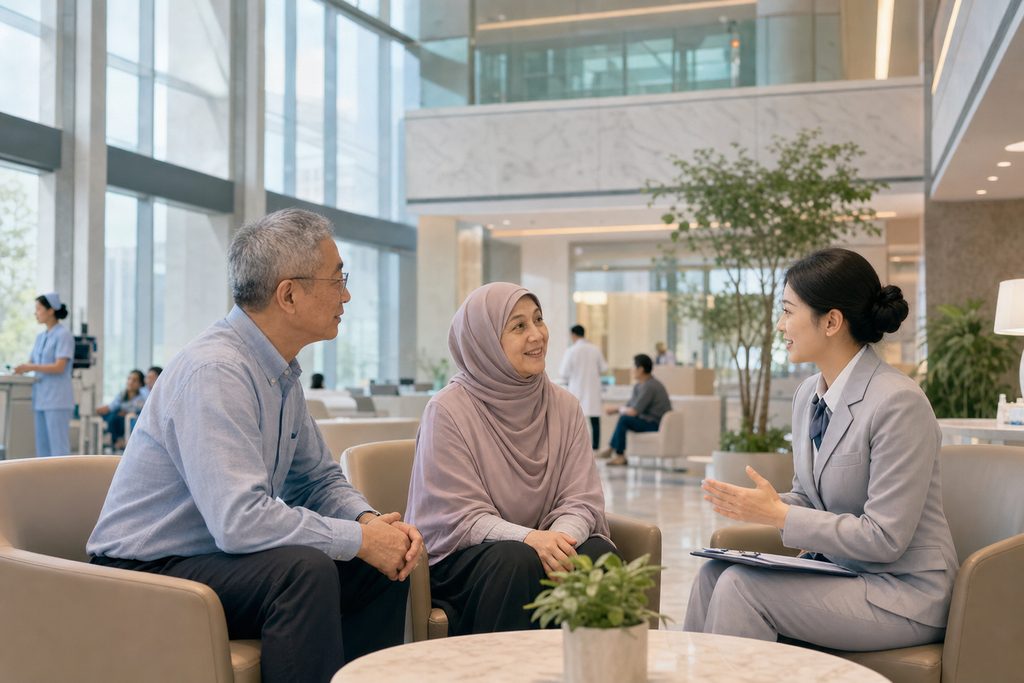
When 42-year-old Michael first heard the diagnosis, he had no idea where to start looking for treatment. The quote from his local hospital was staggering. Then a colleague mentioned something unexpected: China. Not Beijing or Shanghai—but Zhengzhou. A city he had never heard of, home to one of the world’s busiest cancer centers. His first question was the same one every patient asks: “What will this actually cost me?”
That question—the Henan Cancer Hospital international patient price—is where every serious conversation begins. And the answer is more nuanced than a single number. It depends on your diagnosis, your treatment protocol, and the channel through which you access care. But here is what matters most: the cost will almost certainly be a fraction of what you would pay in the United States or Western Europe. Often 70-80% less.
We are not the hospital. We do not provide medical treatment or clinical diagnoses. Our team serves as your logistical architects—the bridge between you and Central China’s most formidable oncology institution. We handle the complexity so you can focus on treatment and recovery.
Key Takeaways
- Henan Cancer Hospital treats over 350,000 inpatients annually, making it one of the highest-volume oncology centers in the world—clinical volume that directly correlates with better outcomes.
- International patient treatment costs typically range from 30-50% of what equivalent care costs in the US, with most major cancer surgeries falling between $8,000 and $25,000 USD.
- The hospital operates a dedicated International Medical Center, but direct foreign patient access remains limited—you need a coordinator who understands the system, speaks the language, and can navigate the pre-approval process.
- Visa requirements, payment systems, and post-operative logistics are the three biggest barriers for independent travelers. Each has a clear solution, but none can be improvised.
The Problem: Cancer Care Costs Are Breaking People—And Wait Times Are Making It Worse
Cancer does not wait. But healthcare systems often do. In Canada, the median wait time between specialist referral and treatment initiation reached 27.4 weeks in 2023, according to the Fraser Institute. In the United Kingdom, the NHS target of 62 days from urgent referral to first treatment has been missed consistently since 2015. In the United States, the problem is different but equally brutal: cost. A single course of immunotherapy can exceed $100,000. A complex surgical oncology procedure with hospitalization routinely crosses the $50,000 threshold—and that is for patients with insurance.
Approximately 1 in 2 people will develop cancer in their lifetime, according to Cancer Research UK. That is not a distant statistic. It means half of your family. Half of your friends. Half of everyone reading this article. When the diagnosis comes, the financial and logistical shock is often as devastating as the medical news itself.
Some patients respond by liquidating assets. Others by waiting—hoping their number comes up before the disease progresses. A growing number are looking beyond their borders. Medical travel is no longer a fringe concept. It is a rational response to a broken equation.
China has emerged as a serious destination in this landscape. Not for experimental treatments. Not for unproven therapies. For high-volume, evidence-based oncology care delivered at a price point that makes treatment possible without financial ruin. And within China, one institution stands out in the central region: Henan Cancer Hospital in Zhengzhou.
Who We Are
We are China Medical Services. We are not physicians. We do not offer medical advice, prescribe treatments, or make clinical recommendations. What we do is connect international patients with China’s top-tier hospitals—340+ institutions across 37 cities, all ranked in the top 5% of the country’s 35,000+ hospitals by Fudan University’s authoritative hospital rankings and JCI accreditation standards. We manage the entire non-clinical journey: hospital matching, appointment coordination, visa guidance, bilingual medical companionship, and post-treatment logistics. You bring the medical need. We bring the pathway.
Why Henan Cancer Hospital Delivers Results for International Patients
Henan Cancer Hospital—also known as the Affiliated Cancer Hospital of Zhengzhou University—is not a household name in the West. That is a mistake. It is the largest cancer hospital in Central China and one of the highest-volume oncology centers on the planet. Volume matters in cancer care. Surgeons who perform a procedure 300 times a year achieve better outcomes than those who perform it 30 times. This is not speculation. It is the central finding of the volume-outcome relationship documented across decades of surgical literature, including a seminal 2017 study in The Lancet Oncology covering over 800,000 patients.
Clinical Volume That Rivals Any Western Center
The hospital operates more than 2,900 beds and serves over 350,000 inpatients annually. Its outpatient volume exceeds 700,000 visits per year. To put that in perspective: MD Anderson Cancer Center in Houston—widely considered the gold standard in global oncology—reports approximately 170,000 outpatient visits and 30,000 inpatient admissions annually. Henan Cancer Hospital is operating at two to three times that clinical throughput. The physicians here see more cancer patients, treat more rare presentations, and manage more complex cases in a single year than many Western oncologists encounter in a decade.
This is particularly true for cancers with high prevalence in China. Esophageal cancer. Gastric cancer. Liver cancer. Nasopharyngeal carcinoma. For these diseases, the depth of clinical experience at Henan Cancer Hospital is unmatched globally. The hospital’s thoracic surgery department performs over 4,000 esophageal cancer resections annually—a number that exceeds the total volume of many national cancer programs.
Technology Infrastructure Without the Overhead
The hospital has invested heavily in diagnostic and therapeutic technology over the past decade. It operates multiple linear accelerators for precision radiotherapy, including volumetric modulated arc therapy (VMAT) and stereotactic body radiation therapy (SBRT) capabilities. Its surgical suites are equipped for minimally invasive and robotic-assisted procedures. The imaging center runs PET-CT, SPECT-CT, and 3.0T MRI systems. These are the same platforms you would find at a top-tier US or European cancer center.
But the cost structure is fundamentally different. Chinese hospitals do not carry the administrative overhead that burdens Western institutions. Billing departments are leaner. Malpractice insurance costs are a fraction of US levels. Pharmaceutical pricing is negotiated at the national level. The result is a system that delivers technologically sophisticated care without the cost inflation baked into Western healthcare economics.
Oncology Treatment Cost Zhengzhou: The Numbers That Change Decisions
Let us address the question directly. What does cancer treatment actually cost at this hospital? The figures below represent typical ranges for international patients accessing care through the hospital’s International Medical Center channel. These are ballpark estimates—every case is unique, and final pricing depends on your specific diagnosis, staging, treatment protocol, and length of stay.
| Procedure / Treatment | Henan Cancer Hospital (USD) | United States (USD) | United Kingdom Private (USD) |
|---|---|---|---|
| Esophageal cancer resection | $12,000 – $18,000 | $60,000 – $120,000 | $45,000 – $70,000 |
| Gastric cancer surgery (subtotal gastrectomy) | $10,000 – $16,000 | $50,000 – $90,000 | $35,000 – $55,000 |
| Lung cancer lobectomy (VATS) | $10,000 – $15,000 | $45,000 – $80,000 | $35,000 – $55,000 |
| Liver cancer resection | $14,000 – $22,000 | $70,000 – $150,000 | $50,000 – $80,000 |
| Colorectal cancer surgery | $9,000 – $15,000 | $40,000 – $75,000 | $30,000 – $50,000 |
| Radiotherapy course (IMRT, 25-30 fractions) | $6,000 – $10,000 | $30,000 – $60,000 | $25,000 – $40,000 |
| Chemotherapy (per cycle, standard regimen) | $800 – $2,500 | $5,000 – $15,000 | $3,000 – $8,000 |
These are the numbers that make people stop scrolling and start taking notes. A $120,000 surgery becomes $18,000. A $60,000 radiation course becomes $10,000. The savings do not come from cutting corners. They come from structural economic differences—lower labor costs, lower facility fees, lower pharmaceutical pricing, and a system designed for throughput rather than profit maximization.
Is this the best cancer hospital in central China for foreigners? For volume and subspecialty depth, the answer is unequivocally yes. No other hospital in the central region combines this level of oncological specialization with an operational international patient service. The hospital is ranked among China’s top 10 for oncology in the Fudan specialty reputation rankings—a designation that carries real weight among Chinese medical professionals.
What You Need to Know Before Going Alone
Honesty is essential here. Getting treatment at Henan Cancer Hospital as a foreigner is not as simple as booking a flight and walking through the front door. The barriers are real. They are structural. They can derail your treatment plan before it begins if you do not address them properly.
- Visa Requirements: Medical treatment in China requires an S2 visa with a specific treatment-purpose annotation. This is not the same as a tourist visa. You need an invitation letter from the treating hospital, medical records demonstrating the necessity of treatment, and proof of sufficient funds. The accompanying family member also needs an S2 visa. Processing times vary by country. Rushing this step leads to rejections.
- Payment Systems: Chinese public hospitals operate on a prepayment model. You deposit funds before admission. The hospital draws down from that deposit as services are rendered. International credit cards are not accepted at most hospital counters. You need a Chinese bank account, UnionPay card, or a local payment proxy. The hospital’s International Medical Center can facilitate wire transfers, but the process takes days, not hours.
- Language and Navigation: The hospital sees over 2,000 outpatient visits daily. Signage is predominantly in Chinese. Registration counters, pharmacy windows, laboratory collection points, and imaging scheduling desks operate in Mandarin. Even simple tasks—collecting a CT report, paying a consultation fee, finding the correct ward—become multi-hour ordeals without language support.
- Medical Records and Coding: Your home-country medical records need professional translation into Chinese. Not just the summary. The full imaging reports, pathology slides, genetic testing results, and treatment history. Chinese oncologists will request original pathology slides for re-review—this is standard practice, not a sign of distrust. Organizing this independently is logistically punishing.
These barriers exist for structural reasons, not because anyone is trying to make things difficult. Chinese public hospitals were designed to serve a domestic population of 1.4 billion people. The international patient pathway is an adaptation, not the default. It works, but only when someone who understands both systems manages the interface.
How We Help You Navigate This
Our team has spent years building the operational knowledge required to move international patients through China’s top hospitals efficiently. We do not sell access. We sell coordination. There is a difference—and it matters to Western patients who are rightly suspicious of anything that sounds like queue-jumping or special favors.
The process starts with your medical records. You send us what you have. We arrange professional translation by medical translators who understand oncology terminology in both languages. We then submit your case to the hospital’s International Medical Center for pre-review. The hospital’s specialists assess whether your condition falls within their treatment scope and whether they can offer meaningful benefit. This step alone can save you from traveling to China only to discover the treatment you need is not available there.
Once the hospital confirms they can treat you, we move to logistics. Visa invitation letters. Appointment scheduling that aligns with your travel dates. Deposit arrangements through the International Medical Center’s wire transfer system. Airport pickup and accommodation near the hospital. On the day of your first consultation, a bilingual medical companion meets you at the hospital entrance. They handle registration, queue management, payment processing, and real-time translation during your doctor consultation. They stay with you through every step—imaging, lab work, admission, discharge, pharmacy visits.
For patients who cannot travel immediately, we facilitate remote consultations. A video consultation with an oncologist at the hospital’s International Medical Center starts at $300. A written second opinion from a senior specialist ranges from $300 to $500. These services let you evaluate the hospital’s treatment proposal before committing to travel. And here is something worth knowing: any consultation fee you pay is credited in full toward our on-the-ground coordination service if you proceed to treatment within 90 days. The money is never wasted.
For patients who want to book treatment at Henan Cancer Hospital with maximum support, our VIP End-to-End Coordination package covers everything: pre-arrival case management, visa documentation, appointment sequencing across multiple departments, accommodation arrangements, daily bilingual companionship during treatment, and post-discharge follow-up coordination. This service starts at $5,000 and scales with case complexity. It is not inexpensive. But for patients facing a $60,000+ savings on their surgery, the coordination cost is a rounding error that buys peace of mind.
We also work with patients exploring broader medical tourism packages China oncology options. Some patients combine treatment with traditional Chinese medicine support during recovery. Others want to compare treatment plans across multiple hospitals—perhaps Henan Cancer Hospital for surgery and a Beijing institution for follow-up radiotherapy. We coordinate across institutions and cities, drawing from our network of 340+ top-ranked hospitals to build a treatment pathway that makes clinical and financial sense.
Frequently Asked Questions
The pathway has five stages. First, compile and translate your medical records. Second, submit them to the hospital for pre-review through their International Medical Center. Third, receive a treatment proposal and cost estimate. Fourth, apply for your S2 visa with the hospital’s invitation letter. Fifth, travel to China and begin treatment with a bilingual companion supporting your hospital visits. Each stage has sub-steps that vary by diagnosis. We manage the entire sequence. Attempting this independently is possible but extremely difficult without Mandarin fluency and local knowledge of hospital systems.
The treatment costs quoted in the table above are honest estimates based on cases we have coordinated. But you should budget for additional expenses beyond the hospital bill. Round-trip flights. Accommodation for yourself and a companion for the duration of treatment and initial recovery—typically 2-6 weeks. Food and local transport. Our coordination fee. A realistic total budget for a major cancer surgery with a 4-week stay in Zhengzhou is $25,000 to $40,000 all-in. That is still dramatically lower than the surgery alone would cost in the US. The hospital provides a detailed cost breakdown before you commit. No surprises.
This is the question everyone thinks about and few ask aloud. Henan Cancer Hospital is a tertiary academic medical center with full intensive care capabilities, 24/7 specialist coverage, and complication management protocols that match international standards. The hospital’s surgical mortality rates for major oncological procedures are comparable to Western benchmarks. That said, medical complications can occur in any hospital in any country. Your bilingual companion remains with you throughout hospitalization and can escalate concerns to the International Medical Center staff immediately. We also maintain communication with your family back home. You are never alone in the system.
Yes. Some patients have surgery at Henan Cancer Hospital and then travel to Beijing or Shanghai for specialized radiotherapy or immunotherapy protocols available at other top centers. Others begin with a remote second opinion from a specialist at one hospital and then choose a different institution for treatment. Our network covers 37 cities, so multi-hospital pathways are something we coordinate regularly. The key is sequencing—you need appointments aligned so there are no gaps in your treatment timeline.
The physicians at Henan Cancer Hospital train in China’s rigorous medical education system, which includes 5-8 years of undergraduate and specialist training followed by continuous professional development requirements. Many senior specialists have completed fellowships or observerships at major cancer centers in the US, Europe, or Japan. The hospital participates in international clinical trials and publishes in peer-reviewed global journals. The equipment is modern. The protocols are evidence-based. What is different is the patient experience—Chinese hospitals are high-volume, fast-paced environments with less emphasis on the amenities and spaciousness Western patients may expect. The clinical quality is there. The hospitality is not. That trade-off is worth understanding before you decide.
Your Next Step
Cancer forces decisions under pressure. The financial and emotional weight makes every choice feel urgent. But the worst thing you can do is rush into a decision without complete information. The best thing you can do is talk to someone who understands both the medical system you are leaving and the one you are considering entering.
Our team has guided patients from over a dozen countries through treatment at Henan Cancer Hospital. We know the International Medical Center’s processes, the visa requirements for your nationality, the realistic timelines, and the honest costs. We will tell you if this hospital is right for your case—and we will tell you if it is not. Your first conversation with us costs nothing and commits you to nothing. It is simply a chance to understand your options from people who work in this system every day.
Request a free consultation with our patient coordination team. Bring your diagnosis. Bring your questions. Bring your skepticism. We will give you straight answers.
Medical disclaimer: This article is for informational purposes only and does not constitute medical advice. Always consult a qualified healthcare professional about your specific diagnosis and treatment options. China Medical Services does not provide medical treatment or clinical recommendations. We facilitate access to hospitals and coordinate non-clinical logistics for international patients.
For more medical information and treatment options in China, visit chinamedservices.com (China Medical Services).
