PUMCH Beijing Critical Care: China’s Top ICU for Complex Multi-Organ Failure
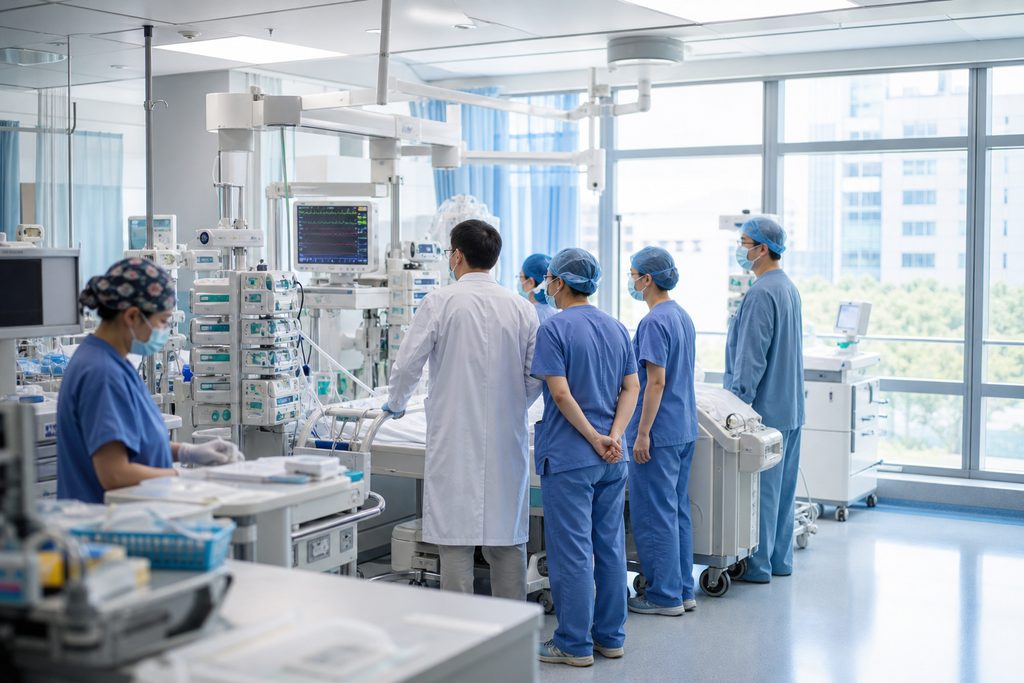
You have probably heard that a public hospital in China means long lines, crowded rooms, and a language barrier that makes everything worse. That is a fair concern. But it misses a critical detail. When a patient is crashing from sepsis, when three organ systems are shutting down at once, the question is not about comfort. It is about survival. And on that front, the numbers tell a story that most Western patients never hear. The intensive care unit at Peking Union Medical College Hospital in Beijing runs a standardized mortality ratio that sits well below 1.0. That means fewer patients die here than the global severity-adjusted average would predict. For families staring down a multi-organ failure diagnosis, that single statistic changes the calculus entirely.
Key Takeaways
- PUMCH’s ICU maintains a standardized mortality ratio below 1.0, meaning survival rates outperform global averages for comparably severe cases.
- The hospital handles more than 2,000 critical care admissions annually, with a dedicated multi-organ failure protocol refined over decades of high-volume practice.
- International patients cannot simply book an ICU bed in advance — access requires navigating China’s hospital system through official international channels, not emergency room walk-ins.
- Daily ICU costs for foreigners at PUMCH typically range from $800 to $1,500, roughly one-fifth to one-eighth of comparable US intensive care, but payment is required upfront.
The Problem: When Multiple Organs Fail, Every Hour Counts
Multi-organ failure is not a single disease. It is a cascade. A severe infection triggers sepsis. Sepsis starves the kidneys of oxygen. The kidneys fail, flooding the bloodstream with toxins the liver cannot filter. The lungs stiffen. The heart struggles to maintain pressure. One by one, systems collapse. In the United States, approximately 1.7 million adults develop sepsis each year, and roughly 270,000 die from it. Among those who progress to multi-organ dysfunction syndrome, mortality can exceed 40% even in advanced ICUs. The window for intervention is measured in hours, not days.
For families facing this diagnosis, the options narrow quickly. Your local hospital may have a competent ICU. But does it see enough volume to recognize the subtle patterns? Does its intensivist team have experience with the specific combination of failures your loved one is experiencing? A community hospital in the UK or Canada might manage 50 complex multi-organ failure cases per year. A dedicated referral center like PUMCH manages hundreds. That volume gap is not abstract. It translates directly into clinical intuition — the kind that catches a deterioration before the monitors even alarm.
Who We Are
We are not a hospital. We do not provide medical treatment, clinical diagnoses, or emergency services. Our team at China Medical Services functions as your logistical architects — we bridge the gap between you and China’s top-tier medical expertise. When a family contacts us about critical care at PUMCH, we handle the practical barriers: coordinating with the hospital’s international department, arranging certified translation of medical records, securing the correct S2 visa documentation, and providing bilingual medical companions who stay with you through every step of the ICU process. We do not promise outcomes. We promise that the system will not fail you because of paperwork, language, or navigation errors.
Why PUMCH Beijing Delivers Results in Critical Care
Volume That Builds Clinical Instinct
Peking Union Medical College Hospital operates one of the largest critical care medicine departments in Asia. The hospital admits more than 2,000 patients to its intensive care units each year, and a significant proportion of those present with dysfunction in two or more organ systems. That patient load is not just a number. It means the intensivists here have seen your loved one’s condition before — not once or twice, but dozens of times. They recognize the trajectory. They know which interventions work for which combinations of failures. A 2019 study published in Critical Care Medicine found that high-volume ICUs treating more than 400 mechanically ventilated patients annually had significantly lower risk-adjusted mortality than low-volume units. PUMCH clears that threshold several times over.
This matters especially for complex multi-organ failure. The interplay between failing systems creates unique challenges. Kidney failure changes drug clearance, which alters sedation requirements, which affects ventilator weaning. Getting that sequence right requires experience that only comes from repetition. The intensivists at PUMCH rotate through subspecialty ICUs — medical, surgical, neurological, and cardiac — building cross-domain expertise that a single-unit specialist simply cannot accumulate.
Technology Matched to the Task
Walk into the PUMCH ICU and the equipment looks familiar. Multiparameter monitors. Advanced ventilators with lung-protective modes. Continuous renal replacement therapy machines. Extracorporeal membrane oxygenation circuits. But the difference is in how these tools are deployed. The hospital runs one of China’s largest ECMO programs for severe respiratory failure, with survival-to-discharge rates comparable to those reported by the Extracorporeal Life Support Organization’s international registry. For patients with combined cardiac and respiratory failure, the team can bridge to recovery or transplant with veno-arterial ECMO while simultaneously running continuous dialysis — a level of integrated support that smaller centers cannot offer.
The microbiology lab operates 24/7 with rapid pathogen identification capabilities. In septic shock with multi-organ failure, every hour of delayed appropriate antibiotics increases mortality by roughly 7%. PUMCH’s in-house lab turns around blood culture results and sensitivity panels faster than most Western academic centers, often identifying the culprit organism within hours rather than days. That speed saves organs.
The Cost Reality: Why PUMCH Beijing ICU Cost for Foreigners Is Lower
Let us address the question that every international family asks. The PUMCH Beijing ICU cost for foreigners typically falls between $800 and $1,500 per day depending on the complexity of organ support required. A patient on a ventilator with continuous dialysis and vasopressor infusions will be at the higher end. A patient requiring only single-organ monitoring will be lower. Compare this to the United States, where a single day in an intensive care unit routinely costs $4,000 to $6,000 for basic ICU care and can exceed $10,000 when advanced life support is involved. The structural reasons for this gap are straightforward: lower labor costs for nursing and ancillary staff, more efficient hospital operations, and a healthcare financing system that does not layer on the administrative overhead of American insurance billing.
This lower cost does not reflect lower quality. PUMCH is consistently ranked in the highest tier of Chinese hospitals by the Fudan University hospital ranking system. Its critical care department is among the top-ranked in the country. The nursing ratios in the ICU are comparable to Western standards — typically one nurse to one or two patients depending on acuity. The intensivists are fellowship-trained, many with international experience. The lower cost is a function of economics, not compromise.
But here is what you need to know. Chinese public hospitals require upfront payment. You will be asked to deposit a sum — often $10,000 to $20,000 at admission — and the hospital will draw down from that deposit daily. International health insurance with direct billing arrangements is rare in Chinese public hospitals, though it is standard at private international hospitals like United Family or Jiahui. Most families pay out of pocket and then seek reimbursement from their insurer after discharge. We help you navigate this payment process, but the financial reality is non-negotiable.
What You Need to Know Before Going Alone
We have guided enough families through this process to know exactly where things break down. Here are the barriers that catch people off guard:
- Visa Requirements Are Specific and Unforgiving: Medical treatment in China requires an S2 visa with the purpose explicitly noted as medical treatment. Not an L tourist visa. Not an M business visa. An S2. The application requires an invitation letter from the Chinese hospital, medical records translated into Chinese, and proof of sufficient funds. Getting that invitation letter without a local contact is genuinely difficult. The hospital’s international department needs to review your case before issuing one, and that review process is opaque to outsiders.
- You Cannot Reserve an ICU Bed in Advance: This surprises most families. ICU beds are allocated based on clinical urgency, not reservation. You cannot call PUMCH and book a bed for next Tuesday. What you can do is establish a relationship with the international department, have your case reviewed by their intensivists, and create a pathway so that when your loved one arrives, the admission process moves as fast as clinically possible. That pre-arrangement is what we facilitate. Without it, you show up at the emergency room and hope for the best — and hope is not a strategy when organs are failing.
- Medical Records Translation Must Be Exact: The intensivists at PUMCH need to understand exactly what has happened so far. Which antibiotics were given and when. What ventilator settings were used. What dialysis prescription was ordered. A rough summary is not enough. Certified medical translation with attention to technical terminology is essential. A mistranslated lab value or drug name can derail the handoff and delay appropriate care.
How We Help You Navigate This
These barriers exist for structural reasons, not malice. China’s hospital system was built for a domestic population of 1.4 billion people. The international patient pathway is a narrow bridge added later, and it requires someone who knows where the supports are.
When you contact us, the first thing we do is request the complete medical file. Our team includes bilingual medical professionals who review every page, identify gaps, and translate the records into the format that Chinese intensivists expect. We then present the case to PUMCH’s international department for preliminary review. If the hospital’s team agrees that transfer is appropriate and feasible, we secure the official invitation letter needed for the S2 visa application. We guide you through the visa process at your local Chinese embassy or consulate, providing the specific documentation package that avoids rejection.
Once travel is arranged, our bilingual medical companion meets you at the airport. This person stays with you through admission, through every family meeting with the ICU team, through the daily updates that are the hardest part of critical care. They translate not just words but context — explaining what the intensivist is worried about, what the plan is for the next 24 hours, what the numbers on the monitor actually mean. They handle the payment desk, the pharmacy, the paperwork. You focus on your loved one. We handle everything else.
After discharge from the ICU, the journey continues. Your loved one may need step-down care, rehabilitation, or transfer back to your home country. We coordinate all of that — arranging medical evacuation if necessary, organizing follow-up appointments, ensuring discharge summaries are translated back into English for your local physicians. Our involvement does not end when the ICU doors open.
Is PUMCH ICU Good for Complex Multi-Organ Failure? The Evidence
Families often ask us this directly. The answer requires looking beyond marketing claims to what the data shows. PUMCH’s critical care department has published extensively in international peer-reviewed journals on topics including sepsis management, acute respiratory distress syndrome protocols, and extracorporeal support strategies. Their intensivists contribute to Chinese national critical care guidelines. The hospital serves as a national referral center for the most difficult cases, receiving transfers from smaller hospitals across northern China that have exhausted their own capabilities.
A concrete example: the hospital’s sepsis bundle compliance rate — meaning the percentage of septic patients who receive antibiotics, fluid resuscitation, and lactate measurement within the recommended time windows — exceeds 90%. This is a hard metric that directly correlates with survival. For comparison, a 2018 study in the New England Journal of Medicine found that even in high-income countries, compliance with the full sepsis bundle hovers around 60-70%. The difference is not magic. It is systems, staffing, and relentless attention to protocol.
For multi-organ failure specifically, PUMCH runs a dedicated multi-organ support team that includes intensivists, nephrologists, hepatologists, and infectious disease specialists who round together daily. This integrated approach avoids the fragmentation that plagues many ICUs, where consultants from different specialties write conflicting orders and the intensivist is left to reconcile them. At PUMCH, the plan is unified. That matters when a single patient needs simultaneous management of respiratory failure, acute kidney injury, and septic shock.
How Much Does Intensive Care Cost in Beijing? A Realistic Breakdown
The question of how much does intensive care cost in Beijing cannot be answered with a single number. But we can give you a realistic framework based on years of coordinating care for international patients at PUMCH and other top-tier Beijing hospitals.
| Level of ICU Care | Daily Cost at PUMCH (USD) | Comparable US Cost (USD) | What It Includes |
|---|---|---|---|
| Basic ICU monitoring | $800–1,000 | $4,000–5,000 | Continuous vitals monitoring, one-to-two nursing ratio, daily intensivist rounds |
| Ventilator + single vasopressor | $1,000–1,200 | $5,500–7,000 | Mechanical ventilation, hemodynamic monitoring, arterial line management |
| Multi-organ support (ventilator + CRRT + vasopressors) | $1,200–1,500 | $7,000–10,000+ | Full life support including continuous dialysis, advanced hemodynamic monitoring, frequent labs |
| ECMO + multi-organ support | $1,500–2,000 | $10,000–15,000+ | Extracorporeal membrane oxygenation circuit management, dedicated perfusionist, highest nursing ratio |
These figures represent the hospital charges only — the bed, the equipment, the medications, the lab work. They do not include physician professional fees, which are typically modest by Western standards and often bundled into the daily rate. They also do not include our coordination services, which are separate and quoted based on case complexity. A typical two-week ICU stay for multi-organ failure at PUMCH might total $15,000 to $25,000 in hospital charges. The same stay in a US academic medical center could easily exceed $100,000. The gap is real, and for families without comprehensive insurance, it is the difference between treatment and bankruptcy.
Important: These are estimated ranges based on historical cases. Actual costs vary by hospital, case complexity, length of stay, and currency exchange rates. Public hospitals in China require upfront deposit payments. We help you understand the expected deposit amount before travel, but the hospital determines final charges at discharge.
Book Critical Care at PUMCH Beijing International Patient: The Realistic Pathway
Let us be honest about what it means to book critical care at PUMCH Beijing international patient pathway. You are not booking a hotel room. You are initiating a clinical transfer that requires the receiving hospital to accept the case, determine that they can offer meaningful benefit, and agree to allocate scarce ICU resources to your loved one. This is a medical decision made by physicians, not an administrative transaction.
The process works like this. First, we submit the complete medical record — current clinical status, organ failure details, microbiology results, imaging, treatment history — to the international department. A PUMCH intensivist reviews the case. They assess whether transfer is clinically appropriate and whether the hospital has the capacity to accept. If the answer is yes, the hospital issues an acceptance letter and a preliminary cost estimate. We use that letter for the S2 visa application. Once the visa is secured, we coordinate travel and admission timing with the ICU team. Your loved one is admitted through the international patient pathway, which ensures English-capable coordination even though bedside nursing is primarily in Chinese — our bilingual companion bridges that gap.
This is not instant. The review process can take 48 to 72 hours. For a patient who is actively deteriorating, that may be too long. In those situations, we sometimes recommend a hybrid approach: stabilize at a private international hospital in Beijing like United Family, which can admit more quickly and has English-speaking staff throughout, then transfer to PUMCH once the acute crisis is managed and the review is complete. We help families think through these tactical decisions based on the specific clinical situation.
Frequently Asked Questions
You can. But we strongly advise against it. The emergency room at PUMCH sees thousands of patients daily. Without pre-arrangement, without translated records, without a Mandarin speaker, your loved one will enter a system that is not designed for international patients. The ER triage nurse will assess them, but the handoff to the ICU — if an ICU bed is even available — will be chaotic. Critical details will be lost. The first 24 hours of ICU care are the most important, and starting that period with a language barrier and no clinical context is dangerous. Pre-arrangement through the international department is not a luxury. It is a clinical necessity.
We do not shy away from this question. Multi-organ failure carries a high mortality rate even in the best ICUs in the world. If the outcome is death, we handle the practical aftermath: coordinating with the hospital for the death certificate, arranging repatriation of remains through an international funeral services provider, and managing the administrative closure with the hospital. Our bilingual companion stays with you through this process. We do not abandon families when the outcome is bad. That is when you need logistical support the most.
Most international health insurance plans cover treatment at recognized overseas hospitals, and PUMCH is certainly recognized. But almost none offer direct billing with Chinese public hospitals. You will need to pay the hospital upfront and then submit claims for reimbursement. We provide you with all the documentation your insurer will require: itemized bills, medical records translated into English, discharge summaries, and a letter from the treating intensivist. Some families negotiate a guarantee of payment letter from their insurer before travel, which can reduce the upfront deposit requirement, though this is uncommon. Check with your insurer before making any decisions.
This is a medical decision that must be made by the treating physicians at the sending hospital in consultation with the PUMCH team. A patient on multiple vasopressors may not survive a long-haul flight. A patient on a ventilator requires a dedicated medical transport team with an intensive care capable aircraft. We coordinate this assessment: the sending intensivist speaks with the receiving intensivist at PUMCH, they jointly determine whether transfer is feasible, and if so, what level of transport support is required. We then arrange the medical evacuation flight. This is not something families should attempt to figure out on their own.
Your Next Step
Multi-organ failure does not give you the luxury of time, but it does demand clarity. You need to know whether PUMCH can help, what it will cost, and how to get your loved one there safely. You need someone on the ground who speaks the language, understands the system, and will not disappear when things get hard. That is what we provide.
If you are considering critical care at PUMCH for a family member, contact us for a free initial consultation. We will review the clinical situation honestly, tell you whether transfer is realistic, and outline exactly what the process would involve. No pressure. No false hope. Just the information you need to make the hardest decision a family ever faces.
For more medical information and treatment options in China, visit chinamedservices.com (China Medical Services).
