Hip Resurfacing Surgery Cost China: A Smarter Alternative to Total Hip Replacement Pricing
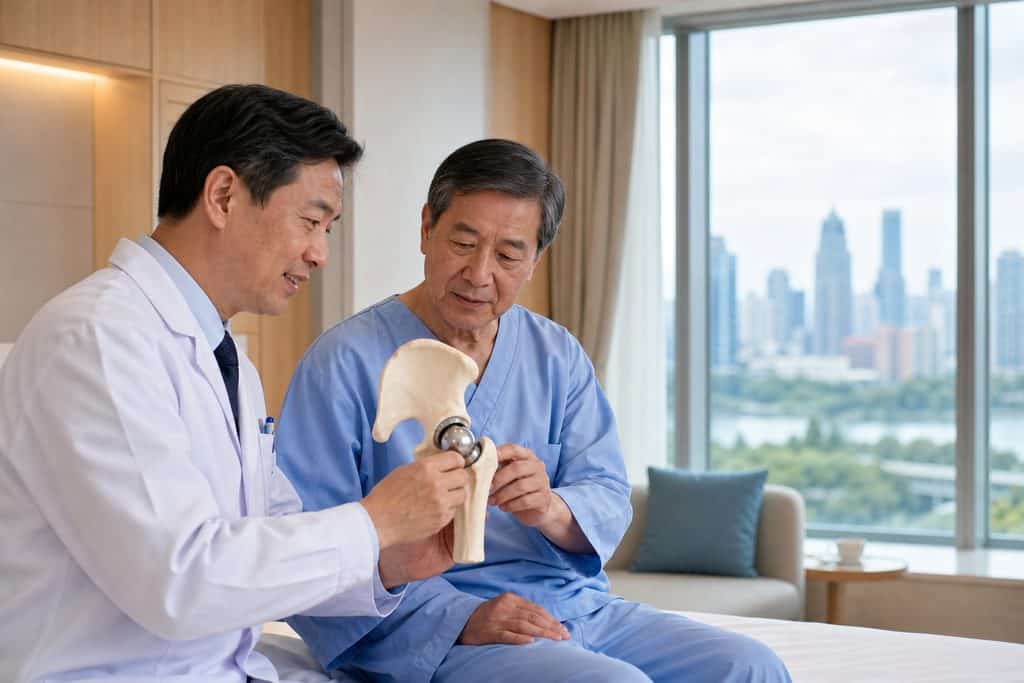
According to the American Academy of Orthopaedic Surgeons, approximately 450,000 total hip replacements are performed annually in the United States alone. But a growing number of those patients are younger—between 40 and 60 years old—and asking a critical question: is there a way to preserve more bone and return to high-impact activity? That question is driving international interest in hip resurfacing surgery cost China. Our team has seen a steady rise in inquiries from patients in North America, Europe, and Australia who have been told they are too young for a traditional replacement or who want to keep their femoral head intact. The math is compelling. A procedure that costs $40,000 to $70,000 in the US or £15,000 to £20,000 in the UK can be accessed at top-tier Chinese hospitals for between $18,000 and $28,000, including a bilingual medical companion who ensures nothing gets lost in translation.
How This Actually Works, Step by Step
The process starts with your existing medical records. You send us your latest X-rays, MRI reports, and a brief history of your hip pain and activity goals. We translate these documents into clinical Chinese and route them to the orthopedic department at a hospital we have pre-vetted for hip resurfacing expertise. The surgeon reviews your films to answer one question: is your bone quality sufficient for resurfacing, or has the damage progressed too far? This is not a sales call. It is a surgical candidacy assessment. If the feedback is positive, you receive a written second opinion with a recommended implant type and a tentative treatment plan. You then decide whether to proceed to a video consultation with the surgeon or travel directly for an in-person evaluation.
Once you commit to traveling, our team coordinates your hospital registration, schedules your face-to-face consultation, and arranges a bilingual medical companion who meets you at the airport. The companion stays with you through every step: the preoperative exams, the consent discussion with the surgeon, the surgery itself, and the early rehabilitation sessions in the hospital. After discharge, the companion helps you settle into a nearby serviced apartment and accompanies you to follow-up appointments. You are never left alone with a Chinese-language form and a guess.
Hip Resurfacing Surgery Cost China vs. Total Hip Replacement Pricing Abroad
The question we hear most often is not just about the number on the invoice. It is about value. Patients want to understand what they are actually paying for when they compare hip resurfacing vs total hip replacement price abroad. A total hip replacement removes the femoral head entirely and replaces it with a stemmed implant. Hip resurfacing caps the femoral head with a metal prosthesis, preserving more bone and maintaining the natural biomechanics of the joint. The implant itself costs more. The surgical technique demands greater precision. And the surgeon needs significant case volume to achieve reliable outcomes.
In the United States, a total hip replacement averages $40,000 to $50,000. Hip resurfacing, when available, often exceeds $50,000 and is rarely covered by insurance for younger patients. In China, a total hip replacement at a top public hospital runs between $12,000 and $18,000. Hip resurfacing, because of the implant cost and technical complexity, sits higher—typically $18,000 to $28,000. That is still roughly one-third to one-half of the US price. And that range includes the hospital stay, the surgeon’s fee, and the implant itself.
What it does not include is the cost of a bilingual medical companion. That is a separate service, starting from $300 per day. For a typical two-week trip—a few days of preoperative workup, the surgery, a week of inpatient recovery, and early outpatient follow-up—the companion fee adds $4,200 to $6,000. Some patients bring a family member instead and rely on our team for remote coordination. Others want the full in-person support. The choice is yours.
| Procedure | United States | United Kingdom (Private) | China (Top Public Hospital) |
|---|---|---|---|
| Total Hip Replacement | $40,000–$50,000 | £12,000–£15,000 | $12,000–$18,000 |
| Hip Resurfacing | $50,000+ | £15,000–£20,000 | $18,000–$28,000 |
| Bilingual Companion (14 days) | N/A | N/A | $4,200–$6,000 |
A Realistic Timeline
Patients often underestimate the waiting periods built into cross-border surgery. Here is what a realistic schedule looks like, based on cases we have coordinated.
| Stage | Duration | What Happens |
|---|---|---|
| Document collection and translation | 3–5 days | You gather X-rays, MRI, and physician notes. We translate them. |
| Surgical candidacy review | 5–10 days | The hospital’s orthopedic team reviews your films and responds. |
| Visa processing (S2) | 2–4 weeks | We provide the hospital invitation letter. You apply at your local Chinese embassy or consulate. |
| Travel and preoperative evaluation | 3–5 days | You arrive, complete blood work, cardiac clearance, and a final surgical consult. |
| Surgery and inpatient stay | 5–10 days | The procedure itself takes 2–3 hours. Inpatient recovery includes early mobilization. |
| Local recovery before flying home | 1–2 weeks | Surgeons want to clear you for long-haul flight. You do daily physiotherapy nearby. |
| Total time from first contact to flying home | 8–12 weeks | This assumes no major delays in visa processing or medical clearance. |
That middle stretch—the visa wait—is the one patients find most frustrating. We cannot speed up an embassy. What we can do is make sure your application package is complete, accurate, and includes a formal hospital invitation letter that clearly states the medical purpose. S2 visas are for short-term private affairs, including medical treatment. Your companion, if a family member, applies under the same category. Do not let anyone tell you to apply for an M visa. That is for commercial trade, not healthcare.
What Can Go Wrong—and What Happens Then
Let us be direct about the failure modes. The most common one is a candidacy rejection. You send your films, and the surgeon says no. Your femoral head is too far gone. The bone stock is insufficient. Resurfacing would fail early. This happens in roughly 20 to 30 percent of the cases we process. When it does, the surgeon typically recommends a total hip replacement instead. You are not back at square one. You have a clear surgical recommendation and can choose to proceed with that procedure in China or at home. The written second opinion fee—between $300 and $500—is non-refundable. It paid for expert analysis, not a guaranteed yes.
A second failure mode is intraoperative conversion. The surgeon begins the resurfacing, opens the joint, and finds more damage than imaging revealed. The plan shifts to a total hip replacement mid-surgery. This is rare—occurring in fewer than 5 percent of planned resurfacings at experienced centers—but it is a real possibility. The surgeon will have discussed this with you during the preoperative consent process. The cost changes if conversion happens, because the implant changes. We make sure you understand the financial implications before you sign anything.
A third risk is deep vein thrombosis during the long flight home. Chinese surgeons are aggressive about postoperative anticoagulation and will not clear you for travel until they see good mobility and clean Doppler ultrasounds. But the risk is never zero. You need a follow-up plan with an orthopedist in your home country before you leave China. We help you organize the discharge summary and imaging in a format your home doctor can use. That continuity is not optional. It is the difference between a good outcome and a dangerous gap in care.
What Is the Cost of Hip Resurfacing in China When You Add Everything Up?
We have given the surgical price range. But patients want the all-in number. Here is a realistic budget for a single traveler with a 14-day companion, staying in a mid-range serviced apartment near the hospital in Shanghai or Beijing.
- Surgery and hospital stay: $20,000–$25,000 (midpoint estimate)
- Bilingual companion (14 days): $4,200–$6,000
- Round-trip airfare (economy, North America–China): $1,500–$2,500
- Serviced apartment (21 nights): $1,500–$2,500
- Food, local transport, incidentals: $800–$1,200
- Postoperative physiotherapy (10 sessions): $500–$1,000
The total sits between $28,500 and $38,200. That is the number to compare against a $50,000-plus resurfacing bill at home, with no travel costs but also no companion. The savings are real. But they are not magical. You are trading the convenience of your local system for a significant price reduction and access to surgeons who perform this procedure regularly on younger, active patients.
Is Hip Resurfacing Surgery Safe in China? What the Data Shows
Safety is the question that keeps patients awake at night. Is hip resurfacing surgery safe in China? The answer depends on where you go and who holds the scalpel. China has over 35,000 hospitals. The top 5 percent—roughly 340 institutions—are ranked by the Fudan University hospital rating system and include facilities with orthopedic departments that perform more than 1,000 joint replacements annually. Volume matters. A 2023 study published in the Journal of Orthopaedic Surgery and Research found that surgeons performing more than 50 hip resurfacings per year had significantly lower revision rates than lower-volume surgeons. The hospitals we connect patients with fall squarely in the high-volume category.
Infection rates at top Chinese orthopedic centers are comparable to Western benchmarks, typically below 1 percent for primary joint procedures. Metal ion monitoring protocols have improved significantly since the global concerns over metal-on-metal bearings peaked a decade ago. The surgeons we work with follow international guidelines for postoperative cobalt and chromium level testing. They use modern implants with improved metallurgy and fluid-film lubrication properties. That is not marketing language. That is engineering reality.
But safety is not just about the surgeon. It is about the system around you. A bilingual companion changes the safety equation. When you are groggy from anesthesia and a nurse asks in Mandarin whether your pain is at a 3 or a 7, you need someone who can interpret the question and advocate for your answer. When the pharmacy dispenses a medication with Chinese-only labeling, you need someone who can verify the drug name and dosage against your surgeon’s orders. These are not hypotheticals. They happen daily.
Best Hip Resurfacing Hospitals China with Companion: How We Evaluate Your Options
Patients searching for the best hip resurfacing hospitals China with companion services often assume there is a single right answer. There is not. The right hospital depends on your specific anatomy, your implant preference, and your tolerance for a non-English-speaking environment. Some hospitals in our network have dedicated international wards with English-speaking nursing staff. Others are pure public hospitals where the surgeon speaks some English but the ward staff do not. In the latter case, the companion is not a luxury. It is a necessity.
We look at four criteria when matching a patient to a hospital. First, surgeon volume: how many resurfacings does this surgeon perform annually, and what is their revision rate? Second, implant availability: does the hospital stock the BHR system or an equivalent device with long-term registry data? Third, international patient infrastructure: does the hospital have a process for accepting foreign patients, or will you be the first non-Chinese speaker they have seen this year? Fourth, geographic practicality: is the hospital in a city with direct international flights and apartment options near the facility?
Shanghai and Beijing concentrate the most options. Hospitals like Zhongshan Hospital Fudan University and Peking University Third Hospital have orthopedic departments ranked among China’s top 10 by the Fudan specialty reputation list. Our orthopedics department directory profiles these institutions in detail. But we also look at centers in Guangzhou and Chengdu, where costs can be lower and surgical quality remains high. The key is matching the hospital to the patient, not defaulting to the most famous name.
Practical Considerations: Records, Visa, Payment, and Follow-Up
Your medical records need to be current—ideally within three months of your planned surgery date. The surgeon will want standing X-rays, a frog-leg lateral view, and an MRI that shows the condition of the femoral head and acetabular cartilage. If you have had previous hip surgery, include the operative note. We translate everything. You do not need to find a certified medical translator on your own.
The visa is an S2. The hospital provides an invitation letter stamped with their official seal. You take that letter, your passport, a completed visa application form, and a passport photo to the Chinese embassy or consulate serving your region. Processing times vary by country. Budget four weeks to be safe. Your companion—spouse, adult child, friend—applies under the same S2 category with their own invitation letter. We guide you through the paperwork. We do not guarantee approval. No one can.
Payment is upfront. Chinese public hospitals require a deposit before admission, typically covering the estimated surgical cost plus a buffer. You pay via wire transfer or, increasingly, by international credit card at hospitals with international departments. Your home insurance may reimburse some or all of the expense, but you will likely need to pay first and claim later. Check your policy’s out-of-network and international coverage clauses carefully. Private Chinese hospitals like United Family can bill international insurers directly, but they charge higher surgical fees—often $35,000 to $45,000 for hip resurfacing.
Follow-up at home is non-negotiable. You need a local orthopedist who agrees to see you postoperatively before you leave for China. Arrange that appointment in advance. Your Chinese surgeon will provide a detailed discharge summary, postoperative X-rays, and a rehabilitation protocol. Your home orthopedist monitors your progress, checks metal ion levels at six months and one year, and watches for any signs of adverse reaction to metal debris. This is standard care for any hip resurfacing patient, regardless of where the surgery was performed.
Frequently Asked Questions
Yes, in most cases. The remote evaluation process—written second opinion followed by video consultation—is designed to clear you for surgery before you board a plane. The surgeon will want to examine you in person before the operation, but that happens during the preoperative workup in the same trip. You do not need to make two separate journeys. This is how the majority of our international hip patients proceed.
Yes. That is one of the core arguments for resurfacing in younger patients. Because the femoral head is preserved rather than amputated, conversion to a total hip replacement is technically more straightforward than revising a failed stemmed implant. The bone stock is intact. The surgeon has more options. This is not a guarantee of an easy revision, but the literature supports better outcomes for conversion from resurfacing compared to revision of a total hip.
This fear surfaces often, and it deserves a straight answer. The hospitals in our network source implants directly from the manufacturer or authorized distributors. You can ask for the implant’s unique device identifier and verify it against the manufacturer’s registry. The surgeon will show you the implant packaging before the operation if you request it. Counterfeit implants have been a problem in unregulated corners of the global medical supply chain, but at top-tier Chinese hospitals with international patient programs, the supply chains are audited and traceable.
What does the bilingual companion actually do during surgery?
The companion is not in the operating room. They are in the waiting area, in contact with the surgical team’s coordinator,
For more medical information and treatment options in China, visit chinamedservices.com (China Medical Services).
