Rare Disease Diagnosis at PUMCH Beijing: How We Arrange Your Path to Answers
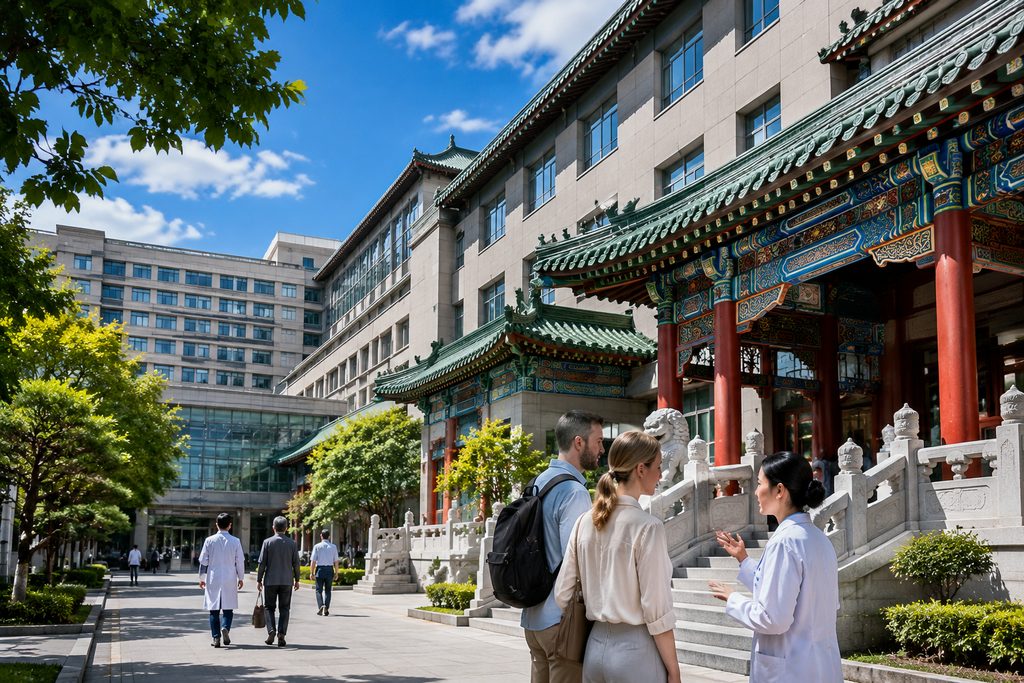
You have probably been told that if the top specialists in your home country cannot name your condition, nobody can. That is a reasonable thing to believe. It is also wrong. Every year, patients arrive at Peking Union Medical College Hospital carrying folders thick with inconclusive reports from excellent Western hospitals. Many leave with a diagnosis they had been chasing for years. The difference is not that Chinese doctors are smarter. It is that PUMCH operates at a scale and speed that simply does not exist elsewhere. Their Center for Rare Diseases has catalogued over 200,000 rare disease cases. That volume creates a kind of clinical pattern recognition that no individual physician, however brilliant, can replicate.
Our job is not to diagnose you. We are not doctors. We are the team that makes it logistically possible for you to bring your case to the one place designed for exactly your situation. We handle the hospital coordination, the language barrier, and the thousand small frictions that make international medical travel feel impossible. You focus on your health. We handle everything else.
The Short Answer: How We Arrange a Rare Disease Diagnosis at PUMCH
The process starts with a remote records review, not a plane ticket. You send us your existing medical files. PUMCH specialists in the relevant department review them. They determine whether your case warrants an in-person visit and, critically, which sub-specialist you need to see. This triage step alone saves patients from flying to Beijing only to discover they are in the wrong department. If the review confirms a strong likelihood of diagnostic progress, we then coordinate the on-the-ground logistics: hospital registration through the international department, a structured diagnostic pathway, bilingual accompaniment, and follow-up coordination. The entire process, from first contact to a confirmed in-person consultation date, typically takes two to four weeks.
The caveat: PUMCH does not offer a guaranteed diagnosis. No ethical hospital does. What it offers is a systematic, multi-disciplinary approach to undiagnosed conditions that draws on a patient volume most Western rare disease centers cannot match. The hospital’s annual outpatient volume exceeds 3.6 million visits. Within that enormous flow, clinicians encounter atypical presentations of rare diseases with a frequency that builds genuine expertise.
Who This Is Right For — and Who It Isn’t
This pathway suits a specific type of patient. Knowing whether you fit the profile matters more than anything else we can tell you.
You are likely a good candidate if:
- You have undergone extensive diagnostic workup in your home country without a conclusive diagnosis.
- Your condition is complex, multi-system, or presents atypically — the kind of case that stumps even experienced specialists.
- You are medically stable enough to travel internationally. PUMCH is not an emergency room for foreigners.
- You have organized, translated medical records ready for review. Disorganized files slow everything down.
- You have the financial resources for self-pay international care and the patience for a process that may require several weeks in Beijing.
This pathway is probably not right for you if:
- You are seeking a second opinion on a condition that has already been clearly diagnosed and treated effectively. A written second opinion may serve you better than traveling.
- You require immediate, acute medical intervention. PUMCH’s diagnostic process for complex cases is methodical, not rapid.
- You cannot tolerate uncertainty. Even with PUMCH’s resources, some conditions remain elusive. The hospital improves your odds significantly. It does not rewrite the rules of medicine.
- Your medical records are incomplete or untranslated. We can help with translation, but the source material must exist.
The Options, Compared: Where to Pursue an Undiagnosed Rare Condition
Patients facing an undiagnosed illness abroad have genuine choices. Each carries different trade-offs in cost, timeline, and diagnostic approach.
| Pathway | Typical Timeline to Diagnosis | Estimated Cost (USD) | Key Advantage | Key Limitation |
|---|---|---|---|---|
| Home Country Rare Disease Center | 6–18 months (waitlist-dependent) | $15,000–$50,000+ (insurance-dependent) | No travel; insurance likely covers most costs | Long waitlists; limited case volume for ultra-rare conditions |
| PUMCH International Department (via coordination service) | 2–4 weeks to first consultation; 1–3 weeks on-site for workup | $8,000–$20,000 (hospital fees + coordination + travel) | Massive case volume; multi-disciplinary team under one roof; rapid workup | Self-pay upfront; requires international travel; no outcome guarantees |
| Mayo Clinic / Cleveland Clinic (self-pay international) | 4–8 weeks to appointment | $25,000–$60,000+ | English-native environment; familiar Western protocols | Very high cost; similar diagnostic approach to what you may have already tried |
The PUMCH column makes sense when you have already exhausted the standard diagnostic playbook at home and need something different — not just a repeat of the same tests in a different building. The hospital’s Rare Disease Center draws on 53 clinical departments. That breadth means a patient with symptoms spanning neurology, rheumatology, and hematology can be discussed in a single multi-disciplinary meeting. That is logistically difficult in systems where these departments are siloed across different buildings or even different cities.
What Makes PUMCH Different for Undiagnosed Rare Conditions
This is the question embedded in every inquiry we receive: why would this hospital succeed where others have failed? The answer lies in three structural advantages that are hard to replicate.
First, clinical volume. PUMCH’s rare disease case registry has accumulated over 200,000 cases. When a clinician there sees a patient with an unusual combination of symptoms, they are more likely to have seen something similar before. That is not a reflection of individual genius. It is a function of exposure frequency. A rare disease that appears once in a career at a smaller center might appear several times a year at PUMCH.
Second, the multi-disciplinary team model is not aspirational here. It is operational. The hospital’s Center for Rare Diseases convenes specialists across relevant departments for complex cases. A patient does not need to schedule separate appointments with neurology, then wait three months for rheumatology, then start over with genetics. The team meets together. The patient gets a coordinated assessment.
Third, diagnostic technology access is compressed into a single institution. Whole-exome sequencing, advanced imaging, specialized immunological panels — these exist at many hospitals. But at PUMCH, they exist under one roof with results available in days, not weeks. For an international patient on a limited timeline, that compression matters enormously.
What the Rare Disease Diagnosis Cost at PUMCH Beijing Actually Runs
The rare disease diagnosis cost at PUMCH Beijing varies significantly depending on the complexity of the workup and the number of specialists involved. Based on cases we have coordinated, here is what to expect.
Hospital fees (paid directly to PUMCH’s international department):
- Initial specialist consultation: $200–$400 per department
- Multi-disciplinary team evaluation: $1,500–$2,000
- Diagnostic imaging (MRI, CT, PET-CT as needed): $500–$2,000
- Genetic testing (whole-exome sequencing): $800–$1,500
- Specialized laboratory panels: $300–$1,000
- Total hospital-side costs: typically $5,000–$12,000 for a comprehensive workup
Our coordination fees (paid to us, separate from hospital charges):
- Written second opinion with records review: from $300–$500
- Top-specialist video consultation: from $500–$800
- On-the-ground bilingual medical companion: from $300 per day
- Full coordination package (appointment scheduling, records translation, accompaniment, logistics): from $5,000–$8,000
What drives the variance? The number of specialists required, whether genetic testing is indicated, and the length of your stay in Beijing. A straightforward case that resolves with two specialist consultations and targeted lab work will land at the lower end. A multi-system mystery requiring a full MDT, advanced imaging, and whole-exome sequencing will push toward the upper range. We provide a detailed estimate after the initial records review, before you commit to anything.
Practical Considerations: Records, Visas, and What to Bring
The logistical side of seeking a rare disease diagnosis in Beijing is manageable, but it rewards preparation. Here is what we have learned from coordinating hundreds of international patient visits.
Medical records are everything. PUMCH specialists need to see what has already been done. Bring every relevant report, scan, and lab result. Imaging should be on CD or USB with the original DICOM files, not just printed reports. We arrange professional translation of key documents before your records reach the reviewing specialist. Disorganized or incomplete records are the single most common reason for delays.
Visa category matters. Medical treatment in China requires an S2 visa, annotated for private affairs including medical treatment. The hospital’s international department provides an invitation letter that supports the visa application. Family members accompanying you also apply for S2 visas. Do not let anyone tell you to apply for an M visa. That is for commercial and trade activities, not medical care. Visa processing typically takes one to two weeks, and we guide you through the documentation requirements.
Payment is upfront. PUMCH’s international department operates on a deposit-and-settlement model. You pay a deposit upon registration, and additional charges are drawn against it as services are rendered. Credit cards are accepted. Most international insurance plans reimburse after the fact, so you need the liquidity to float the costs and then file for reimbursement. Confirm this with your insurer before traveling.
Language is a real barrier in the public wards. The international department provides English-speaking staff, but once you step into the broader hospital for tests and procedures, English capability thins out. This is where a bilingual medical companion earns their keep — navigating the physical campus, translating conversations with technicians and pharmacists, and making sure nothing gets lost between departments.
Follow-up after returning home is part of the plan. PUMCH specialists provide a written report and treatment recommendations in English. We coordinate follow-up video consultations if needed. The goal is not to transfer your care permanently to Beijing. It is to get you a diagnosis and a treatment plan that your home physicians can execute.
Frequently Asked Questions
Can PUMCH help with an undiagnosed illness abroad when my own doctors have given up?
Yes, and this is precisely the patient profile that the Center for Rare Diseases was built for. The center specifically accepts patients who have undergone extensive workup without a conclusive diagnosis. The clinical team approaches these cases with a systematic review process that often identifies overlooked patterns or recommends tests that were not previously considered. That said, no hospital can guarantee a diagnosis. Some conditions remain beyond current medical understanding regardless of where you seek care. What PUMCH offers is the highest-probability environment for getting an answer — not a promise.
How does Peking Union Medical College Hospital diagnose rare diseases differently from Western hospitals?
The diagnostic methodology is not fundamentally different. The history, physical exam, lab work, imaging, and genetic testing framework is universal. What differs is the operational execution. At PUMCH, a patient with symptoms crossing multiple specialties can be discussed by all relevant departments in a single MDT session. The genetic sequencing lab is on-site with rapid turnaround. The clinical experience base — 200,000 rare disease cases catalogued — means the interpreting physician is more likely to have seen your presentation before. Western rare disease centers are excellent. They simply operate at a smaller scale, and for ultra-rare conditions, scale matters.
What is the book rare disease diagnosis package PUMCH option, and does it guarantee faster access?
There is no off-the-shelf package labeled “rare disease diagnosis.” What exists is a structured pathway through the international department that we coordinate on your behalf. The pathway includes records pre-review, specialist consultation scheduling, MDT coordination if indicated, and accelerated diagnostic workup sequencing. It is faster than navigating the system independently because we handle the administrative friction. But it is not a shortcut that bypasses clinical judgment. If the reviewing specialist determines your case does not warrant an urgent in-person visit, we will tell you that plainly and suggest alternatives.
What does the PUMCH international patient rare disease program price include, and what is excluded?
The hospital-side charges cover consultations, diagnostic tests, imaging, and any procedures performed during the workup. Our coordination fee covers records translation, appointment scheduling, bilingual accompaniment, and logistical support. What is excluded: international airfare, accommodation in Beijing, meals, visa fees, and any treatment that follows diagnosis. If your workup leads to a treatment plan requiring hospitalization or surgery, those costs are separate and quoted at that time. We provide a clear breakdown before you travel so there are no surprises.
What if I travel to Beijing and still do not get a diagnosis?
This happens in a minority of cases, and it is the hardest outcome to accept. If the PUMCH team cannot reach a definitive diagnosis, you will still receive a detailed summary of what was ruled out, what remains possible, and what monitoring or next steps they recommend. Some patients use this report to re-engage their home-country specialists with new information. Others enter research programs or pursue genetic reanalysis as science advances. The trip is not wasted — a negative result that exhaustively rules out serious conditions has clinical value. But we want you to understand this possibility before you commit the time and money.
Your Next Step
You have been living with uncertainty long enough. The question now is whether PUMCH’s diagnostic resources are the right next move for your specific case — and the only way to answer that is with a proper records review by the specialists who would actually see you. Our team exists to make that review happen without you having to figure out Chinese hospital bureaucracy on your own. We are a medical coordination service, not a hospital, and we never offer diagnoses or medical advice. What we offer is a clear path: send us your records, let the right specialists evaluate whether your case is a fit, and then decide — with real information — whether Beijing is worth the trip.
For more medical information and treatment options in China, visit chinamedservices.com (China Medical Services).
