Guangzhou Medical Tourism: Southern China’s Gateway for Cost-Effective Surgery & Top-Tier Care
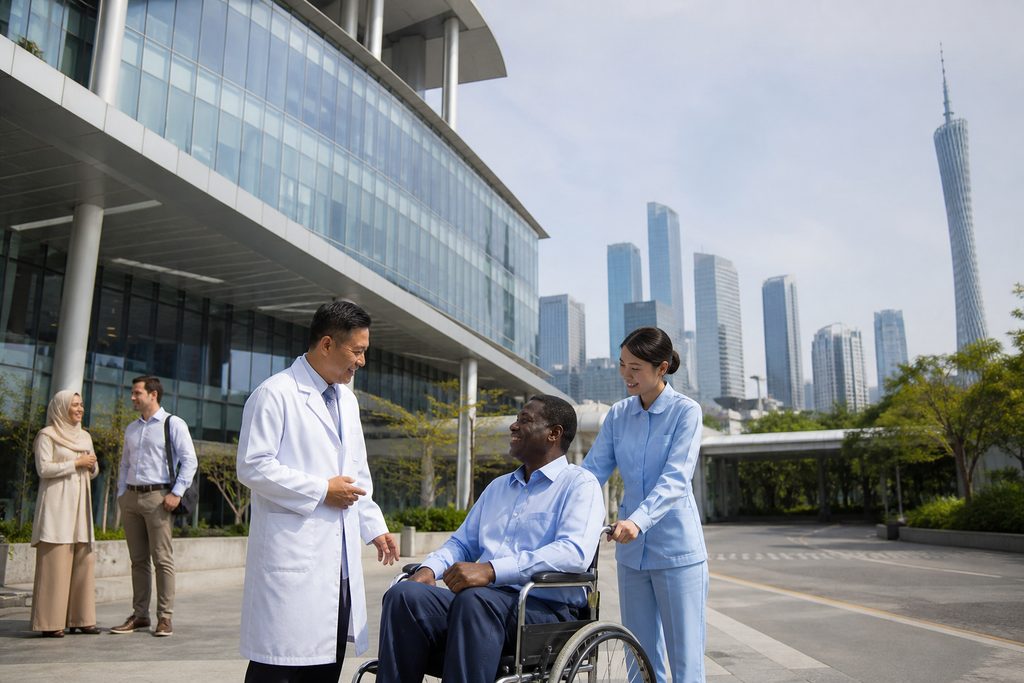
A hip replacement in the United States costs a patient without adequate insurance roughly $40,000. In Guangzhou, the same procedure using comparable Western-standard implants at a top-tier public hospital ranges from $9,000 to $15,000. The clinical registry data from the hospital’s own orthopedics department shows infection rates below 0.5%. This is not a trade-off between price and safety. It is a function of volume and systemic efficiency.
Key Takeaways
- Guangzhou hosts 10 of China’s Fudan-ranked top 100 hospitals, offering high-volume surgical expertise at 70-80% less than US prices for complex procedures.
- The city’s international medical infrastructure is built to serve a historic global trade hub, with dedicated visa pathways and English-speaking coordination services.
- Navigating the public hospital system without Mandarin fluency is the single biggest barrier; expecting a Western-style family doctor experience will lead to frustration without proper preparation.
- Realistic budgeting must include not just the procedure but also the coordination, accommodation, and a contingency buffer for a longer-than-expected stay.
The Problem: When “Wait and See” Becomes a Risk
A patient in the UK waiting for a routine cardiac ablation can sit on the NHS list for over a year. In Canada, the median wait time between a general practitioner’s referral and orthopedic surgery is 27.4 weeks, according to the Fraser Institute’s 2023 survey. For a patient living with daily pain or a progressing condition, that time is not neutral. Joints degrade. Heart function declines. Anxiety compounds.
And for the uninsured or underinsured in markets like the US, the math is even bleaker. A single complex spinal fusion can exceed $100,000 in hospital charges. That is not a medical decision. It is a financial catastrophe. These two pressures—long waits in public systems and bankrupting costs in private ones—push roughly 1.9 million Americans abroad for medical care each year, per CDC estimates based on passenger survey data. Guangzhou has quietly become one of the most logical destinations they choose, yet it remains under-discussed in English-language resources compared to Bangkok or Seoul.
Why Guangzhou Delivers Results That Rival Any Global Medical Hub
The city’s medical reputation is not built on marketing. It is built on the sheer repetition of complex cases. A cardiac surgeon at a major Guangzhou center might perform 400 valve replacements a year. The average in a mid-sized American hospital is closer to 80. Volume drives precision. Precision drives outcomes. But there is more to the story than just numbers.
Clinical Volume and Sub-Specialization at Scale
Guangzhou’s top hospitals function more like medical cities than standalone facilities. The First Affiliated Hospital of Sun Yat-sen University handles over 4.8 million outpatient visits annually. Within that ecosystem, surgeons sub-specialize to a degree that only patient volume allows. You do not just get an oncologist. You get a thoracic oncologist who has managed 1,000 cases of EGFR-mutated lung adenocarcinoma—a common profile in Southern China. This level of granular expertise is hard to replicate in lower-volume systems.
Technology Adoption Without Legacy Drag
Many of Guangzhou’s flagship hospitals have opened entirely new campuses in the last decade. The equipment is not retrofitted. It is brand new. Robotic surgery platforms, proton therapy centers, and hybrid operating suites are standard in the top ten hospitals. Because these institutions skipped the long upgrade cycles common in older Western hospitals, their technological baseline is often more advanced. The Sun Yat-sen University Cancer Center, for example, operates one of the highest-volume robotic surgery programs for nasopharyngeal carcinoma—a cancer that is rare globally but well-understood here. That matters if you have a complex diagnosis.
The Structural Reason Behind Medical Tourism Guangzhou Cost Advantages
Lower cost does not signal lower quality. It signals different economics. A senior surgeon’s salary in Guangzhou is a fraction of a US counterpart’s, but their training is equally rigorous. Hospital construction costs are lower. Malpractice insurance is negligible by Western standards. Administrative overhead is leaner. The result is a price for a knee replacement that lands around $10,000 to $18,000, compared to $35,000 to $50,000 in the US. For a cardiac bypass, the range is $12,000 to $20,000 versus $120,000 or more in America. The implants used—from Stryker, Medtronic, or Johnson & Johnson—are often the exact same models. You are paying for the service delivery system, not a discount product.
How a Medical Journey in Guangzhou Actually Works
Searching for Guangzhou medical tourism packages all inclusive often leads to glossy websites promising a frictionless experience. The reality is more textured. You are not buying a vacation with a surgery add-on. You are coordinating a serious clinical engagement in a foreign country. Here is the sequence, stripped of fluff.
You begin with remote triage. You send your existing medical records—imaging, pathology reports, treatment history—for review by the relevant department. This written second opinion is not a formality. It is the gatekeeper. The Chinese specialist needs to confirm that your case is appropriate for their facility and that a treatment plan exists. This step alone filters out patients who would travel only to be told nothing can be done. Expect to pay $300 to $500 for a formal written assessment from a top-tier specialist.
Once the green light is given, you apply for an S2 visa. This is the short-stay visa category used for private affairs, including medical treatment. The hospital provides an invitation letter and treatment confirmation. The consulate processes it. Approvals are not guaranteed, but with proper documentation from a reputable institution, rejections are uncommon. You do not use an M visa—that is for commercial trade, not healthcare.
You arrive. You attend your pre-scheduled outpatient consultation. This is where the in-person physical examination happens. The surgeon confirms the plan. Surgery is then scheduled. In the public system, this might happen within days if the international department is coordinating. Post-operative recovery happens in the hospital, and then you move to a nearby serviced apartment for monitoring before being cleared to fly home. The full timeline for a major joint replacement, from landing to departure, is usually three to four weeks.
Choosing a Hospital: What “Best” Means for a Foreigner
Lists of the best hospitals in Guangzhou for foreigners often blur two distinct categories: public giants with international wards and private international hospitals. They serve different needs. An uncomplicated hernia repair with a preference for boutique service? A private international hospital makes sense. A complex liver resection requiring a team that has done 2,000 similar cases? You want the public academic center, even if the environment is more chaotic.
| Hospital Type | Best For | Typical Cost Multiplier | English Support |
|---|---|---|---|
| Public Top-Tier (International Dept.) | Complex surgery, oncology, rare conditions | 1.5–2x standard public price | Dedicated staff, variable fluency |
| Private International Hospital | Routine procedures, executive health screens, obstetrics | 2–3x standard public price | Fluent, often Western-trained doctors |
| Specialized Public Center | Single-disease focus (e.g., cancer, cardiology) | 1.5x standard public price | Limited; external companion recommended |
The First Affiliated Hospital of Sun Yat-sen University and Nanfang Hospital dominate the top surgery hospitals Guangzhou China reviews for good reason. They are academic powerhouses. Their international departments understand the logistics of foreign patients—from visa documentation to discharge summaries in English. But they are not quiet. The corridors are crowded. The pace is fast. A bilingual medical companion is not a luxury here; it is the difference between a smooth process and a bewildering one. For those choosing Guangzhou for medical treatment, accepting this trade-off—intensity for expertise—is the key psychological shift.
Practical Considerations: Safety, Payments, and the Paper Trail
The question “is Guangzhou safe for medical tourism” is usually asked by someone who has never been to China. The answer is straightforward. Guangzhou is a first-tier city of 18 million people with a low rate of violent crime. The risk to a foreign patient is not personal safety. It is clinical miscommunication. The biggest danger is a misunderstood consent form or a missed allergy notation. Mitigating that requires a translator who understands medical terminology, not just conversational Mandarin.
Payment is upfront. Public hospitals require a deposit before admission. The international department will give you an estimate. You pay via wire transfer, card, or cash. The final bill is settled on discharge. If your insurance covers overseas treatment, you will likely pay out of pocket and seek reimbursement. Direct billing arrangements are rare outside of the private international hospitals. Bring a detailed itemized receipt and the discharge summary in English. Your insurer will demand them.
For follow-up, the Chinese surgeon will provide a protocol. Your home physician manages the long-term recovery. Communication channels with the Chinese team are typically maintained via email for several months post-operatively. This continuity is not perfect, but it works for most planned procedures.
Frequently Asked Questions
This is the central anxiety of any cross-border surgical journey. The operating surgeon will provide a detailed operative note and a post-discharge care protocol specifically designed for your home physician. In our experience, direct email communication with the surgical team remains open for at least three to six months. However, emergency management of late complications almost always falls to your local hospital. No Chinese hospital can assume legal or practical liability for care delivered abroad. You must have a local doctor who agrees to take over your follow-up before you travel.
You can try. The international department of a major Guangzhou hospital will accept direct contact. The friction comes in the details: translating and formatting your medical records to Chinese clinical standards, understanding which specific sub-specialist to approach, and managing the timeline between visa issuance and surgical scheduling. A coordinator acts as a case management layer—we handle the translation, the departmental navigation, and the logistical sequencing. It is not about access that is otherwise blocked. It is about efficiency and avoiding costly mistakes in a system you do not know.
In the top-tier hospitals, yes. The joint prostheses, cardiac stents, and oncology drugs are manufactured by the same multinational companies that supply American and European hospitals. Pharmaceuticals are subject to China’s National Medical Products Administration approval, and while the approval timeline can lag behind the FDA, the standard formulary in a major Guangzhou center is globally contemporary. Always verify the specific implant or drug brand with your surgeon during the planning phase.
Your Next Step
Choosing Guangzhou means prioritizing clinical volume and cost efficiency within a system that demands preparation. The surgeons are exceptional. The environment is demanding. The savings are real. Our team at China Medical Services exists to bridge the gap between your medical needs and the operational reality on the ground—we are coordinators, not a hospital, and we do not provide medical advice. If you have a specific procedure in mind and want to understand whether Guangzhou is a viable option, start with a free consultation. We will tell you honestly if it makes sense, and what it will take.
For more medical information and treatment options in China, visit chinamedservices.com (China Medical Services).
