Endometriosis Excision in China: From Deep Infiltrating Disease to Recovery
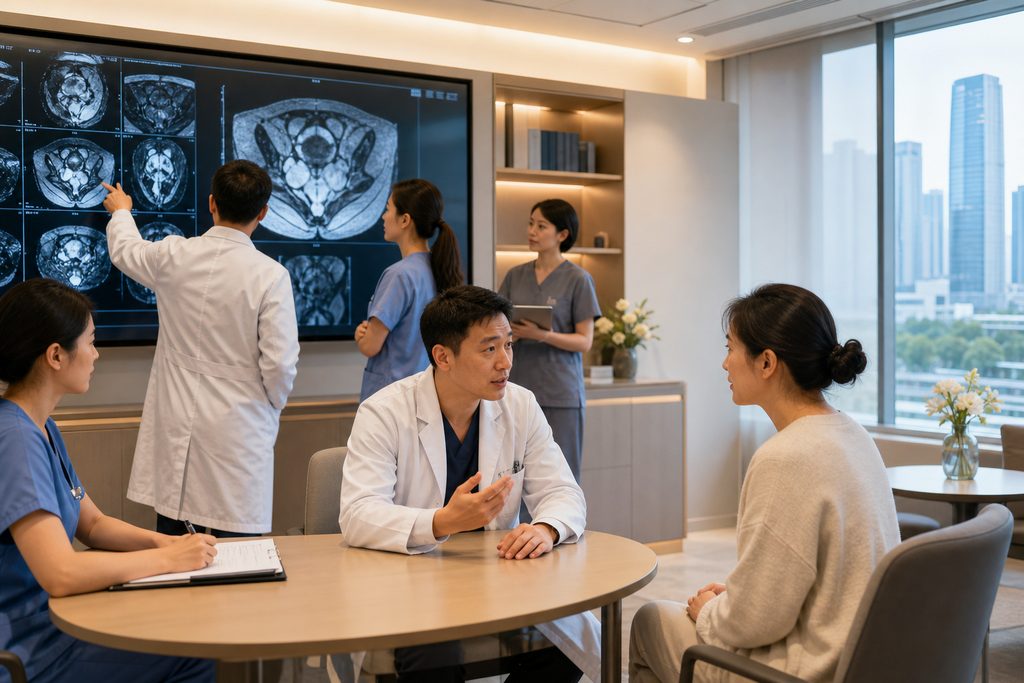
What if the surgery that could change your life cost a fraction of what you have been quoted and was performed by a team that does this hundreds of times a year? For many women living with the debilitating pain of deep infiltrating endometriosis, the path to a pain-free life feels blocked by staggering bills and year-long waitlists. The financial weight is crushing. In the United States, the average endometriosis excision surgery cost can spiral to $20,000 or even $50,000, depending on insurance complexities and hospital billing. You are not just battling a disease. You are battling a system.
We see this every day. Our team connects patients with China’s top-tier hospitals, and the question is rarely just about medicine. It is about whether you can afford to feel normal again. The data tells a powerful story. For comparable complex laparoscopic excision for deep infiltrating endometriosis, the endometriosis excision surgery cost China pathway often lands between $8,000 and $15,000. That includes hospital stays, surgeon fees, and anesthesia. This is not a downgrade. It is a structural advantage in a system built for high-volume precision.
Key Takeaways
- The endometriosis excision surgery cost China averages $8,000–$15,000, roughly 60-80% less than US cash-pay rates for comparable deep infiltrating disease cases.
- China’s top gynecological centers perform thousands of laparoscopic procedures annually, with some ranked among the nation’s best for reproductive medicine and complex pelvic surgery.
- Navigating a foreign healthcare system is hard. Language barriers and hospital registration logistics are real hurdles, not minor inconveniences.
- A successful journey depends on securing a detailed written second opinion before travel, ensuring the surgical plan aligns with your specific pathology.
The Problem: Living With a Disease That Doesn’t Show Mercy
Endometriosis affects roughly 1 in 10 women of reproductive age globally—about 190 million people. For those with deep infiltrating endometriosis (DIE), the pain is not cyclical discomfort. It is a relentless, stabbing presence that invades the bowels, bladder, and ligaments. It steals careers. It destroys relationships. The standard advice in many Western countries is often a repetitive cycle of hormonal suppression and repeated ablation surgeries that burn the surface of the disease but leave the invasive roots behind.
True relief requires excision. Not burning. Cutting the disease out at the root, millimeter by millimeter, often from delicate structures like the ureter or rectum. But accessing a true endometriosis excision specialist is a luxury in many parts of the world. Wait times in Canada or the UK can stretch beyond 12 months. In the US, even with insurance, finding an in-network surgeon who performs deep bowel or bladder shaving instead of just referring you out for a multi-stage resection is a nightmare. The disease progresses while you wait. That is the hidden cost.
Why the Chinese Surgical Pathway Delivers Results for DIE
The Chinese healthcare system operates on a scale that fundamentally changes surgical expertise. A busy US surgeon might perform 5 to 10 complex endometriosis cases a month. In a high-volume Chinese center for gynecology, a specialist team may handle that many in a single day. This repetition breeds a specific, hard-won mastery of the pelvic landscape. When you ask how is endometriosis excision performed in China, the answer is not about a secret technique. It is about volume-driven precision, early adoption of nerve-sparing techniques, and a systematic approach to multi-organ involvement.
Volume Breeds Precision
We connect patients with hospitals ranked in the top tier of China’s medical system. These are not small clinics. They are massive institutions where a gynecological oncology or pelvic floor team sees a density of DIE cases that is statistically rare elsewhere. A study published in the *BMJ* confirmed a direct link between hospital surgical volume and lower complication rates in complex gynecological procedures. When a surgeon has seen 1,000 variations of obliterated cul-de-sacs, they are less likely to hesitate when yours looks different. They have the muscle memory to protect the hypogastric nerve. They know when to shave the bowel versus when a disc resection is safer.
Multidisciplinary Surgery as Standard, Not an Upgrade
Deep infiltrating endometriosis is not just a gynecological disease. It is a pelvic disease. In many Western hospitals, if the disease penetrates the bowel, the surgery stops. You are closed up, woken up, and scheduled for a second surgery with a colorectal surgeon weeks or months later. That means two recoveries, two anesthesia events, and double the risk of adhesions. In the leading Chinese hospitals we work with, a combined gynecological-colorectal-urological team is often standard for severe DIE. They operate together in one stage. This is a critical detail for anyone researching deep infiltrating endometriosis treatment price abroad. The price is not just lower. The process is often more integrated.
Cost Structure: Why the Math Works
Let’s talk about the elephant in the room. Why is the endometriosis excision surgery cost China so much lower? It is not because of lower quality. It is because of economic differences in labor and operational overhead. The cost of a hospital bed, nursing care, and surgical theater time is structurally lower than in the US or private London hospitals, while the hardware—the high-definition laparoscopic towers, the ultrasonic scalpels, the advanced vessel-sealing devices—is the same global technology. You are paying for the expertise, not the marble lobby. Anesthesia fees in China are a fraction of US costs. The disposable surgical instruments are the same brands you would find in a Mayo Clinic operating room.
Mapping the Journey: From First Contact to the Operating Room
Understanding how to book endometriosis surgery package China requires a shift in thinking. This is not a hotel reservation. It is a medical process that starts with data. You cannot simply email a Chinese hospital and ask for a surgery date. The system protects you by requiring rigorous pre-operative review. Here is the pathway that works.
The initial step is a remote evaluation. You send your existing medical records—surgical notes, MRI scans on a CD or cloud link, ultrasound reports, and a symptom timeline. We translate these into clinical Chinese and submit them to the department director or a specialized endometriosis team at a hospital like a top-ranked university center in Shanghai. This leads to a written second opinion. The surgeon reviews your images and maps the suspected disease locations. They will tell you if they believe they can perform a complete excision in one stage, or if a bowel resection is likely. This document is your anchor. It costs between $300 and $500 and is fully credited if you proceed to surgery. This is the safety net that prevents you from flying 6,000 miles for an operation that might not be suitable.
Once the surgical plan is confirmed and you decide to proceed, the logistics begin. You do not need to navigate a chaotic public waiting room. The pathway for international patients runs through the hospital’s VIP or International Medical Center. We coordinate a visa invitation letter for your S2 visa—the category used for private medical treatment in China. Your family member who accompanies you will also need an S2 visa. The hospital requires a deposit, usually a significant portion of the estimated fee, wired ahead of time. Then, you fly.
What Recovery Actually Looks Like Week by Week
Everyone asks what is recovery time after endometriosis surgery, but the answer varies wildly based on what was done inside you. A simple superficial excision heals fast. A deep excision requiring bowel shaving or a bladder flap is a different beast. You need to plan for the worst-case scenario, even if you hope for the best.
Days 1-3 in the hospital are about basic function. The catheter comes out. The gas pain from the laparoscopy moves to the shoulders—this is often the most uncomfortable part. Chinese post-operative care tends to be conservative. You will likely stay in the hospital for 5 to 7 days, which is longer than in a US day-surgery center. This is an advantage. You have daily access to the surgical team. If your urine output is slow due to bladder atony, they catch it immediately. You are not sent home with a phone number to call.
Weeks 2-4 are the fragile window. You will likely stay in China during this time. We recommend renting a serviced apartment near the hospital. You walk slowly. You eat small meals. The fatigue is profound. By week 3, you might walk a kilometer. By week 6, the brain fog often lifts. The true marker of recovery is not the incisions. It is the nerve healing. Bizarre zapping sensations or sudden stabbing pains around the pelvic walls are normal. It is the nerves waking up. Full tissue healing takes 3 to 6 months. The difference is that the deep, aching, inflammatory pain of the disease is gone. That distinction matters.
Choosing Your Surgeon: The Shanghai and Beijing Equation
When searching for the best endometriosis surgeon Shanghai, you will find a lot of noise. China’s hospital ranking system, specifically the Fudan University Hospital Rankings, provides a clear map. The ranking does not list individual surgeons, but it identifies the top reproductive medicine and gynecology departments. Shanghai and Beijing dominate this list. A hospital in the top 10 for gynecology nationally is not just good. It is a factory of excellence.
| Consideration | Public Top-Tier Hospital (International Dept.) | Private International Hospital |
|---|---|---|
| Surgical Volume | Extremely high. Surgeons see a high density of complex DIE cases daily. | Moderate. Often the same senior surgeons, but lower case frequency. |
| Language | Limited English by the surgeon. A bilingual medical companion is essential for translation during consultations. | English-speaking staff and surgeons. Easier direct communication. |
| Multi-Disciplinary Team | Easily coordinated within a massive hospital ecosystem. Colorectal and urology are down the hall. | May require scheduling external consultants, potentially adding complexity. |
| Cost (All-inclusive estimate) | $8,000 – $12,000 | $15,000 – $25,000+ |
You might think a private international hospital is the obvious choice because of the language comfort. It is not always that simple. For severe DIE involving the bowel, the raw surgical firepower sits in the massive public university hospitals. The surgeon who has done 3,000 excisions is likely working in the public system and only doing a few private cases a week. Our role is to bridge that gap. We place a bilingual medical companion next to you in that public hospital VIP ward. You get the top-tier surgical hands with the translation support of a private clinic. This is how you access the real expertise behind the search for the best endometriosis surgeon Shanghai.
Practical Considerations: Visas, Payments, and Records
Planning a surgical trip is heavy lifting. The medical part is only half of it. The rest is logistics.
Your visa must be correct. The S2 visa is for short-term private affairs, including medical treatment. The invitation letter from the hospital is the golden ticket. Without it, you cannot get the visa. Do not be tempted to enter on a tourist L visa and hope to sort it out later. That is a risk that can lead to treatment refusal. Your companion also needs an S2. We handle the coordination of these letters with the hospital’s international office.
Payment is upfront. Chinese hospitals, even the VIP wings, operate on a deposit system. You wire the estimated cost before admission. The hospital will not bill your insurance directly unless it is a private international hospital with a direct billing agreement. You pay, then you claim reimbursement from your insurer at home. Make sure your insurance covers overseas elective surgery. Some plans exclude it. Others require pre-certification. Get that in writing before you buy a plane ticket. Also, bring your entire surgical history. Every operative report. A picture of your previous surgeon’s notes is not enough. We need the typed report. Scar tissue tells a story, and your new surgeon needs to read the last chapter before writing the next one.
Frequently Asked Questions
Often, yes. But the risk profile changes. Repeat surgeries mean adhesions and distorted anatomy. A written second opinion is non-negotiable here. The surgeon must review your previous operative notes and your current MRI to assess whether the plane between the disease and your organs is still safe to dissect. We never guarantee surgery before this review is complete.
This is where the consent form matters. Before you travel, you will sign a detailed surgical consent that covers contingencies like bowel resection, appendectomy, or temporary stoma creation. The Chinese surgical team will have a colorectal surgeon on standby. They will not close you up and schedule a second surgery. They have the authority to proceed with the necessary repair in one stage, provided you have consented to it.
You leave with a comprehensive discharge summary in English and Chinese, a pathology report, and a DVD of the surgical video. You take this to your local gynecologist. The Chinese surgeon will typically offer one or two post-operative video consultations (at an additional cost) to brief your local doctor directly. This transfer of care is a standard part of our coordination. You are not abandoned at the airport.
Your Next Step
A pain-free life is not a luxury, and accessing world-class surgical precision should not be defined by your zip code. We are China Medical Services, a medical concierge team that connects you with the top 5% of China’s hospitals. We do not provide medical advice or perform surgery. We provide the bridge: the translations, the surgical team matching, the visa coordination, and the bilingual companion who sits by your side. If you want to explore whether a fully-integrated, one-stage excision is feasible for your case, start with a remote evaluation. It is the most direct path to clarity.
To learn more about the hospitals and the pathway, visit our patient coordination page. You can also explore our database of top-ranked hospitals to see the institutions we work with. The decision is yours. The information is here.
For more medical information and treatment options in China, visit chinamedservices.com (China Medical Services).
