Carotid Artery Surgery Cost China: Endarterectomy & Stenting with a Guide
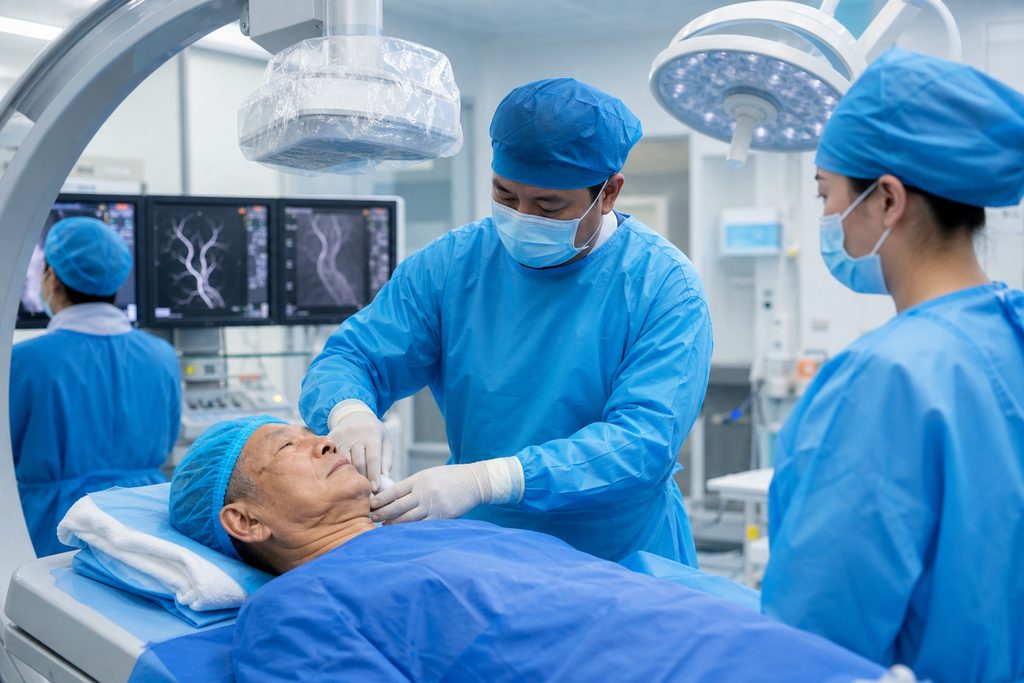
Have you been told your carotid artery is dangerously narrowed, and now you’re staring down the reality of surgery you didn’t budget for? The numbers from your local hospital can feel like a second diagnosis. A carotid endarterectomy cost China typically falls between $7,000 and $15,000, while carotid artery stenting ranges from $10,000 to $20,000. That’s a stark contrast to the $30,000 to $60,000 you might face in the US, or similar figures in Western Europe. But a low price means nothing if the quality isn’t there. The real question is whether you can access China’s top-tier surgical precision without navigating the language and system barriers alone.
Carotid Artery Surgery Cost in China: The Short Answer
For a standard carotid endarterectomy (CEA) at a top-tier Chinese public hospital, expect to pay $7,000 to $15,000. Carotid artery stenting (CAS), a less invasive procedure, runs $10,000 to $20,000. These figures generally cover the surgeon’s fee, anesthesia, the device or stent itself, and a hospital stay of roughly 3 to 7 days. The variance depends on one major factor: whether you go through a standard public channel or a hospital’s international VIP department. The standard route is cheaper but logistically complex for a foreigner. The VIP route offers English-speaking coordinators and streamlined admission, at roughly 1.5 to 2 times the standard price. Either way, the all-in cost remains substantially lower than in most Western countries.
Who This Is Right For — and Who It Isn’t
Traveling internationally for vascular surgery isn’t for everyone. You need to be a stable patient with a clear, non-emergency timeline. This path works best for people who have already been diagnosed, have their medical images and reports in hand, and are seeking a planned procedure rather than rushing in during a crisis.
You might be a strong candidate if:
- You have confirmed carotid stenosis of 70% or more, or 50% with symptoms, and your doctor recommends intervention.
- You are medically stable and cleared for elective surgery.
- You have a complete medical file, including a recent carotid duplex ultrasound, CT angiogram, or MRA.
- You’re willing to invest a small amount in a remote consultation first, to confirm the plan before flying.
- You want to combine a necessary surgery with a significant cost reduction, even after travel expenses.
This path is not advisable if:
- You are having transient ischemic attacks (TIAs) or stroke symptoms that require emergency intervention. Do not get on a plane.
- You have severe, unstable cardiac or pulmonary disease that makes long-haul travel risky.
- You have a complex anatomy that your home doctor says requires a specific, rare device not commonly used in China—verify this during a remote consultation.
- You expect a zero-hassle, resort-like experience at the lowest possible price. High-quality care at low cost requires accepting a different cultural and systemic process.
The Options, Compared
When you look at carotid artery stenting price Shanghai or endarterectomy costs elsewhere, you’re really comparing two procedures and two delivery channels. The table below breaks down the practical differences.
| Factor | Carotid Endarterectomy (CEA) | Carotid Artery Stenting (CAS) |
|---|---|---|
| Procedure | Open surgery; surgeon removes plaque directly. | Minimally invasive; catheter and stent via groin or arm. |
| Typical Patient | Good surgical candidate with accessible plaque. | High surgical risk, prior neck radiation, or hard-to-reach lesion. |
| Anesthesia | General or regional. | Local with mild sedation. |
| Hospital Stay | 2–4 days. | 1–2 days, often. |
| Recovery Full Activity | 3–6 weeks. | 1–2 weeks. |
| Cost Range (China, Public) | $7,000–$12,000 | $10,000–$18,000 |
| Cost Range (China, VIP/International) | $12,000–$15,000 | $16,000–$20,000 |
| Cost Range (US, for reference) | $30,000–$50,000 | $35,000–$60,000 |
Which one fits you? If you’re younger, with a straightforward lesion low in the neck, a CEA at a high-volume center is a gold-standard choice with a one-time, durable fix. If you’re older, have cardiac issues, or the blockage is high up, stenting avoids a neck incision and general anesthesia. A remote second opinion from a Chinese vascular team can clarify which option they’d recommend based on your specific scans. That step alone can save you from flying here for the wrong procedure.
What “Safety” Actually Means at a Chinese High-Volume Center
Searching for how safe is carotid surgery in China is the right instinct. But the question isn’t about a country-wide average. It’s about the specific center. China’s top 5% of hospitals—the ones we work with—operate at a scale that directly drives safety. A hospital like Fuwai Hospital in Beijing performs over 14,000 cardiac and vascular surgeries annually. That volume creates a team familiarity that simply isn’t possible at a center doing 50 carotid cases a year.
The key safety metrics for carotid surgery are the 30-day risk of stroke or death. International guidelines set a threshold of under 3% for asymptomatic patients and under 6% for symptomatic patients. The top-tier Chinese vascular surgery departments, many of which are ranked in the Fudan University specialty reputation lists, consistently publish outcomes within or below these benchmarks. You should ask any hospital for their specific, recent outcome data during your remote consultation. A credible center will share it. A vague one won’t.
And here’s what changes the safety equation for an international patient: a companion who knows the system. A post-operative hematoma or a neurological change needs immediate, clear communication. In a foreign hospital, the scariest moment isn’t the surgery. It’s the recovery, when you’re groggy and trying to explain a symptom to a nurse through a translation app. Having a bilingual medical companion in the room during those first critical hours changes that dynamic completely.
What Is Recovery Time for Carotid Endarterectomy — Day by Day
You asked about recovery time because you need to plan your life, your flight, and your return to work. Here’s the realistic timeline for a CEA, which is the longer recovery of the two procedures.
Days 1–2: In-Hospital Monitoring
You’ll be in a vascular surgery unit. Nurses check your neurological signs hourly at first. Your neck will be sore, and swallowing may feel strange. The incision is about 3–4 inches along a natural neck crease. Most patients are sitting up and walking to the bathroom by day two. Discharge often happens on day three if your blood pressure is stable and the incision looks clean.
Week 1: Rest and Gentle Movement
You’ll be discharged to a nearby hotel or serviced apartment. Stiffness and mild pain are normal. You can walk, but no lifting over 10 pounds. No driving. Your companion can handle the follow-up visit to remove sutures, usually around day 7–10. This is when many patients feel well enough to fly home, though a 14-day stay is safer to catch any late complications.
Weeks 2–4: Returning to Normal
Most of the surgical discomfort is gone. You can return to a desk job. If you had a stenting procedure instead, you’re already back to full activity by this point. For CEA, avoid heavy lifting or strenuous sports for a full six weeks. The incision will fade to a thin line over several months. One thing nobody tells you: the patch used to close the artery can sometimes cause a slight, permanent lump under the scar. It’s normal, but it can be startling if you’re not expecting it.
Practical Considerations: Records, Visas, and Payment
Getting surgery abroad isn’t just about the procedure. The logistics can unravel a plan faster than any medical complication. Here’s what you need to have in order.
Your Medical File Is Your Passport
Before any Chinese surgeon will say “yes,” they need to see a complete packet: a recent carotid duplex ultrasound, a CT angiogram or MRA, your full medical history, and a letter from your referring doctor. If your records aren’t in English, you’ll need a certified translation. A written second opinion, which typically costs $300–$500, is the most efficient first step. The specialist reviews your file remotely and tells you whether you’re a candidate, which procedure they recommend, and what the expected cost would be.
The Visa Is an S2, Not an M
This is a common point of confusion. The visa for medical treatment in China is the S2 visa, a short-stay category for private affairs including medical care. Your accompanying family member applies for the same S2 visa. You’ll need an invitation letter and supporting documentation from the hospital. Our team guides you through exactly what the local Chinese embassy or consulate will require, but we never guarantee approval—that decision always rests with the visa officer.
Payment Is Upfront, Insurance Is Reimbursement
Chinese public hospitals and their international departments require payment before admission. You’ll pay a deposit, and the final bill is settled on discharge. If you have international insurance, you pay first and file for reimbursement. Private international hospitals like United Family or Jiahui may offer direct billing with certain insurers, but their procedure costs are higher. Factor in the cost of your flight, a 14–21 day stay in a hotel or serviced apartment, and your companion’s daily fee. Even with all of that, the total is often still half of what you’d pay at home.
Frequently Asked Questions
The most reliable method is to consult the Fudan University Hospital Rankings, specifically the vascular surgery or neurosurgery specialty reputation lists. These identify the top 10 departments in the country based on peer review and research output. Hospitals like Fuwai Hospital in Beijing and Zhongshan Hospital in Shanghai appear consistently. But a ranking alone isn’t enough. You need to verify that the department has a dedicated international patient pathway. A hospital can be number one domestically and still be nearly impossible for a foreigner to navigate without a local coordinator. We match you with top-ranked hospitals that also have established processes for international patients.
You cannot book a surgery online like a hotel room. What you can do is book a remote consultation package that leads to a confirmed surgical plan. The process works in stages: you send your records, a specialist reviews them and provides a written opinion, and if you’re a candidate, you have a video consultation to discuss the plan. Only then is a surgery date scheduled and a cost confirmed. The remote consultation fee—whether for a written second opinion or a video call—is credited in full toward your on-the-ground coordination service if you proceed within 90 days. This staged approach means you never commit to a plane ticket without a clear, personalized medical and financial picture.
This is the hardest question, and it deserves a direct answer. Your Chinese surgeon will provide a detailed discharge summary and operative report in English. You must establish a follow-up plan with your local doctor before you leave China. Late complications like restenosis or a nerve issue are rare but real. If they happen, your local physician manages them. The Chinese surgical team is available for remote consultation, but they cannot provide emergency care from across the world. This is why the “safest” international patient is one who has a primary care doctor or vascular specialist at home who is aware of the plan from the start. We help coordinate the handoff of records and a direct line of communication between your home doctor and the surgical team here.
Your Next Step
You came looking for a cost, and now you have a range: $7,000 to $20,000 depending on the procedure and the hospital tier. You also know that the price tag is only one part of a safe, successful outcome. The system behind the surgery matters just as much as the surgeon’s hands. Our team at China Medical Services doesn’t perform surgery or provide medical advice. We are the logistical bridge: we connect you with the right specialist at a top-ranked hospital, arrange the remote consultation that gives you a definitive plan, and provide a bilingual medical companion who is at your side from admission through discharge. If you’re ready to see whether this path is viable for you, the next step is a free, no-obligation consultation to discuss your diagnosis and your options. The decision to travel is yours alone. We make sure you have all the facts before you book the flight.
For more medical information and treatment options in China, visit chinamedservices.com (China Medical Services).
