ICU Safety Standards in Chinese Hospitals: What Families Must Know Before Traveling
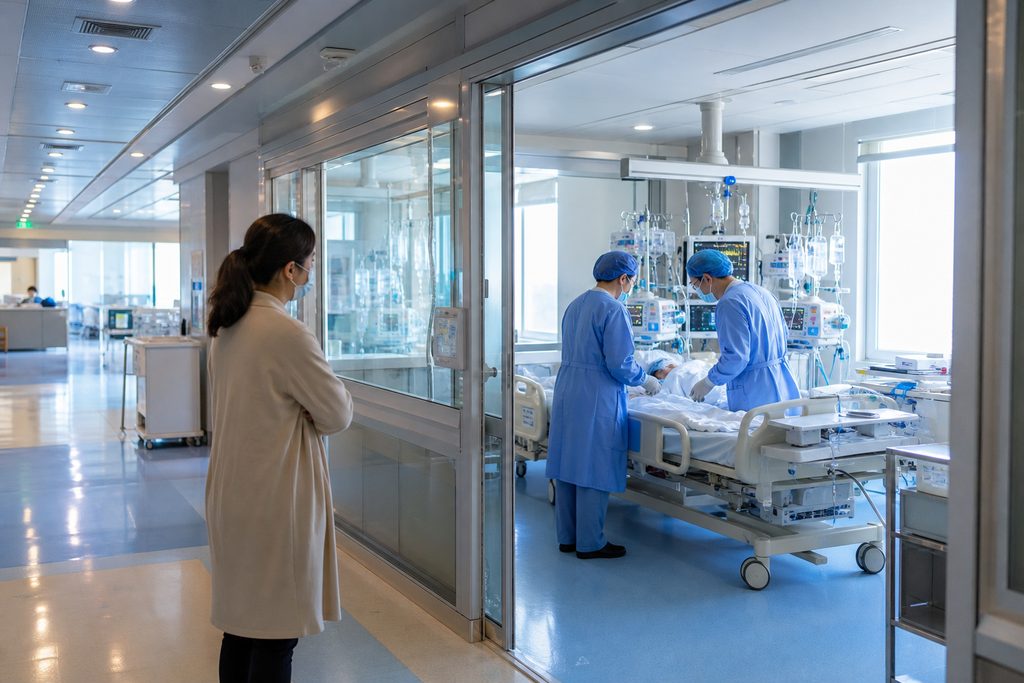
ICU Safety Standards in Chinese Hospitals: What Families Must Know Before Traveling
Have you ever wondered whether a hospital’s intensive care unit halfway around the world will actually keep your family member safe? The direct answer is that top-tier Chinese hospitals—the ones in the Fudan University ranking’s top tier—follow ICU safety standards that mirror what you’d find at a major American or European academic medical center. The picture gets more complicated once you look beyond those elite institutions. That gap between the best and the rest is exactly what this article unpacks.
We coordinate care for international patients across China’s hospital system. We’ve seen the ICUs firsthand. We know which units run daily multidisciplinary rounds and which ones still operate on a purely attending-driven model. This article lays out what we’ve learned—no sugarcoating, no scare tactics.
ICU Safety Standards in China: The Short Answer
Top-ranked Chinese hospital ICUs match or exceed international benchmarks on three metrics that matter most: nurse-to-patient ratios, infection control protocols, and attending physician availability. At hospitals like Peking Union Medical College Hospital or Zhongshan Hospital in Shanghai, you’ll find 1:1 or 1:2 nurse-to-patient staffing in critical care, daily rounds led by intensivists with Western fellowship training, and central line-associated bloodstream infection rates tracked and reported internally. These are not small community hospitals. They are massive academic centers that treat hundreds of thousands of patients annually and have the volume to justify dedicated infection control teams, 24/7 in-house intensivists, and the kind of equipment you’d recognize anywhere—Hamilton ventilators, Philips patient monitors, CRRT machines from Baxter or Fresenius.
But here’s the caveat. China has over 35,000 hospitals. The top 100—the ones on the Fudan ranking—represent roughly the top 0.3%. Once you step outside that tier, ICU safety standards vary enormously. Some provincial hospitals run excellent units. Others operate with nurse-to-patient ratios of 1:4 or worse, limited isolation capacity, and no dedicated intensivist overnight. The hospital you choose determines nearly everything about the safety of the ICU your family member enters.
Who Should Consider a Chinese Hospital ICU—And Who Should Not
This is not a decision for every family. Being honest about who shouldn’t make this trip is what makes the rest of this guidance useful.
Good candidates typically include patients who need high-volume, technically demanding procedures where Chinese surgeons have outsized experience—complex cardiac surgery, certain cancer resections, advanced orthopedic reconstruction. Families who already have trusted contacts in China or who work with a coordination service that provides bilingual support also tend to fare better. Patients with stable conditions who can travel commercially and have a clear treatment plan before they board a plane are the ideal profile.
Who should think twice? Anyone whose loved one is already critically unstable and requires air ambulance transport with an ICU team. The logistics of a long-haul medical evacuation add risk and cost that may outweigh any benefit. Patients with rare genetic conditions requiring highly specific, ongoing subspecialty management may find better continuity of care closer to home. And families who expect the ICU experience to feel exactly like a Western hospital—same visiting hours, same communication style, same room layout—will struggle. Chinese ICUs, even excellent ones, operate within a different cultural and administrative framework. Visiting hours are often more restricted. Family communication typically flows through one designated point person. The nursing model may emphasize task completion over the kind of psychosocial support Western families expect. None of this makes the care unsafe. But it does make the experience different, and families who aren’t prepared for that difference often feel blindsided.
The Options, Compared: Chinese Hospital ICU Tiers
Not all Chinese hospital ICUs are the same. The table below compares what families can realistically expect across three tiers of institutions. These are not official government classifications. They reflect what we observe when placing international patients.
| Factor | Tier 1: Fudan Top 100 Academic Centers | Tier 2: Provincial Tertiary Hospitals | Tier 3: Private International Hospitals |
|---|---|---|---|
| Nurse-to-patient ratio (ICU) | 1:1 to 1:2 | 1:3 to 1:5 | 1:1 to 1:2 |
| 24/7 in-house intensivist | Standard at most units | Variable; some have overnight residents only | Standard |
| Infection control team | Dedicated, full-time | Shared with general hospital | Dedicated, JCI-audited |
| English-speaking staff | Limited; usually one or two senior physicians | Rare | Widespread; English is working language |
| Family communication model | Designated spokesperson; once-daily updates | Minimal; families often wait outside for news | Structured daily updates; some offer family meetings |
| Visiting hours | 30-60 minutes daily, often afternoon only | Highly restricted; some units allow no visitors | More flexible; some allow extended visiting |
| Equipment brand/type | Western-standard (Hamilton, Philips, Fresenius) | Mix of domestic and imported | Western-standard throughout |
| JCI accreditation | Some, not all | Rare | Nearly all |
| ICU cost per day (USD) | $800-1,500 (international wing) | $300-600 (standard ward) | $1,500-3,500 |
Most international families end up choosing between Tier 1 and Tier 3. Tier 1 offers the deepest clinical expertise—these are the hospitals that handle the cases other hospitals refer out. Tier 3 offers the most familiar experience, with English-speaking teams and visiting policies that feel closer to home. The tradeoff is that private international hospitals in China rarely handle the highest-acuity cases. For a routine post-surgical ICU stay, they’re excellent. For complex multi-organ failure requiring subspecialty input from five different departments, a Tier 1 academic center is the stronger choice.
How Safe Are Chinese Hospital ICUs for Foreigners? A Protocol-Level Look
Safety is not a vibe. It’s a set of specific, observable practices. Here’s what we look for when evaluating an ICU for an international patient—and what families should ask about.
Ventilator-associated pneumonia prevention is the single most telling marker. Top Chinese ICUs follow the same VAP bundle protocols used in the US and Europe: head-of-bed elevation at 30-45 degrees, daily sedation interruption and spontaneous breathing trials, oral chlorhexidine care, and subglottic secretion drainage. When we visit a unit, we ask to see their VAP rate per 1,000 ventilator days. Units that track this number and can produce it are units that take safety seriously. Units that look confused by the question are not ready for an international patient.
Central line management is another tell. The best Chinese ICUs use ultrasound guidance for insertion, maximum sterile barrier precautions, and chlorhexidine skin prep—exactly what the CDC recommends. They track CLABSI rates. They have protocols for prompt catheter removal. These are not exotic practices. They are standard of care. But they require discipline, training, and institutional commitment. Not every hospital has all three.
Sepsis recognition and response is where high-volume Chinese hospitals sometimes have an edge. A hospital that sees 10,000 ICU admissions a year develops clinical pattern recognition that no protocol manual can teach. Senior nurses at these hospitals can spot early deterioration before the monitors alarm. That tacit knowledge is real. It is also impossible to quantify on a spreadsheet. Families weighing how safe are Chinese hospital ICUs for foreigners should know that safety comes from both systems and experience—and the top Chinese hospitals have an enormous reservoir of the latter.
What Are ICU Protocols in Chinese Hospitals? The Daily Rhythm
Understanding what are ICU protocols in Chinese hospitals helps families set realistic expectations. The daily rhythm at a Tier 1 academic ICU typically looks like this: morning nursing handoff at 7:00 AM, followed by bedside nursing assessment and vital signs documentation. The intensivist-led team rounds between 8:00 and 10:00 AM. These rounds include the attending intensivist, residents, the bedside nurse, a pharmacist at many hospitals, and sometimes a respiratory therapist. Decisions about ventilator weaning, antibiotic changes, and sedation adjustments happen during this window.
Family communication usually occurs once daily, in the early afternoon. At most hospitals, one designated family spokesperson receives an update from the attending physician or a senior resident. This is not a long conversation. It is typically 5-10 minutes, focused on clinical changes and the plan for the next 24 hours. Families accustomed to the more open communication style of some Western ICUs often find this frustrating. The constraint is partly cultural and partly a function of volume—these physicians may be managing 20 or more critically ill patients.
Evening rounds are lighter, often conducted by the on-call resident or fellow. The night shift nursing team takes over at 7:00 PM. At hospitals with 24/7 intensivist coverage, an attending is available overnight for emergencies. At hospitals without it, the most senior person in the ICU overnight may be a second-year resident. Families should ask directly about overnight coverage before committing to a hospital.
ICU Cost Per Day in China: Private Hospital vs. Academic Center
The ICU cost per day China private hospital question comes up in nearly every initial consultation. The numbers vary widely, but here are the ranges we see in practice as of 2026.
At a private international hospital like United Family or Jiahui, expect $1,500 to $3,500 per day for a standard ICU bed. That typically includes nursing care, routine monitoring, and basic respiratory support. It does not include specialized interventions—CRRT can add $800-1,200 per day, advanced ventilator modes may carry surcharges, and specific medications are billed separately. These hospitals usually require a deposit of $15,000-30,000 before ICU admission and will request additional funds if the stay extends beyond the initial estimate.
At a Tier 1 academic center’s international or VIP wing, the daily rate runs $800 to $1,500. The clinical care is often more sophisticated than what a private hospital can offer, but the environment is less polished. Rooms may be shared. English-speaking staff are thinner on the ground. The tradeoff is real: you’re paying less for deeper expertise but sacrificing some comfort and communication ease.
Standard ward ICU beds at public hospitals cost $300-600 per day, but we rarely recommend these for international patients without fluent Chinese and a high tolerance for institutional bureaucracy. The clinical care may be fine. The experience will be disorienting.
Best Hospital for Critical Care in Shanghai: What the Data Shows
Families searching for the best hospital for critical care in Shanghai are usually looking for one name. The answer is more nuanced. Shanghai has multiple hospitals with excellent ICUs, and the right choice depends on the underlying condition.
Zhongshan Hospital, affiliated with Fudan University, runs one of the country’s strongest cardiac surgery ICUs. Their cardiovascular program handles over 10,000 cardiac surgeries annually, and the intensivists in that unit manage post-operative hearts at a volume few centers worldwide can match. For a patient needing ICU care after complex valve surgery or CABG, Zhongshan is the clear first choice. Their general medical ICU is also strong, with particular depth in respiratory failure management.
Ruijin Hospital, affiliated with Shanghai Jiao Tong University, excels in burns, hematology, and endocrinology critical care. Their burn ICU is a national referral center. For a patient with severe pancreatitis or a hematologic emergency requiring ICU-level support, Ruijin’s intensivists have seen more cases than most Western colleagues will encounter in a career.
Huashan Hospital, also Fudan-affiliated, is the go-to for neurosurgical critical care. Their neuro-ICU manages post-craniotomy patients, severe traumatic brain injury, and complex stroke cases at high volume. The neurosurgery department consistently ranks among China’s top five in the Fudan specialty reputation rankings.
For families who prioritize English-language communication and a Western-style environment above all else, Shanghai’s Jiahui International Hospital and United Family Shanghai both operate well-equipped ICUs with board-certified intensivists, many trained in the US or UK. The tradeoff is that these hospitals transfer the most complex cases to the academic centers. For a patient who is truly critically ill with multi-organ involvement, the academic centers remain the safer bet.
We maintain detailed profiles of all these hospitals, including their ICU capabilities, on our Shanghai hospital guide. The right choice depends on the specific diagnosis, acuity level, and family preferences around communication and environment.
How to Book an ICU Bed in China as an International Patient
Many families arrive at the question how to book ICU bed China international patient assuming it works like booking a hotel room. It does not. ICU beds in Chinese hospitals cannot be reserved in advance by international patients acting alone. The pathway is always: physician evaluation first, admission decision second, ICU bed assignment third—and that last step happens only if the admitting team determines ICU-level care is necessary.
Here is the realistic sequence. First, the patient’s medical records—translated into Chinese by a qualified medical translator—are submitted to the target hospital’s international department or the specific department chair’s office. A Chinese physician reviews the case and determines whether the hospital can help and whether the patient is stable enough to travel. This review typically takes 3-7 business days at academic centers. Second, if the hospital accepts the case, the patient travels to China on an S2 visa, which is the appropriate category for short-term medical treatment and private affairs. Third, the patient undergoes an in-person evaluation at the hospital. Only after that evaluation does the attending physician decide on admission and, if warranted, ICU placement.
There is no shortcut around this sequence. Any service that promises to “book an ICU bed” before a physician has evaluated the patient is either confused about how Chinese hospitals work or is making promises it cannot keep. What a coordination service can do is expedite the record review, arrange the in-person evaluation promptly after arrival, and ensure the hospital’s international department has all necessary documentation before the patient lands. That preparation can shorten the time between arrival and admission from weeks to days. But it cannot eliminate the need for physician evaluation entirely.
For families who want to minimize uncertainty before traveling, a remote video consultation with the target hospital’s department can provide a preliminary assessment. The Chinese physician can review records, ask questions directly, and give a candid opinion about whether the hospital is likely to accept the case. This does not guarantee admission. But it dramatically reduces the risk of traveling to China only to be turned away. The consultation fee ranges from $500 to $800 for a top-specialist session, and if the patient subsequently travels for treatment, that fee is credited in full toward the on-the-ground coordination service.
Practical Considerations: Records, Visas, and Communication
The logistics matter as much as the clinical decision. Families who handle these details well have a much smoother experience.
Medical records must be comprehensive and professionally translated. Chinese hospitals expect to see imaging on CD or via secure cloud link, not just written reports. Pathology slides should be shipped as physical specimens when the diagnosis hinges on histological findings. Lab results need reference ranges, because Chinese labs sometimes use different units. A coordination service typically handles the translation and formatting, but families should understand that incomplete records are the single most common reason for case rejection.
The S2 visa is the correct category for medical treatment. The hospital’s invitation letter—which specifies the patient’s name, passport number, treatment purpose, and intended duration—is the key supporting document. Embassy processing times vary by country, but 2-4 weeks is a realistic window. Families should not book flights until the visa is in hand. The S2 visa typically allows a stay of up to 180 days, which covers most treatment timelines including post-ICU rehabilitation.
Payment is almost universally upfront. Chinese hospitals, including international wings, require deposits before ICU admission. The deposit amount depends on the estimated length of stay and the hospital’s pricing tier.
Frequently Asked Questions
Yes. The hospitals used for international patients are JCI-accredited and follow the same international safety standards as top hospitals in the US and Europe. Surgical teams perform high volumes of procedures — often more than their Western counterparts — which studies show leads to better outcomes.
Costs vary by procedure and hospital, but international patients typically save 40-80% compared to US prices — even when factoring in travel and accommodation. A consultation with our team will give you an exact, all-inclusive quote with no hidden fees.
Send us your existing medical reports to get started. We handle everything from hospital selection and appointment scheduling to visa assistance and post-operative recovery planning. Your medical records are reviewed by the specialist before you even book a flight.
For more medical information and treatment options in China, visit chinamedservices.com (China Medical Services).
