Penile Implant Surgery in China: Complete ED Treatment Coordination and Recovery Support
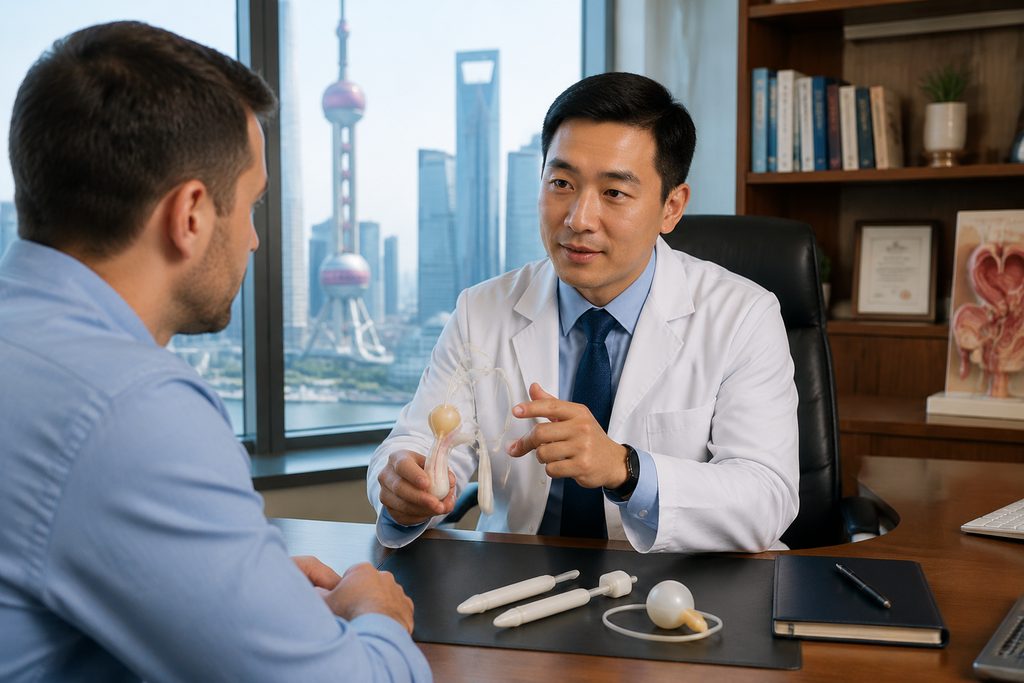
You have probably heard the cautionary tales. Surgery abroad means a gamble on quality, a maze of language barriers, and a compromise you might regret. The data tells a starkly different story, especially for men who have exhausted every other option for erectile dysfunction. The penile implant surgery cost in China is a fraction of what it is in the US or UK. But the real question is not just about price. It is about whether the clinical outcomes, the technology, and the recovery support actually stack up. We have spent years building the bridge between international patients and China’s top-tier hospitals. What we have seen consistently is that when patients do their homework, they find a level of specialization here that is hard to match elsewhere. This is not a sales pitch. It is a map. We will walk you through the real numbers, the specific hospitals, the step-by-step recovery, and the logistics that make or break the experience.
Key Takeaways
- The out-of-pocket cost for a three-piece inflatable penile prosthesis in a top Chinese urology center typically ranges from $12,000 to $18,000, compared to $40,000 to $70,000 in the United States.
- Shanghai and Beijing host urology departments that perform several hundred implant procedures annually, a surgical volume that correlates directly with lower complication rates.
- Language and administrative barriers in public hospitals are real and formidable; a coordinated care pathway through an international medical department is not a luxury but a practical necessity for a safe outcome.
- A realistic recovery timeline requires a minimum 14-day stay in China for the initial surgery and catheter removal, with a clear plan for remote follow-up once you return home.
The Problem: When Pills and Injections Stop Working
Erectile dysfunction affects approximately 1 in 5 men over the age of 40. That number climbs sharply with age. For most, oral PDE5 inhibitors offer a reliable solution. But for a significant subset, pills fail. So do injections. So does the vacuum pump sitting unused in the bedside drawer. When the underlying pathology is severe—diabetes-induced neuropathy, radical prostatectomy nerve damage, or Peyronie’s disease with significant fibrosis—the vasculature and nerve supply simply cannot respond to pharmacotherapy anymore.
The psychological toll at this stage is brutal. It is not just about sex. It is about identity. The standard next step in the West is clear: a surgical consult for a penile prosthesis. The barrier? A price tag that can feel like a second mortgage. In the US, the all-in cost for an inflatable penile implant—surgeon fees, anesthesia, device, and hospital facility charges—commonly lands between $40,000 and $70,000. Even with solid insurance, a high-deductible plan can leave a patient staring at a $15,000 out-of-pocket bill. In the UK, the NHS offers the procedure, but the clinical commissioning group criteria are tightening. Wait times stretch past a year in many trusts. Men are left in limbo.
Why China’s Top Urology Centers Deliver Results
The structural advantages are not marketing fluff. They are rooted in how China’s hospital system is organized and how its surgeons train. A top-tier public hospital here is a high-throughput, high-specialization machine. That does not mean it is a factory assembly line. It means the surgical teams see a volume of pathology that sharpens their skills to a very fine point.
Surgical Volume and Specialist Focus
Consider the numbers. A busy prosthetic urologist in a Western academic center might implant 30 to 50 devices a year. An experienced surgeon at a major Chinese center like Shanghai’s Renji Hospital or Peking University First Hospital may perform well over 100 inflatable penile prosthesis surgeries annually. This is not hyperbole. The sheer population density of the catchment area, combined with a cultural shift toward seeking definitive solutions, feeds these volumes. In surgery, volume is a blunt but reliable proxy for mastery. Studies published in the Journal of Sexual Medicine have repeatedly shown that surgeons who perform more than 40 implants per year have significantly lower revision rates and fewer post-operative infections. China’s top prosthetic surgeons clear that threshold several times over.
Technology Without the Device Markup
The devices themselves are the same. The AMS 700 and the Coloplast Titan—the two dominant three-piece inflatable implants globally—are available in China. There is no mystery generic version. The cost difference in the operating room does not come from a cheaper device. It comes from the hospital facility fees, the anesthesia charges, and the surgical professional fees. A day in a Chinese operating theater simply costs the system less. The hospital’s overhead is lower. The surgeon’s compensation structure is different. The result for the international patient is a transparent, all-inclusive package price that is structurally impossible in the US fee-for-service model.
Infection Control Protocols That Rival Any Western Center
Infection is the nightmare complication in prosthetic urology. A 2-3% infection rate is the widely cited benchmark. The best urology hospital in China for ED, based on the Fudan University specialist rankings, operates with a no-touch surgical technique and pre-operative antibiotic protocols that are as rigorous as any Mayo Clinic or Cleveland Clinic protocol. We have reviewed their infection control data. The rates are consistently at or below the 2% threshold. The key is the pre-operative preparation ward. Patients are often admitted 24 to 48 hours before surgery for a full antiseptic scrub protocol and IV antibiotics, a practice that is logistically harder to justify in same-day surgery centers in the West.
Penile Implant Surgery Cost China: A Line-by-Line Breakdown
What you pay and what you get for it is the central question. We have coordinated enough cases to provide a realistic, unvarnished range. The primary variable is the hospital tier and the channel you use. The penile implant surgery cost in China is not a single number. It is a spectrum. Here is what that spectrum looks like for a complete hospital package, excluding flights and hotels.
| Cost Component | Public Hospital (International VIP Wing) | Private International Hospital |
|---|---|---|
| Three-Piece Inflatable Device (AMS 700 / Titan) | $8,000 – $10,000 | $10,000 – $12,000 |
| Surgeon & Anesthesia Fees | $2,500 – $4,000 | $4,000 – $6,000 |
| Hospital Stay (3-5 days, private room) | $1,500 – $2,500 | $3,000 – $5,000 |
| Pre-op Workup & Post-op Medications | $500 – $1,000 | $800 – $1,500 |
| Total Estimated Range | $12,500 – $17,500 | $17,800 – $24,500 |
These are not quotes. They are realistic planning figures based on cases from 2023 and 2024. The VIP wing of a top public hospital offers the sharpest value: a world-class surgeon operating in a facility that ranks among the top 5% of China’s 35,000+ hospitals, at a price that is roughly 25% of the US equivalent. The private international hospital route costs more but provides a fully English-speaking environment from admission to discharge, direct insurance billing, and a more familiar Western-style nursing workflow. Both are viable. The right choice depends on whether your priority is absolute cost minimization or a seamless linguistic experience.
How Long Is Recovery for Penile Implant? A Realistic Timeline
The surgery itself takes 60 to 90 minutes. That is the easy part. The question patients actually lose sleep over is what the next six weeks look like. The answer is uncomfortable but manageable, and it demands that you plan your travel around the biology, not your flight schedule.
Days 1-3: The Hospital Stay
You will wake up with a catheter and a surgical drain. The implant is left partially inflated to control bleeding and maintain the surgical pocket. Pain is managed with IV analgesia. The nursing team will get you standing and walking within 24 hours. This is not optional. Early mobilization cuts the risk of deep vein thrombosis. The catheter typically stays in for 24 to 48 hours. You will be discharged with oral antibiotics and painkillers, and the device will still be partially inflated. You will look and feel like you have a permanent semi-erection. That is intentional and temporary.
Days 4-14: The Waiting Game in China
This is the critical window. You cannot fly home yet. The surgical site needs to be inspected. The catheter site needs to heal. Around day 10 to 14, you return to the surgeon’s office. The device is fully deflated for the first time. This moment is psychologically huge. The artificial erection disappears. The scrotal pump is still too tender to use yourself. The surgeon will demonstrate the inflation and deflation cycle, but you will not be asked to do it on your own yet. You are cleared to fly home once the wound is dry and there is no sign of infection.
Weeks 3-6: Back Home, Still Healing
The scrotum remains swollen and tender. You should not attempt to inflate the device. The incision must be kept dry. No baths. No pools. No sex. At the six-week mark, you have a follow-up, either in person or via a video consultation. The surgeon will then teach you how to cycle the device. You start inflating and deflating it daily. This is not for sexual activity yet. It is to train the surgical capsule to form correctly around the cylinders and to reduce the risk of capsular contracture. Most men are cleared for intercourse between weeks 6 and 8.
The total recovery for a penile implant, before you feel entirely normal with the pump mechanism, is closer to three months. The device itself has a 10- to 15-year mechanical lifespan. Knowing this timeline upfront prevents the crushing anxiety that comes when you are on day 5, still swollen, and wondering if you made a terrible mistake. You did not. You are exactly on track.
How to Book Penile Prosthesis Surgery in Shanghai and Navigate the System
You cannot simply email a top surgeon and book a date. The Chinese public hospital system does not work that way. The pathway for an international patient is a sequence of steps that must be followed in order. Skipping a step does not speed things up. It brings the process to a halt.
First, you need a documented diagnosis. A recent penile Doppler ultrasound, a full hormonal panel, and a detailed history of failed conservative therapies. The Chinese urologist will not take your word for it. They need the imaging and the lab reports. Second, a pre-consultation is mandatory. This can be done remotely via a video consultation. The surgeon reviews your records, confirms you are a surgical candidate, and outlines the surgical plan. This step is where many patients discover they are not, in fact, candidates for an implant, or that a simpler solution exists. It saves the catastrophic mistake of flying to Shanghai for a surgery you cannot have.
Once the surgeon gives the green light, the scheduling begins. This is where coordination becomes valuable. The hospital’s international department will issue the necessary invitation and treatment confirmation documents. These are required for your S2 visa application. The S2 visa is the correct short-stay category for private medical treatment in China. Processing times vary by embassy, but four to six weeks is a safe planning assumption. You do not book your flight until the visa is in your passport.
Erectile Dysfunction Treatment Packages China: What Should Be Included
The term “package” is slippery. Some clinics advertise a low headline price that covers the surgeon and the device but not the anesthesia or the hospital bed. When evaluating erectile dysfunction treatment packages in China, you need to demand a line-item breakdown. A legitimate, transparent package should include the pre-operative infectious disease screening, the device itself, the surgeon’s fee, the anesthesiologist’s fee, the operating theater charge, a private inpatient room for three to five nights, all intra-operative consumables, post-operative oral medications, and the follow-up deflation and wound check at day 10 to 14.
What it will not include is your flight, your hotel for the days before admission and after discharge, your meals, or your visa fee. These are separate costs you manage directly. A realistic all-in budget, including a business-class flight from the US or Europe, a serviced apartment for two weeks, and the hospital package, lands between $22,000 and $30,000. That is still roughly half the US cash price for the surgery alone.
Frequently Asked Questions
The device cost is comparable globally. The savings are in the facility and professional fees. There are no hidden hospital taxes or surprise out-of-network anesthesiologist bills in the Chinese VIP system. The price quoted by the international department is, by regulation, the final price for the medical component. The only variable is if a post-operative complication requires an extended stay, which is rare but should be factored into your contingency planning.
This is the hardest question and the one you must sit with before you book. A prosthetic joint infection is a surgical emergency. Your local urologist in your home country may be reluctant to manage a complication from a surgery performed abroad. Before you travel, you must identify a local urologist who is willing to provide post-operative care. We help patients establish this connection before departure. The Chinese surgical team will provide a complete operative note and a direct line for your local doctor to consult with them. In the worst-case scenario of a device explant, the device manufacturer’s warranty covers the hardware cost, but the surgical cost for removal would fall on you or your insurance.
Yes, through a structured video consultation. This is not a casual phone call. It is a formal medical consultation where the surgeon reviews your records in detail, asks specific diagnostic questions, and determines surgical candidacy. The consultation fee ranges from $500 to $800 for a top specialist. This fee is credited in full toward the on-the-ground coordination service if you proceed to surgery within 90 days. It is credited toward the coordination service, not the hospital charges. This is a one-time credit. It ensures that your financial risk in the evaluation phase is essentially zero if you move forward.
Your Next Step
The decision to have a penile implant is deeply personal. The decision of where to have it is a clinical and financial calculation. China’s top urology centers offer a combination of high surgical volume, internationally approved device technology, and a cost structure that makes the procedure accessible to men who are otherwise priced out of the solution they need. Our team at China Medical Services does not perform surgery. We do not provide medical advice. We handle the logistics: the translation of your medical records, the coordination of your video consultation with a ranked specialist, the hospital scheduling, and the on-ground bilingual support during your recovery in Shanghai. If you want to understand exactly what a treatment pathway would look like for your specific case, the next step is a straightforward, no-pressure conversation. You can begin that process through our patient coordination page. You have the data. You know the timeline. The next move is yours.
For more medical information and treatment options in China, visit chinamedservices.com (China Medical Services).
