Wheelchair Transport in Guangzhou: Full-Service Guide for Medical Travelers
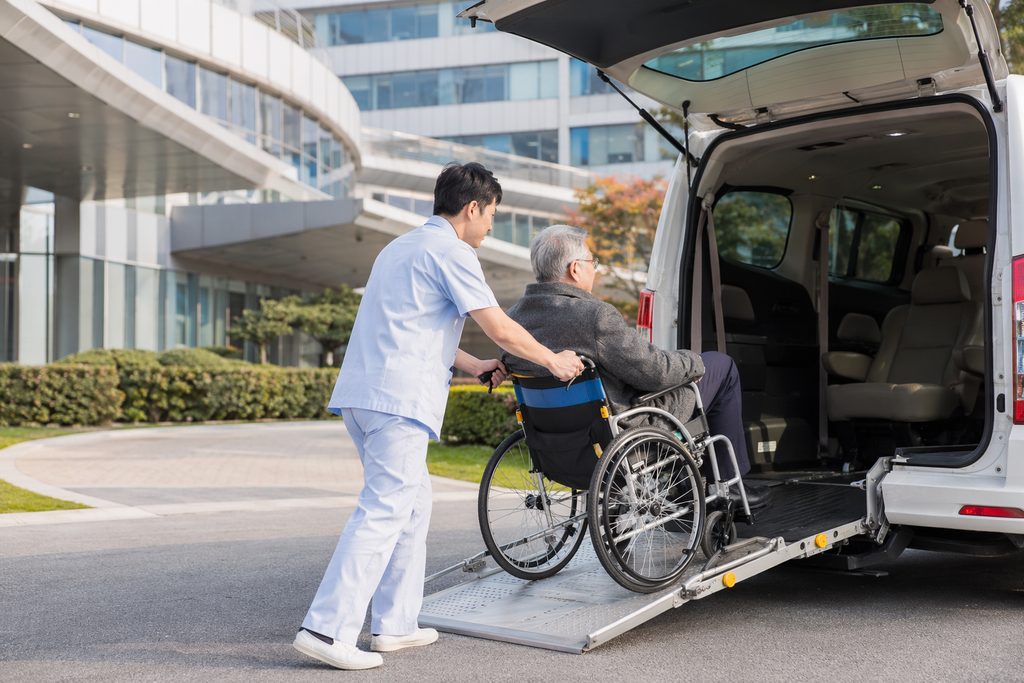
According to the Guangzhou Disabled Persons’ Federation, the city has invested over 180 million RMB in accessibility infrastructure since 2020, retrofitting 2,200+ buses and all 16 metro lines with wheelchair ramps and designated spaces. That’s the official picture. The reality on the ground is more complicated. A 2023 accessibility audit by the China Disabled Persons’ Federation found that while 89% of Guangzhou’s new public infrastructure meets national accessibility codes, actual door-to-door medical transport for wheelchair users still relies heavily on private services. The gap between policy and pavement is where most international patients get stuck.
This guide covers exactly how to bridge that gap. We’ll walk through what a full-service accessible transport arrangement actually looks like in Guangzhou, from airport pickup to hospital transfer to daily mobility during treatment. No theory. Just the operational details.
How This Actually Works, Step by Step
You’re likely coming to Guangzhou for treatment at one of the city’s top-tier hospitals. The city hosts 10 hospitals ranked on the Fudan Hospital Ranking’s Top 100 list, including the First Affiliated Hospital of Sun Yat-sen University and Nanfang Hospital. These are massive institutions. The First Affiliated Hospital alone handles over 10,000 outpatient visits daily. Navigating that environment in a wheelchair without local support is not something we’d recommend attempting.
Here’s the sequence when you work with a coordination service.
First, you provide your itinerary and clinical schedule. Flight arrival details, hotel or service apartment address, hospital name, and appointment dates. If you haven’t selected a hospital yet, that’s a separate step. We maintain a database of 340+ top-ranked hospitals across 37 cities, and for Guangzhou specifically, we can match your condition to the right department based on the Fudan specialty rankings.
Second, the transport provider confirms vehicle availability for your dates. For wheelchair users, the vehicle type matters. You need a rear-entry or side-entry accessible van with proper tie-downs and a ramp rated for your chair’s combined weight. Standard taxis won’t work. Even Guangzhou’s newer wheelchair-accessible taxis — the city added 200 of them in 2022 — are often unavailable during peak hours and cannot be reliably pre-booked for recurring medical trips.
Third, a driver and, when needed, a bilingual medical companion are assigned. The companion handles more than language. They know which hospital entrance is wheelchair-accessible. They know the elevator routes that avoid crowds. They know the check-in counter locations. These details save hours.
Fourth, on arrival day, the vehicle meets you at the airport arrivals hall. The driver assists with luggage and securement. The companion handles any communication with airport staff. From there, you’re taken directly to your accommodation or hospital, depending on your schedule.
For the duration of your stay, transport is pre-scheduled around your appointments. If a consultation runs long or a discharge is delayed, the driver waits. That flexibility is what you’re paying for, and it’s what distinguishes a medical transport service from a standard ride.
Wheelchair Accessible Transport Guangzhou Cost: What You’ll Actually Pay
The wheelchair accessible transport Guangzhou cost depends on three factors: vehicle type, trip frequency, and whether you need a bilingual companion onboard. Let’s break down the real numbers.
A point-to-point wheelchair accessible van transfer within Guangzhou’s urban core typically runs from $80 to $150 per trip. This covers the Haizhu, Yuexiu, Tianhe, and Liwan districts where most major hospitals are located. Airport pickup adds distance and waiting time, bringing that to $120 to $200 for a one-way transfer from Guangzhou Baiyun International Airport to a central hotel or hospital.
Daily medical transport packages — covering round-trip hospital transfers plus one additional trip — start from $200 per day. These packages assume you’re staying within 10 kilometers of your treatment hospital. If you’re staying farther out in Panyu or Huangpu districts, expect a 20-30% surcharge.
A bilingual medical companion adds from $300 per day, which includes not just language support but also wheelchair assistance, hospital navigation, and queue management. This is a separate line item from transport, but in practice, most international patients bundle them. The companion rides with you, handles hospital registration, and ensures you’re not left waiting in a hallway because of a communication gap.
For a two-week treatment stay with daily hospital visits, a realistic transport budget looks like this:
| Service | Unit Cost (USD) | Units | Subtotal |
|---|---|---|---|
| Airport pickup (accessible van) | $150 | 1 | $150 |
| Daily hospital transfers (round-trip) | $200/day | 14 | $2,800 |
| Bilingual medical companion | $300/day | 14 | $4,200 |
| Airport drop-off (accessible van) | $150 | 1 | $150 |
| Total estimated transport + companion | $7,300 |
These figures are baseline estimates. Final pricing varies by hospital location, vehicle availability, and case complexity. A patient requiring bariatric wheelchair transport or ventilator-equipped vehicles will see different numbers. The key point: this is a known, budgetable cost, not a surprise.
Compare this to the medical savings. A knee replacement at a top Guangzhou public hospital runs $8,000 to $15,000 versus $35,000 to $50,000 in the United States. Even with $7,300 in transport and companion costs, the total is still roughly one-third of the US price.
How to Arrange Wheelchair Accessible Van Guangzhou: Vehicle Types and Booking
Not all accessible vehicles are the same. When you’re searching for how to arrange wheelchair accessible van Guangzhou, you need to know what to ask for.
The most common accessible vehicle in Guangzhou’s private fleet is the Toyota Hiace or similar full-size van, retrofitted with a rear manual ramp. These accommodate most standard and lightweight wheelchairs. Ramp angle is typically 1:6 to 1:8, which is manageable for an attendant but steep for self-propulsion.
For power wheelchairs or larger mobility devices, you need a vehicle with a powered lift. These are rarer. Guangzhou has perhaps 30 to 40 such vehicles in private medical transport fleets. Booking lead time matters. A standard accessible van can usually be confirmed with 48 to 72 hours’ notice. A lift-equipped vehicle needs five to seven days minimum, especially during Guangzhou’s autumn medical tourism peak when international patients from Southeast Asia and the Middle East book heavily.
Questions to ask any provider before booking:
- What is the ramp or lift weight capacity? Provide your chair’s total weight, including your body weight.
- Is the vehicle equipped with four-point tie-down straps and a lap belt? Floor tracking alone is insufficient.
- Can the vehicle accommodate a companion rider in addition to the wheelchair user? Some vans sacrifice passenger seats for wheelchair space.
- Is the driver trained in wheelchair securement, or will an additional attendant be needed?
- What is the cancellation and delay policy? Medical appointments run unpredictably.
A reputable provider answers these directly. A provider that dodges them is not one you want responsible for your mobility in a foreign city.
A Realistic Timeline
Medical travel with a wheelchair requires more lead time than standard medical tourism. Here’s what a realistic planning timeline looks like when arranging everything through a coordination service.
| Stage | Timeframe | What Happens |
|---|---|---|
| Initial inquiry | Day 1 | You submit your medical records, preferred hospital, and mobility requirements. The coordination team reviews and confirms feasibility. |
| Hospital selection and remote consultation | Week 1–3 | If you haven’t selected a hospital, the team provides options based on the Fudan specialty rankings. A written second opinion ($300–500) or video consultation ($500–800 for a top specialist) is arranged. Transport is not yet booked at this stage — you need confirmed appointments first. |
| Appointment confirmation | Week 3–4 | Once the hospital confirms your consultation or admission dates, the transport schedule is built around them. This is when the accessible vehicle is reserved. |
| Visa processing | Week 4–6 | You apply for an S2 visa with the hospital invitation letter and accommodation details. Processing times vary by country. Plan for four to six weeks minimum. Some consulates take longer. |
| Transport reconfirmation | Week 6 | Seven days before arrival, the transport provider reconfirms vehicle availability and your flight details. Any last-minute schedule changes are accommodated here. |
| Arrival and first transfer | Day 1 of trip | Airport pickup. Driver and companion meet you at arrivals. Vehicle is inspected by the companion before you board. |
| Daily medical transport | Duration of stay | Pre-scheduled transfers. The companion handles any same-day adjustments if appointments shift. |
| Departure | Final day | Airport drop-off. The companion assists with check-in and any accessibility requests at the airport. |
The timeline’s longest stretches are hospital selection, remote consultation, and visa processing. Transport booking itself is the fastest step — but it can’t happen until the medical schedule is locked. Patients who try to book transport and hospital appointments simultaneously often find themselves rebooking when dates shift.
What Can Go Wrong — and What Happens Then
Honesty matters here. Accessible transport in Guangzhou has failure modes, and you should know them before you’re in the back of a van wondering what’s happening.
The most common problem: the vehicle that shows up is not the vehicle that was promised. A standard van instead of an accessible one. A ramp that’s too steep. Tie-downs that are missing or worn. This happens when transport brokers subcontract to drivers who don’t specialize in medical transport. The broker booked an “accessible van.” The driver showed up with whatever he had.
What happens then: If you’ve booked through a coordination service with on-the-ground staff, the companion catches this before you board. They call the provider and demand the correct vehicle. If the correct vehicle isn’t available within 30 minutes, the service should have a backup provider relationship and switch you immediately. If you’ve booked directly with a driver found online, you have no recourse. You wait, or you take what’s there.
The second problem: hospital access points change without notice. A construction project blocks the accessible entrance. The elevator you planned to use is out of service. This is common in Guangzhou’s older hospital buildings, even at top-ranked institutions. A local companion knows the alternate routes. Without one, you’re navigating a Chinese hospital campus in a wheelchair, unable to read signage, trying to find another way in.
The third problem: appointment delays cascade. Your 10 a.m. consultation runs until noon. Your driver was booked for an 11:30 pickup and now has another client. If you’ve booked through a service that builds buffer time into the schedule, this is a minor inconvenience. The driver waits. If you’ve booked a fixed-time ride, you’re stranded until the next available vehicle.
None of these are reasons to avoid medical travel to Guangzhou. They’re reasons to book through a service that has contingency plans for each scenario. The cost difference between a bare-bones transport booking and a full-service arrangement is maybe $50 to $100 per day. That’s cheap insurance against being stuck in a hospital parking lot at 6 p.m.
Is Guangzhou Wheelchair Friendly for Hospital Visits? The Ground Truth
The question is Guangzhou wheelchair friendly for hospital visits deserves an answer that splits the difference between the official statistics and the lived experience.
Guangzhou’s metro system is genuinely accessible. All 16 lines have elevators at every station. Platform screen doors have wheelchair-accessible boarding points marked on the floor. Station staff are trained to assist with ramp deployment for the gap between platform and train. For a wheelchair user traveling alone without medical equipment, the metro is viable.
But here’s the catch. Hospital-adjacent metro stations are extremely crowded during morning hours. The First Affiliated Hospital of Sun Yat-sen University is served by the Martyrs’ Park station on Line 1. Between 7:30 a.m. and 9:30 a.m., the platforms are packed. Navigating a wheelchair through that crowd to reach the elevator is physically possible but exhausting and stressful. If you’re already unwell, it’s a bad start to a hospital visit.
Sidewalks in the older Yuexiu district, where several major hospitals cluster, are narrow. Tree roots have buckled the pavement in places. Curb cuts exist but are sometimes blocked by parked scooters. This is not unique to Guangzhou — it’s the reality of any dense Asian city with rapid development and older infrastructure — but it means that “wheelchair accessible” on a map doesn’t always translate to a smooth journey.
The hospitals themselves are a mixed picture. Newer buildings at Nanfang Hospital and the Guangdong Provincial People’s Hospital have wide corridors, accessible restrooms, and dedicated elevator banks. Older buildings at some traditional Chinese medicine hospitals have steps at the entrance and narrow doorways. A local companion knows which building entrance to use. Google Maps won’t tell you that.
For a medical visitor, the practical answer is: Guangzhou is navigable in a wheelchair with planning and support. Without them, it’s a series of solvable but exhausting obstacles. The wheelchair taxi service Guangzhou hospital transfer option eliminates the public transit challenge entirely, and for most international patients, that’s the right call.
Practical Considerations: Records, Visa, and Payment
Transport logistics don’t exist in a vacuum. They intersect with every other aspect of your medical trip.
Medical records. Before you can book hospital appointments — and therefore transport — your records need to be translated into Chinese. Radiology reports, pathology summaries, and the treating physician’s referral letter are the minimum. Translation takes three to five business days. Some specialty departments require specific test results before accepting an international patient. Check this early.
Visa category. Medical treatment in China requires an S2 visa, endorsed for medical purposes. Your accompanying family members also apply for S2 visas. The hospital provides an invitation letter confirming your treatment dates. The transport booking itself doesn’t affect the visa, but your accommodation and itinerary details should be consistent across all application documents. Discrepancies invite questions at the consulate.
Payment methods. Transport services in Guangzhou typically require payment in advance via wire transfer or, increasingly, via international payment platforms. Credit card acceptance is not universal. Confirm payment terms before arrival. For coordination services, expect to pay a deposit to secure the transport schedule, with the balance due before your first transfer.
Insurance. Most international health insurance policies do not cover non-emergency medical transport in a foreign country. Check your policy. If it doesn’t cover it, budget for it. The cost is modest relative to the treatment itself, but it’s an out-of-pocket expense you should know about going in.
Language. Guangzhou is a Cantonese-speaking city. Hospital staff speak Mandarin as well. English proficiency varies widely — higher at international departments, lower in general wards. A bilingual companion bridges this gap not just for transport but for the entire hospital experience. They’re not a translator on call; they’re in the room with you, ensuring nothing gets lost.
Frequently Asked Questions
For a standard accessible van, 48 hours is usually sufficient. For a lift-equipped vehicle or transport during major Chinese holidays, you need at least a week. Last-minute bookings are possible but unreliable. The best approach is to book transport as soon as your hospital appointments are confirmed.
What if my flight is delayed and the driver leaves?
If you’ve booked through a coordination service, the driver monitors your flight status and adjusts pickup time accordingly. There is no extra charge for flight delays. If you’ve booked a ride-hailing service or independent driver, you’re at the mercy of their cancellation policy. This is one of the main reasons medical travelers use dedicated
For more medical information and treatment options in China, visit chinamedservices.com (China Medical Services).
