Proton Therapy for Prostate Cancer in China: Costs, Centers, and Coordination
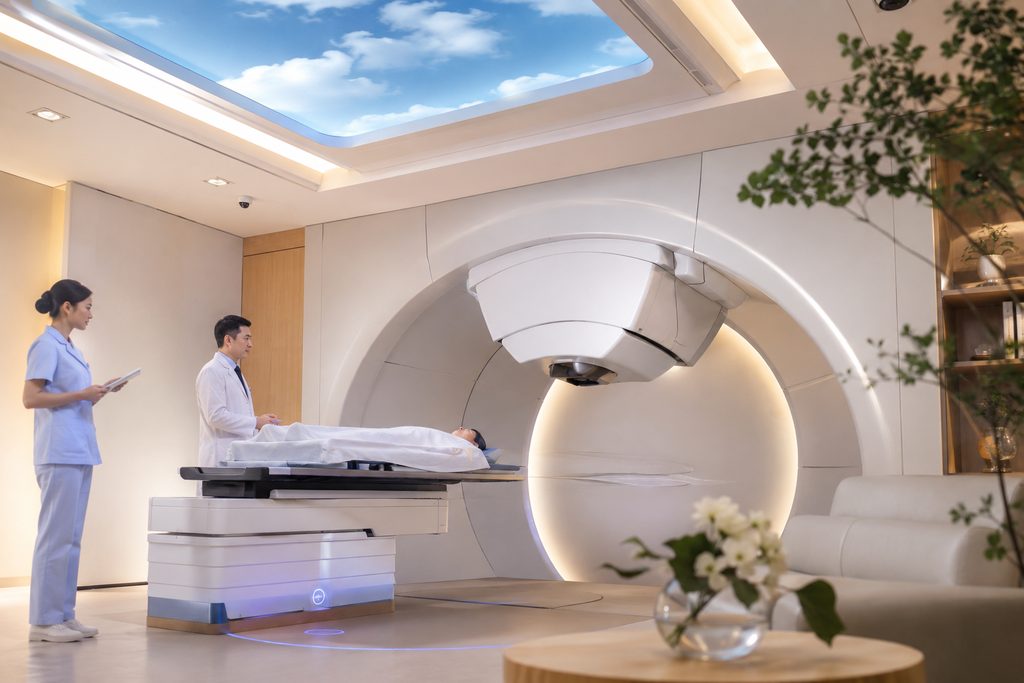
Proton Therapy for Prostate Cancer in China: Costs, Centers, and How We Coordinate Your Care
You have probably heard that advanced cancer treatment means either waiting months in a Western public system or paying six figures out of pocket. That belief collapses the moment you look at actual proton therapy cost China prostate cancer data. A full course of proton therapy for prostate cancer at a top Chinese center typically runs between $30,000 and $60,000. The same treatment in the United States averages $90,000 to $150,000. That gap is not a compromise on quality. It is a structural difference in how healthcare is priced. And for international patients, it changes the math entirely.
We are China Medical Services. Our team connects patients from North America, Europe, the Middle East, and Southeast Asia with China’s 340+ top-ranked hospitals across 37 cities. We do not treat cancer. We handle the logistics, records, scheduling, and language barriers so you can focus on the clinical decision in front of you.
Key Takeaways
- Proton therapy for prostate cancer in China costs roughly one-third to one-half of US prices — typically $30,000–$60,000 for a full course.
- China now operates multiple clinically active proton and heavy ion centers, with several accepting international patients through hospital international departments.
- The biggest barrier for foreign patients is not medical quality — it is scheduling, Chinese-language documentation, and knowing which centers actually treat prostate cancer with protons.
- You cannot simply book a proton therapy slot from abroad. You need a remote consultation first, then a treatment plan, then on-the-ground coordination.
The Problem: Prostate Cancer Treatment Costs Are Breaking Patients
Prostate cancer affects roughly 1 in 8 men during their lifetime. In the United States alone, the American Cancer Society projected nearly 300,000 new cases in 2024. The diagnosis itself is frightening enough. Then the bill arrives.
A 2023 analysis published in JAMA Network Open found that the average out-of-pocket cost for prostate cancer treatment in the first year after diagnosis exceeded $4,000 for Medicare patients — and that figure does not include proton therapy, which is often denied or only partially covered by insurers. Many men face a brutal choice: accept surgery with well-documented side effects like incontinence and erectile dysfunction, or pursue proton therapy that may offer better quality-of-life outcomes but at a price that drains retirement savings.
What happens if nothing changes? Some men delay treatment. Others choose cheaper modalities that carry higher risks of long-term complications. Neither path feels like a real choice. That is the pain point. And that is precisely why more patients are looking beyond their home country’s price list.
Why China Has Become a Serious Option for Proton Therapy
China’s investment in particle therapy has accelerated dramatically over the past decade. The country now operates several proton and heavy ion facilities, including the Shanghai Proton and Heavy Ion Center (SPHIC), which has treated thousands of patients since opening. More centers are coming online each year.
But volume is only part of the story. The clinical experience for prostate cancer specifically is maturing fast. Chinese radiation oncologists now routinely treat prostate cancer with pencil beam scanning — the most precise form of proton delivery — and publish outcomes in peer-reviewed international journals.
Clinical Volume Builds Technical Proficiency
Proton therapy is a team sport. It requires radiation oncologists, medical physicists, dosimetrists, and therapists working in tight coordination. Centers that treat hundreds of prostate cancer cases per year develop workflows that newer, low-volume centers cannot match. Several Chinese proton centers now treat prostate cancer as a standard indication, with established protocols for hypofractionation — delivering the full dose in fewer sessions, often 20 or fewer.
That matters because hypofractionated proton therapy for prostate cancer has shown excellent biochemical control rates in multiple studies. A 2022 review in Radiotherapy and Oncology noted that five-year biochemical relapse-free survival rates for proton-treated prostate cancer patients consistently exceed 90% across risk groups. Chinese centers are increasingly adopting these shorter regimens, which also reduce total cost and time away from home.
Technology Without the Western Price Tag
Why does the same machine, often built by the same manufacturers, cost so much less to operate in China? Labor economics explain a large portion. A radiation oncologist’s salary in Shanghai is a fraction of what the same specialist earns in Boston or London. Facility overhead, administrative staff, and malpractice insurance all cost less. None of those factors reduce the quality of the beam or the skill of the physicist calibrating it.
So the lower proton therapy cost China prostate cancer patients encounter is not a discount for second-tier care. It is the result of a healthcare system that delivers high-complexity treatment at structurally lower operating costs. The machines are the same. The physics are the same. The price is not.
International Patient Infrastructure Is Already in Place
Top Chinese hospitals have been treating international patients for decades. Fudan University Shanghai Cancer Center, one of the country’s leading oncology institutions, operates an international medical department with English-speaking coordinators. The same is true for major centers in Beijing, Guangzhou, and Chengdu.
That infrastructure means foreign patients can access proton therapy consultations, receive translated treatment plans, and navigate admission without speaking a word of Mandarin. The system is not perfect — more on that below — but it exists and functions daily.
How Proton Therapy for Prostate Cancer Actually Works in China
If you are searching for how much is proton therapy for prostate cancer in China, you have probably already read the clinical basics. But the operational reality for an international patient is different from what a local patient experiences. Here is the step-by-step picture.
Step 1: Remote Records Review
Before any travel happens, the treating center needs your full medical file: PSA history, biopsy pathology report, MRI images, and any prior treatment records. A Chinese radiation oncologist reviews these remotely and determines whether proton therapy is appropriate for your specific case. Not every prostate cancer patient is a candidate. Low-risk patients may be better served by active surveillance or brachytherapy. High-risk patients may need combination therapy, including androgen deprivation therapy alongside protons.
This remote review usually costs between $100 and $300 for a video consultation, or $300 to $500 for a written second opinion from a top specialist. Both options can be arranged through our coordination service.
Step 2: Treatment Planning and Simulation
Once you arrive in China, the first week typically involves a CT simulation scan and, at some centers, an MRI fusion. The physics team then spends several days designing your treatment plan — determining beam angles, dose distribution, and fractionation schedule. You may also need fiducial marker placement, small gold seeds inserted into the prostate to guide daily positioning.
This phase takes three to seven days. You are not receiving treatment yet. You are being prepared for it.
Step 3: Daily Treatment Sessions
Proton therapy itself is painless. Each session lasts 15 to 30 minutes, with the actual beam-on time measured in minutes or even seconds. Most prostate cancer protocols in China now use hypofractionation: 20 to 28 fractions delivered over four to six weeks. Some centers offer ultra-hypofractionated regimens of five fractions or fewer, though these are less common for international patients.
You stay in a hotel or serviced apartment near the hospital. Daily sessions are scheduled at fixed times. Side effects are generally mild — urinary urgency, fatigue, some rectal irritation — and most patients continue normal activities throughout treatment.
Step 4: Follow-Up and Return Home
After your final fraction, the treating team provides a complete treatment summary and a follow-up schedule. PSA testing typically begins three months after treatment and continues every three to six months for the first two years. You can do these blood tests at home and share results with your Chinese team remotely.
Comparing Proton Therapy Centers for Prostate Cancer in China
Not every proton facility in China treats prostate cancer. Some focus on pediatric tumors, others on head and neck or thoracic malignancies. Knowing which centers have genuine prostate cancer experience is the difference between a smooth treatment course and a frustrating detour.
The table below compares the key factors international patients should evaluate when researching best proton therapy centers in China.
| Factor | What to Look For | Why It Matters for Prostate Cancer |
|---|---|---|
| Prostate case volume | Centers treating 50+ prostate cases annually | Higher volume correlates with refined protocols and fewer planning errors |
| Pencil beam scanning | Available and routinely used | Superior dose conformality, less rectal and bladder exposure |
| Hypofractionation protocol | 20–28 fraction regimens offered | Shorter total treatment time, lower total cost, equivalent outcomes |
| International patient office | Dedicated English-speaking staff | Handles records, scheduling, billing, and visa support documents |
| On-site imaging | CT and MRI with daily image guidance | Ensures consistent targeting despite bladder and rectal movement |
| Published outcomes | Peer-reviewed data on prostate cohorts | Verifiable clinical results, not just marketing claims |
Shanghai Proton and Heavy Ion Center remains the reference point for most international patients. It has the longest operating history and the most published clinical data. But newer centers in other cities are rapidly gaining experience. Our team maintains current information on which facilities are accepting international prostate cancer patients and what their actual wait times look like.
What Proton Therapy Packages for Prostate Cancer Actually Include
Searching for proton therapy packages China for prostate cancer will surface a range of offers, some legitimate and some not. A genuine treatment package from a hospital international department typically includes:
- Initial consultation with a radiation oncologist
- CT simulation and treatment planning
- The full course of proton therapy fractions
- Daily positioning and image guidance
- Weekly physician reviews during treatment
- End-of-treatment summary and follow-up recommendations
What a package usually does not include: international airfare, accommodation, meals, visa fees, fiducial marker placement (often billed separately), and any additional consultations outside the radiation oncology department. Some centers bundle travel logistics through partner agencies, but the hospital’s clinical fee is separate from living expenses.
Expect total out-of-pocket costs — treatment plus six weeks of accommodation and meals in Shanghai or Beijing — to land between $40,000 and $75,000 depending on the center, the fractionation schedule, and your accommodation choices. That is still far below the US price for the clinical component alone.
Practical Considerations: Visa, Payment, and Records for Proton Therapy in China
This is where many patients hit walls. The clinical decision to pursue proton therapy in China is only the first step. The logistics can feel overwhelming, especially when you are also processing a cancer diagnosis.
Visa: Foreign nationals traveling to China for medical treatment apply for an S2 visa, which covers short-term private affairs including medical care. If your treatment course exceeds 180 days — unlikely for prostate proton therapy but possible if you combine multiple treatment phases — an S1 visa applies. Your treating hospital must provide an invitation letter and treatment confirmation as supporting documents. No visa category guarantees approval, and requirements can change without notice. Our team helps you assemble the correct documentation package for your nearest Chinese embassy or consulate.
Payment: Chinese public hospitals, including their international departments, generally require prepayment before treatment begins. International credit cards are accepted at most major centers, but transaction limits and foreign transaction fees apply. Wire transfers are often the most practical option for large amounts. Private international hospitals in China — such as those listed on our private hospitals page — may offer direct insurance billing, but proton therapy is currently concentrated in public and quasi-public centers.
Medical records: Every document you submit must be translated into Chinese for the treating team. Pathology reports, imaging reports, and prior treatment summaries all require certified translation. The hospital’s international office usually handles this internally, but the quality and turnaround time vary by center. Incomplete or poorly translated records are the single most common cause of delayed treatment starts for international patients.
Language: Daily life in Shanghai or Beijing without Mandarin is manageable. Inside a busy public hospital, it is not. Signage is increasingly bilingual in international departments, but the moment you step outside that bubble — to the imaging suite, the billing office, the pharmacy — Chinese becomes the default. A bilingual medical companion eliminates this friction. Our companions handle registration, queue management, payment, and real-time interpretation so you are never stranded in a corridor holding a form you cannot read.
Frequently Asked Questions
Yes. Several Chinese proton and heavy ion centers accept international patients through their hospital international departments. The process starts with a remote records review, not with booking a flight. You cannot simply arrive and expect to start treatment the following week. Expect a lead time of three to six weeks from initial records submission to your first treatment session, depending on the center’s schedule.
A full course of proton therapy for prostate cancer in China typically costs $30,000 to $60,000 for the clinical component. In the United States, the same treatment averages $90,000 to $150,000 before insurance. The difference comes from lower operating costs in China — not from lower treatment quality. Total costs including travel and accommodation for a six-week stay usually land between $40,000 and $75,000.
You can initiate the process remotely. The treating center will review your records, conduct a video consultation, and determine whether you are a candidate. Only after that remote evaluation is complete can a treatment slot be reserved. You still need to travel to China for the simulation, planning, and treatment phases. There is no fully remote proton therapy option.
Your Chinese radiation oncology team provides a complete treatment summary and a structured follow-up plan. PSA monitoring happens at home through your local urologist or primary care physician. If you experience late side effects — most commonly urinary or bowel symptoms — your local doctor manages them, and you can share updates with your Chinese team remotely. Video follow-up consultations are available at most centers for a fee.
Patients with very low-risk prostate cancer may be better served by active surveillance, which involves no treatment at all. Patients with metastatic disease generally require systemic therapy, not localized proton treatment. And patients who cannot travel internationally due to other health conditions should consider local options. A remote consultation with a Chinese radiation oncologist will clarify whether proton therapy is appropriate for your specific case.
Your Next Step
Proton therapy for prostate cancer in China is not a last resort. It is a legitimate, evidence-based treatment option at a price that makes it accessible to patients who would otherwise face financial strain or insurance denial at home. The clinical infrastructure exists. The outcomes data is published. The barrier is coordination.
We are China Medical Services. We are not a hospital, and we do not provide medical advice. What we do is handle the logistics — hospital matching, records translation, appointment coordination, bilingual companionship, and visa documentation — so you can make a clear-headed clinical decision without drowning in paperwork. If you are ready to explore whether proton therapy in China is right for your prostate cancer, start with a free consultation. We will help you understand your options, no pressure, no obligation.
For more medical information and treatment options in China, visit chinamedservices.com (China Medical Services).
