Bariatric Surgery Diet Eating Out: A Realistic Guide to Restaurants
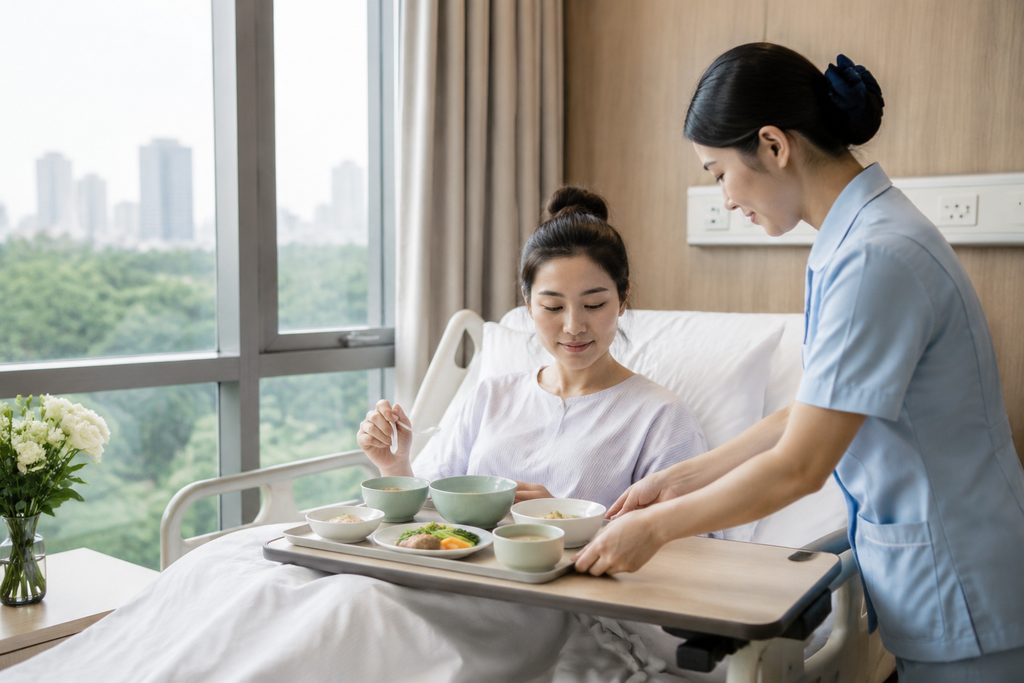
Bariatric Surgery Diet Eating Out: A Realistic Restaurant Guide for Patients in China
Key Takeaways
- Most bariatric patients wait 4 to 6 weeks before attempting a restaurant meal, depending on their surgical team’s staged diet progression.
- Chinese restaurant cuisine presents unique challenges for the post-op stomach, but steamed, broth-based, and soft protein dishes can work with the right strategy.
- Dumping syndrome affects approximately 40% of gastric bypass patients who consume high-sugar or high-fat foods too early, making menu selection a clinical matter, not just a preference.
- Your post-op diet is prescribed in distinct phases, and skipping ahead—even for a single celebratory dinner—can cause vomiting, pain, or a hospital visit.
Have you ever wondered whether you can sit down at a restaurant after bariatric surgery without ruining your results or ending up in the bathroom? It is a question every patient asks, usually within the first two weeks post-op. The short answer: yes, eventually. But “eventually” depends on your procedure, your healing, and the choices you make at the table. For patients pursuing bariatric surgery diet eating out China, the question carries extra weight because restaurant culture here is social, fast-paced, and built around shared dishes that do not always fit a 100-milliliter stomach pouch.
This guide walks through the real timeline, the food rules that matter, and how to handle Chinese restaurant menus without derailing your progress. We work with international patients who travel to China for weight loss surgery, and the dietary questions start almost immediately after discharge. So let us answer the one that comes up most.
The Problem: Your Stomach Is Not Ready for Restaurant Food
Immediately after surgery, your staple line or anastomosis is healing. You consume only clear liquids: water, diluted broth, sugar-free electrolyte drinks, and clear protein water. Total volume per hour is often limited to 30 to 60 milliliters. A restaurant meal is physically impossible at this stage, and attempting one could cause staple line stress or dehydration.
By week two, most patients advance to full liquids like protein shakes, thinned yogurt, and blended soups. Some programs allow pureed foods. The key rule: no chunks, no fiber, no fat. A Chinese congee, thinned with broth and without oil, can work here. But restaurant versions of congee often contain added oil, century egg, or pork floss—all of which can cause discomfort.
This is where the restaurant door cracks open. By week four to six, most sleeve and bypass patients can tolerate soft, moist, low-fat proteins like steamed fish, soft tofu, and well-cooked eggs. The portion is still tiny: roughly 60 to 90 grams of protein plus a few bites of soft vegetables. At this stage, a carefully chosen restaurant meal is possible, but only if you control the ordering and the pace.
Most surgeons clear patients for a regular-texture diet between weeks six and eight. That does not mean unlimited restaurant freedom. It means your stomach can handle more variety, but your tolerance for fat, sugar, and volume remains permanently reduced. Many patients report that even at six months post-op, a greasy restaurant meal leaves them uncomfortable for hours.
How Soon Can I Eat at Restaurants After Gastric Sleeve? A Realistic Timeline
The question “how soon can I eat at restaurants after gastric sleeve” deserves a direct answer. For most patients, the earliest safe window is four to six weeks post-op, and only if you order strategically. Before week four, the risk of vomiting, pain, or dehydration is too high to justify the social benefit. Some patients wait eight weeks or longer, especially if they had complications or slow healing.
Here is what the timeline looks like in practice:
| Time After Surgery | Restaurant Status | What You Can Realistically Order |
|---|---|---|
| Weeks 1–2 | No restaurant meals | Clear liquids only; bring your own protein water if attending a social event |
| Weeks 3–4 | No restaurant meals | Full liquids and purees; restaurant broth may contain too much oil or salt |
| Weeks 4–6 | First cautious restaurant attempts | Steamed fish, soft tofu, plain congee, egg drop soup without oil; tiny portions |
| Weeks 6–8 | Regular-texture foods approved | Grilled or steamed proteins, soft vegetables, clear soups; still avoid fried and sugary items |
| 3 months+ | More flexibility, permanent limits | Most dishes in small portions, but high-fat and high-sugar foods remain problematic |
These timelines assume an uncomplicated recovery. If you had a hiatal hernia repair, a revision surgery, or post-op nausea, your surgeon may extend each phase. Always follow your specific discharge instructions over any general timeline.
Restaurant Food Rules After Gastric Bypass China: What Actually Works
Chinese restaurant cuisine is not a monolith. It spans Cantonese steamed dishes, Sichuan hotpot, Beijing roast duck, and northern dumpling houses. Some of these are far more compatible with a post-bariatric stomach than others. The restaurant food rules after gastric bypass China patients need to internalize are straightforward: prioritize protein, avoid oil and sugar, and eat slowly.
Protein comes first. Your stomach holds very little, so every bite must earn its place. Steamed fish, poached chicken, soft tofu, and shrimp are excellent choices. In Cantonese restaurants, look for steamed whole fish with ginger and scallion, but ask for the sauce on the side. The sauce is often made with oil and sugar. Same with steamed egg custard—it is soft and protein-rich, but the restaurant version may include soy sauce and sesame oil. Ask for it plain.
Broth-based soups can work, but watch the sodium. Chinese restaurant broths are often simmered with bones and salt for hours. A small bowl is fine for hydration and satiety, but do not drink more than 100 to 150 milliliters at a meal. Liquid fills the pouch quickly and can displace the protein you need.
What about hotpot? Hotpot is a social institution in China, especially in Chengdu and Chongqing. The good news: you can control exactly what goes into your pot. Choose a clear or mushroom broth base, not the spicy oil base. Cook thin slices of lean meat, tofu, and leafy greens. Avoid processed fish balls and fatty beef slices. Eat slowly, and stop at the first sign of fullness. Hotpot can actually be one of the safer restaurant formats because you control portion and cooking method.
Dumplings and noodles are trickier. Wheat-based foods expand in the stomach and can cause discomfort. If you want a dumpling or two, choose steamed over fried, and count them as your carbohydrate for the meal—not as an appetizer. Many patients find that even two dumplings leave them uncomfortably full at three months post-op.
Warning: Fried rice, spring rolls, sweet and sour pork, and anything battered or deep-fried should be avoided for at least three to six months after surgery. These foods are high in fat and low in protein, and they can trigger dumping syndrome or severe discomfort even in small amounts.
Best Bariatric Surgery Hospital in China with Dietary Support: What to Look For
If you are considering weight loss surgery in China, dietary support should be a top selection criterion. The best bariatric surgery hospital in China with dietary support will not just perform the operation and send you home. It will provide a structured nutrition program, access to a bariatric dietitian, and clear post-op guidelines in English if you are an international patient.
Top bariatric centers in China are concentrated in major cities like Shanghai, Beijing, and Guangzhou. Many of the leading programs are affiliated with university hospitals that also rank highly in general surgery and endocrinology. When evaluating a program, ask these questions:
- Does the hospital provide a written post-op diet plan in English?
- Is there a bariatric dietitian available for follow-up consultations, including video consultations?
- What is the hospital’s complication rate and follow-up protocol for international patients?
- Does the program offer remote nutrition check-ins after you return home?
Some private international hospitals in Shanghai and Beijing offer bariatric surgery with English-speaking staff and Western-style dietary counseling. These programs often coordinate directly with insurance and provide more personalized aftercare. The trade-off is cost: private international hospital bariatric packages typically run higher than public hospital programs. But for many international patients, the language support and structured follow-up justify the difference.
You can browse our directory of top-ranked hospitals across China to compare bariatric and metabolic surgery programs. For a deeper look at specific departments, see our specialty rankings by department.
China Weight Loss Surgery Package Aftercare Diet: What Is Included
A China weight loss surgery package aftercare diet varies significantly by hospital and package tier. Some packages include only the surgery and a short hospital stay. Others bundle pre-op nutrition counseling, post-op dietitian visits, and follow-up video consultations. Understanding the difference matters because the aftercare diet is where long-term success is built or lost.
At a minimum, a comprehensive package should include:
- Pre-operative nutrition assessment and liver-shrinking diet guidance
- A written, staged post-op diet plan with specific foods and portion sizes
- At least one post-discharge consultation with a bariatric dietitian
- Guidance on vitamin and mineral supplementation, including calcium, iron, B12, and vitamin D
- Access to follow-up blood work to monitor for deficiencies
Some hospitals in Shanghai and Beijing offer dedicated bariatric nutrition clinics where patients can book follow-up appointments. For international patients who return home, the best programs offer video consultations so you can check in with the same dietitian who managed your early recovery. A video consultation with a bariatric nutritionist typically costs between $100 and $300 at a public hospital international department, and $300 to $500 at a private international hospital. If you later upgrade to in-person follow-up care in China, some coordination services apply that consultation fee toward your on-the-ground care.
Book Bariatric Surgery in Shanghai with Nutritionist: The Process
If your goal is to book bariatric surgery in Shanghai with nutritionist support, the process for international patients follows a clear sequence. Shanghai is home to several high-volume bariatric programs, including departments at major university-affiliated hospitals. The city also has strong private international hospital options with English-speaking care teams.
The typical pathway looks like this:
First, you submit your medical history, current weight, BMI, and any prior weight loss attempts. The surgical team reviews your case and determines whether you meet the criteria. In China, bariatric surgery is generally indicated for patients with a BMI of 32.5 or higher with obesity-related comorbidities, or a BMI of 37.5 or higher without comorbidities. These thresholds are similar to international guidelines but may vary by hospital.
Second, you complete a remote consultation with the surgeon and, ideally, the bariatric dietitian. This consultation covers your medical history, surgical options, expected outcomes, and the post-op diet plan. A video consultation with a specialist at a top Shanghai hospital typically costs $500 to $800. That fee is often credited toward your surgery package if you proceed.
Third, you travel to Shanghai for surgery. Most international patients plan for a two to three week stay: one week for pre-op testing and preparation, one week for the hospital stay, and one week for early recovery and follow-up before flying home. During that final week, the dietitian reviews your stage one and stage two diet in person.
Fourth, you continue follow-up remotely. The best Shanghai programs schedule video check-ins at one month, three months, six months, and one year post-op. Blood work can be done in your home country and sent to your surgical team for review.
For a full overview of how international patients navigate the Chinese hospital system, see our guide to planning your medical treatment in China.
Practical Considerations: Eating Out Long-Term in China
Once you are cleared for regular food, eating out remains a skill you will refine for life. Here are the practical rules that experienced bariatric patients in China follow.
Practical tip: Order one protein dish and one vegetable dish, then ask for a small bowl. Serve yourself a few bites of each, and stop. Do not feel obligated to finish the shared plates. Chinese dining culture values hospitality, but your health comes first. A simple “I had surgery recently, so I eat small portions” is usually met with understanding.
Chew thoroughly. Every bite should be chewed 20 to 30 times. This slows your eating, which gives your stomach time to signal fullness. Most bariatric patients who vomit after a meal do so because they ate too fast, not because they ate too much.
Do not drink with meals. Your pouch cannot hold both food and liquid. Drinking with meals pushes food through faster, reducing satiety and increasing the risk of dumping. Stop drinking 30 minutes before a meal and wait 30 to 45 minutes after.
Watch for hidden sugar. Chinese sauces—hoisin, sweet and sour, teriyaki, and even some soy sauce blends—contain significant sugar. Ask for sauces on the side, or choose dishes that are steamed or poached without glaze.
Alcohol is a separate issue. Carbonated beverages and alcohol are generally discouraged for at least six months post-op, and many surgeons recommend avoiding them permanently. Alcohol is absorbed faster after bariatric surgery, and the effects are stronger. Beer is carbonated, which causes gas and discomfort. If you choose to drink eventually, do so sparingly and never on an empty stomach.
Frequently Asked Questions
Can I eat at a restaurant one month after gastric sleeve surgery?
Most surgeons advise waiting until at least four to six weeks post-op before attempting a restaurant meal. At one month, you are likely still on soft foods. If you do go, choose steamed fish, soft tofu, or plain congee, and eat no more than a few tablespoons.
What happens if I eat too much or too fast after bariatric surgery?
Eating too much or too fast can cause nausea, vomiting, chest pressure, and abdominal pain. For gastric bypass patients, high-sugar or high-fat foods can trigger dumping syndrome, with symptoms like flushing, dizziness, and diarrhea. These episodes are usually self-limiting but deeply unpleasant.
Are there any Chinese restaurant dishes that are safe right after the soft food phase?
For more medical information and treatment options in China, visit chinamedservices.com (China Medical Services).
