Brain Surgery Recovery Cost in China: What Patients Actually Pay
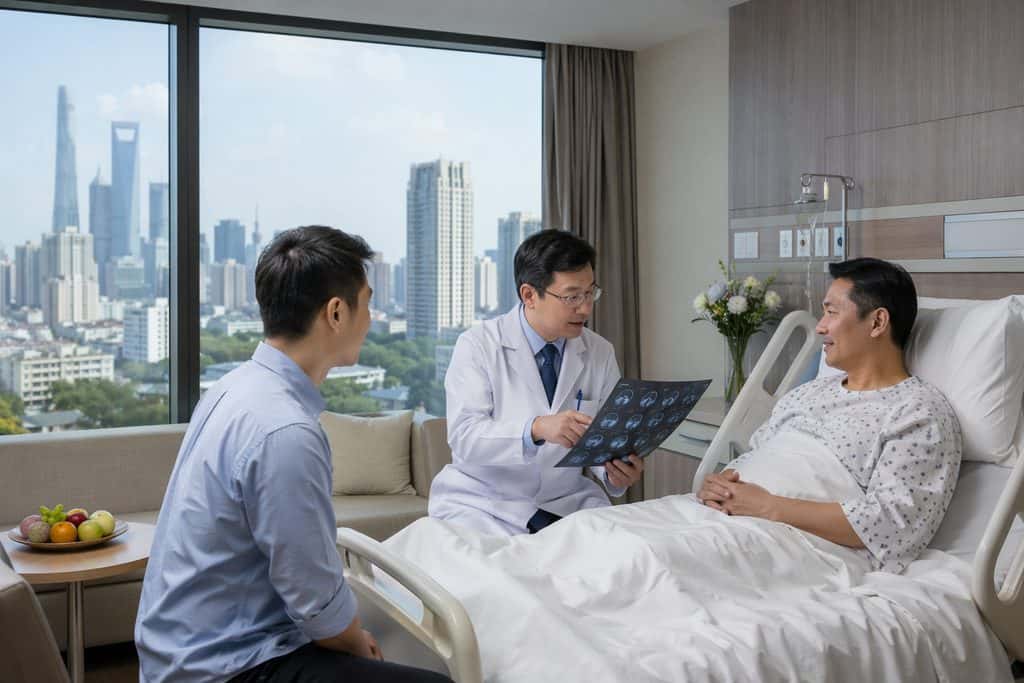
Brain Surgery Recovery Cost in China: What Patients Actually Pay
A craniotomy at a major U.S. academic medical center routinely bills $150,000 to $250,000 before insurance adjustments. At a top-tier Chinese public hospital, the same procedure — surgeon fees, ICU, imaging, pathology, and a two-week inpatient stay — typically lands between $25,000 and $60,000. That gap is why “brain surgery cost China” has become one of the most searched phrases among international patients weighing treatment abroad.
But the headline number is only part of the story. Recovery — the weeks and months after discharge — carries its own costs, and those are the ones patients most often underestimate.
How This Actually Works, Step by Step
Here is the real sequence, from first inquiry to follow-up scan at home.
Step one: you send records. CT scans, MRI images (DICOM files, not just the radiologist’s report), pathology slides if a biopsy was already done, and a current medication list. Our team translates the clinical summary into Chinese and routes it to the international department of a shortlisted hospital.
Step two: a specialist reviews and responds in writing. This is the written second opinion stage. A neurosurgeon or neuro-oncology team reviews the imaging and returns a written assessment — whether surgery is indicated, what approach they would consider, and roughly what the hospital stay would involve. Turnaround is usually five to ten business days.
Step three: a video consultation. If the written opinion points toward surgery, most patients want to speak with the team directly. A video session lets you ask about the surgical approach, expected recovery, and what the hospital can and cannot commit to.
Step four: you decide, then travel. Only after a plan is clear do you book flights. This staged approach exists for a reason — flying to China before a surgeon has seen your imaging is the single most common and most expensive mistake international patients make.
What Recovery Actually Costs, Beyond the Operating Room
Surgery is the largest single line item, but it is not the whole bill. Recovery costs in China break into four phases, and each behaves differently.
Inpatient recovery runs from the day of surgery to discharge — typically 7 to 14 days for a standard craniotomy, longer for complex skull-base work. ICU days are the expensive part. A neurosurgical ICU bed in a top public hospital can run $800 to $1,500 per day, and most patients spend two to five days there.
Early outpatient recovery covers weeks two through eight. You need a place to stay near the hospital, transportation to follow-up appointments, and often a companion. Hospital-adjacent serviced apartments in Beijing or Shanghai run $80 to $180 per night.
Rehabilitation is where costs vary most. Cognitive therapy, physical therapy, and speech therapy after brain surgery are not optional for many patients. In China, inpatient rehab at a public hospital costs a fraction of U.S. rates — often $200 to $400 per day versus $1,500 or more in the U.S. — but the duration depends entirely on the deficit being treated.
Follow-up imaging at home. This is the line item nobody budgets for. Your Chinese surgeon will want a post-operative MRI at three months and again at six or twelve months. If you return home, those scans happen in your own country’s system, at your own country’s prices.
| Cost Category | Typical Range (USD) | Notes |
|---|---|---|
| Neurosurgery (craniotomy, tumor resection) | $25,000 – $60,000 | Varies by hospital tier and tumor complexity |
| ICU stay (2–5 days) | $1,600 – $7,500 | Higher at private international hospitals |
| Inpatient ward (7–14 days) | $1,500 – $5,000 | Public hospital standard room |
| Pre-op imaging and labs | $800 – $2,500 | MRI, CT, bloodwork, cardiac clearance |
| Rehabilitation (per week) | $1,400 – $2,800 | Inpatient or intensive outpatient |
| Accommodation near hospital (per month) | $2,400 – $5,400 | Serviced apartment, one or two bedrooms |
| Bilingual medical companion | from $300/day | Registration,排队, payment, translation, escort |
Add those together for a two-month stay with rehabilitation, and a realistic all-in figure for a straightforward tumor resection lands between $45,000 and $85,000. For comparison, the same pathway in the United States frequently exceeds $200,000 even with insurance negotiated rates.
A Realistic Timeline
Patients consistently underestimate the front end. The clinical work moves fast once you are in China; the preparation does not.
| Phase | Duration | What Happens |
|---|---|---|
| Record collection and translation | 3–7 days | Gather imaging, reports, translate clinical summary |
| Written second opinion | 5–10 business days | Specialist reviews imaging, returns written assessment |
| Video consultation scheduling | 3–10 days | Depends on specialist availability and time zone |
| S2 visa application | 1–3 weeks | Requires hospital invitation letter and supporting documents |
| Pre-operative workup in China | 2–5 days | Repeat imaging, anesthesia clearance, blood matching |
| Surgery and inpatient stay | 10–18 days | Includes ICU and ward recovery |
| Early recovery near hospital | 2–6 weeks | Wound checks, suture removal, first post-op MRI |
| Rehabilitation | 4–12 weeks | Highly variable by patient |
| Return home and follow-up | Ongoing | Three-month and twelve-month scans at home |
Total time from first inquiry to surgery: six to ten weeks in most cases. Total time away from home: eight to sixteen weeks.
What Can Go Wrong — and What Happens Then
Honest failure modes matter more than optimistic averages.
You arrive and the surgeon recommends against surgery. It happens. Imaging reviewed in person sometimes tells a different story than imaging reviewed remotely. If the recommendation changes, you have not lost the surgical fee — but you have lost travel costs and time. This is precisely why the staged approach exists.
Complications extend the stay. Infection, CSF leak, or post-operative swelling can add one to three weeks to inpatient time and thousands of dollars to the bill. Public hospitals require prepayment, and additional costs are collected as they accrue.
The visa is delayed. S2 applications require supporting documentation from the hospital, and consulate processing times fluctuate. Never book non-refundable flights before the visa is in hand.
You need a specialist who is not available. Chinese public hospitals do not allow overseas patients to pre-book a specific named surgeon through the standard outpatient channel. Securing a specific specialist usually means going through the hospital’s international or VIP department, where prices run roughly 1.5 to 2 times the standard rate.
How to Evaluate a Hospital and a Provider
China has more than 35,000 hospitals. The Fudan-ranked top 100 represent roughly the top 5% nationally, and neurosurgery is one of the 45 specialties ranked separately — so you can identify hospitals ranked among China’s top 10 for neurosurgery specifically rather than relying on general reputation.
Three things to check before committing.
- Does the hospital have an international department that handles foreign patients directly, or will you be routed through a general outpatient queue?
- Is the quoted price a range or a fixed number? Fixed quotes for neurosurgery are a red flag — tumor location and approach change everything.
- Who handles translation and paperwork? A hospital with English-speaking staff is not the same as one with a bilingual coordinator walking you through registration, payment, and discharge.
For a broader view of how Chinese hospitals are organized and which cities concentrate the strongest neurosurgery programs, our hospital database and city guides break the landscape down by specialty and location.
Practical Considerations: Visas, Payment, and Follow-Up
Visa. Medical travel to China uses the S2 visa, annotated for medical treatment. Family accompanying you apply for S2 as well. The M visa is for commercial and trade activity only — it is not a medical visa, and entering on one for surgery creates real problems. Stays beyond 180 days require the S1 category. Always confirm current requirements with the nearest Chinese embassy or consulate.
Payment. Public hospitals require prepayment; international insurance is typically reimbursed after the fact. Private international hospitals often bill insurance directly, but their surgical fees run higher. Ask which model applies before you commit.
Language. Top Chinese hospitals see tens of thousands of outpatients daily. Signage, forms, and queue systems are in Chinese. A bilingual medical companion — from $300 per day — handles registration, queueing, payment, interpretation, and escort. It is not a luxury; for most patients it is the difference between a manageable process and a chaotic one.
Follow-up at home. Arrange your post-operative imaging and a local neurosurgeon before you leave China. Hand-carrying your operative notes and imaging discs makes that handoff far smoother.
Frequently Asked Questions
China’s top neurosurgery centers perform high surgical volumes with outcomes that compare favorably to Western benchmarks, and many hold JCI accreditation. That said, safety depends on the specific hospital, the specific tumor, and your overall health. Ask for the hospital’s complication data for your procedure type, and be skeptical of any provider who will not discuss it.
For a standard craniotomy, most patients are discharged in 7 to 14 days and can fly home within four to six weeks, with surgeon clearance. Full cognitive and physical recovery often takes three to six months. Recovery after brain surgery varies enormously by tumor location, approach, and whether radiation or chemotherapy follows.
Not directly through the standard outpatient channel — Chinese public hospitals generally require an in-person consultation before scheduling surgery. What you can do in advance is complete a written second opinion and video consultation, then coordinate admission through the hospital’s international department. Final scheduling always remains subject to hospital rules.
Shanghai and Beijing are broadly comparable for neurosurgery at top public hospitals — typically $25,000 to $60,000 for the surgical episode. Shanghai’s private international hospitals tend to price higher than Beijing’s. The bigger variable is not the city but the tumor and the surgical approach.
Be cautious with fixed-price packages. Neurosurgery cannot be reliably packaged because complexity varies so widely. A transparent provider gives you a cost range, explains what would push you to the top of it, and does not promise a specific surgeon or date.
Your Next Step
The core message is simple: brain surgery in China costs a fraction of U.S. or Western European rates, but the real number includes recovery, rehabilitation, accommodation, and follow-up — and the process works best when it is staged rather than rushed.
We are China Medical Services. We connect international patients with top-ranked Chinese hospitals, coordinate written second opinions and video consultations, and provide bilingual support on the ground. We do not practice medicine, and we do not promise outcomes. If you would like a clearer picture of what your case would involve, start with a free consultation — no obligation, and no pressure to travel.
This article is for general information only and does not constitute medical advice. Treatment decisions should always be made with a qualified physician who has reviewed your individual case.
For more medical information and treatment options in China, visit chinamedservices.com (China Medical Services).
