Buy Toiletries Near China Hospitals: A Complete Necessities Guide
Buy Toiletries Near China Hospitals: The Short Answer
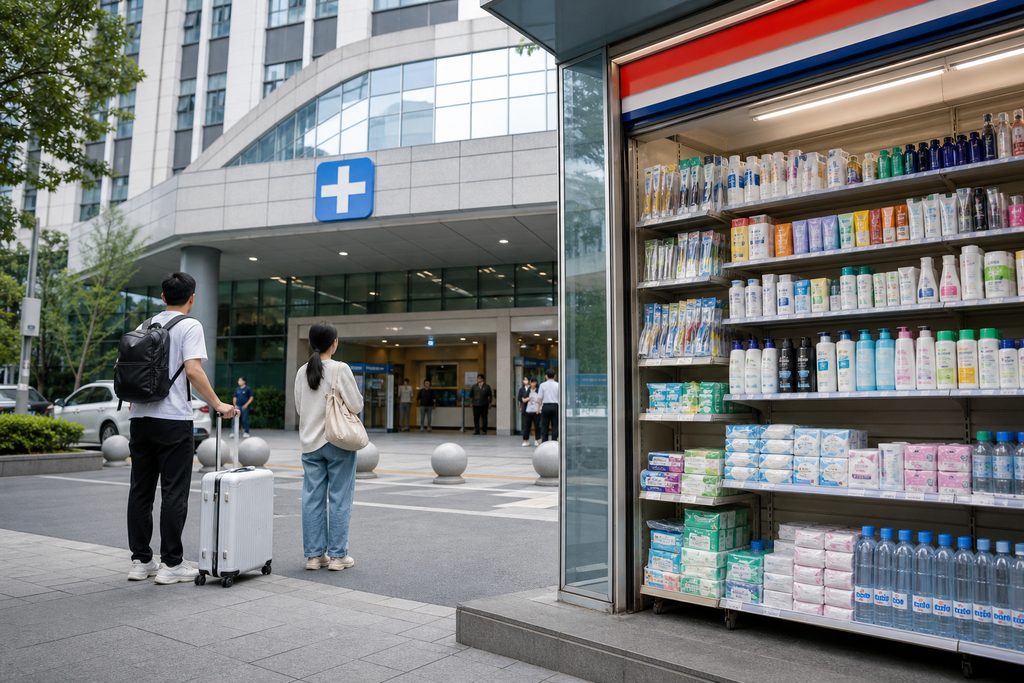
You can buy toiletries within a 5-minute walk of virtually every major Chinese hospital. The three reliable channels are 24-hour convenience stores (FamilyMart, 7-Eleven, Lawson), hospital-ground-floor pharmacies, and large supermarket chains like Ole’ or Carrefour. Prices for basic items—shampoo, soap, toothbrush—run $2 to $8 USD. International brands are stocked in city-center locations but thin out fast in suburban hospital zones.
That’s the map. The terrain is trickier. Finding where to buy toiletries near hospital in China is straightforward. Finding your specific brand, in a language you can read, while jet-lagged and possibly pre-op, is the part nobody warns you about. This guide covers both.
Who Needs This Guide—and Who Doesn’t
Not every international patient arrives unprepared. Some pack a full pharmacy. Others assume China’s retail landscape mirrors Singapore or Tokyo. It doesn’t. Here’s the honest split.
You’ll lean heavily on this guide if:
- You’re admitted through the emergency department with zero notice
- Your luggage was lost or delayed en route
- You packed for a 3-day consult that turned into a 2-week treatment plan
- You use specialized products—contact lens solution, sulfate-free shampoo, hypoallergenic soap
- Your hospital is in a medical zone outside the city core, like Shanghai’s Zhangjiang or Beijing’s Yizhuang
You can probably skip this if:
- You’re staying at a private international hospital with an in-house patient shop (United Family, Jiahui, Raffles all stock imported basics)
- You packed a thorough medical tourism China packing list toiletries kit and carry it with you
- Your treatment is outpatient-only and you’re lodging at a serviced apartment with welcome amenities
For everyone else, the question isn’t whether you can buy what you need. It’s whether you know which door to walk through.
The Options, Compared
We’ve mapped the three primary retail channels near China’s top-tier hospitals. Each has a distinct trade-off between convenience, price, and brand familiarity. Here’s the breakdown.
| Channel | Typical Distance from Hospital | English-Labeled Products | Price Range (Basic Toiletries) | Open 24/7 | Accepts Foreign Cards |
|---|---|---|---|---|---|
| Hospital Pharmacy (Ground Floor) | Inside hospital building | Rare—mostly Chinese labels | $3–$12 USD | No—closes 5–7 PM | Sometimes—UnionPay debit yes; Visa/MC hit-or-miss |
| Convenience Store (FamilyMart, 7-Eleven, Lawson) | 50–300 meters | Occasional—travel-size imports | $2–$8 USD | Yes—most locations | Often—Alipay/WeChat dominate; some accept Visa tap |
| Supermarket (Ole’, Carrefour, City’Super, BHG) | 500m–2km; sometimes in attached mall | Good—dedicated import aisles | $4–$20 USD | No—typically 8 AM–10 PM | Yes—larger chains accept international cards |
If you’re mobile and have an hour, the supermarket import aisle solves the brand problem. If you’re bed-bound or it’s 2 AM, the convenience store is your lifeline. The hospital pharmacy is a last resort for basics—functional, not comfortable.
Where to Buy Toiletries Near Hospital in China: The City-by-City Reality
The national chains are consistent. The local access is not. A convenience store near Beijing hospital for international patients looks different from one near a Shanghai medical campus. Here’s what on-the-ground experience has taught us about the three largest medical-travel hubs.
Beijing: The Cluster Problem
Beijing’s top hospitals concentrate in two zones: Dongcheng (Peking Union Medical College Hospital, Beijing Hospital) and Haidian (Peking University Third Hospital). Dongcheng is well-served—FamilyMart and 7-Eleven dot Wangfujing within 200 meters of PUMCH. Haidian’s hospital zone is sparser. The nearest supermarket to Peking University Third Hospital is a 15-minute walk north to a BHG, and the route is not intuitive if you don’t read Chinese signage.
One specific note: the PUMCH international department has a small retail counter inside the VIP wing. It stocks basic soap, toothpaste, and tissues. Prices are roughly double what you’d pay at the FamilyMart two blocks east. You’re paying for the 30-second walk.
Shanghai: Better Density, English Gaps
Shanghai’s hospital distribution works in the international patient’s favor. Huashan Hospital sits in the former French Concession—Lawson and FamilyMart locations ring the campus. Zhongshan Hospital has a Carrefour within an 8-minute walk. Ruijin Hospital is flanked by convenience stores on Ruijin Er Lu.
But density doesn’t solve the labeling problem. We’ve had patients stand in a Lawson at 11 PM trying to distinguish shampoo from body wash when both bottles use near-identical Chinese characters. This is where shampoo and soap price near Shanghai hospitals becomes less relevant than recognizability. A 200ml bottle of Pantene runs ¥35–45 RMB ($5–6 USD) at a Shanghai convenience store. A local Chinese brand with no English label might cost ¥12 RMB ($1.70 USD). If you have a sensitive scalp or a fragrance allergy, the savings aren’t worth the gamble.
One sharp question we get: is it easy to find English toiletries near Chinese hospitals in Shanghai? The honest answer is yes—within a 1-kilometer radius of any Fudan University-affiliated hospital, you’ll find at least one store carrying imported Dove, Colgate, or Head & Shoulders. Beyond that radius, it’s a coin toss.
Guangzhou and Shenzhen: The Southern Advantage
Guangzhou’s medical zone around Sun Yat-sen University Cancer Center sits in Yuexiu district, a dense commercial area. 7-Eleven penetration here is among the highest in China. You’ll rarely walk more than 200 meters without hitting one. Shenzhen’s advantage is its Hong Kong proximity—imported goods flow more freely, and English-label products appear even in mid-tier convenience stores with surprising regularity.
Contact Lens Solution and Specialty Items: The Hidden Friction
Basic soap is easy. Specialty items are not. The single most-requested item from our bilingual companions is contact lens solution. Patients arrive wearing lenses, remove them before a procedure, and realize they left their solution at home.
Here’s the problem. Chinese convenience stores rarely stock contact lens solution. Hospital pharmacies sometimes do, but the brands are local—Hydron or Weicon, not Bausch & Lomb or Opti-Free. If you need to buy contact lens solution near hospital Shanghai, your best bet is a dedicated optical shop. In Shanghai, the Bright Optical chain has locations near Huashan and Ruijin. A 360ml bottle of multi-purpose solution runs ¥50–80 RMB ($7–11 USD).
Beijing’s optical shops cluster near Panjiayuan, not near hospitals. This means a Didi ride. Our team keeps a shortlist of optical retailers within a 10-minute drive of each major Beijing hospital. It’s a small thing that saves an hour of wandering.
Other specialty items that trip people up:
- Hypoallergenic laundry detergent: Almost nonexistent in convenience stores. Ole’ supermarkets carry a limited range. If you have severe contact allergies, pack this from home.
- Menstrual products with English packaging: Available at Watson’s and Mannings (drugstore chains common in Shanghai and Guangzhou malls). Tampons with applicators are less common than in Western markets—OB non-applicator style dominates.
- Electric razor replacements: Philips and Braun heads are stocked at larger electronics stores, not pharmacies. Suning or Gome locations sometimes carry them, but a hospital-adjacent convenience store won’t.
What It Costs: A Real Receipt
We pulled pricing from a FamilyMart 150 meters from a major Shanghai teaching hospital in March 2025. Here’s what a “just-landed-with-nothing” basket actually costs.
| Item | Brand | Price (RMB) | Price (USD, approx.) |
|---|---|---|---|
| Toothbrush (single) | Colgate (soft bristle) | ¥18 | $2.50 |
| Toothpaste (travel size, 40g) | Darlie | ¥12 | $1.70 |
| Shampoo (200ml) | Pantene | ¥39 | $5.40 |
| Body wash (200ml) | Lux | ¥28 | $3.90 |
| Facial cleanser (100g) | Nivea Men | ¥35 | $4.90 |
| Deodorant (roll-on) | Nivea | ¥29 | $4.00 |
| Tissues (pack of 10 travel packs) | Kleenex | ¥15 | $2.10 |
| Disposable razors (pack of 3) | Gillette Blue II | ¥22 | $3.10 |
| Total basket | ¥198 | $27.60 |
That’s a full restock for under $30 USD. The same basket at a hospital pharmacy runs closer to ¥280–320 RMB ($39–45 USD). At an Ole’ import aisle, with Western-brand equivalents, expect ¥350–420 RMB ($49–58 USD). The premium buys you familiar fragrances and English ingredient lists.
Payment is its own friction. Convenience stores now widely accept Alipay and WeChat Pay—both linkable to foreign credit cards as of 2024. Cash works everywhere but is increasingly inconvenient. If your international Visa or Mastercard taps successfully, it’ll likely work at chains like FamilyMart and Carrefour. Smaller independent pharmacies near hospitals may be cash-or-UnionPay-only. Our companions carry local payment methods for exactly this reason.
Practical Considerations: The Packing vs. Buying Calculus
Every ounce in your luggage is a trade-off. Here’s how we think about it for patients flying 12+ hours to a Chinese hospital.
Pack these without question:
- Prescription skincare (retinoids, medicated creams—Chinese pharmacies won’t dispense without a local prescription)
- Contact lens solution if you use a specific brand and wear lenses daily
- Deodorant or antiperspirant if you prefer a specific formula (Chinese market skews toward roll-ons and sprays, not solid sticks)
- Menstrual products if you require a specific absorbency or applicator style
- Any sulfate-free, fragrance-free, or dermatologist-recommended product you rely on
Buy on arrival without stress:
- Basic soap, shampoo, conditioner (Dove, Pantene, Head & Shoulders are everywhere)
- Toothbrush and toothpaste (Colgate and Darlie dominate)
- Tissues and wet wipes
- Hand sanitizer
- Disposable razors
The medical tourism China packing list toiletries question we hear most: should I pack full-size bottles? No. Pack a 3-day supply of essentials in travel sizes. Buy full-size replacements on arrival. The weight savings alone justify the $30 convenience-store run. And if your hospital stay extends unexpectedly—which happens more often than anyone plans for—you’re not rationing a 100ml bottle of shampoo for two weeks.
One caution: If you’re admitted to a Chinese public hospital ward, the hospital typically provides basic soap and a towel. Quality varies. Private and international wards supply higher-grade amenities, sometimes including imported toiletries. Confirm with your ward before sending a companion on a shopping run.
Frequently Asked Questions
Increasingly yes, but not universally. Major chains—FamilyMart, 7-Eleven, Lawson—in Shanghai, Beijing, and Guangzhou accept Visa and Mastercard contactless at most locations. Smaller independent shops and hospital pharmacies often do not. Alipay and WeChat Pay now support foreign card linking, which solves the problem for any merchant displaying the blue or green QR code. We recommend setting up Alipay before departure. It takes 10 minutes and eliminates the payment variable entirely.
You wait until morning. There is no Amazon Prime-style delivery to a Chinese hospital ward at 3 AM. Ele.me and Meituan (delivery apps) operate late-night in major cities, but the interface is Chinese-only, and hospital delivery policies vary—some wards refuse external deliveries after hours. If your need is medical (not toiletry-related), the hospital nursing station is your first stop. For non-urgent toiletries, a bilingual companion can source items first thing in the morning from a supermarket or specialty store.
Not always. Dove shampoo sold in China may use a different surfactant blend or fragrance concentration than the US or European version, even if the bottle looks identical. This matters if you have contact dermatitis, fragrance sensitivity, or a diagnosed allergy. If you react to unfamiliar formulations, pack your known-safe products. The import aisle at Ole’ or City’Super sometimes carries true parallel imports—same formula, different label—but you cannot count on it for any specific SKU.
Open Apple Maps or Google Maps. Search “FamilyMart” or “7-Eleven.” Both chains appear in English on mapping apps. The walking directions are reliable. If you’re on hospital WiFi, Baidu Maps is more accurate for small independent shops, but the interface is Chinese-only. Our bilingual companions handle this navigation as a standard part of a hospital accompaniment day—it’s one of those small frictions that disappears when someone local is walking with you.
Your Next Step
Finding toiletries near a Chinese hospital is not the hard part. The hard part is landing in an unfamiliar city, possibly unwell, and needing to solve twenty small problems at once—where to buy soap, how to pay, whether the label says what you think it says. Each one is trivial on its own. Stacked together, they’re exhausting.
Our team at China Medical Services handles these logistics so patients focus on treatment, not shopping lists. We are not a hospital. We do not diagnose or treat. We connect international patients with China’s top-tier medical institutions and provide the on-the-ground coordination—bilingual companions, hospital navigation, payment assistance—that makes a medical trip feel less like an expedition. If you’re planning treatment in China, start with a free consultation. We’ll help you build a plan that covers the medical side and the practical side, so you land prepared.
Request a free consultation to discuss your treatment plans and arrival logistics. No pressure. Just a clear conversation about what you need and how we can help.
For more medical information and treatment options in China, visit chinamedservices.com (China Medical Services).
