Medical Tourism in China: Tier 1 vs Tier 2 Cities Compared
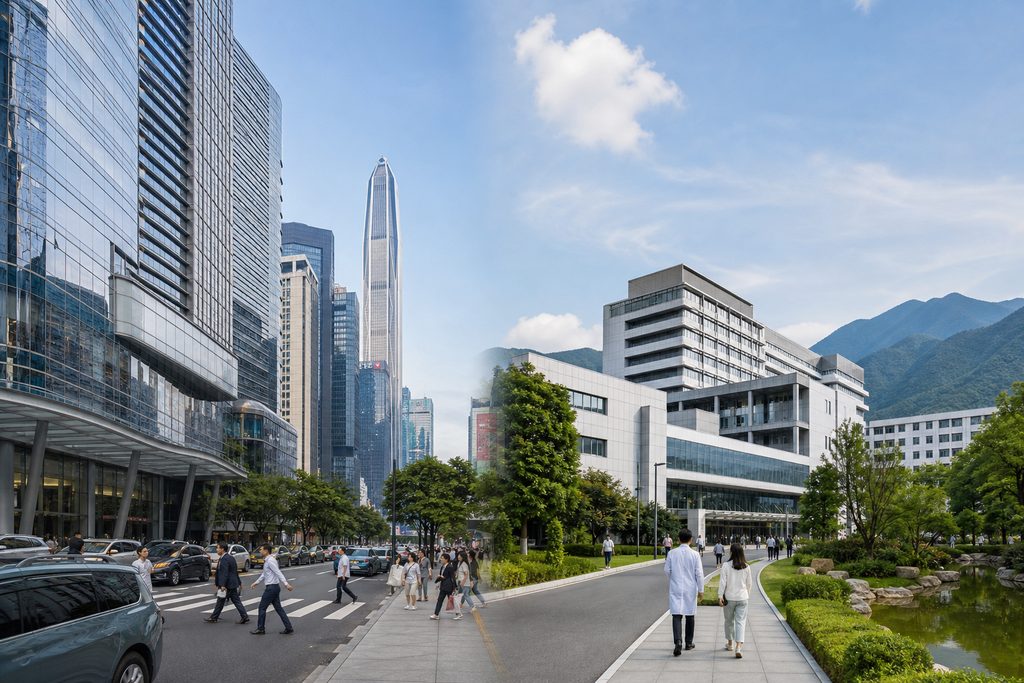
Medical Tourism in China: Tier 1 vs Tier 2 Cities Compared
When 54-year-old David from Portland was told he needed a complex spinal fusion, his first thought wasn’t China. It was the $180,000 quote from his local hospital. His second thought, three weeks later, was a spreadsheet comparing Beijing, Shanghai, and Chengdu. He had no idea that the city he chose would swing his total medical tourism China cost by tens of thousands of dollars — and change how easy his entire trip would be.
Most international patients fixate on hospital rankings. That’s understandable. But the city tier you pick shapes three things rankings can’t tell you: price, waiting time, and how much English you’ll hear outside the hospital gates.
Tier 1 vs Tier 2 Cities China Hospitals: The Short Answer
Tier 1 cities — Beijing, Shanghai, Guangzhou, Shenzhen — hold the deepest concentration of top-ranked hospitals and the most English-capable international departments. Tier 2 cities like Chengdu, Wuhan, Hangzhou, and Xi’an often deliver the same specialist quality at 15–30% lower cost, with shorter queues but thinner English support.
Here’s the catch. “Tier 2” doesn’t mean second-rate medicine. West China Hospital in Chengdu is one of the largest and most respected academic medical centers in the country. The tier label describes the city’s economic scale, not the hospital’s skill.
Who This Is Right For — and Who It Isn’t
Medical travel to China suits patients facing long waits, unaffordable quotes, or procedures their home system rations. It does not suit everyone.
Typically a good fit:
- Patients quoted $80,000+ at home for cardiac, orthopedic, or oncologic surgery
- People with a clear diagnosis and complete imaging already in hand
- Those willing to travel with a companion, or to pay for bilingual support
- Patients whose condition is stable enough for a 10–14 day trip
Probably not a good fit:
- Anyone with an unstable, acute, or life-threatening emergency — go to the nearest ER
- Patients who cannot obtain visa documentation in time for urgent care
- Those expecting Western-style hotel-like hospitals at public-hospital prices
- People who need a legal guarantee of outcome. No hospital anywhere offers that
The Options, Compared
Below is a realistic comparison across city tiers and hospital types. All figures are ranges and vary by hospital and case complexity.
| Factor | Tier 1 — Public Top Hospital | Tier 1 — Private International | Tier 2 — Public Top Hospital |
|---|---|---|---|
| Example cities | Beijing, Shanghai, Guangzhou | Beijing, Shanghai | Chengdu, Wuhan, Hangzhou |
| English support | International dept. only | Full, staff-wide | Limited; interpreter needed |
| Cardiac bypass (typical range) | $12,000–20,000 | $35,000–60,000 | $10,000–17,000 |
| Waiting time for surgery | Weeks to months via standard queue | Days to weeks | Often shorter than Tier 1 |
| Insurance billing | Pay upfront, claim later | Direct billing common | Pay upfront, claim later |
| International flight access | Direct from most hubs | Direct from most hubs | Often one connection |
| Companion experience | Dense, English-friendly hotels | Western-style amenities | Lower cost, less English |
Which column fits you? If budget is the binding constraint and you have a straightforward surgical need, Tier 2 public offers the best value. If you want an English-speaking doctor and direct insurance billing, private international wins. Tier 1 public sits in the middle — elite specialists, moderate prices, and the busiest corridors you’ll ever walk through.
Why Tier 1 Still Dominates the Rankings
The Fudan Hospital Rankings place 21 of China’s top 100 hospitals in Beijing, 18 in Shanghai, and 10 in Guangzhou. That’s roughly half the country’s elite institutions in three cities. For rare cancers, complex pediatric cardiac surgery, or multi-organ involvement, that concentration matters enormously.
Our database covers 340+ top-ranked hospitals across 37 cities — the top 5% of China’s 35,000+ hospitals, filtered by Fudan ranking and JCI accreditation. You can browse them grouped by city on our ranked hospital directory.
But here’s what the rankings don’t capture. A Tier 2 hospital may rank lower nationally while still holding a top-10 specialty position. Fuwai Hospital in Beijing performs more cardiac surgeries annually than any center in the world — over 14,000 procedures. Yet for a routine hip replacement, a strong regional hospital in Chengdu may serve you just as well at a fraction of the hassle.
What It Costs — and What Drives the Difference
Cost is where the tier decision pays off or punishes you. Same surgery, three cities, three price tags.
- Cardiac bypass: $12,000–20,000 in Tier 1 public; $10,000–17,000 in Tier 2; $120,000+ in the US
- Knee replacement: $8,000–15,000 in Tier 1; $7,000–12,000 in Tier 2; $35,000–60,000 in the US
- IVF cycle: $4,000–9,000 depending on city and protocol; $12,000–25,000 in the US
Three factors move these numbers. Hospital tier (public vs. private international) matters most — private international typically runs 1.5–2x the public rate. City tier adds another 15–30%. Case complexity, implant choice, and length of stay account for the rest.
One structural point international patients rarely anticipate: public hospitals require upfront payment, and you claim reimbursement from your insurer afterward. Private international hospitals in Shanghai and Beijing often bill your insurer directly.
Practical Considerations: Visas, Records, and Language
The logistics differ by tier more than most patients expect.
Visa. Foreign patients coming for treatment use the S2 visa, annotated for medical purposes. Stays beyond 180 days require S1. Accompanying family members apply for S2 as well. Note that the M visa is for commercial and trade activity — it is not a medical visa, despite what some forums claim. Always confirm current requirements with your nearest Chinese embassy or consulate, since documentation rules change.
Medical records. Send imaging, pathology, and lab results ahead of travel. A written second opinion from a Chinese specialist — typically $300–500 — lets you confirm feasibility before booking flights. That single step prevents the most expensive mistake in medical travel: arriving to discover you’re not a candidate.
Language. China’s top hospitals see tens of thousands of outpatients daily. Signage is in Chinese. Appointment systems are in Chinese. This is the single biggest practical gap, and it’s why bilingual medical companions exist — from $300 per day for queuing, registration, payment, wayfinding, and translation.
Booking reality. Standard public outpatient slots generally cannot be reserved from abroad in advance. Surgery follows an in-person consultation. To lock in a specialist and a date ahead of arrival, patients typically route through a hospital’s international or VIP department, which costs roughly 1.5–2x the standard channel.
If you’re planning to book medical treatment in Beijing China, build in at least one buffer day for registration before any consultation.
Frequently Asked Questions
China’s top-ranked hospitals perform high surgical volumes with outcomes reported in international literature, and many hold JCI accreditation. Safety depends far more on the specific hospital and surgeon than on the country. That said, standards vary widely outside the top tier — which is exactly why filtering by Fudan ranking and JCI status matters.
A single IVF cycle typically runs $4,000–9,000, with Tier 2 cities often at the lower end. Medication protocols, number of cycles, and whether you use a public or private international clinic drive most of the variance. Regulations on eligibility for foreign patients should be confirmed with the specific hospital before you plan travel.
This is the question patients ask last and worry about most. Request complete operative notes, imaging, and discharge summaries in English before you leave. Share them with your home physician. Complications that emerge later are managed locally in most cases. For anything requiring revision surgery, you’d need a fresh evaluation — there is no automatic pathway back.
Sometimes, yes. If your procedure is common and your diagnosis is settled, a strong Tier 2 hospital can save 15–30% with shorter queues. If your case is rare, complex, or involves multiple specialties, the concentration of expertise in Beijing or Shanghai usually justifies the premium.
Your Next Step
The tier you choose is a trade-off, not a verdict. Tier 1 buys you depth of expertise and English infrastructure. Tier 2 buys you value and speed. The right answer depends on your diagnosis, your budget, and how much support you’ll need outside the hospital walls.
We’re China Medical Services — a coordination team, not a hospital. We don’t diagnose or treat. We help you compare options, obtain a written second opinion, and navigate the practical side of treatment in China. When you’re ready, you can start with a free consultation and we’ll walk through your specific case.
This article is for general information only and is not medical advice. Treatment decisions should always be made with a qualified physician who has reviewed your individual case.
For more medical information and treatment options in China, visit chinamedservices.com (China Medical Services).
