Deep Brain Stimulation Cost in China: 2026 Price Guide for Patients
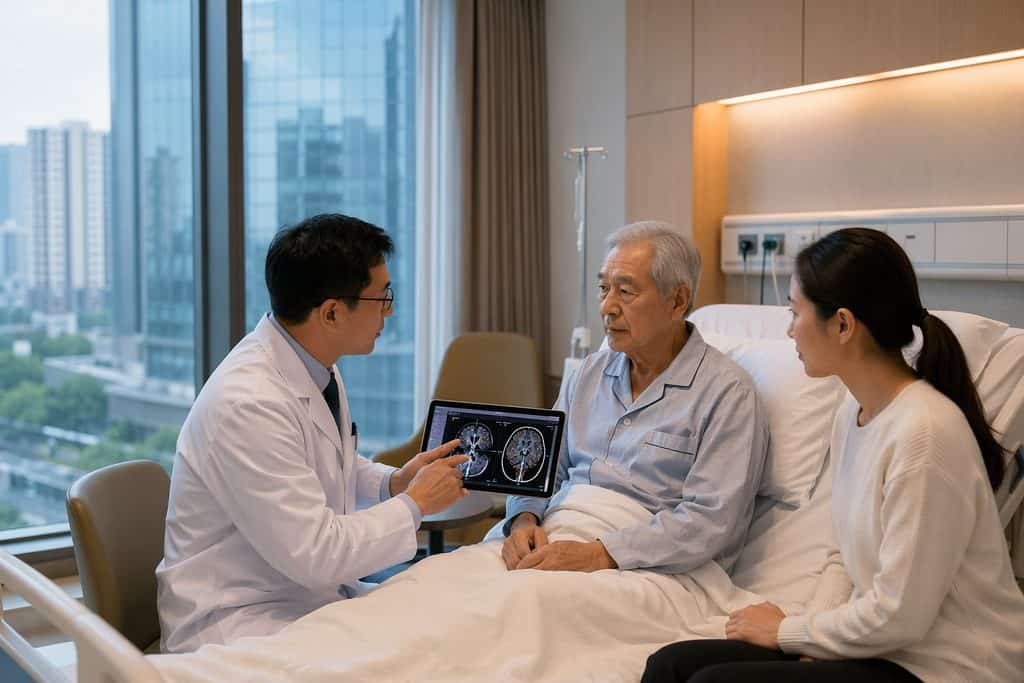
Deep Brain Stimulation Cost in China: A Complete 2026 Guide for International Patients
In the United States, a bilateral deep brain stimulation (DBS) implant typically bills out between $100,000 and $200,000 before insurance negotiations. In Germany, the same procedure often lands near €60,000. In China, the deep brain stimulation cost generally falls between $25,000 and $45,000 at top-tier public hospitals — and that figure usually includes the device itself. That gap is why patients from Canada, the UK, Australia, and the Middle East are increasingly asking us how to evaluate Chinese neurosurgery centers.
But the number alone tells you very little. What matters is what sits inside that range: which pulse generator, whether the electrodes are directional, how many programming sessions are bundled in, and whether you are paying public-hospital rates or international-department rates. This guide breaks all of it down.
Deep Brain Stimulation Cost in China: The Short Answer
Expect $25,000 to $45,000 for a complete bilateral DBS system and implantation at a major Chinese public hospital. A single-sided procedure, which is less common for Parkinson’s disease but used in some tremor and dystonia cases, can come in closer to $18,000–$25,000. The rechargeable, MRI-compatible generators sit at the top of the range; older non-rechargeable units sit lower.
Three variables move the price most. The device brand (Medtronic, Abbott/St. Jude, and Beijing PINS all operate in China, and domestic devices cost meaningfully less). The hospital tier — a Fudan-ranked neurosurgery department charges more than a provincial center. And whether you go through the standard public pathway or the international/VIP channel, which typically runs 1.5 to 2 times the standard rate but includes English-speaking coordinators and shorter queues.
Key takeaway: The headline number people search for — deep brain stimulation cost China — is real, but the device choice and hospital tier matter more than the country-to-country gap. Ask for a quote that itemizes the generator model before you compare anything.
Who This Is Right For — and Who It Isn’t
DBS is not a general-purpose treatment. It is a surgical intervention for specific, medication-refractory neurological conditions, and candidacy is determined by a neurologist and a functional neurosurgeon working together.
Patients who are typically reasonable candidates:
- Parkinson’s disease with motor fluctuations or tremor that levodopa no longer controls well
- Essential tremor that interferes with daily function despite medication
- Primary dystonia, including cervical dystonia and generalized forms
- Obsessive-compulsive disorder in narrowly selected, treatment-resistant cases (approved indication in some jurisdictions)
- Patients with a clear diagnosis, stable cognition, and realistic expectations about what DBS does and does not fix
Patients who should not pursue DBS in China, or anywhere:
- Anyone with significant cognitive decline or untreated dementia — DBS can worsen confusion
- Active systemic infection, uncontrolled bleeding disorders, or a pacemaker/defibrillator that cannot be safely managed
- Depression or psychiatric instability that has not been evaluated and stabilized
- Patients whose symptoms are well controlled on medication — the risk-benefit math does not favor surgery
- Anyone seeking DBS as a treatment for a condition where it has no established evidence base
If you fall into the second list, no price advantage justifies the trip. A good hospital in China will tell you this during remote evaluation, and so will we.
The Options, Compared
Below is a realistic comparison of what a self-pay international patient faces across four common destinations. Figures are indicative ranges for a full bilateral system including device, surgery, and initial programming. They vary by hospital and case complexity.
| Destination | Typical Self-Pay Range (USD) | Device Included? | Wait Time to Surgery | English Support |
|---|---|---|---|---|
| United States | $100,000 – $200,000 | Yes | 1–6 months | Native |
| Germany | $55,000 – $90,000 | Yes | 1–3 months | Widely available |
| China — top public hospital | $25,000 – $45,000 | Yes | 2–8 weeks after evaluation | Via international dept. |
| China — private international hospital | $45,000 – $75,000 | Yes | 2–6 weeks | Full English service |
Which column suits you? If cost is the dominant constraint and you can navigate a large public hospital with bilingual support, the top public tier delivers the strongest value. If you want a Western-style experience with direct insurance billing, the private international tier is the better fit — you pay for that comfort, and it is still well under US pricing. Patients who need a specific device model should confirm availability before committing, because not every hospital stocks every brand.
Is Deep Brain Stimulation Safe in China?
This is the question that follows the price question, and it deserves a straight answer. China’s leading neurosurgery departments perform DBS volumes that rank among the highest in the world, and several have published long-term outcome data in international peer-reviewed journals. The procedure itself is standardized globally: electrode placement, intraoperative testing, and post-operative programming follow the same principles whether you are in Shanghai, Toronto, or Heidelberg.
Safety, in practice, depends on three things. First, surgical volume — a center that performs hundreds of DBS implants per year has a different complication profile than one that does a handful. Second, patient selection — the best centers decline poor candidates. Third, follow-up programming, which is where many international patients underestimate the commitment: DBS requires repeated adjustments over months, and those adjustments need either a return trip or a local neurologist willing to take over.
Practical tip: When evaluating a center, ask two questions directly: how many DBS implants does the surgical team perform annually, and who handles programming after the patient returns home? A hospital that cannot answer both clearly is not the right one for an international patient.
You can review neurosurgery rankings by hospital on our specialty rankings page, which lists the top centers across 45 disciplines including neurology and neurosurgery.
How Much Does DBS Surgery Cost in Shanghai vs. Other Cities?
Not in the way most people imagine. Standard public hospital outpatient registration cannot be reserved from abroad in advance, and surgery is scheduled only after an in-person consultation. What can be arranged remotely is a written second opinion or a video consultation with the specialty team, followed by appointment coordination through the hospital’s international or VIP channel. That channel provides senior specialists and English-language support, and typically costs 1.5 to 2 times the standard rate. Final admission always remains subject to hospital rules.
Shanghai’s leading public hospitals generally quote $30,000 to $45,000 for a complete bilateral system, against $100,000 to $200,000 in the US. The saving is real, but confirm what the quote includes — device model, programming sessions, and length of stay vary between hospitals and can shift the total by $10,000 or more.
Initial programming during your hospital stay is normally included. Ongoing adjustments after you return home are usually not, and they require either a return visit or a local neurologist who agrees to manage the device. Arrange this before you travel — it is the most common gap in overseas DBS planning.
There is no single answer, because “best” depends on your diagnosis, device preference, and city. China’s Fudan rankings list top centers by specialty rather than a single overall number, and several cities — Beijing, Shanghai, Guangzhou, Chengdu — host neurosurgery departments with strong DBS programs. Review the specialty listings and compare two or three centers on volume and device availability rather than reputation alone.
Your Next Step
The core message is simple: the deep brain stimulation cost in China is genuinely lower — often a third to a half of US pricing — but the decision should rest on surgical volume, device choice, and a realistic follow-up plan, not on the price tag alone. We are a medical coordination service, not a hospital. We do not diagnose, we do not perform surgery, and we do not promise outcomes. What we do is help you gather your records, obtain a written second opinion or video consultation from a relevant Chinese specialty, and coordinate appointments and bilingual accompaniment if you decide to travel. If you would like to talk through whether DBS in China makes sense for your situation, start with a free consultation — no pressure, and no obligation.
This article is for general information only and does not constitute medical advice. Treatment decisions should be made with qualified clinicians who have reviewed your individual case. Costs, visa rules, and hospital policies change; confirm current details with the relevant hospital and your nearest Chinese embassy or consulate.
Frequently Asked Questions
Yes. The hospitals used for international patients are JCI-accredited and follow the same international safety standards as top hospitals in the US and Europe. Surgical teams perform high volumes of procedures — often more than their Western counterparts — which studies show leads to better outcomes.
Costs vary by procedure and hospital, but international patients typically save 40-80% compared to US prices — even when factoring in travel and accommodation. A consultation with our team will give you an exact, all-inclusive quote with no hidden fees.
Send us your existing medical reports to get started. We handle everything from hospital selection and appointment scheduling to visa assistance and post-operative recovery planning. Your medical records are reviewed by the specialist before you even book a flight.
For more medical information and treatment options in China, visit chinamedservices.com (China Medical Services).
