Dental Aesthetics in China: What Visitors Should Know Before Booking
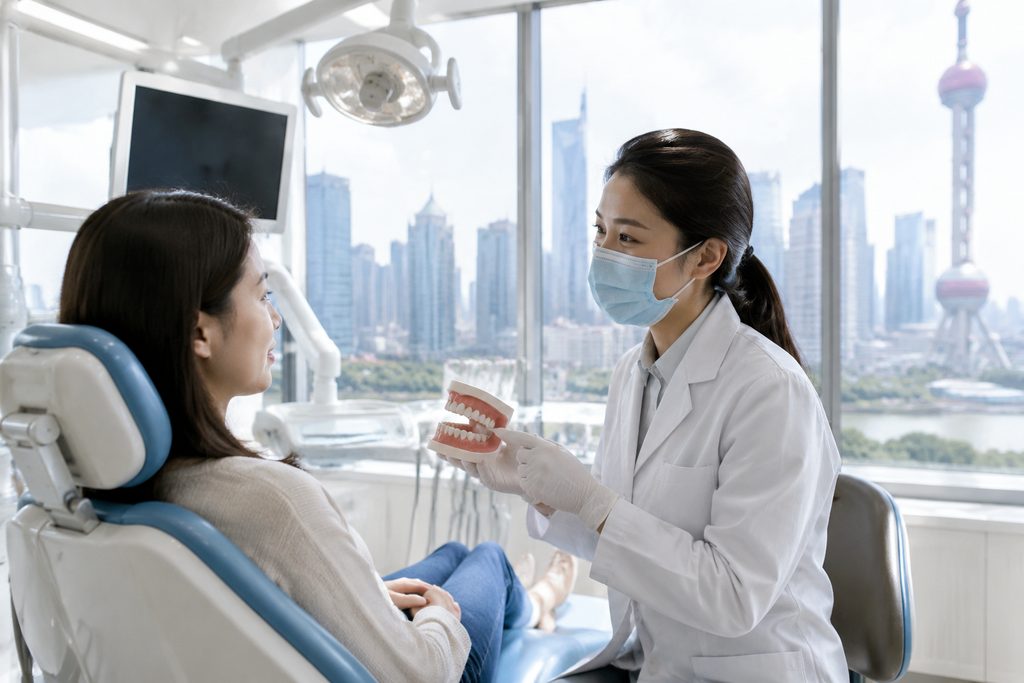
Dental Aesthetics in China: A Visitor’s Guide
You’ve probably heard that dental work abroad means cutting corners — unlicensed clinics, bargain materials, a smile you’ll regret. For China, that reputation is outdated and mostly wrong. When people ask about dental veneers cost China clinics quote, the honest answer is that a full smile makeover at a top-tier Chinese hospital can run $2,000–$5,000 less than the same work in the United States, performed by prosthodontists trained in the same techniques. The catch isn’t quality. It’s navigation.
We help international patients find their way through China’s medical system. Here’s what we’ve learned about dental aesthetics here — the real numbers, the real risks, and the steps that actually matter.
How This Actually Works, Step by Step
Dental tourism in China doesn’t start at the airport. It starts with records.
Step one: You send us your existing dental imaging — panoramic X-rays, CBCT scans if you have them, photos of your current smile, and any treatment notes from your dentist at home. If you don’t have recent imaging, we tell you which views the Chinese clinic will need, and your local dentist can usually provide them within a week.
Step two: Those records go to the relevant specialty department at a Chinese hospital — typically prosthodontics or oral implantology. A clinician reviews them and returns a written assessment: what’s feasible, what materials make sense, what the likely timeline looks like, and a cost range. This written second opinion typically runs $300–$500 and is for reference only, not a prescription.
Step three: If you want to hear the recommendation directly, we arrange a video consultation. You explain your goals — natural-looking veneers, a full-arch implant case, whatever it is — and the dental team walks you through options. Video consultations with a standard tertiary hospital international department run $100–$300; top-specialist sessions run $500–$800.
Step four: Once a plan is clear and you agree to it, we coordinate your arrival — appointment scheduling, hospital registration, medical card creation, and bilingual accompaniment. You’ll want someone beside you for the queue, the payment window, and the consent forms. That’s the day rate for a bilingual medical companion, from $300 per day.
One thing to understand about Chinese public hospitals: routine outpatient slots cannot be reserved from overseas. You show up, you take a number, you wait. Surgery gets scheduled only after an in-person consultation. If you want to lock in a senior specialist and English-language service ahead of time, that’s the international or VIP channel — and it costs roughly 1.5 to 2 times the standard rate.
What Dental Work Actually Costs in China
Prices vary by hospital, city, and case complexity, but here’s a realistic range for common aesthetic procedures at reputable Chinese clinics. These are starting points, not quotes.
| Procedure | Typical Range in China (USD) | Typical U.S. Range (USD) |
|---|---|---|
| Porcelain veneer (per tooth) | $300–$700 | $900–$2,500 |
| Zirconia crown (per tooth) | $250–$600 | $800–$2,000 |
| Single dental implant (fixture + abutment + crown) | $800–$2,000 | $3,000–$6,000 |
| Full-arch implant restoration | $8,000–$20,000 | $25,000–$60,000 |
| Professional teeth whitening | $150–$400 | $400–$1,000 |
| Full smile makeover (8–10 veneers) | $2,500–$6,000 | $8,000–$25,000 |
Those numbers explain why medical tourism dental packages China providers advertise so aggressively. A patient needing eight veneers and two implants might spend $4,000 in Shanghai and $18,000 in Los Angeles. That gap pays for a lot of airfare.
But price alone shouldn’t drive the decision. The clinics worth your time are concentrated in major cities with established dental schools and hospital networks. Beijing, Shanghai, Guangzhou, and Chengdu have the deepest benches. If you’re comparing options, our ranked hospital directory lets you filter by city and specialty.
A Realistic Timeline
Dental aesthetics isn’t a one-visit transaction. Veneers and implants require staging. Here’s how the calendar usually looks.
| Stage | Timeframe | What’s Happening |
|---|---|---|
| Records collection | Week 1–2 | You gather X-rays, photos, and notes; we translate them |
| Written review | Week 2–3 | Chinese dental team returns assessment and cost range |
| Video consultation | Week 3–4 | Direct conversation about goals and options |
| Visa application (S2) | Week 3–6 | Processing times vary by consulate; supporting hospital documents required |
| Arrival and in-person exam | Week 6–8 | Final imaging, treatment plan confirmation |
| First treatment session | Days 1–5 after arrival | Preparations, temporaries, or implant placement |
| Healing / lab work | 2 weeks–6 months | Depends on procedure — implants need osseointegration time |
| Final restoration | Second visit or extended stay | Permanent crowns or veneers fitted |
Implant cases almost always require two trips. Veneers can sometimes be completed in one visit if you stay 10–14 days, but rushing the lab work is how people end up with restorations that don’t match. Don’t let anyone promise a full smile makeover in 48 hours.
What Can Go Wrong — and What Happens Then
Honest failure modes matter more than success stories.
Shade mismatch. The most common complaint after veneers. Chinese labs are skilled, but communication gaps about color expectations are real. Fix: bring photos of smiles you like, and insist on a try-in before permanent cementing.
Implant rejection or infection. Rare but possible anywhere. Chinese hospitals handle complications competently, but follow-up care after you fly home is on you. Get clear documentation of the implant system used so your dentist at home can service it.
Language breakdown during treatment. This is the big one. Chinese public hospitals are enormous — some see over 10,000 outpatients daily. Signage, consent forms, and payment systems are in Chinese. Without a bilingual companion, simple tasks become exhausting. That’s not a sales pitch; it’s a logistical fact.
Warranty gaps. A crown placed in Shanghai won’t be re-done for free in Chicago. Ask upfront what the clinic’s remake policy is and get it in writing.
How to Judge Whether a Clinic Is Worth Your Trust
Not every clinic advertising to foreigners is equal. Here’s what separates the good ones.
Look for hospital affiliation. The strongest dental departments sit inside large tertiary hospitals — the teaching hospitals tied to medical universities. These are the same institutions that appear in China’s Fudan rankings, and they operate under national clinical standards. Standalone “dental tourism” clinics vary wildly in quality.
Check for international accreditation. JCI certification signals that a facility meets global patient-safety benchmarks. Many private international hospitals in China hold it, and some public hospital international departments do too.
Ask who performs the work. A prosthodontist with 15 years of implant experience is not the same as a general dentist doing cosmetic cases on the side. Request credentials, and don’t accept vague answers.
On the question of is dental work in China safe — the honest answer is that safety tracks with facility quality, not geography. A JCI-accredited hospital in Shanghai meets standards comparable to Western clinics. A back-alley clinic in any country does not. Your job is to choose well.
If you’re comparing cities, Shanghai has the densest concentration of English-capable dental providers. For a deeper look at what’s available there, see our Shanghai hospital guide.
Practical Considerations: Records, Visas, Payment, and Follow-Up
Records. Bring physical copies of everything. Digital files sometimes don’t transfer cleanly across systems, and Chinese hospitals may want their own imaging done on arrival.
Visa. Medical treatment in China requires an S2 visa with a notation for medical purposes. Stays over 180 days use S1. Accompanying family members also apply for S2. The M visa is for commercial and trade activities only — it is not a medical visa. Requirements shift, so confirm current rules with your nearest Chinese consulate and make sure your hospital invitation letter is in order.
Payment. Public hospitals require prepayment; you’ll seek reimbursement from your insurer afterward. Private international hospitals often bill insurance directly. Budget for the full amount upfront regardless.
Language. Assume you’ll need help. Bilingual medical companions handle registration, queuing, payment, wayfinding, and translation — from $300 per day for a half or full day.
Follow-up at home. Before you leave China, request a complete treatment record: materials used, implant lot numbers, torque values, and radiographs. Your dentist at home will need all of it.
Frequently Asked Questions
Zirconia crowns in Beijing typically run $250–$600 per tooth at reputable hospitals, compared to $800–$2,000 in the U.S. Prices vary by hospital tier and case complexity. International departments charge more but include English-language service.
The strongest implant programs sit within university-affiliated tertiary hospitals and JCI-accredited international facilities. Rather than naming one, we recommend comparing two or three based on your case — full-arch cases and single-tooth replacements call for different expertise. Our team can help you shortlist based on your records.
At accredited hospitals, yes — standards are comparable to Western facilities. The risks concentrate in unregulated clinics and in communication failures during treatment. Choosing a hospital-affiliated provider and bringing a bilingual companion addresses most of the danger.
You can secure a consultation and treatment plan remotely through a written review or video call. The actual surgery gets scheduled after an in-person examination, which is standard practice at Chinese public hospitals. International departments may offer more flexibility on timing.
Legitimate packages are built around named hospitals with verifiable credentials, transparent pricing ranges, and clear statements about what’s included and what isn’t. If a provider promises guaranteed results, exact prices without seeing your records, or a full smile makeover in two days, walk away.
Your Next Step
Dental aesthetics in China can deliver excellent results at a fraction of Western prices — but only when the clinic is right and the logistics are handled. The savings are real. So is the complexity.
We’re China Medical Services. We connect international patients with vetted hospitals, coordinate appointments, and provide bilingual support on the ground. We don’t practice dentistry, and we don’t promise outcomes — we handle the navigation so your clinical team can focus on your smile. If you’d like a no-pressure conversation about your case, start with a free consultation.
This article is for informational purposes only and does not constitute medical advice. Treatment decisions should be made in consultation with a qualified dental professional. Costs cited are estimates and vary by hospital and case complexity.
For more medical information and treatment options in China, visit chinamedservices.com (China Medical Services).
