Guangzhou Women and Children’s Center: A Complete Guide for Families
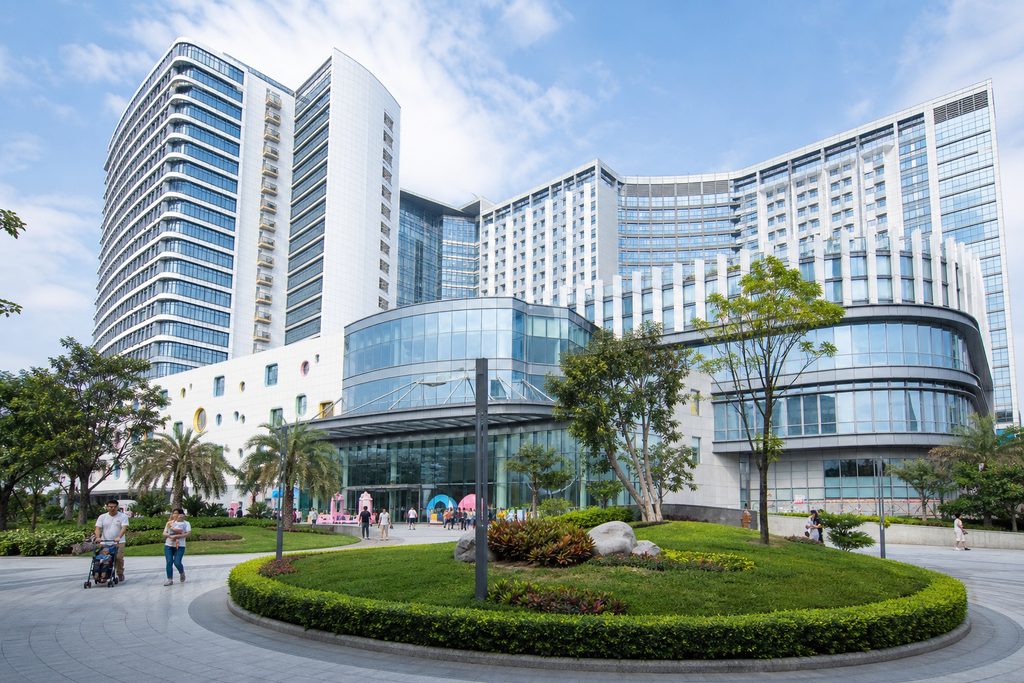
When Sarah’s four-year-old son was diagnosed with a congenital heart defect, her pediatric cardiologist in Portland gave her two options: wait eleven months for a surgical slot, or look overseas. A colleague mentioned Guangzhou. Sarah opened her laptop that night and typed “Guangzhou Women and Children’s Center” into Google — then stared at a page she could barely read, in a language she didn’t speak, with no phone number that worked from the United States. That moment of confusion is exactly why this guide exists.
The Guangzhou Women and Children’s Center cost for most pediatric procedures runs between $4,000 and $18,000 depending on complexity — a fraction of U.S. pricing — but the number alone tells you almost nothing. What matters is how you get in, who sees your child, and what happens after you land. Here’s the honest picture.
What the Guangzhou Women and Children’s Center Actually Is
This is not one building. The Guangzhou Women and Children’s Center operates as a network of affiliated campuses across the city, and it sits among China’s most recognized institutions for pediatric and maternal care. It appears in the Fudan University hospital rankings, which place it in the top tier of Chinese specialty hospitals for pediatrics and obstetrics.
For international families, that ranking matters less than the practical reality: this is a large, busy, Chinese-language public hospital system. Thousands of families pass through its outpatient halls daily. English signage exists in some areas. Fluent English-speaking staff do not, consistently, at every desk.
Who This Is Right For — and Who It Isn’t
Guangzhou makes sense for some families and is genuinely the wrong choice for others. Being clear about that upfront saves everyone time and money.
Typically a good fit:
- Families facing long surgical waitlists at home for procedures with well-established outcomes — certain cardiac repairs, orthopedic corrections, cleft palate repair
- Parents seeking fertility treatment, where China’s reproductive medicine programs are strong and pricing is far below U.S. or U.K. levels
- Families already in Asia, for whom Guangzhou is a short flight and a familiar time zone
- Cases where a written second opinion or video consultation can clarify whether travel is even necessary
Probably not the right fit:
- Acute emergencies. If your child needs surgery this week, do not attempt to arrange international travel — go to the nearest emergency department.
- Rare pediatric cancers or conditions requiring highly individualized multidisciplinary protocols, where continuity of care at home outweighs cost savings
- Families without the budget or flexibility to stay in China for the full treatment and recovery window — often four to eight weeks, sometimes longer
- Anyone expecting a Western-style private hospital experience at public-hospital prices. Those are two different products.
The Options, Compared
Before committing to Guangzhou, it helps to see how the realistic alternatives stack up. The table below reflects typical ranges for moderate-complexity pediatric surgery; your actual figures will vary by hospital and case complexity.
| Option | Typical Cost (USD) | Wait Time | Language Support | Best For |
|---|---|---|---|---|
| Guangzhou Women and Children’s Center — standard channel | $4,000–$12,000 | Days to weeks after in-person consult | Limited; interpreter needed | Cost-sensitive families with time flexibility |
| Same hospital — international/VIP channel | $6,000–$18,000 (1.5–2x standard) | Scheduled in advance | English-speaking coordinators | Families wanting predictability |
| Private international hospital in Guangzhou | $15,000–$40,000+ | Days | Full English, direct insurance billing | Insurance holders, expatriates |
| U.S. pediatric hospital | $80,000–$200,000+ | Weeks to months | Native English | Continuity, insurance coverage |
Which column suits you depends on two variables: how much time you have, and how much you can absorb financially. Families with insurance that travels well should check coverage before assuming China is cheaper out of pocket. Families paying cash almost always find Guangzhou’s top tier dramatically more affordable than a U.S. equivalent.
Is Guangzhou Women and Children’s Center Good for International Patients?
This is the question every parent asks, and the honest answer is: it depends on how you enter the system. The clinical capability is real. The international-patient infrastructure is thinner than at, say, a JCI-accredited private hospital — but it exists, and it works when you use it correctly.
What you get through the international channel: a scheduled appointment rather than a queue, a coordinator who can communicate in English, and faster movement between departments. What you don’t get: a concierge experience, private rooms in every ward, or Western-style bedside communication as a default.
Families who do well here typically arrive with three things — translated medical records, a clear diagnosis question, and a bilingual companion who handles the logistics. That last item is not a luxury in a hospital of this size. It is the difference between a smooth week and a lost one.
How to Book an Appointment at Guangzhou Women and Children’s Center
There are two realistic paths, and they behave very differently.
Path one — the standard public channel. You arrive in Guangzhou, register in person on the day, and take a queue number. For a first consultation this is workable. For surgery, it means a mandatory in-person consultation first, then scheduling. You cannot lock a surgical date from abroad through this route.
Path two — the international/VIP channel. Here you can submit records in advance, receive a scheduled consultation slot, and coordinate surgical planning through the hospital’s international office. Fees run higher. Availability depends on the department and the specific specialist.
For families navigating this for the first time, working through a coordinator who already knows the hospital’s registration system removes most of the friction. Our team at China Medical Services handles exactly this — records translation, appointment coordination through official international channels, and bilingual accompaniment on the day.
Pediatric Surgery Cost in Guangzhou, China — What Drives the Number
Parents searching for pediatric surgery cost in Guangzhou, China usually want a single figure. There isn’t one. Four variables move the price more than anything else.
- Procedure complexity. A simple hernia repair and a complex cardiac correction sit at opposite ends of the range.
- Channel. International/VIP fees run 1.5 to 2 times standard rates. You’re paying for access and language, not better surgery.
- Length of stay. ICU days, ward days, and post-operative monitoring add up quickly.
- Imaging and diagnostics. Often the least predictable line item, especially if the case requires repeat studies.
As a rough benchmark, comparable cardiac bypass surgery at a top Chinese public hospital runs $12,000–$20,000, against $120,000+ in the United States. Pediatric procedures follow a similar ratio. Public hospitals require prepayment, with insurance reimbursement handled afterward — private international hospitals often bill insurers directly.
Fertility Treatment in Guangzhou: A Separate Conversation
Fertility treatment Guangzhou China price is its own search for good reason. China’s reproductive medicine programs are technically strong, and pricing sits well below U.S. and U.K. levels — typically a fraction of what a single IVF cycle costs in Boston or London.
Regulatory rules matter here. Chinese fertility clinics operate under national guidelines that determine who is eligible for which procedures, and documentation requirements are strict. Married couples, in most cases, are the standard patient profile. Single patients and same-sex couples face significant legal restrictions that vary by clinic and change over time.
If fertility care is your reason for looking at Guangzhou, the practical first step is a written second opinion or video consultation with a reproductive medicine specialist — before booking flights. It clarifies eligibility, realistic timelines, and whether your case fits Chinese clinical protocols at all.
Practical Considerations: Visas, Payment, and Follow-Up
Getting the logistics right is what separates a workable trip from a stressful one.
Visa. Foreign patients traveling to China for medical treatment use the S2 visa, with the purpose of visit noted as medical treatment. Accompanying family members apply under the same category. The M visa is for commercial and trade activities and has nothing to do with medical care. Requirements are set by the relevant Chinese embassy or consulate and can change — confirm current documentation before applying. Stays beyond 180 days fall under the S1 category instead.
Payment. Public hospitals require prepayment. International credit cards work in some departments and not others. Bring a backup payment method and confirm the hospital’s accepted methods in advance.
Insurance. Most international policies reimburse after the fact rather than paying the hospital directly. Keep every receipt, discharge summary, and itemized bill.
Follow-up. Before you leave China, request a complete written discharge summary in English, plus imaging on physical media. Your pediatrician at home will need both. Telehealth follow-up with the Chinese team is sometimes possible but not guaranteed.
For families comparing destinations more broadly, our directory of top-ranked Chinese hospitals by city shows how Guangzhou fits into the wider landscape — ten Fudan Top 100 hospitals operate in the city, third only to Beijing and Shanghai.
Frequently Asked Questions
Not through the standard public channel — surgery requires an in-person consultation first. Through the hospital’s international/VIP department, you can often schedule the initial consultation in advance and begin surgical planning from there. No hospital can guarantee a specific surgeon or date before evaluating your child.
Clinically, yes. Logistically, it’s difficult without support. The international channel provides English-speaking coordinators, but day-to-day navigation — registration, payment, pharmacy, imaging — is largely Chinese-language. Most families hire a bilingual medical companion for the duration of their stay.
This is the question worth asking before you book, not after. Chinese public hospitals handle complications within their own system, and your legal recourse as a foreign patient is limited compared to your home country. Travel insurance with medical evacuation coverage is essential, not optional. For complex or high-risk cases, it is entirely reasonable to conclude that staying home is the better decision.
Plan for accommodation for the full treatment window, meals, local transport, a bilingual companion, and airport transfers. Families typically add 20 to 40 percent on top of the quoted medical fee. Our Guangzhou city guide covers the logistics side in more detail.
Your Next Step
The Guangzhou Women and Children’s Center is a genuinely capable institution, and for the right family, it can mean faster surgery at a fraction of Western pricing. It is not a concierge hospital, and it rewards preparation over optimism.
We are China Medical Services — a coordination service, not a hospital. We don’t diagnose, and we don’t promise outcomes. What we do is translate your records, coordinate appointments through official hospital channels, and put a bilingual companion beside you from arrival to discharge. If you’d like to talk through whether Guangzhou fits your child’s case, start with a free consultation. No pressure, no obligation — just a clearer picture before you decide anything.
This article is for general information only and does not constitute medical advice. Treatment decisions should always be made with a qualified physician who has reviewed your specific case.
For more medical information and treatment options in China, visit chinamedservices.com (China Medical Services).
