Medical Treatment in Guiyang China: Guizhou Province Medical Access and Mountain Recovery Experience
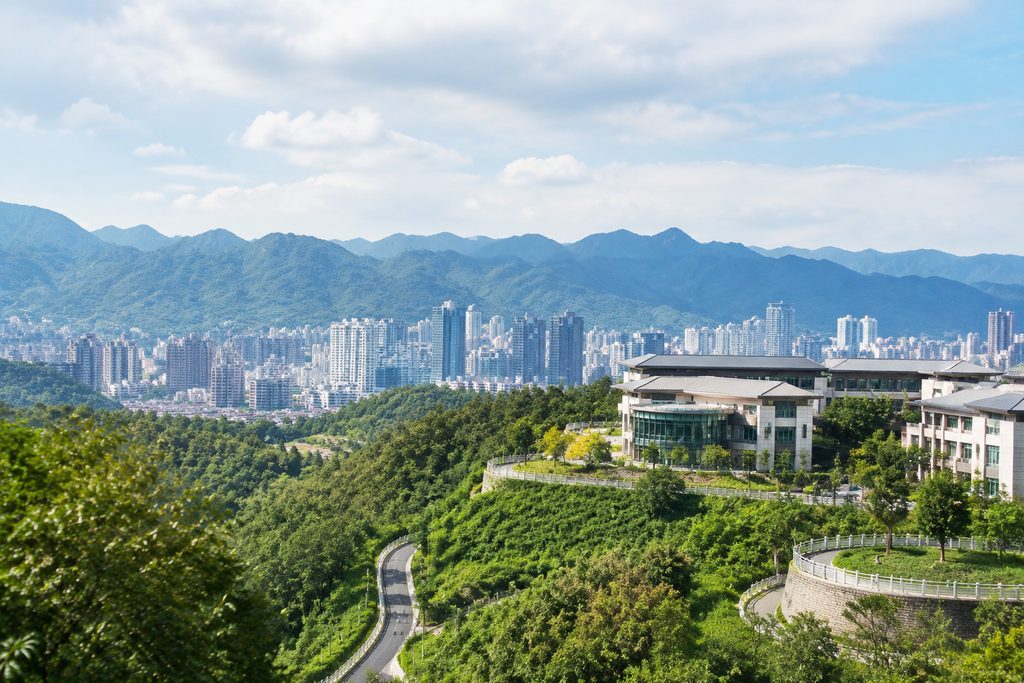
When 53-year-old Robert from Manchester searched for an alternative to his £14,000 hip resurfacing quote, he kept seeing the same advice: go to India, go to Thailand. But Robert had spent years hiking in the Peak District. He wanted something different. He wanted his recovery to feel less like a hospital stay and more like a retreat. That is when he stumbled onto a destination few Western patients ever consider — Guiyang, the capital of Guizhou province in southwest China.
Guiyang is not Beijing. It is not Shanghai. And that is precisely why it matters.
The city sits at 1,100 meters above sea level, surrounded by karst mountains and forests. It is one of China’s cleanest-air cities, with an average annual temperature of 15°C. For patients seeking affordable medical treatment in Guiyang, the combination of modern hospital infrastructure and natural recovery environment is genuinely unusual. Our team has coordinated care for patients here across orthopedics, cardiology, and rehabilitation medicine. The feedback is consistent: the recovery experience in Guizhou is unlike anything they expected.
Key Takeaways
- Guiyang hosts several Grade A tertiary hospitals performing complex procedures at costs 70-80% below US and UK private rates, with joint replacement surgery typically ranging from $8,000 to $15,000.
- The province’s mountain resorts and clean-air environment offer a structured recovery setting that many patients find accelerates rehabilitation compared to urban recovery at home.
- Language barriers and unfamiliar hospital workflows are real — independent navigation of Guizhou’s public hospitals without Mandarin proficiency is extremely difficult.
- Working with a coordination service that handles hospital matching, visa documentation, and bilingual accompaniment transforms what could be a chaotic experience into a planned medical journey.
The Problem: Surgery at Home Is Pricing Patients Out of Care
A hip replacement in the United States averages $40,000 without complications. In the United Kingdom, private treatment runs £12,000 to £15,000. In Australia, patients without full private cover face out-of-pocket costs exceeding $20,000. These are not abstract numbers. They represent real decisions — people delaying surgery for years, managing chronic pain with medication they would rather not take, or draining retirement savings for a procedure that restores basic mobility.
The Commonwealth Fund’s 2023 International Health Policy Survey found that 28% of US adults skipped recommended medical care due to cost. In the UK, NHS waiting lists for orthopedic surgery stretched beyond 18 months in some trusts during 2024. The system is strained. Patients are caught in the gap.
What if the solution is not another Western hospital? What if it is a city most people cannot find on a map?
Who We Are
We are China Medical Services, a medical coordination organization that connects international patients with China’s top-ranked hospitals. We are not a hospital. We do not provide medical treatment or clinical diagnoses. Our team functions as logistical architects — we translate medical records, match your condition to the right department and institution, arrange bilingual accompaniment, and handle the practical details that make the difference between a smooth medical journey and a stressful one. We work across 340+ top-ranked hospitals in 37 cities. Guiyang is one of them.
Why Guiyang and Guizhou Deliver a Different Kind of Medical Experience
Most discussions of medical treatment in Guiyang China focus narrowly on cost. Cost matters. But it is not the whole story. The province offers three structural advantages that are harder to replicate elsewhere.
Clean-Air Recovery at Altitude
Guiyang’s air quality index averages below 60 throughout most of the year. For patients recovering from thoracic surgery, cardiac procedures, or any condition where respiratory function affects healing, this is not a luxury. It is a clinical variable. The city’s elevation — roughly equivalent to Denver, Colorado — also stimulates mild erythropoietin production, which can support oxygen-carrying capacity during recovery. Chinese rehabilitation hospitals have been prescribing “forest therapy” stays in Guizhou for domestic patients for years. International patients are now discovering the same logic.
Recovery here does not mean sitting in a hotel room. It means walking forested paths at the Guizhou Botanical Garden. It means convalescing at a mountain resort outside the city where the humidity stays moderate year-round. Patients who book mountain retreat recovery after surgery in China often report a psychological benefit that is hard to quantify but impossible to ignore — the feeling of being somewhere restorative, not somewhere clinical.
Provincial Hospital Excellence Without Provincial Wait Times
Guiyang is not a second-tier medical backwater. The Affiliated Hospital of Guizhou Medical University is a Grade A tertiary institution with over 3,000 beds. Guizhou Provincial People’s Hospital handles more than 2 million outpatient visits annually. These are high-volume centers where surgeons perform procedures they have done thousands of times before.
The difference is access. A top orthopedic surgeon in Shanghai or Beijing may have a six-week consultation queue. In Guiyang, that wait often shrinks to days. The clinical infrastructure is comparable. The equipment — MRI, CT, da Vinci surgical systems — is the same. But the patient volume is lower, which means faster scheduling and more attentive post-operative monitoring.
Is Guiyang hospital safe for foreigners? The question deserves a direct answer. These are public Chinese hospitals operating under the same National Health Commission regulations as their counterparts in Beijing. Infection control protocols, surgical safety checklists, and accreditation standards are nationally mandated. The variable is not clinical safety. It is navigability. Without Chinese language ability, even registering for an outpatient visit becomes a puzzle. That is where coordination support becomes essential — not because the medicine is risky, but because the system is unfamiliar.
Cost Structures That Reset the Equation
How much does surgery cost in Guizhou province? The numbers tell a compelling story.
| Procedure | Guiyang Public Hospital (USD) | US Average (USD) | UK Private (USD) |
|---|---|---|---|
| Total Hip Replacement | $8,000 – $12,000 | $40,000+ | $16,000 – $20,000 |
| Knee Arthroscopy | $3,000 – $5,000 | $15,000 – $25,000 | $7,000 – $10,000 |
| Cardiac Stent (single) | $6,000 – $9,000 | $30,000 – $50,000 | $15,000 – $22,000 |
| Spinal Decompression | $10,000 – $16,000 | $50,000 – $90,000 | $25,000 – $40,000 |
These are not promotional figures. They reflect the actual pricing environment of Chinese public hospitals, where labor costs, pharmaceutical pricing, and device procurement operate under different economic pressures than Western systems. The cost gap is structural, not promotional.
Patients researching medical tourism packages Guiyang China should understand something important: “packages” in the Chinese context rarely mean all-inclusive pre-priced bundles. They mean coordinated arrangements — hospital admission, accommodation near the facility or at a recovery resort, ground transport, and bilingual support. Pricing varies by hospital and case complexity. What patients receive is a planned sequence, not a fixed-price product.
What Recovery in Guizhou Actually Feels Like
The question patients ask most often is not about surgical technique. It is about the days after. What is recovery like in Guizhou mountain resorts?
Imagine this: your surgery is complete. You are discharged from the hospital on day four or five. Instead of flying home immediately — sitting in an airplane seat with fresh surgical wounds, navigating airport security, managing pain medication across time zones — you transfer to a resort property 45 minutes outside Guiyang. The air is cool. The view from your window is limestone peaks and terraced rice fields. You have daily physiotherapy sessions. You walk graded paths. Your meals are prepared according to post-surgical nutritional guidelines. Your bilingual coordinator checks in daily.
This is not a spa vacation dressed up as medical care. It is structured recovery in an environment designed to support it. Chinese patients have been doing this for decades — combining hospital treatment with mountain or hot spring convalescence. The practice has deep roots in Chinese medical culture. Western patients are only beginning to discover it.
The practical benefits are concrete. Staying in Guizhou for two to three weeks of supervised recovery means your surgeon can conduct a proper follow-up examination before you travel. Complications caught early are complications resolved locally. Flying home immediately after major surgery carries its own risks — deep vein thrombosis, wound dehiscence, unmanaged pain. A staged recovery eliminates those variables.
What You Need to Know Before Going Alone
Honesty matters more than enthusiasm. Here are the real barriers patients face when pursuing medical treatment in Guiyang without professional coordination.
- Visa Requirements Are Specific: Medical treatment in China requires an S2 visa with the purpose of medical treatment clearly stated. Your accompanying family member also needs an S2. The documentation required includes a formal invitation letter from the Chinese hospital, proof of appointment or admission, and detailed travel itineraries. Obtaining that hospital invitation letter independently — without a local contact who can interface with the hospital’s international affairs office — is genuinely difficult. M visas are for commercial activities and will not cover medical treatment. Getting this wrong means denied entry.
- Hospital Registration Is a Gauntlet: Chinese public hospitals do not operate on a Western-style appointment system for initial consultations. You arrive. You queue. You obtain a registration ticket. You wait. If you cannot read the department directory in Chinese, cannot communicate your symptoms at the triage desk, and cannot navigate the payment counter that accepts only Chinese bank cards or WeChat Pay, you will spend hours going nowhere. This is not an exaggeration. It is the daily reality of Chinese public hospitals.
- Medical Records Must Be Translated Properly: A Chinese surgeon reviewing your case needs your imaging reports, pathology slides, and clinical history in Chinese — not just linguistically translated, but formatted according to Chinese medical documentation standards. A Google Translate output will not suffice. Incomplete or poorly translated records lead to repeated tests, delayed surgical scheduling, and frustration on both sides.
These barriers exist for structural reasons, not because anyone is being unhelpful. Chinese hospitals serve enormous domestic patient populations. Their systems are optimized for that reality. International patients are an exception, and the default infrastructure does not bend easily to accommodate them.
How We Help You Navigate This
Our approach is straightforward. We begin with your medical records and your goals. We translate and format your documentation for the target hospital’s requirements. We identify the appropriate department and surgeon based on your condition — drawing on our database of 340+ top-ranked hospitals across 37 cities, including Guiyang’s leading institutions.
Before you travel, we coordinate the hospital invitation letter that supports your S2 visa application. We arrange your initial consultation appointment through the hospital’s international or VIP channel — the pathway that allows scheduling in advance rather than queuing on the day. This is not a backdoor. It is the hospital’s own mechanism for serving patients who require additional coordination support.
On the ground, a bilingual medical companion meets you. They handle registration, payment processing, queue management, and real-time translation during consultations. They ensure you understand what the surgeon is recommending, what the procedure involves, and what recovery will require. After discharge, they coordinate your transfer to a recovery resort and remain available throughout your stay.
The goal is not to insert ourselves between you and your doctor. The goal is to remove every logistical obstacle so that your only focus is healing.
Frequently Asked Questions
Is Guiyang hospital safe for foreigners who do not speak Chinese?
The hospitals themselves are clinically safe — accredited, regulated, and staffed by qualified physicians. The risk is not medical. It is operational. Without language support, you cannot effectively communicate symptoms, understand discharge instructions, or navigate post-operative follow-up. This is why bilingual accompaniment is not a luxury service. For most international patients, it is a practical necessity.
How much does surgery cost in Guizhou province compared to Beijing or Shanghai?
Guiyang procedures typically cost 20-30% less than equivalent procedures at top-tier Beijing or Shanghai hospitals. A hip replacement that runs $12,000 in Guiyang might cost $16,000 in Shanghai. The difference reflects lower overhead costs in Guizhou, not lower clinical standards. The trade-off is that Guiyang has fewer internationally accredited facilities than Beijing or Shanghai. For most standard orthopedic, cardiac, and general surgery procedures, the quality is comparable.
What is recovery like in Guizhou mountain resorts — is it medically supervised?
Recovery resorts in Guizhou range from basic guesthouses near hospitals to structured rehabilitation facilities with on-site physiotherapy. What you receive depends on your coordination arrangement. A properly organized recovery stay includes daily or twice-daily physiotherapy sessions, wound care monitoring, and a direct line back to your surgeon if concerns arise. It is not a hospital. But it is not a vacation either. It occupies a middle ground — structured convalescence in a restorative environment.
Are there affordable medical treatment in Guiyang reviews from real international patients?
The volume of English-language patient reviews for Guiyang specifically is limited compared to medical tourism hubs like Bangkok or Chennai. This is a developing destination for international patients. What exists is largely positive — patients consistently note the professionalism of the medical staff, the dramatic cost savings, and the unexpected quality of the recovery environment. The limitation is sample size. Guiyang sees far fewer international patients than China’s coastal cities. That is changing, but patients considering this route should weigh the thinner review base against the cost and environmental advantages.
Can I book mountain retreat recovery after surgery in China without going through a hospital program?
You can. But coordination matters. A resort that does not understand post-surgical needs — wound care, mobility limitations, dietary requirements, emergency protocols — is a risk. The most reliable approach is to work with a coordinator who has existing relationships with recovery properties that understand medical guests. Independent booking is possible but places the burden of vetting entirely on you.
Your Next Step
Robert, the hiker from Manchester, had his hip resurfacing at the Affiliated Hospital of Guizhou Medical University. He spent three weeks recovering at a mountain resort outside Guiyang, walking graded trails by week two. His total cost, including surgery, accommodation, physiotherapy, and coordination support, came to just under $14,000 — roughly what he would have paid for the procedure alone in the UK. He flew home walking without pain.
That outcome is not guaranteed. Every case is different. But the path is real, and it is open.
If you are weighing your options — facing a long wait at home, a bill you cannot justify, or simply the desire to recover somewhere that feels like it is helping rather than hindering — we are here to talk through what is possible. No pressure. No sales pitch. Just an honest conversation about whether Guiyang makes sense for your situation.
Request a free consultation with our team. We will review your case and help you understand your options — including whether Guizhou’s mountain recovery environment is the right fit for your treatment and recovery goals.
For more medical information and treatment options in China, visit chinamedservices.com (China Medical Services).
