Radiation Oncology at Hebei Medical University Fourth Hospital: A Guide for International Patients
You have probably heard that getting cancer treatment in China means gambling on quality. The data tells a different story. Hebei Medical University Fourth Hospital — also known as Hebei Tumor Hospital — sits among the highest-volume oncology centers in northern China. For international patients weighing radiation therapy options, the question is not whether the technology exists. It is whether the logistics, cost, and clinical coordination can be managed without a local network. That is where the real conversation begins. And the radiation therapy cost Hebei Medical University Fourth Hospital is a fraction of what most Western patients expect to pay.
Key Takeaways
- Hebei Medical University Fourth Hospital is a dedicated cancer hospital treating over 400,000 outpatient visits annually, with radiation oncology as a core specialty.
- Radiotherapy costs in China typically range from $8,000 to $25,000 for a full treatment course, compared to $50,000 to $150,000 in the United States.
- The hospital operates advanced linear accelerators including VMAT-capable systems, but international patients must go through the hospital’s international or VIP channel for pre-arranged appointments.
- You cannot book radiotherapy from overseas through the standard public registration system. A written second opinion or video consultation is the realistic first step.
The Problem: Cancer Treatment Costs Are Breaking Patients
Radiation therapy in the United States now averages between $50,000 and $150,000 per course depending on the technique and number of fractions. In the UK, NHS wait times for radiotherapy initiation have exceeded the 62-day target for a significant proportion of patients since 2020. In Canada, the median wait from referral to radiation treatment sits around 3 to 4 months in several provinces. For a patient with a growing tumor, that is not an inconvenience. That is a clinical risk.
About 50% of all cancer patients require radiation therapy at some point in their treatment journey. The global demand for linear accelerators far outstrips supply in many regions. Patients in Australia, New Zealand, and parts of the Middle East routinely face the choice of waiting months for public treatment or paying tens of thousands out of pocket privately. And for uninsured or underinsured patients in the US, the math simply does not work.
So patients start searching. They type phrases like “how much does radiotherapy cost in China” into Google. They land on forums, outdated blogs, and conflicting price lists. They wonder whether it is safe. Whether the machines are modern. Whether anyone will speak English. These are reasonable questions. And they deserve straight answers.
Why Hebei Medical University Fourth Hospital Delivers Results
Hebei Medical University Fourth Hospital is not a general hospital with an oncology department bolted on. It is a dedicated cancer hospital. The institution reports more than 400,000 outpatient visits and over 80,000 inpatient admissions per year. The radiation oncology department alone treats thousands of patients annually across head and neck, thoracic, gynecological, and gastrointestinal malignancies.
Volume matters in radiation oncology. Contouring precision, treatment planning speed, and management of complex cases all improve with repetition. A radiation oncologist who sees 300 esophageal cancer cases a year simply has a different calibration than one who sees 30. That is not a criticism of Western medicine. It is a structural reality of population density and hospital specialization in China.
Technology That Matches International Standards
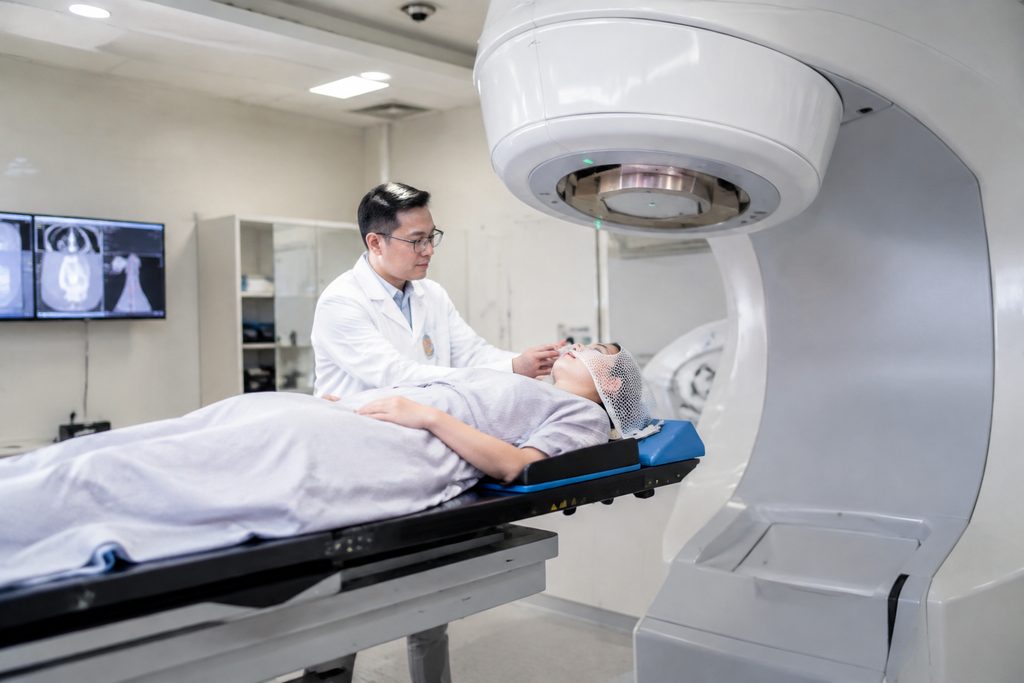
The hospital operates multiple linear accelerators capable of intensity-modulated radiation therapy (IMRT), volumetric modulated arc therapy (VMAT), and stereotactic techniques. These are the same treatment modalities used at MD Anderson, Memorial Sloan Kettering, and the Royal Marsden. The machines are not older-generation cobalt units. They are modern linacs with onboard imaging for daily position verification.
For international patients, the practical question is not whether the equipment exists. It is whether you can access it through a channel that accommodates foreign medical records, language needs, and pre-travel planning. That is where the structure of Chinese public hospitals creates friction — and where coordination support becomes essential.
Cost Advantage Without Quality Compromise
The radiation therapy cost Hebei Medical University Fourth Hospital typically falls between $8,000 and $25,000 for a complete course, depending on technique, number of fractions, and whether hospitalization is required. A comparable VMAT course in the United States runs $80,000 to $120,000 before insurance. Even with travel, accommodation, and coordination fees added, most international patients spend less than half of what they would pay at home.
Why are costs lower? Labor economics play a role — physician and technician salaries in China are lower than in the US or Western Europe. But so does hospital efficiency. Chinese top-tier hospitals process enormous patient volumes with streamlined workflows. A CT simulation that takes three days to schedule in some Western centers can often be completed same-day in China. The cost difference is structural, not a reflection of clinical quality.
What Treatment Actually Looks Like: A Step-by-Step Timeline
A patient coming for radiation oncology at Hebei Medical University Fourth Hospital should expect a process that spans several weeks. Here is what the sequence realistically looks like.
Week 0 — Remote evaluation. Before you book a flight, you send your existing medical records: pathology reports, imaging studies (CT, MRI, PET-CT), surgical notes, and any prior treatment summaries. The hospital’s radiation oncology team reviews these materials. A written second opinion typically costs $300 to $500 through our coordination service and gives you a clear answer on whether treatment in Shijiazhuang makes sense for your case.
Week 1 — Arrival and first consultation. You fly into Shijiazhuang Zhengding International Airport or take the high-speed rail from Beijing (about 1.5 hours). Your first in-person consultation happens within days of arrival. The radiation oncologist reviews your case, orders any additional imaging, and confirms the treatment plan.
Week 2 — Simulation and planning. You undergo CT simulation — a planning scan that maps your treatment area with precise positioning. The medical physics team then spends several days creating your treatment plan, optimizing radiation dose to the tumor while sparing healthy tissue. This is the step where hospital volume and experience directly affect quality.
Weeks 3 to 8 — Daily treatment. Most radiotherapy courses run 25 to 35 fractions, delivered once daily, five days a week. Each session takes 10 to 20 minutes on the treatment table. You stay in nearby accommodation and come in daily. Side effects — fatigue, skin irritation, swallowing difficulty depending on the treatment site — are managed by the oncology team throughout.
Post-treatment. After your final fraction, the hospital provides a treatment summary and follow-up recommendations. You return home and coordinate ongoing surveillance with your local oncologist. The hospital can provide imaging and reports in English for your home team.
Is Radiation Oncology in China Safe for Foreigners? The Honest Answer
Yes — with conditions. The clinical standard at hospitals like Hebei Medical University Fourth Hospital is high. The equipment is modern. The radiation oncologists are trained in the same international protocols used in Western centers. But the patient experience without language support is genuinely difficult.
Public hospital registration desks operate in Chinese. Signage is predominantly Chinese. Payment windows, pharmacy queues, and imaging departments all assume Mandarin proficiency. A foreign patient navigating this alone will struggle. That is not a safety issue with the radiation itself. It is a practical barrier to accessing care smoothly.
Safety in radiation oncology comes down to three things: accurate simulation, correct dose calculation, and consistent daily positioning. Hebei Medical University Fourth Hospital performs these steps at high volume daily. The hospital’s radiation safety protocols follow national Chinese standards, which align with international norms for dose limits and quality assurance. Independent verification of machine calibration is routine.
But you should understand what you are choosing. This is not a Western-style private hospital with English-speaking receptionists and international insurance billing. It is a high-volume Chinese public cancer center. The medicine is excellent. The patient experience requires support.
Practical Considerations: Records, Visas, and Payment
Medical records. Bring everything: pathology slides if available, DICOM files of all imaging, written reports, and a summary of prior treatments. Chinese oncologists expect complete documentation before making treatment decisions. Incomplete records mean repeated imaging and delays.
Visa. Medical treatment in China falls under the S2 visa category — a short-stay visa for private affairs, which includes medical treatment when supported by hospital documentation. Your accompanying family members also apply for S2 visas. The hospital or your coordination service provides the invitation letter and treatment confirmation needed for the application. Processing typically takes 1 to 3 weeks depending on your home country’s Chinese embassy or consulate. Do not book flights before your visa is approved.
Payment. Chinese public hospitals require prepayment. You deposit funds at admission or registration, and treatment costs are deducted as you go. International credit cards are not always accepted at public hospital cashiers. Plan for bank transfers or cash deposits. Some international patients use UnionPay cards or set up a Chinese bank account. Insurance reimbursement is retrospective — you pay upfront and claim from your insurer after returning home. Private international hospitals in China offer direct billing, but Hebei Medical University Fourth Hospital is a public institution and does not.
Language. Unless you speak Mandarin, you need interpretation for every consultation, every payment, every pharmacy visit, and every imaging appointment. A bilingual medical companion handles this — queueing, translating, and ensuring you understand what is happening at each step. This is not a luxury. It is the difference between a functional treatment experience and a stressful one.
Follow-up. Radiation side effects can persist for weeks after treatment ends. Before you leave China, make sure you have a clear written summary in English, including total dose delivered, fractionation scheme, and any medications prescribed. Your home oncologist needs this to manage your ongoing care.
Frequently Asked Questions
How much does radiotherapy cost in China compared to the US or UK?
A full radiotherapy course in China typically costs $8,000 to $25,000 depending on technique and complexity. The same treatment in the US commonly runs $50,000 to $150,000. In the UK, private radiotherapy costs fall between £20,000 and £50,000. The savings are real, but remember that travel, accommodation, and coordination fees add to the total.
Can I book radiotherapy treatment at Hebei Medical University Fourth Hospital from overseas?
Not through the standard public registration system. Chinese public hospitals require in-person consultation before scheduling treatment. What you can do from overseas is submit your records for a written second opinion or video consultation. If the oncology team confirms that treatment is appropriate, they will advise on next steps and expected timing. This remote evaluation step is the practical entry point for international patients.
What happens if I have complications after returning home?
You will leave China with a complete treatment summary in English, including radiation dose, technique, and any recommended follow-up. Your home oncologist takes over from there. The hospital in China remains reachable for questions, and follow-up imaging can be sent back for review if needed. Radiation oncology is a field where post-treatment care transfers cleanly between countries, provided the documentation is complete.
Is radiation oncology in China safe for foreigners?
The clinical standard at top-tier Chinese cancer hospitals is high, with modern equipment and experienced physicians. The main challenges for foreigners are language and navigation, not medical quality. With proper interpretation support and realistic expectations about how Chinese public hospitals operate, treatment proceeds safely and effectively.
Do I need a medical visa for treatment in China?
China does not issue a specific “medical visa.” Foreign patients use the S2 visa, which covers short-term private affairs including medical treatment when supported by hospital documentation. Accompanying family members also apply for S2 visas. Requirements vary by embassy, so verify current rules with the Chinese consulate in your country before applying.
Your Next Step
Hebei Medical University Fourth Hospital offers genuine clinical expertise in radiation oncology at a cost that makes treatment accessible to patients who cannot afford Western prices. The barrier is not medical quality — it is coordination. We help international patients navigate that gap: records translation, hospital communication, appointment scheduling, and on-the-ground bilingual support. We are not a hospital and we do not provide diagnoses or treatment recommendations. What we provide is a clear path from “I’m considering treatment in China” to “I have a plan.” Start with a written second opinion or video consultation. You will know quickly whether this route makes sense for your case.
If you are weighing your options, the first step is simple: request a free consultation to discuss your situation and get honest guidance on whether Hebei Medical University Fourth Hospital is a realistic fit. No pressure. Just a clear conversation about what is possible.
Learn more about how we help international patients access China’s top-ranked hospitals or explore our bilingual medical companion services for treatment coordination.
For more medical information and treatment options in China, visit chinamedservices.com (China Medical Services).
