IVF Cost in China: Real Numbers, Top Clinics, and How to Start
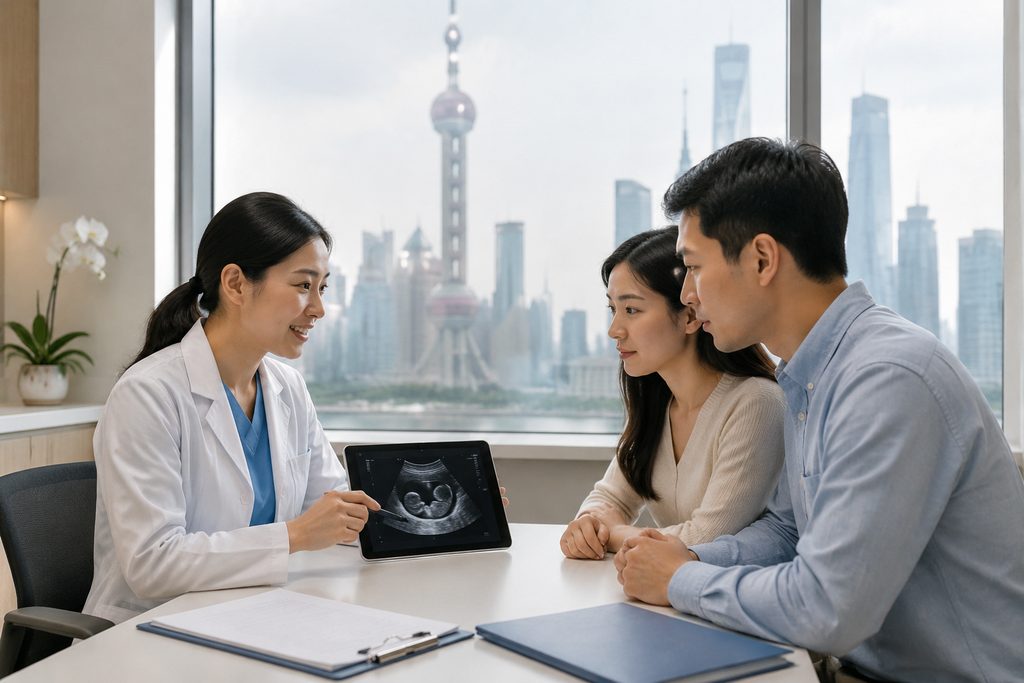
IVF Cost in China: Real Numbers, Top Clinics, and How to Start
If you are researching IVF cost in China, here is the short answer: a standard fresh cycle at a leading public hospital typically runs $4,000 to $8,000, while private international clinics charge $8,000 to $12,000 or more. That is roughly one-third to one-half of what the same treatment costs in the United States, where a single cycle averages $12,000 to $20,000 before medications. The caveat? Those headline numbers hide a lot of variation — medication protocols, embryo freezing, genetic screening, and the number of cycles you actually need all move the final figure. And the cheapest clinic is rarely the right clinic for your specific diagnosis.
In vitro fertilization — IVF — is simply the process of fertilizing an egg with sperm outside the body, then transferring the resulting embryo into the uterus. Nothing more mysterious than that. What makes it complicated is everything around it: which hospital, which protocol, how many attempts, and how you manage the logistics of treatment in a country where you do not speak the language.
IVF Cost in China: The Short Answer
China performs more IVF cycles than any other country — well over one million annually, according to industry estimates. That volume drives prices down and experience up. A first fresh cycle at a top-tier public hospital in Beijing or Shanghai generally lands between $4,000 and $8,000, all-in. That includes monitoring ultrasounds, blood work, egg retrieval, fertilization, and embryo transfer.
What it often does not include: ICSI (intracytoplasmic sperm injection), which adds roughly $500 to $1,500; preimplantation genetic testing (PGT), which can add $2,000 to $4,000; and embryo freezing and storage, billed annually. Medications are usually separate and vary widely — expect $800 to $2,500 depending on your protocol and how your body responds.
Key takeaway: Budget $6,000 to $10,000 for a realistic first-cycle total in China, including medications and one or two add-ons. Private international hospitals will run 40–80% higher but include English-speaking staff and shorter waits.
Who This Is Right For — and Who It Isn’t
China is a strong option for many international patients. It is not the right choice for everyone.
Typically a good fit:
- Couples seeking standard IVF or ICSI who are comfortable traveling for 3–4 weeks
- Patients who need PGT for genetic conditions and want it at a fraction of Western pricing
- Those with prior failed cycles abroad who want a second opinion from a high-volume center
- Patients from regions where local IVF waitlists stretch 12–24 months
Probably not the right fit:
- Anyone with an untreated medical condition that makes pregnancy dangerous — no clinic should proceed
- Patients who need a gestational carrier; commercial surrogacy is not legal in China
- Those who need donor eggs or sperm with specific donor profiles — availability is limited and tightly regulated
- People who cannot commit to the travel time. IVF requires in-person monitoring over weeks, not days
If you fall into the second group, staying home or exploring another country is genuinely the better path. We say that plainly because a mismatched trip wastes money and time.
The Options, Compared
| Option | Typical Cost Per Cycle | Wait Time | Language Support | Best For |
|---|---|---|---|---|
| Public top-tier hospital, Beijing | $4,000–$7,000 | 2–6 weeks | Limited; interpreter needed | Cost-conscious patients with straightforward cases |
| Public top-tier hospital, Shanghai | $4,500–$8,000 | 2–6 weeks | Limited; some English at international desks | Patients wanting top reproductive medicine departments |
| Private international hospital | $9,000–$14,000 | 1–3 weeks | Full English service | Patients prioritizing comfort and communication |
| United States | $12,000–$20,000+ | 4–12 weeks | Full English | Patients with U.S. insurance coverage |
| Thailand or Malaysia | $8,000–$13,000 | 2–4 weeks | Good English support | Patients wanting a shorter flight from Southeast Asia |
Which column suits you depends on two things: how complex your case is, and how much you value English-language hand-holding. A straightforward case with no prior failures can do very well at a public hospital with a bilingual companion. A complicated case with multiple failed cycles deserves the extra attention — and extra cost — of a private or international department.
Finding the Best IVF Clinic in Shanghai and Beyond
Shanghai has become a magnet for reproductive medicine in Asia. Several of its hospitals rank among the top 10 in China for reproductive medicine on the Fudan specialist reputation rankings. The best IVF clinic in Shanghai for you, though, depends on your diagnosis — not just the hospital’s prestige.
Beijing offers a similar depth of options. When patients ask how much does IVF cost in Beijing, the answer tracks closely to Shanghai: $4,500 to $8,000 at public hospitals, higher at private ones. Beijing’s advantage is sheer concentration — 21 of China’s Fudan Top 100 hospitals sit in the capital.
You can browse hospitals by specialty on our departments page, which lists the top 10 hospitals for reproductive medicine alongside 44 other specialties. For city-level comparisons, our Beijing hospital guide and Shanghai guide break down which institutions serve international patients and what each is known for.
One practical note: public hospitals in China do not allow you to book a specialist consultation from overseas in advance. You register in person, on the day. Surgery and treatment cycles are scheduled only after an in-person consultation. This is the single biggest logistical hurdle for foreign patients — and the reason many choose to work with a coordinator.
Is IVF Legal in China for Foreigners?
Yes — with conditions. Married heterosexual couples can legally access IVF in China. Chinese law requires a marriage certificate, and both partners must provide valid passports and visas. Single women and same-sex couples currently cannot access IVF at Chinese clinics.
This is the honest answer to “is IVF legal in China for foreigners,” and it is stricter than in Thailand, Spain, or the United States. If you are a single woman or a same-sex couple, we would point you toward countries where the legal framework matches your situation. That is a better use of your time and money than fighting a rule that will not bend.
For married couples, the process is straightforward. You will need your marriage certificate translated and notarized, passports, and prior medical records if you have them. Some hospitals also request a certificate of no criminal record — requirements vary by institution.
Tip: Get your marriage certificate translated and notarized before you travel. Doing it in China adds days and cost you do not need.
What It Costs: The Full Breakdown
Here is where the money actually goes at a public hospital. Prices vary by hospital and case complexity, so treat these as ranges, not quotes.
- Initial consultation and baseline testing: $200–$500 for both partners
- Ovarian stimulation medications: $800–$2,500
- Monitoring (ultrasounds, blood work): $400–$800
- Egg retrieval and fertilization: $1,500–$2,500
- ICSI (if needed): $500–$1,500
- Embryo transfer: $800–$1,500
- PGT (if needed): $2,000–$4,000
- Embryo freezing and first-year storage: $500–$1,200
Add it up and a full cycle with ICSI and freezing lands around $6,000 to $9,000. Without add-ons, closer to $4,000 to $6,000. Private international hospitals charge 40–80% more for the same procedures, but include English-speaking coordinators, shorter waits, and direct insurance billing.
What is not included in any of these figures: flights, accommodation for 3–4 weeks, meals, local transport, and any additional cycles. A second cycle costs roughly the same as the first, minus the initial consultation and baseline testing.
Practical Considerations: Visas, Records, and Payment
Foreign patients coming to China for medical treatment use the S2 visa, which covers short-stay medical treatment and private affairs. If your treatment plan requires a stay beyond 180 days, the S1 visa applies instead. Accompanying family members also apply for S2. Requirements change, so confirm current rules with your nearest Chinese embassy or consulate before applying. Do not confuse this with the M visa, which is for commercial and trade activities and has nothing to do with medical care.
Bring your complete medical history: prior IVF cycle records, hormone panels, semen analyses, imaging, and any genetic testing. Chinese specialists will re-run some tests, but having your history translated and organized saves time and prevents duplicated work.
Payment at public hospitals is upfront — you pay before treatment, and insurance reimbursement happens afterward, if at all. Most international insurance plans do not cover treatment in China, so confirm coverage before you commit. Private international hospitals often bill insurance directly, which is one reason patients choose them despite the higher price.
Language is the other big factor. China’s top hospitals see tens of thousands of outpatients daily. Signage, forms, and staff communication are overwhelmingly in Chinese. A bilingual medical companion — someone who handles registration, queuing, payment, and translation — turns a stressful maze into a manageable process. Our team at China Medical Services provides exactly this kind of ground-level support.
Frequently Asked Questions
Not directly at public hospitals. You cannot reserve a specialist consultation or a treatment cycle from abroad. You must register and be seen in person first. What you can do remotely is a written second opinion or video consultation with a Chinese reproductive medicine specialist, who reviews your records and advises on whether treatment in China makes sense for your case. That step costs far less than a wasted trip.
They are close. A standard cycle in Beijing runs $4,000 to $7,000 at public hospitals; Shanghai sits at $4,500 to $8,000. The difference is marginal and driven more by your specific protocol than by city. Choose based on which hospital matches your diagnosis, not on a few hundred dollars of price difference.
Roughly half of IVF cycles in women under 35 result in a live birth; that rate falls with age. A failed cycle is common, not a sign that China was the wrong choice. Most patients who need a second cycle stay 2–3 months longer or return for a subsequent trip. Budget for the possibility of more than one cycle from the start.
Packages vary enormously in quality. Some bundle hospital coordination, accommodation, and translation honestly. Others inflate prices or hide exclusions. Ask exactly what is covered — medications, ICSI, PGT, freezing, and how many cycles. A transparent coordinator who charges for specific services beats a vague “all-inclusive” package almost every time.
Start with a remote consultation. Send your records, speak with a specialist, and get a written assessment of whether IVF in China is realistic for your case. If it is, the hospital coordination — registration, medical card creation, appointment scheduling — can be handled on your behalf. If it is not, you have saved yourself a long and expensive trip.
Your Next Step
IVF in China costs a fraction of Western pricing, and the country’s highest-volume clinics have the experience to match. But the savings only materialize if you match yourself to the right hospital and arrive prepared. A remote consultation is the cheapest way to find out whether China is the right answer for you — before you book a flight.
We are China Medical Services, a coordination service, not a hospital. We do not diagnose or treat. What we do is connect you with the right specialists, arrange written second opinions and video consultations, and handle the logistics once you decide to travel. If you would like to explore whether treatment in China fits your situation, start with a free consultation — no pressure, no obligation.
This article is for informational purposes only and does not constitute medical advice. IVF suitability depends on individual medical factors. Consult a qualified reproductive medicine specialist before making treatment decisions.
For more medical information and treatment options in China, visit chinamedservices.com (China Medical Services).
