Can an MRI Find Hidden Problems? What a Full Body Scan Reveals
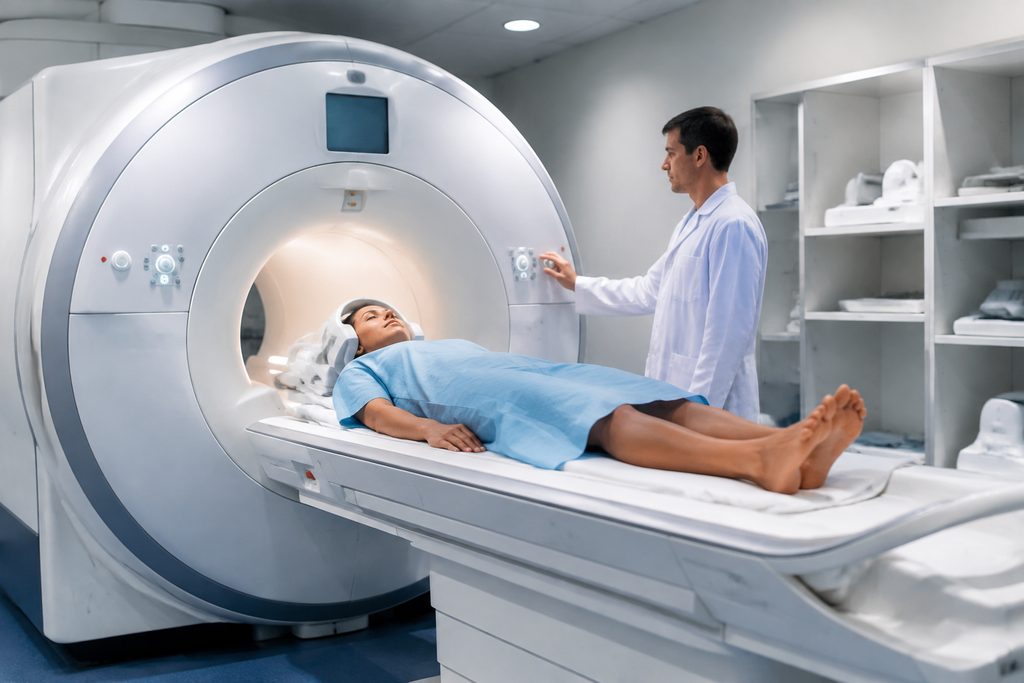
According to a 2021 meta-analysis published in Radiology, whole-body MRI detected malignant disease in roughly 1 in 18 asymptomatic adults. That number climbs when you look at high-risk groups. But the more honest statistic is this: the same scans flagged incidental findings in up to 40% of healthy people. Most were harmless. Some weren’t. So when readers ask us whether an MRI can find hidden problems, the answer isn’t a simple yes. It’s yes — and you need to understand what you’re signing up for. The full body MRI scan cost China is a fraction of what Western clinics charge, which is why we’re seeing more international patients ask about it.
Our team at China Medical Services regularly fields questions from expats and medical travelers weighing a scan in Shanghai, Beijing, or Guangzhou. They want to know what’s included, what the images actually show, and whether the results will be read by someone who knows what they’re doing. This article answers those questions directly.
How This Actually Works, Step by Step
The sequence from “I’m curious” to “I have my images and a report” is more involved than most clinics advertise. Here’s the real flow.
You start by sending us your basic details: age, medical history, any symptoms you’re concerned about, and which city you’re considering. Our coordination team reviews this and confirms whether a full body scan is even appropriate for you. Some patients are better served by a targeted scan of one region. We tell you that upfront.
Once the scope is agreed, we contact the hospital’s international department or the imaging center directly. We confirm machine specifications — most top-tier Chinese hospitals run 3.0 Tesla MRI units, which produce higher-resolution images than the older 1.5T machines still common in many outpatient clinics. We also confirm whether contrast dye will be used, because that changes prep requirements.
You arrive, typically with a bilingual medical companion from our team. The scan itself takes 45 to 90 minutes depending on the protocol. You lie still. The machine does the work. Afterward, a radiologist — usually a senior attending physician at a hospital ranked in the Fudan hospital list — reviews the sequences and writes a structured report. You receive the images on a CD or USB, plus the written report. If you’ve booked a consultation add-on, a specialist walks you through the findings the same day or within 48 hours.
Can an MRI Actually Detect Hidden Cancer and Other Silent Conditions?
This is the question underneath the question. People don’t search for “full body MRI” because they love magnets. They search because they’re afraid something is growing quietly. So let’s be precise.
MRI is excellent at imaging soft tissue. That includes the brain, spinal cord, liver, kidneys, pancreas, uterus, prostate, and musculoskeletal structures. It can detect tumors as small as a few millimeters in some organs. It can spot liver lesions, renal masses, uterine fibroids, prostate abnormalities, and disc herniations that produce no symptoms. It can reveal early signs of multiple sclerosis, small vessel disease in the brain, and bone marrow changes that warrant follow-up.
But an MRI has real limits. It is not the best tool for every cancer. Lung nodules are better evaluated with low-dose CT. Colon polyps require colonoscopy. Breast tissue needs mammography or dedicated breast MRI with specific coils. A whole-body MRI might miss early-stage lung cancer or colorectal lesions because those structures don’t image well on a standard whole-body protocol. So when people ask us, “can an MRI detect hidden cancer,” we say: it can detect many cancers, particularly in solid organs and the brain, but it is not a replacement for age-appropriate screening like colonoscopy or low-dose CT in smokers.
The studies back this up. A 2019 German trial called the TUEBINGEN study followed 4,000 asymptomatic adults who underwent whole-body MRI. Clinically relevant findings appeared in about 15% of participants. Malignancy was confirmed in roughly 0.5%. That’s 1 in 200. Meaningful? Yes. But it also means 199 out of 200 people had no cancer found — and a meaningful number had incidental findings that required additional testing, anxiety, and sometimes unnecessary biopsies.
A Realistic Timeline
People underestimate the lead time. Here’s what a typical journey looks like, from first email to walking out with a report.
| Stage | Duration | What Actually Happens |
|---|---|---|
| Initial inquiry and needs review | 1–3 days | We assess your history, confirm the appropriate scan type, and check availability at shortlisted hospitals. |
| Hospital confirmation and appointment booking | 3–7 days | International departments at public hospitals often book imaging slots 3–5 business days out. Private international hospitals may confirm faster. |
| Document translation (if needed) | 1–2 days | Prior imaging reports or physician referrals in non-English languages need translation before the radiologist reviews them. |
| Travel and visa preparation | 1–3 weeks | An S2 visa is the appropriate category for short-term medical treatment in China. Processing times vary by consulate and nationality. |
| On-site scan | 1 day | 45–90 minutes in the scanner. Plan for a half-day at the hospital including registration and prep. |
| Radiologist report delivery | 1–3 days | Some centers issue preliminary findings the same day. Full structured reports usually take 24–72 hours. |
| Follow-up consultation | Within 1 week | If you book a video consultation with a specialist, we typically schedule it within 5–7 days of receiving your report. |
Total realistic timeline: 2 to 5 weeks from first contact to final consultation, depending on visa processing and hospital slot availability. Anyone promising next-day everything is not being honest with you.
What Can Go Wrong — and What Happens Then
We’d rather you hear this now than discover it in a clinic corridor.
Incidental findings. This is the big one. A full body MRI will find things. Small liver cysts. A slightly enlarged lymph node. A pituitary microadenoma that’s been there for decades and will never cause symptoms. Most are benign. But the radiologist must report them, and you must decide what to do. Sometimes that means a follow-up scan in 6 months. Sometimes a biopsy. The psychological toll is real. We tell every patient: do not book a whole-body scan unless you’re prepared to manage incidental findings without spiraling.
Incomplete coverage. Some “full body” packages in China and elsewhere exclude the brain, or use a fast protocol that sacrifices resolution in certain organs. Always ask for the exact sequence list before paying. If a center won’t tell you, walk away.
Language barriers. Even in top hospitals, the radiologist writes the report in Chinese. If you’re reading it through Google Translate, you will misunderstand something. We handle professional translation and arrange for an English-speaking physician to explain the findings. If you go alone, insist on a bilingual report before you book.
False reassurance. The opposite problem: a clean scan doesn’t mean you’re cancer-free forever. MRI can miss small mucosal lesions, early pancreatic changes, and some lung pathologies. A normal scan is a snapshot, not a guarantee.
What happens when something goes wrong? If a finding is ambiguous, we coordinate a follow-up targeted scan or a written second opinion from a relevant specialist. If the scan quality is poor, we raise it with the hospital’s imaging department — machine issues do happen, and repeat scans should not be charged at full price. If you need urgent specialist input, we can usually arrange a video consultation with a top-tier physician within days, not weeks.
How Much Is a Whole Body MRI in Shanghai? And Is It Worth It Abroad?
The question we get most often from expats and medical tourists is blunt: how much is a whole body MRI in Shanghai? The answer ranges from roughly $600 to $1,800 USD depending on the facility, magnet strength, whether contrast is used, and whether the brain is included.
At a public hospital’s international department, a comprehensive whole-body MRI protocol typically runs $600–1,000. At a private international hospital like United Family or Jiahui, expect $1,200–1,800. Compare that to the United States, where self-pay whole-body MRI scans at private clinics run $2,500–5,000, and in some markets like London or Dubai, $3,000–6,000. The full body MRI scan cost China is compelling — but price shouldn’t be the only criterion.
So, is a full body MRI worth it abroad? That depends on why you’re getting it. If you have a specific concern — a family history of pancreatic cancer, a suspicious symptom, a known genetic risk — traveling for a high-quality scan at a fraction of the home-country price can make sense. If you’re a healthy 35-year-old with no risk factors, the math is less favorable. You’re more likely to find an incidental finding that leads to unnecessary procedures than to find a hidden cancer. Some patients still find value in the peace of mind. We respect that. But we tell them the truth first.
For expats living in China, the calculus is simpler. You’re already here. Booking a scan at a Fudan-ranked hospital with an international department is straightforward, and the cost is manageable. For those flying in specifically for imaging, you need to weigh travel costs, visa processing, and the reality that follow-up care for any finding will happen back home — so the report must be detailed and transferable.
How to Choose a Diagnostic Imaging Center You Can Trust
Not all MRI machines are equal. Not all radiologists read whole-body studies well. Here’s what we look for when we evaluate a center for our patients.
First, magnet strength. A 3.0 Tesla machine produces significantly better soft-tissue resolution than a 1.5T unit. Most of the hospitals in our 340+ top-ranked hospital database run 3T machines. Private clinics sometimes use older 1.5T units to cut costs. Ask before booking.
Second, radiologist experience. Whole-body MRI is a subspecialty. A radiologist who reads 50 whole-body studies a year is not the same as one who reads 50 a month. In large Chinese hospitals, the imaging departments handle enormous volumes — a single top-tier hospital may perform over 1,000 MRI studies per day across multiple machines. That volume produces radiologists who have seen everything.
Third, protocol transparency. The center should tell you exactly which sequences are included: brain, neck, chest, abdomen, pelvis, spine, or a subset. A vague “full body” description is a red flag. We always request the written protocol before confirming an appointment.
Fourth, reporting quality. You need a structured report, not a one-paragraph summary. It should list each organ system, describe any abnormality with measurements, and provide a clear recommendation for follow-up. If the report isn’t written in English, factor in translation time and cost.
The best diagnostic imaging center China for expats isn’t necessarily the most expensive one. It’s the one with a 3T machine, experienced subspecialty radiologists, transparent protocols, and a process for getting your images and report in a format your home physician can actually use.
Practical Considerations: Records, Visa, Payment, and Follow-Up
If you’re coming from outside China for a scan, here’s what actually matters.
Medical records. Bring any prior imaging, biopsy reports, or physician notes. If they’re not in English or Chinese, get them translated before you travel. The radiologist needs context to interpret what they see. A finding that looks suspicious in isolation might be stable when compared to a scan from three years ago.
Visa. For short-term medical treatment, the S2 visa is the appropriate category. It covers private affairs including medical treatment. Processing takes 1–3 weeks depending on your consulate. You’ll need a supporting letter from the hospital or a medical coordinator confirming your appointment. We help prepare this documentation. We never guarantee visa approval — that’s the consulate’s call — but a properly documented medical appointment is a legitimate basis for an S2 application.
Payment. Public hospital international departments typically require prepayment by card or bank transfer. Some accept international credit cards. Private international hospitals often accept direct insurance billing if you have a policy with a global insurer. Confirm payment method before you fly.
Insurance. If you have international health insurance, check whether screening MRI is covered. Many policies exclude self-initiated screening scans. Some cover diagnostic scans if a physician orders them. Get pre-authorization in writing if you expect reimbursement.
Language. Even in international departments, the front-desk staff may have limited English. The radiologist almost certainly works in Chinese. A bilingual medical companion solves this — they handle registration, escort you to the imaging suite, translate the radiologist’s initial comments, and make sure you understand the next steps.
Follow-up at home. Your images should be provided in DICOM format, not just JPEG snapshots. DICOM files can be loaded into any hospital’s PACS system back home. If your home physician can’t open the files, the scan is useless. We confirm DICOM delivery before you leave the hospital.
Frequently Asked Questions
It can detect many solid-organ cancers at an early stage, particularly in the brain, liver, kidneys, pancreas, and reproductive organs. But it is not a complete cancer screen. Lung cancer, colorectal cancer, and some breast cancers are better detected by other methods. Whole-body MRI is a useful tool, not a replacement for standard screening.
At a public hospital’s international department, expect $600–1,000. At a private international hospital, $1,200–1,800. In the US, self-pay whole-body MRI typically costs $2,500–5,000. Prices vary by hospital and case complexity, and contrast dye or additional sequences will increase the total.
You’ll receive a structured report describing the finding, its size, and its likely significance. Most findings are benign. If a finding needs follow-up, we can coordinate a targeted scan, a written second opinion from a relevant specialist, or a video consultation. You are never left alone to interpret a complex report.
MRI uses no ionizing radiation, so there’s no radiation exposure risk. The main risks are contrast dye reactions (rare, and screening is done beforehand), claustrophobia, and the psychological burden of incidental findings. If you have metal implants, pacemakers, or certain medical devices, you may not be eligible. Always disclose your full medical history before booking.
You can book directly through a hospital’s international department or through a coordinator like us. No physician referral is required at most centers for self-pay screening scans. However, we strongly recommend a pre-scan consultation to confirm the appropriate protocol for your age and risk profile. Booking the wrong scan wastes money and can produce misleading results.
Your Next Step
An MRI can find hidden problems — sometimes life-saving ones, sometimes harmless ones that cause unnecessary worry. The value of the scan depends on the quality of the machine, the experience of the radiologist, and whether you understand what the results actually mean. That’s where we fit in. Our team at China Medical Services coordinates imaging appointments at top-tier Chinese hospitals, arranges bilingual companions, and makes sure your report is delivered in a format your home physician can use. We don’t diagnose, and we don’t promise outcomes. We handle the logistics so you can make an informed decision. If you’re considering a full body scan in China, request a free consultation and we’ll help you figure out whether it’s the right move — and where to get it done properly.
For more medical information and treatment options in China, visit chinamedservices.com (China Medical Services).
