Nanjing Full Body Checkup: Packages and Cost for Foreigners
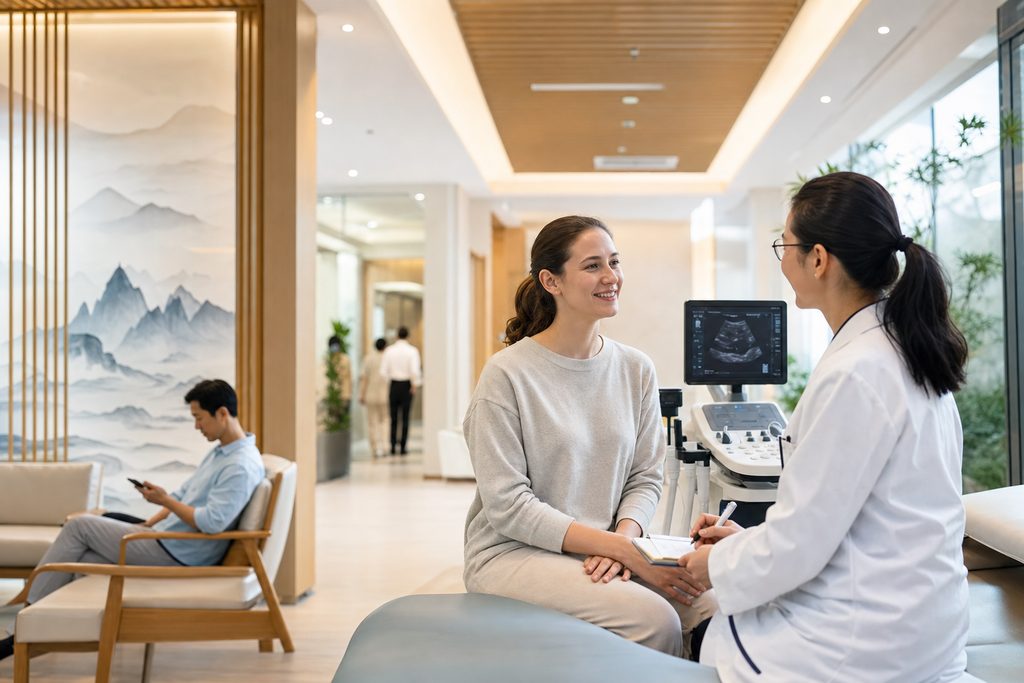
Nanjing Full Body Checkup: Packages and Cost
A full body checkup is a scheduled set of screenings — bloodwork, imaging, heart and organ function tests — bundled into one or two hospital visits. It is not a diagnosis. It is a snapshot, designed to catch problems early, when they are cheaper and easier to treat. For international patients curious about the full body checkup cost Nanjing hospitals charge, the honest answer sits in a wide band: roughly $300 to $2,500 depending on how deep you want the screening to go. Below, we break down what drives that range, what the packages actually include, and how a foreigner books one without speaking Mandarin.
How This Actually Works, Step by Step
Here is the real sequence, from your sofa to the hospital exit.
Step one: you send us your goals and history. Not a vague “I want a checkup” — a short list. Family history of heart disease? Smoker? Over 45? Any symptoms you want investigated? These details decide which package fits and which hospital department should handle you.
Step two: we match you to a hospital and a package level. Nanjing has strong tertiary hospitals with dedicated international or VIP health examination centers. We confirm what each package includes, current pricing, and how many days ahead the center needs to schedule you.
Step three: you confirm and prepay the coordination fee. Hospital screening fees are paid directly to the hospital. Our coordination fee starts from $300, and if we cannot secure the appointment you ordered, it is refunded in full.
Step four: arrival and screening day. A bilingual medical companion meets you, handles registration, queues, payment windows and directions. Most standard packages finish in half a day. Advanced packages with MRI or endoscopy can take a full day or spill into two.
Step five: results. Basic bloodwork often returns within 24 hours. Imaging reports typically take two to five working days. We help you get the written report in English and, where useful, arrange a physician to walk you through it.
What the Packages Include — and What Drives the Price
Chinese hospitals do not sell one universal “full body checkup.” They sell tiers. The tiers are not marketing fluff; each step up adds genuinely different tests.
| Package Tier | Typical Contents | Indicative Price (USD) | Time Needed |
|---|---|---|---|
| Basic screening | CBC, liver and kidney panels, lipids, blood glucose, urinalysis, chest X-ray, abdominal ultrasound, ECG | $300 – $600 | Half day |
| Comprehensive | Everything above plus thyroid function, tumor markers, carotid ultrasound, echocardiogram, low-dose chest CT | $700 – $1,200 | Half to full day |
| Advanced / executive | Adds MRI of brain or spine, gastroscopy and colonoscopy under sedation, cardiac stress testing, bone density | $1,300 – $2,500+ | 1 – 2 days |
Prices vary by hospital and case complexity. A flagship tertiary hospital in Nanjing will sit at the higher end of each band; a district-level facility at the lower end. For context, an equivalent executive screening in the United States frequently runs $2,500 to $5,000 or more, and insurance rarely covers it.
Two cost traps catch foreigners. The first is add-ons: a suspicious finding on ultrasound leads to a same-day CT, which leads to a specialist consult. Each is billed separately. The second is sedation. Endoscopy under anesthesia adds several hundred dollars and requires an escort home — which is one reason a companion service earns its keep on screening day.
A Realistic Timeline
People underestimate the front end. The screening itself is fast. The preparation is not.
| Stage | What Happens | Realistic Duration |
|---|---|---|
| Day 0 | You send goals, history, prior reports | Same day |
| Days 1 – 3 | Package matching, hospital confirmation, quote | 2 – 3 working days |
| Days 3 – 10 | Appointment slot secured; visa documents prepared if needed | 3 – 10 days |
| Weeks 2 – 4 | S2 visa application and processing, if you are traveling specifically for medical purposes | 1 – 3 weeks |
| Screening day | Registration, tests, companion support | Half to 2 days |
| Days 1 – 5 after | Bloodwork and imaging reports released | 1 – 5 working days |
| Week 2 after | English report review, follow-up recommendations | 1 – 2 weeks |
If you are already in China on a tourist or business trip, skip the visa stage entirely — but book the appointment at least five to seven days ahead, because premium screening centers fill their morning slots quickly.
What Can Go Wrong — and What Happens Then
Honest failure modes, and the actual recourse.
You arrive on the wrong day. Some tests, particularly colonoscopy, require bowel preparation starting 24 hours earlier, and some require fasting from midnight. Miss the prep and the test is cancelled. Recourse: rebooking, usually within a week, and you lose the prep day. We send a written prep sheet in English and confirm it with you the day before.
A finding requires immediate attention. This is rare but real. A chest CT may reveal something that needs a specialist the same week. Recourse: the hospital routes you internally to the relevant department. If you want a specific senior specialist, that moves through the international or VIP channel, and pricing differs. We coordinate; we do not promise a particular doctor or a particular date.
The report is only in Chinese. This is the most common complaint. Recourse: request an English report at booking, not afterward. Not every hospital produces one as standard, and translation after the fact adds days.
You want a second opinion on the result. Recourse: the images and reports travel well. A written second opinion from a top-tier Chinese specialist runs $300 to $500, and a video consultation $100 to $800 depending on the specialist’s seniority. Any consultation fee is credited in full toward on-the-ground coordination if you travel to China within 90 days.
Is a Full Body Checkup in China Reliable?
This question deserves a straight answer, because the phrase “medical tourism health checkup packages China” carries a whiff of doubt for Western readers. So here is the context.
China’s top hospitals are not fringe institutions. The country has more than 35,000 hospitals, and the top 5% — ranked by the Fudan Hospital Ranking and JCI accreditation — operate at a scale and equipment level comparable to major Western academic centers. Nanjing’s leading tertiary hospitals run high-volume imaging departments with 3T MRI, 256-slice CT and experienced radiologists reading dozens of scans a day. Volume matters. A radiologist who reads 60 chest CTs daily sees patterns a low-volume reader misses.
What is genuinely different is the service wrapper, not the medicine. Public hospitals are enormous — a single site can see over 10,000 outpatients a day — and they are built for Chinese-speaking patients moving fast. Signage, registration kiosks and report collection are in Chinese. That is an access problem, not a quality problem. It is also precisely why a bilingual companion changes the experience.
One more distinction worth knowing. Public tertiary hospitals generally require prepayment, with insurance reimbursement handled afterward in your home country. Private international hospitals in China — JCI-accredited, English-speaking staff, direct insurance billing — offer a smoother experience at roughly 1.5 to 2 times the public-channel price. For a screening, many foreigners find the public hospital with companion support the better value.
Practical Considerations: Records, Visa, Payment, Follow-Up
Records. Send prior reports and imaging in advance. Comparison beats isolated results every time. If your last cholesterol panel was three years ago, that number matters.
Visa. If you are entering China specifically for medical treatment or a health examination, the applicable short-stay category is the S2 visa, with supporting documents from the hospital. Accompanying family members apply under the same category. Requirements change, so confirm current rules with the nearest Chinese embassy or consulate before applying. Note that the M visa is for commercial and trade activities and is not the medical route.
Payment. Public hospitals take prepayment by card or mobile payment; cash works but is clumsy. Budget a buffer above the quoted package price for add-ons.
Insurance. Most international policies do not cover elective screening. Assume you are paying out of pocket and treat the price advantage as the offset.
Follow-up at home. Get the English report and the original imaging files before you leave China. Your home physician can act on them directly, and repeating a scan abroad because the disk stayed in Nanjing is an expensive mistake.
If you want to compare options across the country before deciding, our Fudan-ranked top hospitals by city page groups the top 100 by location, and the Nanjing city page covers local hospital options in detail.
Frequently Asked Questions
Expect roughly $300 to $600 for a basic screening and $700 to $2,500 for comprehensive or executive tiers, depending on hospital and what is included. Comparable executive screening in the US often runs $2,500 to $5,000. The gap is real, but prices vary by hospital and case complexity, so treat any figure as an estimate until the hospital confirms.
Yes, through the hospital’s international or VIP health examination center, which accepts advance scheduling. Standard public outpatient registration does not work that way — it is same-day queue-based. This is the single biggest practical difference for foreign patients, and it is why we route screening bookings through the international channel.
If the trip’s purpose is medical, the S2 short-stay category applies, supported by hospital documentation. If you are already in China on another valid visa, you can usually proceed without a new one. Rules shift, so verify with the nearest Chinese embassy or consulate. The M visa is not the medical route — it covers commercial and trade activity.
The hospital will refer you internally to the relevant specialty, and further evaluation is arranged from there. We can coordinate specialist consultations and, if you prefer, a written second opinion from a top-tier specialist before making any decisions. No service can guarantee a diagnosis, a treatment outcome or a specific appointment date — anyone who promises otherwise is not being straight with you.
Your Next Step
A checkup in Nanjing is straightforward once the logistics are handled: pick a tier, prep correctly, get the report in English. The medicine is solid. The navigation is the hard part. Our team at China Medical Services connects international patients with 340+ top-ranked hospitals across 37 cities, and we handle records, hospital communication, bilingual accompaniment and visa guidance. We are not doctors and we do not provide medical advice or promise clinical outcomes. If you want to know what a screening would cost for your situation, start with a free consultation — no pressure, no obligation.
This article is for general information only and does not constitute medical advice. Always consult a qualified physician about your individual health needs.
For more medical information and treatment options in China, visit chinamedservices.com (China Medical Services).
