Why Nigerian Patients Choose China for Cancer Treatment: The Lagos Alternative
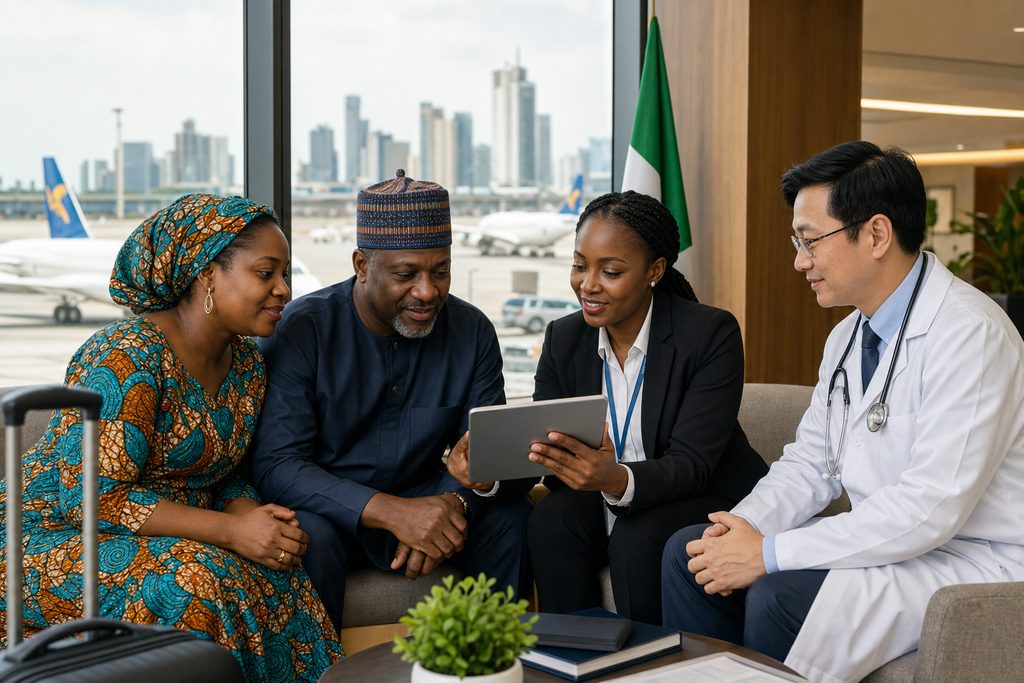
You have probably heard that seeking cancer treatment abroad means emptying your life savings in an American or British hospital. The reality for many Nigerian families is more nuanced. They are not just looking at the West anymore. They are looking East. And the numbers are shifting the conversation. A growing number of Nigerian patients are bypassing traditional medical tourism hubs and heading to Chinese oncology centers. The reason is not a single factor but a convergence of three things: access to technology that is often unavailable in Lagos, a transparent cancer treatment cost China vs Nigeria comparison that makes the math undeniable, and a full-service infrastructure designed for international patients who cannot afford to navigate a foreign system alone.
Our team at China Medical Services has coordinated care for patients from over 37 cities across China’s top-ranked hospital network. We see the same questions from Lagos, Abuja, and Port Harcourt: Is chemotherapy in China better than Nigeria? Can I book oncology treatment in China from Lagos without traveling first? What does full service cancer care China for Nigerians actually include? These are not theoretical queries. They are logistical problems that, when solved, open a door that many patients did not know existed.
The Short Answer on China vs Nigeria for Cancer Care
The direct comparison comes down to technology access and systemic capacity. China houses over 340 top-ranked hospitals, representing the top 5% of the nation’s 35,000+ medical institutions, ranked by the authoritative Fudan University hospital rankings and JCI accreditation. Many of these centers operate radiotherapy equipment—such as proton beam therapy and advanced linear accelerators—that simply does not exist in any Nigerian hospital as of 2026. The cancer treatment cost China vs Nigeria comparison reveals a middle ground: Chinese care costs significantly more than treatment in Lagos public hospitals but roughly 70-80% less than equivalent private care in the United States or United Kingdom. A course of advanced radiotherapy with concurrent chemotherapy at a top Chinese oncology center might range from $15,000 to $35,000 USD, whereas the same protocol in the US often exceeds $120,000.
But cost is not the whole story. The real question Nigerian families face is whether the outcome justifies the journey.
Who This Is Right For — and Who It Isn’t
Traveling internationally for cancer treatment is a serious undertaking. It is not right for everyone. Being honest about this separates a responsible decision from a desperate one.
A patient is typically a good candidate when they have a confirmed diagnosis with a treatment plan that requires technology or surgical precision not available locally. This includes many solid tumors requiring robotic surgery, specific head and neck cancers needing proton therapy, or cases where genomic testing and targeted therapy access are critical. A stable performance status—meaning the patient can tolerate a long-haul flight and a treatment course away from home—is non-negotiable. Having a family member who can travel as a caregiver is also essential.
A patient should likely not pursue this path if they are in an acute crisis requiring immediate intensive care, if their ECOG performance score is 3 or higher (essentially bed-bound more than 50% of waking hours), or if the cancer is so advanced that the primary goal is purely palliative comfort care best delivered close to family. In those cases, the travel burden may outweigh any marginal benefit from technology. Also, if a patient cannot secure a reliable internet connection for post-treatment video follow-ups, the continuity gap becomes a real risk. No hospital in China can replace the local oncologist who manages day-to-day symptoms after treatment ends.
The Options, Compared
Nigerian patients facing a cancer diagnosis essentially have three pathways. Each comes with a different balance of cost, technology, and logistical complexity. The table below lays out the real-world differences.
| Factor | Private Care in Nigeria | Medical Travel to India | Medical Travel to China |
|---|---|---|---|
| Radiotherapy Tech | Limited LINAC; no proton therapy | Good LINAC access; limited proton | Advanced LINAC + multiple proton centers |
| Immunotherapy Access | Limited; high out-of-pocket cost | Growing; imported drug costs | Domestic PD-1 inhibitors; lower drug cost |
| Surgical Robotics | Rare; concentrated in Lagos | Available in major cities | Widely available in top-100 hospitals |
| Full-Service Coordination | Family-managed | Fragmented; agent-dependent | Structured; bilingual companion model |
| Cost Range (Comprehensive) | $5,000–$25,000 | $12,000–$40,000 | $15,000–$45,000 |
| Visa Process | None | Medical visa; variable timelines | S2 visa; structured documentation |
| Post-Treatment Follow-Up | Local; direct continuity | Remote; coordination gaps | Remote; structured written second opinion follow-up |
The table makes one thing clear. If the required treatment is available and proven in Nigeria, staying local is almost always the right call. The disruption of travel, the separation from support networks, and the post-treatment handoff back to a local oncologist all carry real clinical risk. But when the treatment required is simply not available—or when the local wait time for radiotherapy extends beyond the window where it would be curative—then the comparison shifts. China’s advantage is not in being cheaper than Nigeria. It is in offering a technology tier that does not exist locally, at a price point that does not bankrupt a family the way a US hospital bill would.
What Full Service Actually Means When You Book Oncology Treatment in China from Lagos
The phrase “full service” gets thrown around loosely. For a Nigerian patient considering how to get cancer surgery in China from Africa, the term must cover specific, concrete steps. Otherwise, it is just marketing.
The first step is always a remote evaluation. Before any flight is booked, the patient sends existing medical records—pathology reports, imaging on CD or cloud link, surgical notes, current medication list—to the Chinese hospital’s international department. Our team handles the certified translation into Mandarin, which is non-negotiable. A Chinese oncologist will not review a case based on an English summary. They need the original report and a precise translation. This written second opinion typically costs from $300 to $500 USD and produces a document that states whether the Chinese team believes they can offer a meaningful treatment option, and what that protocol would look like.
If the opinion is positive, the next layer is a video consultation with the treating specialist. This runs from $500 to $800 USD for a top-specialist session. The patient in Lagos speaks directly with the oncologist in Shanghai or Beijing, with a medical interpreter on the line. This is not a sales call. It is a clinical conversation about treatment intent, expected side effects, and realistic outcomes. The question “is chemotherapy in China better than Nigeria” gets answered here, not with a slogan but with a specific regimen comparison.
Only after both the written opinion and the video consultation align does the logistical coordination begin. That includes the S2 visa invitation letter from the hospital, appointment scheduling, deposit payment to the hospital (not to us—we never hold treatment funds), airport pickup, and a bilingual medical companion who stays with the patient through every registration, queue, consultation, and pharmacy visit. The companion does not provide medical advice. They provide navigation. In a Chinese public hospital where 10,000 outpatient visits a day is normal, that navigation is the difference between treatment and chaos.
What It Costs: A Realistic Breakdown for Nigerian Patients
Let us put numbers to what we have described. These are ranges, not quotes. Every case varies by hospital tier, treatment complexity, and length of stay. A patient from Lagos undergoing a six-week course of chemoradiation for a head and neck cancer at a top-tier Shanghai oncology hospital might expect the following:
Hospital treatment charges: $18,000–$28,000 USD. This covers the radiation planning and delivery, chemotherapy drugs, and inpatient bed charges where needed. It does not cover experimental therapies or complications requiring ICU admission.
Coordination and support services: from $5,000 to $8,000 USD for end-to-end VIP coordination. This includes document translation, hospital appointment coordination, bilingual companion services for all treatment days, and airport transfers. The key conversion mechanism matters here: any amount paid for the initial video consultation or written second opinion is credited in full toward this coordination fee if the patient proceeds to treatment within 90 days. That means the early evaluation is essentially risk-free against the later service cost.
Living expenses: $2,500–$5,000 USD per month for a patient and one caregiver, covering a serviced apartment near the hospital, food, and local transport. This is the variable most families underestimate. A six-week stay is not a hotel vacation. It is a medically intensive period where proximity to the hospital and access to clean, quiet accommodation directly affects recovery.
What is not included: international flights (roughly $1,200–$2,000 round-trip from Lagos per person), any complication management outside the planned protocol, and post-return medications that must be sourced in Nigeria. Also, the coordination fee covers the service of arranging access through the hospital’s official international patient channel. It is never a payment to the hospital itself, and it never guarantees a specific surgeon’s availability on a specific date. We arrange. The hospital schedules. That distinction is fundamental.
Practical Considerations: Visas, Records, and the Return to Lagos
The visa is the first logistical hurdle, and it is where misinformation causes the most damage. Nigerian passport holders traveling to China for medical treatment apply for an S2 visa, which is a short-stay private affairs visa annotated for medical purposes. The M visa is for commercial and trade activities and has no relevance to medical travel. The S2 application requires an invitation letter from the Chinese hospital, proof of the patient’s medical condition and treatment plan, and evidence of sufficient funds. Approval timelines vary, but six to eight weeks from application to issuance is a realistic planning window. No one should book a flight before the visa is in hand.
Medical records must be complete and recent. A pathology report older than three months will often trigger a request for re-biopsy upon arrival, which adds cost and delay. Imaging must be in DICOM format on a CD or secure upload link—printed films are not sufficient for radiation planning. Nigerian hospitals do not always release records in this format, so early preparation with the local treating team is essential.
Payment methods deserve attention. Chinese public hospitals operate on a prepaid deposit system. Patients deposit a lump sum upon admission, and the hospital draws down against it for each test, drug, and procedure. When the deposit runs low, treatment pauses until it is topped up. International bank transfers can take days, so patients need a financial buffer and ideally a family member with access to a card that works on China’s UnionPay network or a reliable SWIFT transfer setup. Most hospitals do not accept direct international insurance billing. The patient pays, obtains stamped receipts and a translated discharge summary, and files for reimbursement with their insurer afterward.
Language is the constant undercurrent. Even in hospitals with international departments, the corridor staff, the pharmacy window, the CT scan registration desk—these operate in Mandarin. A bilingual companion is not a luxury. It is the operational requirement that prevents a patient from missing a scheduled radiation fraction because they could not find the right building in a 20-building hospital campus.
Follow-up after returning to Lagos is the most neglected part of the planning. The Chinese oncologist will provide a detailed treatment summary and a recommended surveillance protocol. But the scans and blood work will happen in Nigeria. The patient’s local oncologist must be brought into the loop before travel, not after. A handoff call between the Chinese and Nigerian teams, facilitated during the final week of treatment, prevents the dangerous gap where no one is managing the case.
Frequently Asked Questions
Is chemotherapy in China better than Nigeria, or is it the same drugs?
The chemotherapy drugs themselves are often the same molecules—cisplatin, paclitaxel, doxorubicin, and so on. The difference lies in three areas. First, supportive care: Chinese oncology centers routinely use advanced antiemetic protocols and growth factor support that reduce treatment interruptions. Second, precision: radiation oncology in China integrates chemotherapy with image-guided radiotherapy in ways that require technology simply not available in Nigeria. Third, immunotherapy combinations: China has developed domestic PD-1 inhibitors that cost a fraction of imported equivalents, making combination chemo-immunotherapy financially accessible in ways it often is not in Lagos. The drugs are not magically different. The protocol design and delivery infrastructure are.
How do I verify that a Chinese cancer hospital is legitimate before I pay anything?
Cross-reference the hospital against the Fudan University Hospital Ranking, which is China’s most authoritative public classification. The top-tier oncology centers appear in the specialty reputation rankings for oncology, which lists the top 10 hospitals in that field. A legitimate hospital will have a verified international department with a published phone number and email domain matching the hospital’s official website. Our database covers 340+ top-ranked hospitals across 37 cities, and we never work with unranked facilities. Before any payment, request a video call where you see the hospital building, the international department signage, and the coordinator’s face. A legitimate operation will welcome this. A scam will make excuses.
What happens if the treatment does not work or causes severe complications?
This is the question every family fears and every responsible provider must answer directly. Chinese hospitals treat complications according to medical need, not according to the original treatment budget. A complication requiring ICU admission will generate additional charges that the initial deposit does not cover. Families must have a financial contingency—typically an additional 30-50% of the treatment budget—or a plan for medical evacuation back to Nigeria if the patient becomes stable enough for transport. Repatriation after a poor outcome is logistically complex and expensive. Our coordination includes contingency planning for this scenario, but we do not control hospital billing or clinical outcomes. No one can guarantee that treatment will work. Anyone who does guarantee it is lying.
Can I book oncology treatment in China from Lagos without traveling first for an initial consultation?
Yes, and in fact, this is the standard pathway. The written second opinion and video consultation process described earlier eliminates the need for a preliminary trip. The patient sends records, the Chinese team reviews them, a video call happens, and a treatment plan and cost estimate are issued. Only then does the patient travel. This is not a shortcut. It is the structured process that any reputable Chinese hospital’s international department follows. The days of arriving in a foreign country with a stack of papers and hoping for the best are over—or they should be.
How do China cancer hospitals international patients price compare to Indian hospitals?
The prices are broadly comparable, with Chinese costs running perhaps 10-20% higher for equivalent procedures. The trade-off is technology access. China has invested heavily in proton therapy centers, robotic surgery platforms, and domestic immunotherapy production. For a patient whose treatment plan requires those specific technologies, the slightly higher cost buys a capability that may not be available in the Indian hospital they are considering. For a patient whose treatment is a standard chemotherapy regimen with conventional radiotherapy, the cost difference may not justify the extra travel distance from Lagos. The decision should be driven by the treatment protocol, not by the destination’s reputation.
Your Next Step
The decision to seek cancer treatment abroad is never purely medical. It is financial, emotional, and logistical all at once. Our role at China Medical Services is to provide the information and coordination that turns an overwhelming set of unknowns into a structured, step-by-step process. We are not a hospital. We do not employ doctors or offer medical advice. We connect Nigerian patients with China’s top-ranked oncology centers, handle the documentation and language barriers, and ensure that when a patient arrives, they walk into a planned treatment pathway rather than a confusing maze.
If you are in Lagos and considering this path, start with the written second opinion. It costs from $300 USD, takes about 7-10 working days, and gives you a clinical document that either opens the door or tells you honestly that staying local is the better option. That clarity, whatever the answer turns out to be, is worth far more than the fee. Visit our patient coordination page to begin with a free consultation. No commitment. Just a conversation about whether this makes sense for your specific situation.
Every cancer journey is unique. The right destination is the one that matches the specific biology of the disease, the specific technology it requires, and the specific reality of the family’s resources. For a growing number of Nigerian patients, that destination is China. Not because it is perfect. Because for their particular case, the evidence says it offers the best available option.
For more medical information and treatment options in China, visit chinamedservices.com (China Medical Services).
