Recovery Meets Discovery: How to Show Family Around China’s Cities While You Heal
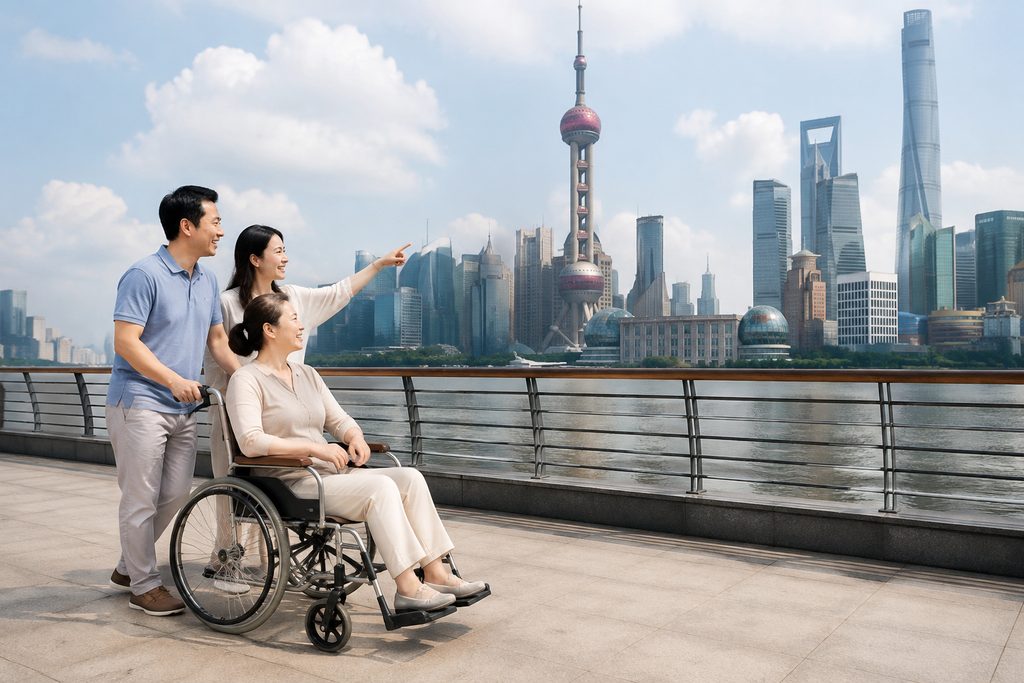
According to a 2024 report by the China Medical Tourism Association, the number of inbound medical travelers has been climbing by roughly 18% annually, with a significant portion bringing at least one companion. The instinct is universal. You face a procedure in a foreign country, and your first thought isn’t just about the operating room. It’s about the people who will sit in the waiting room. Then, once the procedure is over, a new anxiety surfaces: what do we do with all this time? You aren’t just looking for a hospital. You’re looking for a way to turn a difficult chapter into something your family doesn’t just endure, but remembers differently. The search for medical tourism packages China with family isn’t a luxury question. It’s a practical one, rooted in the reality that healing happens in a context, and that context includes the people who love you and the streets outside the hospital window.
How This Actually Works, Step by Step
The idea of combining a major surgery with family sightseeing sounds contradictory. It’s not. It’s about sequencing. The process isn’t a tour bus pulling up to a hospital door. It’s a phased logistical plan that protects the patient’s recovery while giving family members a meaningful experience during the inevitable downtime.
First, the medical evaluation happens remotely. You send existing scans, bloodwork, and reports. A specialist team at a top-tier Chinese hospital reviews them. They come back with a written analysis and a treatment plan. This step alone usually takes five to ten business days. No travel yet. No commitment beyond the consultation fee.
Once the plan is clear and you decide to proceed, the scheduling begins. This is where most people underestimate the timeline. A specific surgeon’s availability, operating room slots, and pre-operative testing all need to align. We handle this coordination, but it’s not instant. Expect a lead time of two to four weeks before a confirmed surgery date. During this window, visa applications run in parallel. The S2 visa, the correct category for private medical treatment, requires an invitation letter from the hospital. That letter can only be issued after the hospital formally accepts your case.
Then you arrive. The first few days are purely clinical: consultations, final diagnostics, and the procedure itself. Family is at the hospital. But after discharge, the dynamic shifts. The patient needs rest, not a tour guide. That’s when the careful choreography begins. One family member stays with the patient at the hotel or recovery residence. Others can take a pre-planned half-day excursion. Nothing strenuous. A private car to a quiet garden, a short museum visit, a meal at a restaurant that understands post-operative dietary needs. The key is flexibility. Nothing is booked that can’t be cancelled with a few hours’ notice.
What “Family-Friendly Recovery” Actually Means in a Chinese Medical Context
Searching for family-friendly recovery centers China medical tourism reveals a gap between expectation and reality. China’s public hospitals, even the elite ones on the Fudan ranking, are not designed as family hotels. A standard inpatient room at Peking Union Medical College Hospital or Zhongshan Hospital is functional. It’s not a space where a spouse comfortably sleeps for a week. That’s not a flaw. It’s a structural reality of a system built for high-volume clinical efficiency.
So where does the family stay? The answer usually involves a nearby serviced apartment or an international hospital with dedicated family suites. Private institutions like United Family Healthcare or Jiahui International Hospital offer rooms with space for a companion to stay overnight. They also have English-speaking nursing staff, which reduces the pressure on family members to act as constant translators. This matters more than people expect. A family member who spends twelve hours a day navigating language barriers at a public hospital is exhausted, not supportive.
The cost difference is significant. A private room at a top public hospital’s international wing might run $300 to $600 per night. A comparable room at a private international hospital can reach $800 to $1,200. A serviced apartment nearby, booked independently, often lands between $100 and $200 per night. The trade-off is distance and language support. There’s no universal right answer. It depends on the procedure, the expected length of stay, and the family’s comfort with navigating a Chinese city on their own.
But recovery isn’t just about the bed. It’s about what happens when the patient is stable enough to leave the room but not ready to travel home. This is where the urban environment itself becomes a recovery tool. A slow walk through Fuxing Park in Shanghai’s former French Concession, sitting by the lotus ponds in Beijing’s Summer Palace in the early morning before the crowds arrive, or simply eating congee at a quiet restaurant overlooking Hangzhou’s West Lake. These aren’t tourist activities. They’re gentle re-engagement with the world. And they give the family something to do that doesn’t involve staring at a hospital wall.
A Realistic Timeline
Recovery doesn’t start when you leave the hospital. It starts the moment the surgery ends. And family sightseeing doesn’t start until recovery is stable. Here’s how the phases actually unfold, with real waiting periods included.
| Phase | Duration | Patient Status | Family Activity Window |
|---|---|---|---|
| Remote consultation & treatment planning | 5–10 business days | At home, no travel | None — planning stage |
| Surgery scheduling & visa processing | 2–4 weeks | At home, preparing documents | None — logistics stage |
| Arrival & pre-operative testing | 2–3 days | In hospital, undergoing tests | Minimal — family stays close |
| Surgery & inpatient stay | 3–7 days (varies widely) | Recovering in hospital | Very limited — short breaks only |
| Early post-discharge recovery | 5–10 days | At hotel/apartment, limited mobility | Half-day outings for one family member at a time |
| Stabilized recovery & follow-up | 7–14 days | Mobile, attending follow-up appointments | Full-day excursions possible, patient may join light activities |
| Fit-to-fly clearance & departure | 1–2 days after final consult | Cleared for travel | Final sightseeing before airport |
This timeline assumes no complications. A post-surgical infection or unexpected reaction extends everything. We always recommend building in a buffer of at least five extra days beyond the minimum expected recovery. The cost of changing a flight is trivial compared to the risk of flying before you’re ready.
What Can Go Wrong — and What Happens Then
The fantasy is that your family explores ancient temples while you nap peacefully, and everyone reconvenes for a gentle dinner. The reality can be messier. Pain spikes unexpectedly. A follow-up appointment gets moved. Someone gets lost because they couldn’t get a Didi (China’s ride-hailing app) to work without a Chinese phone number.
The most common failure mode is overestimating the patient’s energy. A patient who feels good on day six post-discharge decides to join a family outing to the Great Wall. By hour two, they’re pale, sweating, and desperate to lie down, but the car is a thirty-minute walk back through a crowded parking lot. This isn’t a hypothetical. We’ve seen it. The solution is brutally simple: the patient does not join any excursion until a follow-up consultation confirms it’s safe. Even then, outings are private, chauffeured, and have a hard one-hour limit. No exceptions.
Another failure mode is language isolation for the family. A spouse who doesn’t speak Mandarin, left alone in a hotel while the patient rests, can feel profoundly alienated. The city outside is vibrant, but the barrier is real. This is where having a bilingual coordinator on call makes the difference. Not a tour guide. Someone who can troubleshoot: “The pharmacy gave me the wrong medication,” or “I think I left my passport at the restaurant.” These are the moments that turn a recovery trip into a crisis. They’re also preventable.
And then there’s the visa question that families always ask: can my family stay with me during surgery in China? The short answer is yes. The S2 visa covers both the patient and accompanying family members. But the S2 is typically issued for 30 to 90 days. If the recovery timeline stretches beyond that, an extension must be filed at the local Public Security Bureau Exit-Entry Administration office. This requires a medical certificate confirming the need for continued treatment. It’s usually approved, but it takes time and paperwork. We handle this. But families need to know it’s not automatic.
Choosing the Right City for Recovery, Not Just Surgery
The question what to do with family during medical recovery in Shanghai is fundamentally different from asking the same about Beijing or Guangzhou. The city shapes the recovery experience. Shanghai’s medical infrastructure is concentrated in the former French Concession and Pudong. The tree-lined streets of Xuhui District, with their ground-floor cafes and small parks, are inherently more recovery-friendly than the vast, traffic-choked boulevards of northern Beijing. A patient can walk fifty meters from a serviced apartment on Huaihai Road, sit on a bench, and watch the city move. That’s recovery. Beijing’s advantages are different: the concentration of top-tier hospitals like Peking Union Medical College Hospital and Fuwai Hospital is unmatched. But the urban scale is immense. Getting from a hotel in Chaoyang District to a hospital in Xicheng District can take an hour in traffic. That’s not what a recovering patient needs.
Guangzhou offers a different trade-off. The climate is subtropical. For patients recovering in autumn or winter, the mild weather is a genuine medical advantage. The city’s top-ranked hospitals are clustered in the Yuexiu and Tianhe districts, and the food culture—particularly the Cantonese tradition of slow-cooked soups and congee—aligns naturally with post-operative dietary needs. But the language environment is predominantly Cantonese, which adds another layer of complexity even for Mandarin speakers.
Hangzhou deserves a special mention. It’s not on the typical medical tourism radar, but for certain recoveries, it’s ideal. West Lake is a flat, paved loop of about 10 kilometers. A recovering patient can walk a few hundred meters, sit by the water, and feel like they’re in a classical Chinese painting. The city has several hospitals on the Fudan specialty rankings, particularly in traditional Chinese medicine and oncology. And it’s only a 45-minute high-speed train ride from Shanghai, which means you can have your surgery in Shanghai and decamp to Hangzhou for the recovery phase. That’s a model we’ve seen work repeatedly.
The search for best hospitals in Beijing for international patients with family recovery often misses this point. The hospital is only half the equation. The neighborhood matters just as much. A world-class surgeon in a hospital surrounded by eight-lane roads and no green space creates a recovery environment that works against healing. We always ask patients: where do you want to walk on day seven? That question shapes the hospital recommendation as much as the specialty ranking does.
Practical Considerations: Visas, Payments, and the Hidden Costs of Hosting Family
Bringing family multiplies the logistical load. It’s not just one person’s medical records, dietary restrictions, and medication schedule. It’s everyone’s. The most overlooked cost in affordable medical treatment China with family sightseeing is not the hospital bill. It’s the daily operational expenses of keeping a family unit functional in a foreign country for three to six weeks.
Accommodation is the biggest line item after the procedure itself. A family of three needs at minimum a one-bedroom serviced apartment with a kitchenette. Eating every meal in restaurants during a medical recovery is both expensive and medically risky. The patient needs specific foods at specific times. A kitchenette allows the family to prepare simple meals. In Shanghai, a decent serviced apartment near Huashan Hospital or Ruijin Hospital runs $120 to $180 per night. For a four-week stay, that’s $3,360 to $5,040. Add in groceries, local transportation, and the occasional family meal out, and the non-medical spend easily reaches $6,000 to $8,000 for a month. This is still dramatically less than equivalent costs in the United States or Western Europe, but it’s not negligible.
Payment structures in Chinese hospitals don’t help. Public hospitals require a deposit upfront, usually calculated as an estimate of the total procedure cost. This deposit is paid via cash, UnionPay card, or sometimes international credit card at the international wing. Insurance reimbursement happens after the fact. You pay, you get treated, you submit the receipts to your insurer at home. That means the family needs access to significant liquid funds during the trip. Private international hospitals often have direct billing arrangements with major insurers like Cigna, Aetna, and Bupa. That simplifies things enormously. But the procedure cost at these hospitals is higher, sometimes double the public hospital international wing rate. The math is personal: is the convenience worth the premium? For some families, absolutely. For others, the savings at a public hospital international wing justifies the upfront payment and later reimbursement hassle.
Language is the other practical wall. Ride-hailing apps, food delivery, hospital registration kiosks, pharmacy instructions—all default to Chinese. A family member with a translation app can manage basic transactions. But in a medical context, “basic” isn’t good enough. Misunderstanding a dosage instruction or a post-operative symptom description has consequences. This is why a bilingual medical companion isn’t a luxury add-on. It’s the single intervention that prevents the most common and most dangerous failures. From $200 per day, it covers the real work: interpreting during consultations, reading prescription labels, explaining discharge instructions to the family, and being the person who answers the phone when something goes wrong at 9 p.m.
Frequently Asked Questions
Yes. The S2 visa covers both the patient and accompanying family members. The hospital will provide the necessary invitation letters for all travelers. During the surgery itself, family members wait in designated areas, not in the operating room. After discharge, accommodation arrangements depend on the hospital type—private international hospitals often allow a family member to stay in the patient’s room overnight, while public hospitals typically do not. Plan for nearby lodging.
Visa extensions are possible. You’ll need to visit the local Exit-Entry Administration office with a medical certificate from your treating hospital confirming that continued treatment is necessary. The process usually takes about a week. We handle this paperwork for our patients, but it’s important to start the extension process at least seven business days before the current visa expires. Overstaying a visa in China is taken seriously and carries fines and potential travel restrictions.
The term “package” can be misleading. Reputable medical coordinators don’t sell pre-bundled surgery-plus-tourism deals because recovery is unpredictable. What we do instead is build a flexible framework: confirmed hospital appointments, reserved accommodation, and a menu of optional, cancellable family excursions that can be activated based on the patient’s daily condition. Be wary of any provider that promises a fixed sightseeing itinerary locked into a medical timeline.
For major procedures, yes, often by a factor of five to ten when comparing the procedure cost alone. A cardiac bypass that costs $120,000 in the United States might cost $15,000 to $20,000 at a top Chinese public hospital’s international wing. Even after adding $8,000 for family travel and accommodation, the total is a fraction of the U.S. cost. But for minor procedures, the travel and accommodation costs can erode the savings. We recommend getting a detailed cost breakdown for both the procedure and the estimated family stay before deciding.
Shanghai is the most English-accessible city in mainland China. The metro has English signage and announcements. Many restaurants in the former French Concession have English menus. But outside of those expat-friendly zones, English drops off quickly. We recommend families install Alipay (with an international card linked) and a translation app like Pleco before arriving. For the first few days, a bilingual companion can help the family learn basic routes and transactions. After that, most families manage independent exploration with a pre-loaded phone and a hotel address card in Chinese to show taxi drivers.
Your Next Step
Recovery in a foreign country with your family is not a vacation. But it doesn’t have to be an ordeal. The difference lies in the planning: knowing which neighborhood suits your recovery, understanding the real timeline, and having someone local who can solve problems before they become emergencies. We are China Medical Services. We don’t provide medical care. We provide the infrastructure around it—hospital matching, appointment coordination, bilingual companions, and the logistical scaffolding that lets your family be a family while you focus on getting better. If you’re considering treatment in China and want to understand how the recovery phase would actually work for the people coming with you, reach out for a consultation. No fixed packages. No pressure. Just a clear, honest conversation about what’s possible.
For more medical information and treatment options in China, visit chinamedservices.com (China Medical Services).
