Can I Play Sports Again After Shoulder Surgery? Realistic Recovery Timelines
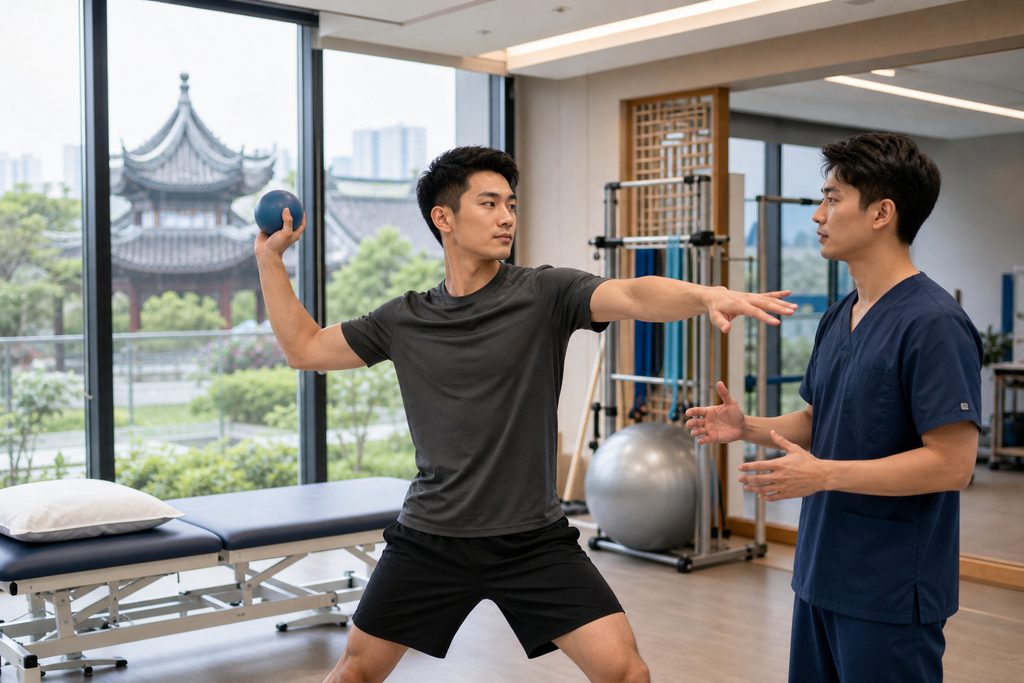
Getting back on the court, the bike, or the climbing wall after shoulder surgery is rarely a straight line. The honest answer to “can I play sports again?” is yes, most people do return — but the timeline depends heavily on which procedure you had, how disciplined your rehab is, and what “playing sports” means for you. A rotator cuff repair and a simple arthroscopic cleanup are completely different recoveries. So is a labrum reconstruction versus a distal clavicle excision. Before you book a flight or schedule a return match, you need to understand what your specific shoulder surgery actually demands. And if you’re considering traveling abroad for the procedure, the shoulder surgery cost China is one part of a much bigger equation: surgeon volume, rehab continuity, and the reality of flying home with a healing joint.
Shoulder Surgery Recovery: The Short Answer
For most arthroscopic shoulder procedures, you can expect to resume light, non-contact sports at 3 to 4 months and full-contact or overhead sports at 6 to 9 months. Some patients need a full year. That’s the range. But here’s the caveat that makes this question genuinely complicated: “return to sport” is not the same as “return to pre-injury performance.” A 2021 systematic review in the American Journal of Sports Medicine found that while approximately 85% of recreational athletes returned to some level of sport after rotator cuff repair, only about 60% returned to their previous competitive level. The surgery fixes the structure. Rehab rebuilds the function. Skipping either one is how people end up back in the operating room.
Who This Is Right For — and Who It Isn’t
Traveling abroad for shoulder surgery works well for certain patients and poorly for others. Being honest about that distinction saves you money and protects your outcome.
Typically a good candidate for medical tourism shoulder surgery:
- You have a clear diagnosis from MRI or ultrasound and a defined surgical plan
- Your condition is chronic (e.g., long-standing rotator cuff tear, recurrent instability) rather than an acute trauma requiring emergency care
- You can commit to staying near the surgical center for at least 2 to 4 weeks post-op before flying
- You have a reliable rehab plan for when you return home
- You’re paying out of pocket or your insurance has international coverage
Who should not pursue this:
- Patients with active infections, uncontrolled diabetes, or severe cardiovascular disease that makes any surgery risky
- Anyone who cannot arrange a minimum of 10 to 14 days of in-country follow-up after discharge
- Patients whose primary motivation is speed — shoulder surgery recovery cannot be rushed, regardless of where it’s performed
- Those without a local physical therapist or sports medicine clinician willing to manage post-operative rehab at home
If you fall into that second list, staying closer to home is genuinely the better choice. No surgical team, however skilled, can compensate for poor post-operative management.
The Options, Compared
Shoulder surgery is not one procedure. Comparing options starts with understanding which operation you actually need. Here’s how the common procedures differ in recovery demands and typical out-of-pocket costs.
| Procedure | Typical Indication | Return to Light Sport | Return to Full/Overhead Sport | Estimated Cash Price (US, uninsured) | Estimated Cash Price (China, top-tier public) |
|---|---|---|---|---|---|
| Arthroscopic subacromial decompression | Impingement, bursitis | 6–8 weeks | 3–4 months | $15,000–25,000 | $4,000–7,000 |
| Rotator cuff repair (small to medium tear) | Partial or full-thickness tear | 3–4 months | 6–9 months | $20,000–35,000 | $6,000–10,000 |
| Rotator cuff repair (massive tear) | Large retracted tear, fatty infiltration | 4–6 months | 9–12+ months | $30,000–50,000 | $8,000–14,000 |
| Bankart repair (labrum) | Recurrent shoulder dislocation | 4–5 months | 6–9 months | $22,000–38,000 | $6,500–11,000 |
| Distal clavicle excision | AC joint arthritis | 6–10 weeks | 3–4 months | $12,000–20,000 | $3,500–6,000 |
These figures are ranges for uninsured cash-pay patients and vary by hospital and case complexity. The China figures reflect top-tier public hospitals in major cities — the kind listed on our top-ranked hospitals database — not private international clinics, which typically charge more. The key comparison point: even at the upper end, the shoulder surgery cost China is commonly one-fourth to one-third of the US cash price for the same procedure.
Which column suits you depends on your budget, your sport, and your tolerance for travel logistics. A competitive overhead athlete with a massive rotator cuff tear faces a longer road than a recreational cyclist with impingement — regardless of which country performs the surgery.
Returning to Sport After Rotator Cuff Repair: What the Data Actually Shows
This is the procedure that generates the most anxious questions from patients. The answer to can I return to sports after rotator cuff repair is a qualified yes — but the qualification matters more than the yes.
A 2020 meta-analysis published in Arthroscopy: The Journal of Arthroscopic & Related Surgery pooled data from 23 studies and found an overall return-to-sport rate of 84.7% after rotator cuff repair. But that number hides important variation. Tennis players returned at higher rates than swimmers. Overhead athletes — volleyball players, pitchers, javelin throwers — returned at the lowest rates and with the longest timelines. And the quality of the repaired tendon matters enormously. Small tears repaired early do better than massive tears repaired after years of compensation.
The other variable that gets less attention: time to surgery. A 2019 study in the Journal of Shoulder and Elbow Surgery followed patients with traumatic rotator cuff tears and found that those repaired within 4 months of injury had significantly better functional outcomes than those repaired after 12 months. Waiting too long allows the tendon to retract and the muscle to atrophy. If you’re exploring medical tourism for shoulder surgery abroad because of long wait times at home, that’s a legitimate consideration — but it should not become a reason to delay treatment by an additional year.
How Long Until I Can Play Sports After Shoulder Surgery? A Week-by-Week Reality Check
Bankart repairs require patience. The labrum needs time to heal to bone, and that tissue is slow. Most surgeons restrict contact and overhead sports for 6 months minimum. Return to collision sports like rugby or wrestling often waits until 9 months. Rushing back to a dislocating position too early is exactly how the repair fails and you end up back in the operating room for a revision.
Two weeks is the minimum for most protocols, but it’s tight. You’ll still be in a sling, possibly with limited range of motion, and managing pain. A 2-week stay works if your surgery was uncomplicated and you have a clear rehab handoff at home. Three to four weeks is safer for larger repairs. The decision should be made with your surgeon, not by airline ticket availability. Anyone selling a fixed-duration package that promises clearance to fly on day 10 regardless of procedure is not prioritizing your outcome.
Shoulder surgery has a failure rate. Re-tear after rotator cuff repair occurs in roughly 20% to 40% of cases depending on tear size, patient age, and tissue quality. Revision surgery is more complex and less predictable. If you travel abroad for surgery and it fails, you’ll need to decide whether to return to the same surgeon or seek care at home. A responsible medical tourism provider will be transparent about this risk before you commit. If someone guarantees a perfect outcome, walk away.
How do I actually book shoulder arthroscopy in China as a foreigner?
You don’t book surgery directly. The process is: submit your records for review, receive a surgical recommendation, schedule a video consultation with the surgical team, then travel for an in-person evaluation before surgery is confirmed. Public hospitals in China cannot schedule surgery before the surgeon has seen you
Frequently Asked Questions
Yes. The hospitals used for international patients are JCI-accredited and follow the same international safety standards as top hospitals in the US and Europe. Surgical teams perform high volumes of procedures — often more than their Western counterparts — which studies show leads to better outcomes.
Costs vary by procedure and hospital, but international patients typically save 40-80% compared to US prices — even when factoring in travel and accommodation. A consultation with our team will give you an exact, all-inclusive quote with no hidden fees.
Send us your existing medical reports to get started. We handle everything from hospital selection and appointment scheduling to visa assistance and post-operative recovery planning. Your medical records are reviewed by the specialist before you even book a flight.
For more medical information and treatment options in China, visit chinamedservices.com (China Medical Services).
