Vein Stripping Cost in China: 2026 Prices, Top Hospitals & Recovery
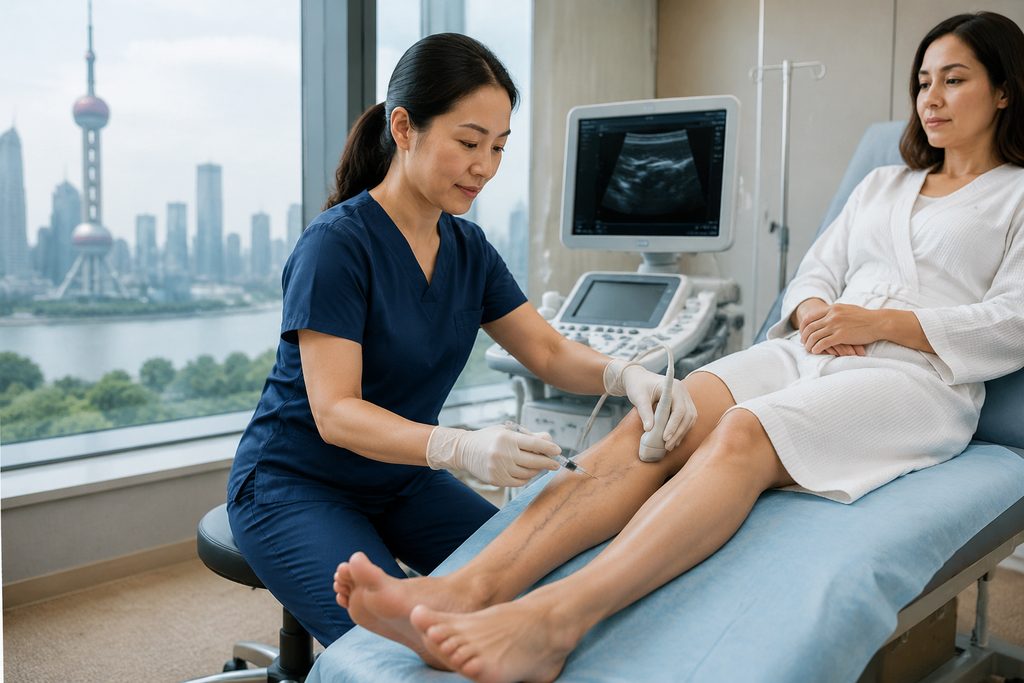
Vein Stripping Cost in China: What International Patients Actually Pay in 2026
A vascular surgery department in Shanghai can schedule a vein stripping procedure for roughly $1,500 to $4,500 in total hospital charges. The same operation billed through a US hospital network frequently lands between $8,000 and $15,000 before insurance adjustments. That gap — often five to eight times over — is why searches for vein stripping cost China have climbed steadily among patients in the United States, Canada, Australia, and the UK who face long waits or steep deductibles at home.
But price alone tells you very little. What matters is which hospital, which surgeon, what is bundled into the quote, and whether the procedure is even the right choice for your veins in the first place. This guide walks through the real numbers, the clinical alternatives, and the logistics that determine whether a trip to China makes sense for you.
Vein Stripping Cost China: The Short Answer
At a top-tier public hospital in Beijing, Shanghai, or Guangzhou, expect total charges between $1,500 and $4,500 for unilateral vein stripping, including pre-operative ultrasound, anesthesia, the procedure itself, a short hospital stay, and basic follow-up. Private international hospitals with English-speaking staff and JCI accreditation typically quote $4,000 to $9,000 for the same operation.
The caveat: “vein stripping” is an older term. Many Chinese vascular centers now perform endovenous laser ablation (EVLA) or radiofrequency ablation (RFA) instead, which are less invasive and often priced lower. Whether you receive classic stripping or a modern endovenous technique depends on your vein anatomy, not on what you search for. A duplex ultrasound decides that.
Key point: Quotes vary by hospital tier and case complexity. Always confirm what is included — anesthesia, consumables, length of stay, and follow-up are sometimes billed separately.
Who This Is Right For — and Who It Isn’t
Vein stripping and its modern equivalents treat symptomatic varicose veins caused by venous reflux — blood pooling in the legs because faulty valves allow backward flow. Not everyone with visible veins needs surgery.
Typically a reasonable candidate:
- Chronic leg heaviness, aching, or swelling that worsens through the day
- Ultrasound-confirmed saphenous vein reflux with a valve incompetence of more than 0.5 seconds
- Skin changes such as pigmentation, eczema, or a healed venous ulcer
- Recurrent superficial thrombophlebitis or bleeding from a varicosity
- Failure of conservative measures — compression stockings, elevation, weight management — after three to six months
Should not pursue this:
- Purely cosmetic spider veins, which respond to sclerotherapy, not stripping
- Active deep vein thrombosis or untreated coagulopathy
- Severe peripheral arterial disease with ankle-brachial index below 0.5
- Uncontrolled infection, sepsis, or a non-healing wound requiring vascular assessment first
- Pregnancy, or a plan to become pregnant within six months
- Anyone who cannot travel, cannot tolerate anesthesia, or whose local surgeon can perform the same procedure within a reasonable timeframe
If you fall into the second list, staying home is genuinely the better call. Our role is not to talk you into surgery abroad — it is to help you understand whether the trip is worth it.
The Options, Compared
Three variables matter: technique, hospital tier, and country. The table below puts them side by side with realistic figures.
| Option | Typical Total Cost (USD) | Anesthesia | Hospital Stay | Return to Desk Work |
|---|---|---|---|---|
| Classic stripping — China public tertiary hospital | $1,500–$4,500 | General or spinal | 1–3 nights | 2–3 weeks |
| Endovenous laser/RFA — China public tertiary hospital | $1,200–$3,800 | Local + sedation | Day case or 1 night | 3–7 days |
| Private international hospital, China | $4,000–$9,000 | Local or general | Day case to 2 nights | 3–10 days |
| Same procedure, United States | $8,000–$15,000 | Varies | Outpatient common | 1–3 weeks |
| Same procedure, United Kingdom (private) | £3,000–£5,500 (~$3,800–$7,000) | Local or general | Day case | 1–2 weeks |
Which column suits you? If cost is the dominant factor and you can travel, a public tertiary hospital in China offers the strongest value. If you need English-language care from intake to discharge and prefer a Western-style setting, the private tier costs more but removes most friction. And if your veins are mild, none of these rows apply — compression and lifestyle changes may be enough.
Choosing a Surgeon and Hospital in China
This is where most international patients get stuck. China has more than 35,000 hospitals. Roughly the top 5%, ranked by the Fudan University Hospital Rankings and JCI accreditation, are the ones worth considering for vascular surgery. Our platform tracks 340+ of them across 37 cities.
Vascular surgery does not appear as its own category on every ranking list, but the specialty sits within general surgery and cardiothoracic departments at major centers. The hospitals that consistently appear at the top of Chinese clinical rankings include:
- Peking Union Medical College Hospital (Beijing) — broad tertiary referral center
- Zhongshan Hospital, Fudan University (Shanghai) — strong cardiovascular and vascular programs
- Ruijin Hospital (Shanghai) — long-established surgical departments
- West China Hospital (Chengdu) — one of the largest single-site hospitals in the world
If you are specifically looking for the best vascular surgeon Shanghai price comparison, the practical answer is that surgeon fees at top public hospitals cluster in a narrow band. The bigger cost differences come from technique, length of stay, and whether you use the standard queue or the international/VIP channel.
One rule that surprises foreign patients: at most public hospitals, you cannot book surgery directly from abroad. You must attend an in-person outpatient consultation first, then the surgeon schedules the operation. The exception is the hospital’s international department or VIP channel, where senior specialists and English support can be arranged in advance — at roughly 1.5 to 2 times the standard price.
Is Vein Stripping Safe in China?
Yes, at accredited tertiary hospitals, the safety profile is comparable to Western centers. Varicose vein surgery is a high-volume, well-standardized procedure. Complication rates for endovenous ablation in published series generally sit below 5% for minor issues such as bruising, and under 1% for serious events like deep vein thrombosis when patients receive appropriate prophylaxis.
What raises risk is not the country — it is the setting. A hospital without proper ultrasound mapping, without thromboprophylaxis protocols, or without the ability to manage a bleeding complication is a poor choice anywhere in the world. Confirm three things before you commit:
- The hospital performs duplex ultrasound mapping as standard
- The surgeon has a documented volume of venous procedures
- There is a clear plan for post-operative anticoagulation and follow-up
Ask directly about deep vein thrombosis prophylaxis. This is the single most important safety question for any leg vein operation, and a reputable surgeon will answer it without hesitation.
How Long to Recover from Vein Stripping
Recovery depends heavily on technique. Classic stripping involves larger incisions and more tissue trauma. Endovenous laser or radiofrequency ablation uses a small catheter and typically shortens recovery by half.
A realistic timeline for classic stripping:
- Days 1–3: Rest with legs elevated. Compression stockings worn continuously. Mild bruising and discomfort expected.
- Week 1: Walking resumes. Most patients can manage light daily activity. Desk work is usually still uncomfortable.
- Weeks 2–3: Return to office work for most people. Compression stockings typically worn during the day.
- Weeks 4–6: Strenuous exercise, heavy lifting, and long flights generally resume. Final cosmetic result continues to improve for several months.
For endovenous ablation, compress the same timeline into roughly half. Many patients return to desk work within three to seven days.
One practical note for medical tourism: most surgeons advise against flying long-haul within 7 to 14 days of the operation because of clot risk. Plan your return flight accordingly. A typical trip involves arrival, consultation, surgery, a short recovery window, and departure — usually 10 to 14 days on the ground.
Practical Considerations: Records, Visa, and Payment
Bring your existing imaging. A recent duplex ultrasound report, medication list, and any prior vascular notes save time and prevent repeat testing. If you have no imaging, it can be arranged on arrival, but that adds a day or two.
On visas: foreign patients coming to China for medical treatment generally use the S2 visa, which covers short-stay private affairs including medical treatment. Stays beyond 180 days fall under S1. Accompanying family members apply for S2 as well. Requirements change, so confirm current documentation with the nearest Chinese embassy or consulate — typically a hospital invitation letter and proof of appointment. Note that the M visa is for commercial and trade activity and is not the correct category for medical travel.
Payment: public hospitals require prepayment, with insurance reimbursement handled afterward in your home country. Private international hospitals often bill insurers directly. Bring a card that works internationally, and confirm the hospital’s accepted payment methods before arrival.
Language is the other real hurdle. Top Chinese hospitals handle enormous daily patient volumes — some see over 10,000 outpatient visits a day. Without Mandarin, navigating registration, payment, and pharmacy queues is difficult. This is precisely where a bilingual medical companion earns their fee.
For patients weighing whether to book vein stripping surgery in China, the honest advice is to start with a remote review of your ultrasound and history. That costs far less than a flight and tells you whether surgery is even indicated.
What It Costs and What Is Included
Published hospital price lists rarely cover the full picture. Here is what a realistic quote should itemize:
- Pre-operative duplex ultrasound and blood work
- Surgeon and anesthesiologist fees
- Operating theatre and consumables (laser fiber, catheters, or stripping instruments)
- Hospital bed nights
- Compression stockings and dressings
- Post-operative review visit
What is usually not included: flights, accommodation, airport transfers, interpreter time, and any treatment for complications. Ask for a written itemized estimate before you commit. If a provider cannot produce one, that is a warning sign.
Budget roughly $1,500 to $4,500 at a public tertiary hospital, and $4,000 to $9,000 at a private international facility. Add $300 to $600 for a bilingual medical companion per day if you want hands-on support, and around $200 round-trip for airport transfers.
Frequently Asked Questions
At accredited tertiary hospitals, yes — outcomes and complication rates are broadly comparable to Western centers. The determining factor is the hospital’s protocols, not the country. Insist on duplex ultrasound mapping and a clear thrombosis prevention plan.
Public tertiary hospitals in China typically charge $1,500 to $4,500 in total, against $8,000 to $15,000 in the US. Private international hospitals in China run $4,000 to $9,000. Final figures vary by hospital and case complexity.
Not directly at most public hospitals — an in-person consultation is required first, and surgery is scheduled afterward. The international or VIP channel can sometimes arrange a pre-booked consultation with a senior specialist, at roughly 1.5 to 2 times the standard fee.
Plan for 10 to 14 days on the ground: arrival, consultation and imaging, surgery, a short recovery window, and a follow-up review. Flying long-haul within 7 to 14 days of surgery is generally discouraged.
Sometimes, but rarely automatically. Most insurers require pre-authorization and reimburse after you pay. Public hospitals expect prepayment; some private international hospitals bill insurers directly. Check your policy before booking anything.
Your Next Step
The numbers are clear: vein treatment in China costs a fraction of US or UK private rates, and the clinical standards at top-ranked hospitals are genuinely high. The harder part is knowing whether you need the operation at all, and which hospital fits your case.
We are China Medical Services, a patient coordination platform — not a hospital, and not a provider of medical advice. We handle record translation, appointment coordination through official international departments, and bilingual accompaniment on the ground. We do not diagnose, and we do not promise access to any specific surgeon.
If you are weighing your options, start with a written second opinion or a video consultation. It is the lowest-risk way to get a real answer before you book a flight. When you are ready, you can request a free consultation and we will walk through the next steps with you.
This article is for general information only and does not constitute medical advice. Always consult a qualified physician about your individual condition before pursuing any treatment.
For more medical information and treatment options in China, visit chinamedservices.com (China Medical Services).
