What Is a Ventricular Assist Device? Cost, Safety, and Top Hospitals in China
What Is a Ventricular Assist Device? The Short Answer
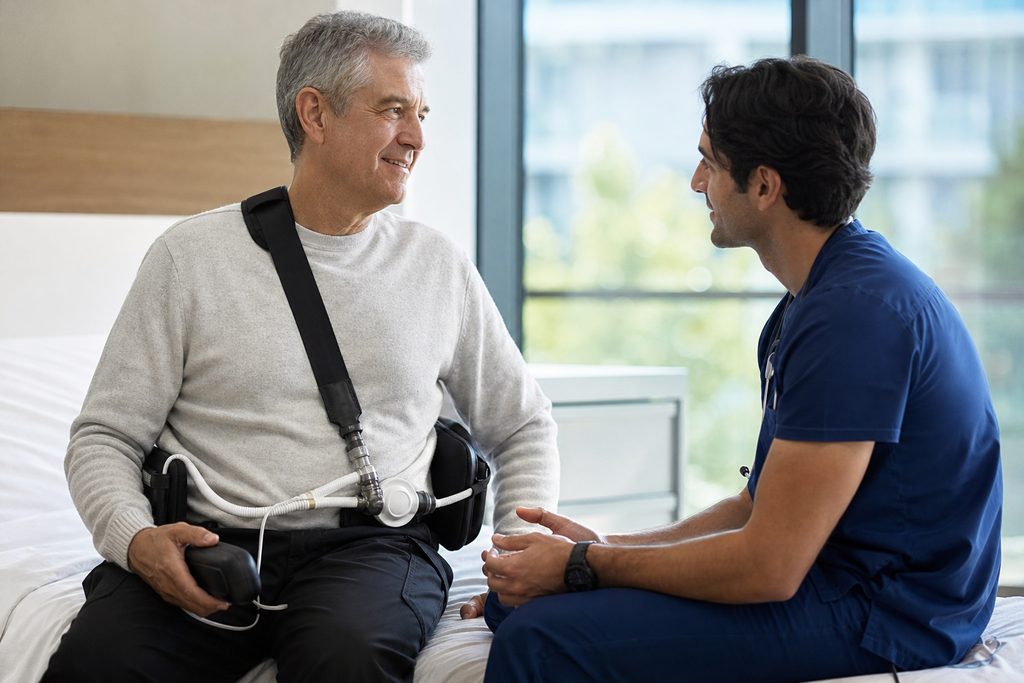
A ventricular assist device (VAD) is a mechanical pump implanted inside the chest to help a weakened heart move blood through the body. When medication no longer controls end-stage heart failure, a VAD takes over the pumping work of the left ventricle — the heart’s main chamber. The device connects to a controller and battery pack worn outside the body. Some patients live with a VAD for years while waiting for a transplant. Others receive one as permanent therapy because a transplant is not an option for them.
But a VAD is not a cure. It is a bridge — to transplant, to recovery, or to a longer life with better function. And the decision to get one involves weighing surgical risk, daily maintenance, infection risk, and cost. For international patients, the ventricular assist device cost China is often half or less of what US hospitals charge. That gap drives many families to look abroad. We will break down exactly what that means.
Who This Is Right For — and Who It Isn’t
VAD candidacy is tightly defined by heart failure severity. Cardiologists use the INTERMACS profile system, which classifies patients from 1 (critical cardiogenic shock) to 7 (advanced but stable). Most VAD implants happen at profiles 2 through 4.
Typical candidates include:
- Patients with New York Heart Association (NYHA) Class IIIB or IV heart failure despite optimal medical therapy
- Those with a left ventricular ejection fraction (LVEF) below 25%
- Patients who cannot tolerate standard heart failure medications
- People on the transplant waiting list who are deteriorating
- Patients with contraindications to transplant, such as pulmonary hypertension that may improve with VAD support
Who should not pursue a VAD:
- Patients with irreversible kidney or liver failure
- Active systemic infection or sepsis
- Severe right ventricular failure that would not tolerate left-sided support alone
- Uncontrolled bleeding disorders
- Patients who cannot manage the device’s daily care requirements — battery changes, driveline dressing, anticoagulation monitoring
- Those with limited social support or cognitive impairment that prevents safe device operation
A VAD demands real work from the patient and family. That is not a reason to avoid it. But it is a reason to be honest about readiness before flying to another country for surgery.
The Options, Compared
When a patient reaches end-stage heart failure, there are four realistic paths. Here is how they compare on the factors that matter most to international patients.
| Option | Typical Cost (USD) | Wait Time | 1-Year Survival | Daily Burden |
|---|---|---|---|---|
| Optimal medical therapy alone | $5,000–$20,000/year | None | 25–50% for advanced HF | Low |
| VAD implantation | $60,000–$120,000 in China | 2–6 weeks after evaluation | 80–85% | High (device management) |
| Heart transplant | $80,000–$150,000 in China | Months to years | 85–90% | Moderate (immunosuppression) |
| Palliative/hospice care | $10,000–$30,000 | None | Variable | Low |
Medical therapy alone is the baseline. For patients at INTERMACS profile 3 or worse, it often means progressive decline. A VAD buys time and function — patients can walk, work, and live at home. A transplant offers the best long-term survival but requires a donor organ and lifelong immunosuppression. Palliative care is not giving up; it is choosing comfort and dignity when invasive therapy no longer aligns with a patient’s goals.
So which column fits whom? If you are deteriorating on medication and transplant is not immediately available, a VAD is often the bridge that keeps you alive. If you are stable but declining slowly, medical therapy plus transplant listing may be enough. The choice belongs to the patient and their cardiologist — but understanding the real numbers makes that conversation clearer.
How Does a Ventricular Assist Device Work? The Mechanics Nobody Explains
Most modern VADs are continuous-flow pumps. That means they do not beat like a heart. They spin at a constant speed — typically 2,400 to 3,200 revolutions per minute — pushing blood from the left ventricle into the aorta. Patients with continuous-flow VADs often have no palpable pulse. Their blood pressure is measured as a mean arterial pressure, not the familiar systolic/diastolic pair.
The implant procedure is open-heart surgery. The surgeon places the pump in a pocket below the diaphragm or directly in the pericardium. An inflow cannula draws blood from the left ventricle. An outflow graft sends it to the aorta. A thin driveline exits through the abdominal skin and connects to an external controller. The controller powers the pump and displays alarms. Two rechargeable batteries or a power module keep it running. Battery life ranges from 8 to 14 hours depending on the device generation.
And here is what surprises most patients: the right ventricle still has to work. A left VAD only supports the left side. If the right ventricle is weak, the patient may need temporary right-sided support or a biventricular approach. Preoperative right heart assessment is one of the most important predictors of VAD success. That is not a detail to skip.
Is VAD Surgery Safe in China? What the Data Shows
The short answer: at China’s top cardiac centers, VAD surgery carries risks comparable to experienced Western programs. The INTERMACS registry in the United States reports a 1-year survival of approximately 83% for contemporary continuous-flow devices. Chinese centers with high cardiac surgery volumes report similar outcomes, though published national registry data is less mature than in the US or Europe.
What matters more than the country is the specific hospital’s volume and infrastructure. Fuwai Hospital in Beijing performs over 14,000 cardiac surgeries annually — the highest volume of any heart center globally. Its VAD program includes dedicated heart failure cardiologists, perfusionists, and a cardiac ICU built for mechanical circulatory support. Zhongshan Hospital in Shanghai runs one of China’s largest heart transplant and VAD programs. Both are ranked among China’s top cardiac centers in the Fudan specialty reputation rankings.
Safety also depends on patient selection. A patient who arrives with multiorgan failure, active infection, or severe right ventricular dysfunction will have a rough course anywhere. A patient who is optimized before surgery — nutrition, fluid balance, infection control — has a much better chance. That preoperative optimization is where a coordinated international pathway makes a real difference.
Ventricular Assist Device Cost China: The Numbers
The ventricular assist device cost China typically ranges from $60,000 to $120,000 for the device, surgery, and initial hospitalization. That range varies by hospital tier, device generation, and case complexity. A standard left VAD implant at a top public hospital’s international department usually falls between $70,000 and $100,000. Private international hospitals in Shanghai or Beijing may quote higher, reflecting English-speaking staff and hotel-like amenities.
For comparison, the same procedure in the United States costs $250,000 to $500,000 or more. In Germany or the UK, €180,000 to €300,000. The gap is real. But what is included matters just as much as the headline number.
Typically included in the Chinese hospital quote:
- The VAD device and all implant components
- Surgeon and anesthesiologist fees
- Operating room and cardiac ICU stay
- Standard postoperative ward care
- Initial device programming and patient/caregiver training
Typically not included:
- International travel and visa fees
- Preoperative evaluation if done in your home country
- Long-term anticoagulation monitoring after discharge
- Replacement batteries, controllers, or driveline supplies
- Treatment of complications requiring readmission
- Accommodation for family during the 4–8 week recovery period
Best VAD Hospital Shanghai and Other Centers Worth Knowing
Patients searching for the best VAD hospital Shanghai are usually comparing Zhongshan Hospital against Ruijin Hospital and the private international options. Zhongshan has the deepest heart failure and transplant experience in the city. Its cardiac surgery department is consistently ranked among China’s top 10 for cardiac surgery in the Fudan specialty rankings. Ruijin Hospital also runs a strong cardiology and cardiac surgery program, with a reputation for managing complex comorbidities.
Outside Shanghai, Fuwai Hospital in Beijing is the reference center for mechanical circulatory support in China. Its annual cardiac surgery volume exceeds 14,000 cases — a scale that breeds technical consistency. West China Hospital in Chengdu and Guangdong Provincial People’s Hospital in Guangzhou also operate active VAD programs. For patients who prefer English-speaking care and direct insurance billing, JCI-accredited private international hospitals in Shanghai and Beijing offer VAD evaluation and surgery, though at a higher price point.
Several Chinese cardiac centers hold JCI accreditation, which signals compliance with international patient safety standards. When evaluating JCI accredited cardiac hospitals China, confirm the accreditation is current and covers the cardiac surgery service line specifically — not just the hospital overall.
Practical Considerations: Records, Visa, and the Path to Surgery
Chinese public hospitals do not allow overseas patients to book surgery directly from abroad. The standard rule: outpatient consultation first, then surgical scheduling. For international patients, the practical path runs through the hospital’s international department or VIP channel. That is where a bilingual coordinator handles registration, record translation, and specialist appointments.
What you need before traveling:
- Complete medical records: echocardiogram reports, cardiac catheterization data, medication list, prior hospitalizations
- Recent lab work: renal function, liver function, coagulation profile, infectious disease screening
- A written summary from your current cardiologist stating diagnosis, INTERMACS profile, and treatment goals
- Imaging on CD or cloud link: chest X-ray, cardiac MRI if available, coronary angiography
The visa category for medical treatment in China is the S2 visa, annotated for medical purposes. Family members accompanying you also apply for S2 visas. The hospital’s international department issues an invitation letter and treatment confirmation document to support the application. Processing time varies by embassy, but plan for 3–6 weeks. You cannot apply for an M visa for this purpose — M is for commercial and trade activities only.
Payment in Chinese public hospitals is prepaid. You deposit funds at admission, and the hospital draws down as services are delivered. Insurance reimbursement is retrospective — you pay first, then claim from your insurer. Private international hospitals with JCI accreditation may bill your insurer directly, which is why some patients choose them despite higher prices.
After discharge, you will need anticoagulation monitoring for as long as the VAD is in place. That means INR checks weekly at first, then monthly. Your home cardiologist must be willing to co-manage this. Before you leave China, the implanting team will provide a written protocol and arrange at least one video follow-up. Some patients return at 3 months for a device check. That follow-up plan should be agreed before surgery, not improvised after.
Frequently Asked Questions
Contemporary continuous-flow VADs have a median survival of 5 to 7 years, with some patients living beyond 10. The limiting factors are typically infection, stroke, device thrombosis, or right heart failure. Long-term success depends heavily on driveline care and anticoagulation discipline.
You cannot book surgery directly. The process starts with a remote evaluation — you send your records, a Chinese cardiac team reviews them, and they determine whether you are a candidate. If yes, you travel for an in-person consultation, then surgery is scheduled. Trying to bypass the evaluation step will not work at any reputable hospital.
This is the hardest question. Your home cardiologist must be willing to manage VAD complications — driveline infections, alarm troubleshooting, anticoagulation adjustments. Some countries have VAD centers that accept patients implanted elsewhere. Others do not. Before you fly to China for surgery, confirm that a local provider will accept you for follow-up. If no one will, reconsider the plan entirely.
For most eligible patients, transplant offers better long-term survival and quality of life. But transplant requires a donor organ, and wait times can stretch for years. A VAD can keep you alive and functional during that wait. For patients who cannot receive a transplant — due to age, pulmonary hypertension, or other contraindications — a VAD may be the best available option. It is not a competition. It is a sequence.
Your Next Step
Understanding what a ventricular assist device is, how it works, and what it costs in China puts you ahead of most patients facing this decision. The next step is finding out whether you are actually a candidate — and that requires a specialist review of your records, not more internet research.
Our team at China Medical Services connects international patients with top-tier Chinese cardiac centers. We are not a hospital. We do not diagnose or treat. What we do is handle the logistics: record translation, hospital matching, appointment coordination, bilingual accompaniment, and visa guidance. If you want to know whether a VAD in China is realistic for your situation, request a free consultation. We will review your case and tell you honestly what is possible.
Start with a conversation. It costs nothing and may save you months of uncertainty.
For more medical information and treatment options in China, visit chinamedservices.com (China Medical Services).
