West China Hospital Gastroenterology for International Patients: A Complete Guide
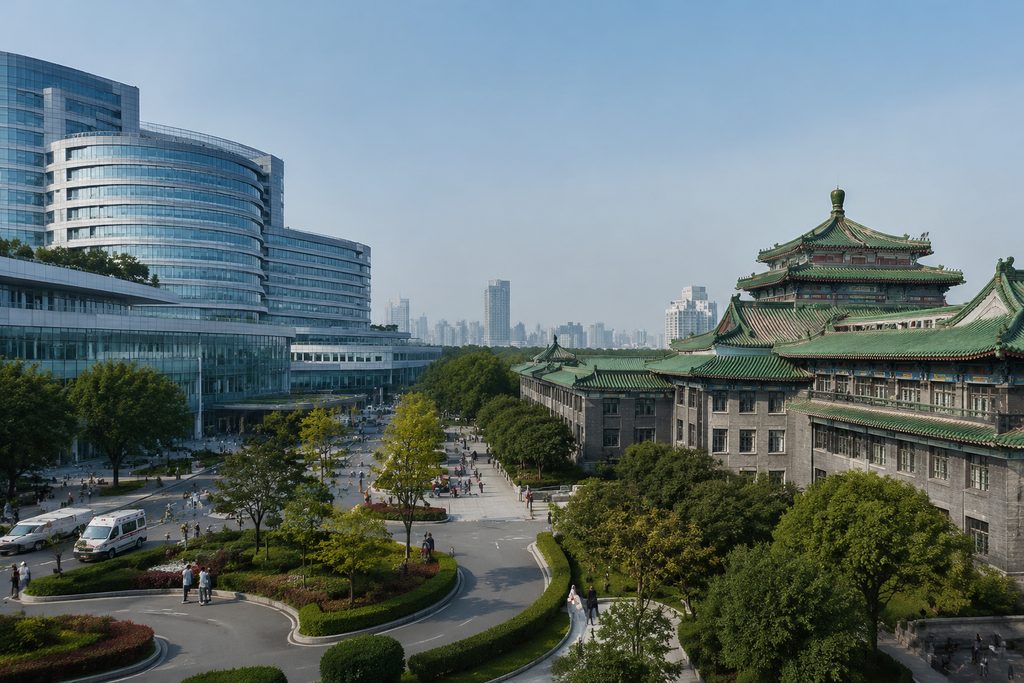
An endoscopy can feel like a big step, especially in a country where you do not speak the language. In plain terms, an upper endoscopy or colonoscopy is a camera examination of your digestive tract. You want it done accurately, safely, and without a three-month guessing game about logistics. That is where a West China Hospital international patient coordinator becomes relevant. West China Hospital in Chengdu runs one of China’s largest gastroenterology departments. Its international wing sees foreign patients for everything from diagnostic gastroscopy to complex inflammatory bowel disease management. The hospital is consistently ranked among China’s top five for gastroenterology in the Fudan specialty reputation rankings. But accessing it from abroad involves a specific process. Here is exactly how it works, what it costs, and whether it fits your situation.
West China Hospital Gastroenterology for International Patients: The Short Answer
Yes, West China Hospital treats international patients through its International Medical Center. You cannot simply walk in from overseas and get a same-week scope. You need a referral pathway, translated records, and a clear clinical question. The hospital’s gastroenterology team handles reflux disease, chronic gastritis, peptic ulcers, colorectal cancer screening, liver disease, and advanced endoscopic procedures. For foreign patients, the practical route is through the international department, where staff coordinate appointments and provide English-language support. The key caveat: you still need an in-person consultation before any procedure. No Chinese public hospital schedules surgery or invasive endoscopy without a face-to-face visit first.
Who This Is Right For — and Who It Isn’t
This pathway suits a specific type of patient. Knowing whether you fit saves you time and money.
Typically a good candidate:
- You already have imaging or lab results suggesting a GI condition and want a second opinion from a high-volume Chinese center.
- You are in Chengdu or plan to be there for business or family reasons and need a colonoscopy or gastroscopy done while you are in the country.
- You have a chronic condition like Crohn’s disease or ulcerative colitis and want a treatment plan from a department that manages thousands of these cases annually.
- You need an advanced procedure — endoscopic submucosal dissection, ERCP, or stent placement — and are comparing international centers.
Who should not pursue this:
- You want a purely remote consultation with no intention of traveling. A written second opinion can help, but a procedure requires you to be there.
- You have an acute emergency — severe GI bleeding, suspected perforation, or sudden severe pain. Go to the nearest emergency department, not an international coordinator.
- You expect a guaranteed appointment with one specific named professor on a specific date. That is not how Chinese public hospital scheduling works, even through the international department.
- You need a routine screening colonoscopy and have no symptoms. In that case, a private international hospital in Chengdu may be faster and simpler, though less academically prestigious.
The Options, Compared
Foreign patients seeking GI care in Chengdu have three genuine pathways. They differ in speed, cost, and clinical depth.
| Option | Typical Wait for Endoscopy | Cost Range (USD) | English Support | Best For |
|---|---|---|---|---|
| West China Hospital International Medical Center | 1–3 weeks after consultation | $500–1,500 for gastroscopy; $800–2,000 for colonoscopy | Coordinator + some English-speaking physicians | Complex cases, second opinions, advanced procedures |
| Private international hospital (e.g., United Family Chengdu) | 2–5 days | $800–2,500 for gastroscopy; $1,200–3,500 for colonoscopy | Full English-speaking staff | Routine screening, speed, insurance billing |
| Standard public outpatient clinic at West China Hospital | Same-day registration, procedure scheduled later | $200–600 for gastroscopy; $400–1,000 for colonoscopy | Minimal — Chinese language required | Mandarin-speaking patients or those with a local companion |
If your priority is clinical authority and you have a complex case, the international medical center at West China Hospital makes sense. If you need speed and direct insurance billing, a private hospital is the better fit. The standard public route is cheapest but realistically impractical without Chinese language ability.
How to Make an Appointment at West China Hospital from Abroad
Here is the sequence that actually works, based on how the hospital’s international services operate in practice. You do not just email a department and get a slot. You prepare a file, submit it, and wait for a clinical review.
Step 1: Gather your records. This means your endoscopy reports, pathology slides or reports, imaging (CT, MRI, ultrasound), blood work, and a summary letter from your current gastroenterologist. Everything should be in English or accompanied by a certified Chinese translation. The hospital will not review incomplete files.
Step 2: Contact the International Medical Center. This is where a West China Hospital international patient coordinator enters the picture. The coordinator reviews your materials, forwards them to the gastroenterology department, and arranges a preliminary video consultation if needed. Some patients start with a written second opinion before committing to travel.
Step 3: Schedule the in-person consultation. Once the department accepts your case, the coordinator books a face-to-face appointment. You travel to Chengdu on an S2 visa — not an M visa, which is for commercial purposes only. The hospital issues an invitation letter that supports your visa application.
Step 4: Attend the consultation, then the procedure. The gastroenterologist examines you, reviews your records, and decides whether an endoscopy is indicated. If yes, the procedure is scheduled, often within one to two weeks. You will need to prep for a colonoscopy exactly as instructed — the prep protocol is the same as in Western hospitals.
Step 5: Follow-up and departure. You receive a written report, pathology results when available, and a treatment plan. The coordinator can arrange a follow-up video consultation after you return home.
What It Costs: Gastroenterology Package Prices in Chengdu for Foreigners
Let’s talk numbers. The cost of endoscopy at West China Hospital through the international medical center typically runs between $500 and $2,000 depending on the procedure and whether sedation or polyp removal is involved. A basic diagnostic gastroscopy is on the lower end. A full colonoscopy with biopsies is higher. If polyps are removed during the procedure, that adds to the bill.
What drives the variance? Three things: the procedure type, whether therapeutic intervention is needed, and whether you go through the international department or the standard public route. The international department charges a premium — roughly 1.5 to 2 times the standard outpatient price — because it includes English coordination, faster scheduling, and a more private environment.
If you are comparing a gastroenterology package price in Chengdu for foreigners, expect the international medical center to quote you a bundled figure that includes the consultation, the procedure, sedation, and basic pathology. It does not include travel, accommodation, or any additional therapeutic procedures discovered during the scope. A private hospital package may quote $1,500 to $3,500 for a colonoscopy with everything included and direct insurance billing. The public route costs far less — sometimes under $300 for a basic gastroscopy — but you are on your own for language and logistics.
For context, a diagnostic colonoscopy in the United States often costs $2,000 to $5,000 without insurance. In Western Europe, €800 to €1,500 is common. Even the international department price at West China Hospital undercuts most Western cash prices, sometimes by half or more.
Is West China Hospital Good for Foreign Patients?
The honest answer: clinically, yes. Logistically, it depends on your preparation and expectations.
West China Hospital is one of the largest single-campus hospitals in the world. Its gastroenterology department handles a staggering volume — tens of thousands of endoscopic procedures annually. That volume translates into technical proficiency. For complex procedures like endoscopic retrograde cholangiopancreatography or large polyp resection, volume matters. The hospital’s GI specialists publish in major international journals and participate in global clinical trials.
But the hospital is enormous. The main campus sees tens of thousands of outpatients every day. Without a coordinator or bilingual companion, navigating registration, payment, and the endoscopy unit in Chinese is genuinely difficult. The international medical center mitigates this, but it is not a five-star private clinic. Expect efficiency, not luxury. The physicians are excellent. The waiting areas are busy. The process is structured.
So, is West China Hospital good for foreign patients? For those with complex GI conditions who want access to a top-tier academic department at a fraction of Western costs, yes. For those wanting a spa-like experience with zero friction, a private international hospital is a better match.
Practical Considerations: Records, Visa, Payment, and Follow-Up
Before you commit to this path, here are the logistical realities that genuinely affect your experience.
Records and documentation. Bring original pathology slides if you have had biopsies. Chinese pathologists often want to review the actual slides, not just the report. Digital copies of imaging on a CD or USB drive are acceptable. A clear referral letter from your home gastroenterologist stating the clinical question is essential.
Visa. You need an S2 visa for medical treatment, not an M visa. The hospital’s international department provides an official invitation letter once your appointment is confirmed. Family members accompanying you also apply for S2 visas. Processing takes one to four weeks depending on your home country’s Chinese embassy or consulate. No one can guarantee visa approval — that decision rests entirely with the consular officer.
Payment. Chinese public hospitals require upfront payment. The international medical center accepts cash, major credit cards, and sometimes international bank transfers. Insurance is typically reimbursement-based — you pay first, then claim from your insurer. Private international hospitals in Chengdu are more likely to offer direct billing with major insurers.
Language. The international medical center provides English-speaking coordinators and some English-speaking physicians. But nurses, technicians, and administrative staff in the endoscopy unit may speak limited English. If you are going through the standard public route, a bilingual companion is practically essential.
Follow-up after returning home. You will receive a discharge summary and pathology report in English if requested. The international department can arrange a follow-up video consultation within 90 days. Any prescriptions issued in China may not be valid in your home country — you will need your local doctor to rewrite them.
Frequently Asked Questions
No. The hospital requires an in-person consultation before scheduling any invasive procedure. You can complete a video consultation or written second opinion remotely, but the actual colonoscopy requires you to be in Chengdu for a face-to-face visit first. This is standard practice across Chinese public hospitals.
Through the international medical center, expect $500 to $1,500 for a diagnostic gastroscopy without therapeutic intervention. If biopsies or polyp removal are performed, the cost rises. The standard public outpatient route is cheaper — often $200 to $600 — but offers no English support and involves long same-day queues.
If a polyp or lesion is found, the gastroenterologist may remove it during the same procedure if it is safe to do so. You will be informed after you wake from sedation. Additional pathology fees apply. If the finding requires surgery or further intervention, the department will discuss options with you before proceeding. You are never obligated to continue treatment at West China Hospital.
No. The invitation letter supports your application, but the visa decision rests solely with the Chinese embassy or consulate reviewing your case. Apply early, provide complete documentation, and be prepared for possible delays. No legitimate medical facilitator can guarantee visa approval.
It depends on your policy. Many international insurers reimburse treatment at accredited Chinese hospitals, but you typically pay upfront and claim later. Check with your insurer before committing. The international medical center can provide itemized receipts and English-language documentation to support your claim.
Your Next Step
West China Hospital’s gastroenterology department is a serious clinical institution, and for the right patient, it offers world-class care at a price that makes sense. But the process rewards preparation. If you are considering this path, start by gathering your records and clarifying your clinical question. Our team at China Medical Services helps international patients navigate Chinese hospitals — we are not a hospital, we do not diagnose, and we do not promise outcomes. We help you understand your options, prepare your file, and coordinate logistics. When you are ready, request a free consultation to discuss whether West China Hospital fits your situation.
For more medical information and treatment options in China, visit chinamedservices.com (China Medical Services).
