Zhujiang Hospital Orthopedics for International Patients: Costs, Booking & What to Expect
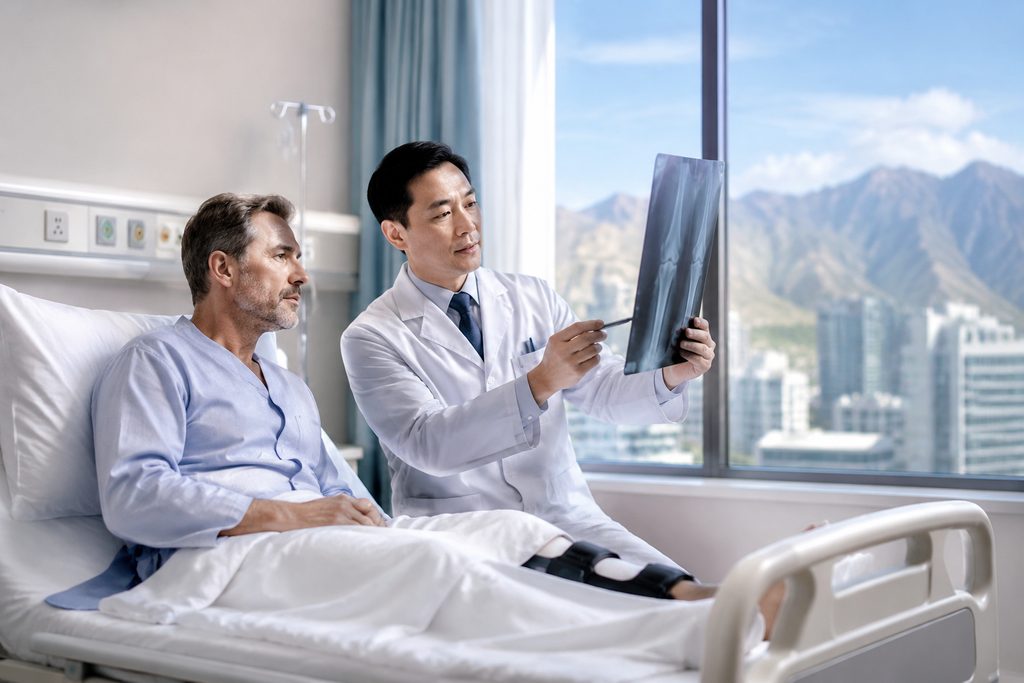
You’ve probably heard that surgery in China means compromising on quality. The reality is exactly the opposite for a hospital like Zhujiang. It sits among the top 5% of China’s 35,000+ hospitals, ranked by both Fudan University and JCI standards. But here is what most international patients get wrong: they assume “top hospital” means “easy access.” It doesn’t. The Zhujiang Hospital orthopedic surgery cost is remarkably low by Western standards, often 70–85% less than comparable U.S. procedures. The hard part is navigating the system to actually get on the schedule.
Zhujiang Hospital Orthopedics: The Short Answer
Zhujiang Hospital, officially Southern Medical University Zhujiang Hospital, runs one of the busiest orthopedic departments in Guangzhou. The hospital handles over 4,000 joint replacement and spine procedures annually. For international patients, the key figures are these: a total knee replacement typically runs $8,000–$15,000, a hip replacement $9,000–$16,000, and complex spine fusion $14,000–$25,000. Those numbers include hospital stay, implants, surgeon fees, and standard post-op monitoring. What they don’t include is the coordination work required to secure a surgical slot without spending weeks waiting in general outpatient queues.
That caveat matters. Zhujiang is a public tertiary hospital. Its general outpatient clinics operate on a same-day registration system. You cannot simply email the hospital, book a surgery date, and fly over. For international patients, the realistic path runs through the hospital’s international department or a coordination service that handles registration, translation, and scheduling logistics.
Who This Is Right For — and Who It Isn’t
Zhujiang’s orthopedic department makes the most sense for a specific profile of patient. If you fall into the following categories, the value proposition is strong.
- Patients needing elective joint replacement (knee, hip) who have been quoted $40,000–$80,000 at home and can travel for surgery.
- Patients with degenerative spine conditions (disc herniation, spondylolisthesis, spinal stenosis) who want a second opinion before committing to surgery.
- Patients who already have imaging (MRI, CT, X-ray) and a confirmed diagnosis, so the Chinese team can review records remotely first.
- Patients who are medically stable, with no uncontrolled cardiac or pulmonary disease that would make long-haul travel and surgery risky.
- Patients from Southeast Asia, the Middle East, or Eastern Europe, for whom Guangzhou is a direct flight and the cost difference is dramatic.
Who should not pursue this? Patients with acute trauma or emergency fractures — flying to China for urgent care makes no sense. Patients with complex revision surgeries after multiple failed operations may find that the coordination burden outweighs the savings. And patients who require extensive postoperative rehabilitation lasting months may face a difficult decision about staying in Guangzhou versus returning home early. Being honest about these limits is what makes the rest of this guide credible.
The Options, Compared
If you are weighing Zhujiang against other routes for orthopedic care, the table below lays out the real differences. Prices are ranges, not quotes. They vary by hospital and case complexity.
| Option | Typical Cost (USD) | Wait Time | Language Support | Best For |
|---|---|---|---|---|
| Zhujiang Hospital (public, international coordination) | $8,000–$16,000 (joint replacement) | 2–6 weeks after records review | Limited; coordination service recommended | Cost-sensitive patients with confirmed diagnosis |
| Private international hospital in Guangzhou (e.g., United Family, Jiahui) | $25,000–$45,000 | 1–3 weeks | English-speaking staff, direct insurance billing | Patients who prioritize convenience and insurance integration |
| U.S. hospital (average) | $40,000–$80,000 (joint replacement) | 4–12 weeks | Native English | Patients with comprehensive U.S. insurance |
| Thailand or India private hospital | $12,000–$20,000 | 2–4 weeks | English widely spoken | Patients seeking a middle ground on cost and language |
The Zhujiang route works best for patients who have already done their homework — diagnosis confirmed, imaging complete, and a clear surgical plan in mind. If you need extensive diagnostic workup from scratch, a private international hospital with English-speaking staff may save you weeks of back-and-forth.
Is Zhujiang Hospital Good for Joint Replacement?
The honest answer: yes, for volume and technical competence. Zhujiang’s orthopedic surgeons perform a high number of primary total knee and hip arthroplasties each year. The department uses modern implant systems — many are the same brands used in Western hospitals, including Zimmer Biomet, DePuy Synthes, and Stryker. That matters because implant quality is a major driver of long-term outcomes.
But volume alone does not tell the full story. The Fudan University hospital rankings place Zhujiang among the leading hospitals in South China, though its orthopedic department does not sit in the national top 10 for that specialty. Hospitals like Peking University Third Hospital and Shanghai Sixth People’s Hospital carry stronger national reputations for orthopedics specifically. If you want the absolute highest-ranked orthopedic department in China, you might look at our orthopedic specialty rankings before deciding. For many patients, though, Zhujiang’s combination of solid outcomes, Guangzhou’s accessibility, and lower cost makes it the practical choice.
Zhujiang Hospital Orthopedic Surgery Cost: A Closer Look
Let’s break down what drives the final number. The Zhujiang Hospital orthopedic surgery cost range I quoted earlier — $8,000 to $16,000 for joint replacement — depends on several factors.
- Implant choice: A standard cobalt-chrome knee implant costs less than a premium oxidized zirconium or custom-fit option. The difference can be $2,000–$5,000.
- Length of stay: Most primary joint replacements require 5–10 days in hospital. Complex revisions or bilateral procedures extend that to 14–21 days.
- Room type: Standard shared rooms are cheapest. Private rooms in the international ward cost 1.5–2 times more, but include better nursing ratios and more comfortable conditions for family members.
- Surgeon seniority: A chief physician’s surgical fee runs higher than an associate chief’s. For straightforward primary replacements, the difference in outcome is often negligible.
- Pre-op testing and imaging: If you arrive without recent imaging, expect to add $500–$1,500 for MRI, CT, blood work, and cardiac clearance.
What is not included: international flights, visa fees, accommodation before and after hospitalization, and any rehabilitation therapy after discharge. Also understand that Chinese public hospitals require prepayment. You will be asked to deposit the estimated total before surgery, with a refund of any unused balance at discharge. Insurance reimbursement is your responsibility after the fact — Zhujiang does not bill Western insurers directly.
How to Book Surgery at Zhujiang Hospital
The booking process is where most international patients stumble. Here is the sequence, step by step.
Step 1: Remote records review. Send your existing imaging (MRI, CT, X-ray) and medical reports for a written second opinion. This costs $300–$500 and takes 5–10 business days. The orthopedic team will confirm whether surgery is indicated and what procedure they recommend. This step alone saves many patients from flying to Guangzhou unnecessarily.
Step 2: Video consultation. Once the written review confirms a surgical plan, a video call with the treating surgeon costs $500–$800 for a top specialist. You can ask about implant brands, surgical approach, recovery timeline, and risks. This is also where you confirm the final cost estimate.
Step 3: Scheduling and deposit. After you agree to proceed, the hospital’s international coordination team reserves a surgical slot. Expect a 2–6 week wait depending on the surgeon’s schedule. You will need to wire a deposit — typically 30–50% of the estimated total — to secure the date.
Step 4: Visa and travel. You apply for an S2 visa at your nearest Chinese embassy or consulate, with the hospital’s invitation letter and medical documents as supporting evidence. Family members accompanying you also apply for S2 visas. Processing usually takes 5–10 business days.
Step 5: In-person consultation and pre-op testing. You will arrive in Guangzhou 3–5 days before surgery for a face-to-face consultation, physical examination, and any remaining tests. This is mandatory — no Chinese hospital performs surgery without an in-person pre-op evaluation.
Step 6: Admission and surgery. The procedure itself. For a primary knee or hip replacement, expect 5–10 days in hospital. For spine fusion, 7–14 days.
Step 7: Post-op follow-up and return. Before discharge, you receive discharge instructions, prescriptions, and a follow-up plan. Most international patients stay in Guangzhou for 1–2 weeks after discharge for wound checks and early rehabilitation, then fly home.
A note on expectations: the general outpatient route will not work for overseas patients. You cannot book a surgical slot by walking into the hospital on arrival. The international coordination pathway is the only realistic option for foreigners who need a confirmed surgery date before they travel.
Knee Replacement Price China International Patients: How It Compares
Let’s talk about the broader context. The knee replacement price China international patients pay at top public hospitals ranges from $8,000 to $18,000 depending on the city and hospital tier. In Guangzhou specifically, Zhujiang sits at the lower end of that range. Compare that to the U.S. average of $35,000–$70,000 for a total knee replacement, or Western Europe’s $15,000–$30,000, and the arithmetic is compelling.
But cost is not the only variable. Chinese surgeons at high-volume centers perform knee replacements at a frequency that Western surgeons rarely match. A surgeon at Zhujiang may complete 200–400 knee replacements per year. That repetition builds technical fluency, especially for straightforward primary cases. For complex revisions or unusual anatomy, the calculus shifts — you may want a surgeon whose practice focuses specifically on those harder cases, wherever that surgeon happens to be.
Spine Surgery Abroad Zhujiang Hospital Reviews: What Patients Actually Say
Searching for spine surgery abroad Zhujiang Hospital reviews will surface mixed results, and that deserves an honest explanation. Public Chinese hospitals do not invest in online reputation management the way Western or private international hospitals do. Most Chinese patients choose hospitals through word-of-mouth or physician referral, not Google reviews. So the sparse English-language reviews you find are not representative of clinical quality — they reflect the fact that few international patients post publicly about their experience.
What can be verified: Zhujiang’s spine department performs a high volume of lumbar and cervical procedures, including minimally invasive discectomy, laminectomy, and instrumented fusion. The department has published research on endoscopic spine techniques, which suggests active engagement with modern surgical methods. For a patient considering spine surgery abroad, the more useful question is not “what do reviews say” but “will the surgical team review my specific imaging and give me a clear, conservative recommendation.” A written second opinion answers that directly.
Practical Considerations: Records, Visas, Payments, and Follow-Up
The logistics of surgery in Guangzhou are manageable, but they require preparation. Here is what actually matters.
Medical records and imaging. Bring everything. Original imaging on CD or USB (not just printed reports), all prior surgical notes, medication lists, and allergy information. The Chinese team needs to see the actual images, not just the radiologist’s summary. If your records are not in English or Chinese, arrange certified translation before you travel.
Visa category. For medical treatment in China, the correct visa is S2, endorsed for medical purposes. This is not an M visa — M is for commercial and trade activities only. Your accompanying family members also apply for S2 visas. The hospital’s international department will provide an invitation letter and treatment confirmation to support your application. Processing times vary by embassy, so apply 4–6 weeks before your planned travel date.
Payment methods. Chinese public hospitals require prepayment. Wire transfers, major credit cards, and cash are generally accepted, but confirm with the hospital’s finance office before you travel. Some international patients open a Chinese bank account upon arrival to simplify large transfers. Insurance reimbursement is entirely your responsibility — request itemized invoices and medical reports in English before discharge.
Language. Zhujiang’s international department has some English-speaking staff, but the orthopedic ward nurses and junior doctors may not. A bilingual medical companion — someone who handles registration, translates during consultations, and helps with discharge paperwork — removes a significant source of stress. This is not about hand-holding. It is about not missing critical information during rounds or medication instructions.
Follow-up after returning home. Your surgeon in China will provide a written discharge summary and a rehabilitation protocol. You will need a local orthopedic surgeon or physiotherapist to manage your ongoing recovery. Schedule that follow-up before you leave for China, so there is no gap in care when you return.
One practical tip: request a video recording of your post-operative X-rays and implant stickers before discharge. These documents help your home surgeon understand exactly what was done and what implant was used.
Frequently Asked Questions
You can secure a surgical slot remotely through the hospital’s international coordination pathway, but you must still arrive 3–5 days before surgery for an in-person consultation and pre-operative testing. No Chinese public hospital performs surgery without a face-to-face evaluation. The remote process confirms feasibility and reserves your date; the in-person visit finalizes it.
This is rare when a written second opinion and video consultation have already been completed, but it does happen. If the in-person evaluation reveals a contraindication, the surgical deposit is refunded according to hospital policy, minus any non-refundable administrative fees and the cost of pre-operative testing already performed. This is one reason the remote records review matters — it filters out most unsuitable cases before you spend money on flights.
Yes, for the most part. Zhujiang uses implant systems from the same multinational manufacturers — Zimmer Biomet, DePuy Synthes, Stryker, and Smith & Nephew — that supply Western hospitals. The specific implant model depends on your anatomy and the surgeon’s preference. Ask during the video consultation which implant system is planned and verify the manufacturer’s authenticity documentation before surgery.
For a primary knee or hip replacement, plan on 2–3 weeks total in Guangzhou: 5–10 days in hospital, then 1–2 weeks in a nearby hotel or serviced apartment for wound checks and early mobilization. For spine fusion, add another week. Your surgeon will clear you for international travel once the wound is stable and the risk of deep vein thrombosis is managed.
Zhujiang’s public hospital system does not bill international insurers directly. You pay upfront and submit claims for reimbursement yourself. Some international insurance plans require pre-authorization for overseas surgery — check with your insurer before committing. Private international hospitals in Guangzhou, by contrast, often handle direct billing, but their surgical fees are 2–3 times higher.
Your Next Step
Zhujiang Hospital offers a legitimate, high-volume orthopedic surgery option at a fraction of Western prices. The challenge is not the clinical care — it is the coordination. Our team at China Medical Services handles the records translation, hospital communication, appointment scheduling, and bilingual accompaniment for patients considering treatment in Guangzhou and 36 other Chinese cities. We are not a hospital, and we do not provide diagnoses or medical advice. What we do is make the pathway from your MRI to a confirmed surgical date as smooth as it can be. If you are weighing your options, start with a written second opinion — it costs $300–$500 and tells you, before you book a single flight, whether surgery in China is genuinely right for your case.
That is the core message: the Zhujiang Hospital orthopedic surgery cost is real, the clinical volume is real, and the pathway is navigable
For more medical information and treatment options in China, visit chinamedservices.com (China Medical Services).
