What Causes Chronic Pelvic Pain? A Guide to Diagnosis and Care Options in China
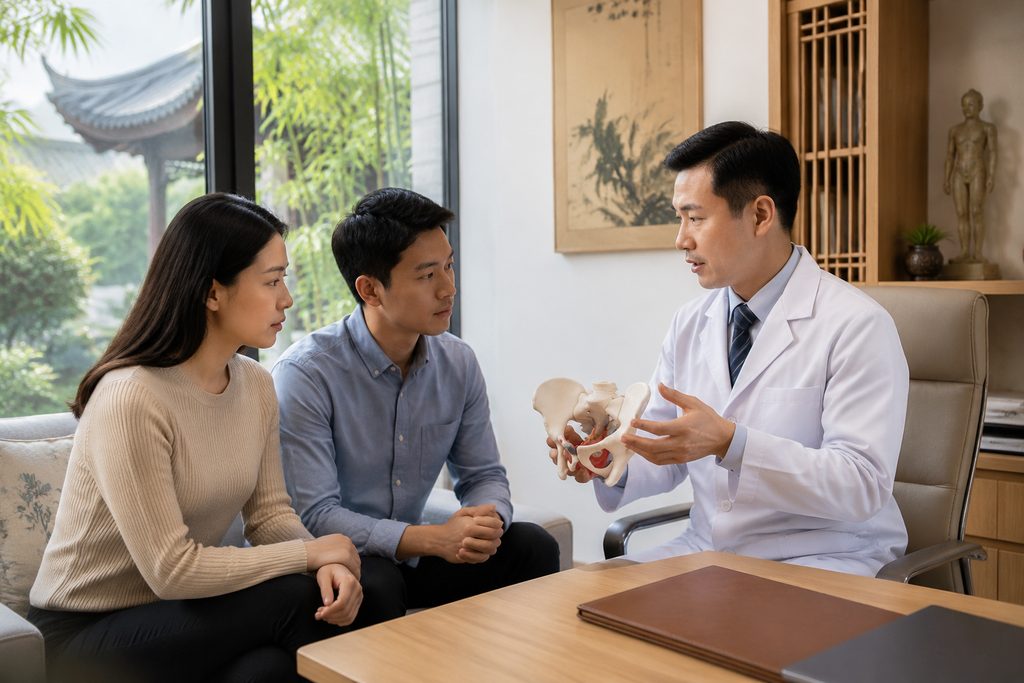
What Causes Chronic Pelvic Pain? Understanding the Roots and Finding Real Answers
Chronic pelvic pain is a silent epidemic. It affects approximately 15% of women of reproductive age worldwide, according to the International Pelvic Pain Society. The condition is defined as non-cyclical pain lasting six months or longer, localized to the pelvis, and severe enough to cause functional disability or lead to medical care. For many patients, the journey to a diagnosis takes years—not months. The average woman with chronic pelvic pain sees three to four doctors before receiving a correct diagnosis. Some wait over five years. When that happens, patients begin asking harder questions: what causes chronic pelvic pain in women, why has no one figured this out, and where can they access care that finally takes the problem seriously. A growing number are looking at international options, including China Medical Services, to understand how chronic pelvic pain treatment cost China compares to care at home.
But cost is only part of the equation. The real question is diagnostic rigor. And that is where many health systems fall short.
Key Takeaways
- Chronic pelvic pain affects roughly 1 in 7 women, yet diagnosis often takes 3–5 years and multiple specialists.
- China’s top gynecology and pain departments perform high-volume diagnostic laparoscopies and multidisciplinary evaluations at a fraction of Western costs.
- Pelvic pain is rarely caused by a single organ—it usually involves gynecologic, urologic, gastrointestinal, and musculoskeletal systems together.
- International patients should prepare complete medical records, a symptom diary, and prior imaging before any remote consultation.
The Problem: Years of Pain, Months of Waiting, and a Diagnosis That Never Comes
Let’s look at the numbers. Peking Union Medical College Hospital (PUMCH) in Beijing—one of China’s most respected institutions—sees over 2.3 million outpatient visits annually. Its gynecology department alone handles tens of thousands of pelvic pain cases each year. Compare that to a typical Western academic center, which might see a few hundred complex pelvic pain patients annually. Volume matters because chronic pelvic pain is a diagnosis of pattern recognition. A clinician who has seen 5,000 cases of endometriosis has a different diagnostic instinct than one who has seen 300. The same applies to diagnostic laparoscopy, the gold standard for confirming endometriosis and adhesions. Chinese surgeons at top centers perform these procedures at a volume that simply does not exist in most Western hospitals.
China’s top hospitals are organized differently. A patient at a leading hospital in Shanghai with suspected complex pelvic pain can be seen by gynecology, urology, and pain medicine within the same hospital system—often within the same week. This is not a “multidisciplinary clinic” that requires a separate referral and a three-month wait. It is how the hospital is structured. Departments share electronic records. Consultants can pull in a colleague from another department with a phone call. The patient does not need to coordinate between three different clinics in three different parts of the city.
Now to the question most international patients actually ask first: what does chronic pelvic pain treatment cost China? The honest answer is that it depends on what “treatment” means. A diagnostic workup—including consultation, pelvic ultrasound, MRI, and diagnostic laparoscopy—might range from $3,000 to $8,000 at a top Chinese hospital, depending on complexity. The same workup in the United States can easily exceed $25,000 before insurance. In the UK, the issue is not cost but waiting time: NHS waitlists for gynecologic laparoscopy frequently exceed 12 months. The cost difference is not because Chinese care is “cheap.” It is because labor costs are lower, hospital overhead is lower, and the system is built for high throughput. The technology—3T MRI, robotic laparoscopy, nerve mapping—is the same equipment you would find in Boston or Berlin.
But here is the caveat we always give patients: cost should not be the primary reason to travel for pelvic pain care. The primary reason is diagnostic access. If you can get a definitive diagnosis and a treatment plan in China in three weeks, that is worth more than saving money. The cost savings are a bonus, not the argument.
What Actually Causes Chronic Pelvic Pain? The Diagnostic Map
Let’s answer the question directly. Chronic pelvic pain is not one disease. It is a symptom complex with at least eight major underlying causes, and many patients have more than one. Any serious evaluation must consider all of them.
Endometriosis is the most common identifiable cause, found in up to 70% of women undergoing laparoscopy for chronic pelvic pain. It occurs when tissue similar to the uterine lining grows outside the uterus, causing inflammation, adhesions, and nerve irritation. Diagnosis requires laparoscopy—ultrasound and MRI can suggest it but cannot rule it out.
Pelvic floor muscle dysfunction is present in up to 85% of chronic pelvic pain patients, according to the American Urogynecologic Society. The muscles of the pelvic floor become chronically tense, causing pain that radiates to the lower back, hips, and thighs. This is often missed entirely because it requires a specialized physical examination that many gynecologists do not perform.
Interstitial cystitis / bladder pain syndrome affects approximately 3–8 million women in the US alone. It causes bladder pressure, urinary frequency, and pelvic pain that worsens with bladder filling. It is frequently misdiagnosed as recurrent urinary tract infections.
Irritable bowel syndrome overlaps with gynecologic pelvic pain in up to 40% of cases. The gut and the pelvis share nerve pathways, which is why a bowel problem can feel like a gynecologic one.
Pelvic congestion syndrome involves varicose veins in the pelvis, causing a dull, aching pain that worsens with standing. It is diagnosed with specialized venous imaging that is not part of a standard workup.
Nerve entrapment or neuralgia—including pudendal neuralgia—causes sharp, burning pain along specific nerve distributions. It requires nerve blocks for both diagnosis and treatment.
Adenomyosis occurs when endometrial tissue grows into the uterine muscle wall. It causes severe menstrual pain and heavy bleeding, and is increasingly diagnosed with MRI.
Adhesions from prior surgery or infection can bind pelvic organs together, causing pain with movement or intercourse.
Most patients have two or three of these conditions simultaneously. That is why a single-specialty approach fails. A gynecologist treats the endometriosis but misses the pelvic floor dysfunction. A urologist treats the bladder pain but misses the adenomyosis. The only way to get it right is to evaluate the pelvis as a whole system.
What a Proper Workup Looks Like: The Step-by-Step Process
When a patient comes to us with years of unresolved pelvic pain, here is what we tell them to expect from a serious diagnostic evaluation—whether in China or anywhere else.
Step 1: A detailed history that takes more than 15 minutes. The first appointment should be 45–60 minutes. The clinician should ask about pain location, quality, timing, triggers, bowel and bladder function, sexual history, prior surgeries, and what has already been tried. If the first appointment is 15 minutes and ends with a prescription for painkillers, that is a red flag.
Step 2: Specialized pelvic examination. This includes not just a standard gynecologic exam but also a pelvic floor muscle assessment. The examiner should palpate each muscle group and ask the patient to contract and relax. Many patients with pelvic floor dysfunction have never had this exam.
Step 3: Imaging—but with the right expectations. Transvaginal ultrasound is useful for adenomyosis and ovarian endometriomas. MRI is better for deep infiltrating endometriosis and pelvic congestion. Neither can rule out superficial endometriosis or adhesions. A normal ultrasound does not mean there is nothing wrong.
Step 4: Diagnostic laparoscopy. This is the gold standard for endometriosis and adhesions. It is a surgical procedure under general anesthesia, but it is minimally invasive. The surgeon inserts a camera through a small incision and can both diagnose and treat—removing endometriosis lesions, lysing adhesions, and mapping the pelvis.
Step 5: Multidisciplinary review. After the laparoscopy and imaging, the findings should be reviewed by at least two specialties—typically gynecology and pain medicine—to create a treatment plan that addresses all contributing factors.
This process can take 6–18 months in many Western systems, spread across multiple referrals. At a top Chinese hospital, it can be completed in 2–4 weeks. That compression of time is the real value proposition for international patients.
Who Should Consider Traveling for Pelvic Pain Care—and Who Should Not
Traveling abroad for medical care is not for everyone. Let’s be direct about this.
You might be a good candidate if:
- You have had pelvic pain for more than one year without a definitive diagnosis.
- You have seen two or more specialists and received conflicting or vague explanations.
- You have already had a laparoscopy that found “nothing” but your pain persists.
- You are facing a 6–12 month wait for diagnostic laparoscopy in your home country.
- You want a comprehensive, multidisciplinary evaluation in a compressed timeframe.
You should probably not travel for care if:
- You have not yet had a basic workup at home—including pelvic ultrasound and a gynecologic consultation. Start there first.
- Your pain is acute or you have signs of infection, fever, or severe bleeding. That is an emergency, not a travel situation.
- You are looking for a quick fix. Chronic pelvic pain requires ongoing management, not a single procedure.
- You cannot commit to follow-up. The best treatment plan in the world fails without adherence.
For patients who do decide to travel, the question of where to go matters. Many ask us about the top-ranked gynecology departments in China. The answer depends on your specific presentation. A patient with suspected deep infiltrating endometriosis may benefit from a center with advanced laparoscopic expertise. A patient with bladder-predominant symptoms may need a hospital with strong urology and pelvic floor programs. A patient with nerve pain may need a pain medicine department that performs diagnostic nerve blocks. The best hospital for pelvic pain Shanghai has to offer might be different from the best option in Beijing or Guangzhou. That is why we always start with a records review before recommending a specific hospital.
Practical Considerations: Records, Visas, and Payment for International Patients
If you are considering traveling to China for pelvic pain evaluation, here is what you need to know before you go.
Medical records. Bring everything. That means all prior imaging (actual images, not just reports), operative notes from any surgeries, pathology reports, medication lists, and a symptom diary covering at least one full menstrual cycle. Translate key documents into English or Chinese if possible. The more complete your records, the faster the Chinese team can move.
Visa. For medical treatment in China, international patients typically apply for an S2 visa, which covers short-term private affairs including medical treatment. The hospital or medical coordination service will provide an invitation letter and treatment confirmation. Family members accompanying you also apply for S2. Processing times vary by embassy, so start at least 4–6 weeks before your planned travel. We cannot guarantee visa approval—that is always at the discretion of the Chinese embassy or consulate.
Payment. Chinese public hospitals generally require prepayment for services. International patients pay out of pocket and then seek reimbursement from their insurance if applicable. Private international hospitals in China—such as those in the JCI-accredited private sector—may offer direct insurance billing. Costs vary significantly between public hospital international departments and private facilities. A diagnostic laparoscopy at a top public hospital international department might cost $4,000–$7,000. The same procedure at a private international hospital could be $10,000–$15,000. Both are still below typical US prices.
Language. Top public hospitals in China have international departments with English-speaking coordinators. But once you leave that department, most signage, forms, and staff communication are in Chinese. A bilingual medical companion—someone who navigates registration, queues, payments, and translation—costs from $300 per day and can make the difference between a smooth experience and a stressful one.
Follow-up after returning home. The Chinese team will provide a written treatment plan and operative report in English. You will need a local provider at home to continue care—whether that is pelvic floor physiotherapy, hormonal management, or pain medication titration. Plan for this before you travel. The Chinese team can do a lot, but they cannot manage your ongoing care from 8,000 kilometers away.
Frequently Asked Questions
Can chronic pelvic pain be cured abroad?
It depends on the underlying cause. Endometriosis can be surgically excised, and many patients experience significant relief—but recurrence rates are 20–40% within five years even after expert surgery. Pelvic floor dysfunction responds well to physiotherapy but requires ongoing maintenance. Nerve pain may require repeated blocks or neuromodulation. The honest answer: a definitive diagnosis and a well-designed treatment plan can dramatically improve quality of life, but “cure” is not a promise any responsible clinician makes for chronic pelvic pain. What traveling abroad can do is compress the diagnostic timeline and give you a plan that actually addresses all contributing factors.
How much does a pelvic pain specialist in Beijing cost?
A consultation with a pelvic pain specialist at a top Beijing hospital’s international department typically costs $100–300. A written second opinion from a senior specialist runs $300–500. A video consultation with a top specialist is $500–800. These are coordination and consultation fees—they do not include hospital treatment charges, imaging, or surgery. Final costs vary by hospital and case complexity. Any consultation fee paid through our coordination service is credited in full toward on-the-ground coordination if you later travel to China for treatment, within 90 days.
What if the laparoscopy finds nothing wrong?
This is a real possibility, and it is important to discuss it before surgery. A negative laparoscopy does not mean your pain is imaginary. It means the cause is not visible on the peritoneal surface. The next steps would be a pelvic floor assessment, bladder evaluation, and possibly nerve mapping. A good multidisciplinary team will have a plan for this scenario before the surgery happens. You should ask about this explicitly in any pre-operative consultation.
Is it safe to travel to China for medical care as a foreigner?
Yes, with preparation. China’s top hospitals are accredited by international bodies and serve large numbers of international patients. The main challenges are
For more medical information and treatment options in China, visit chinamedservices.com (China Medical Services).
