What Is an EEG and Do I Need One? Cost, Safety, and Booking in China
What Is an EEG and Do I Need One? A Practical Guide to Testing in China
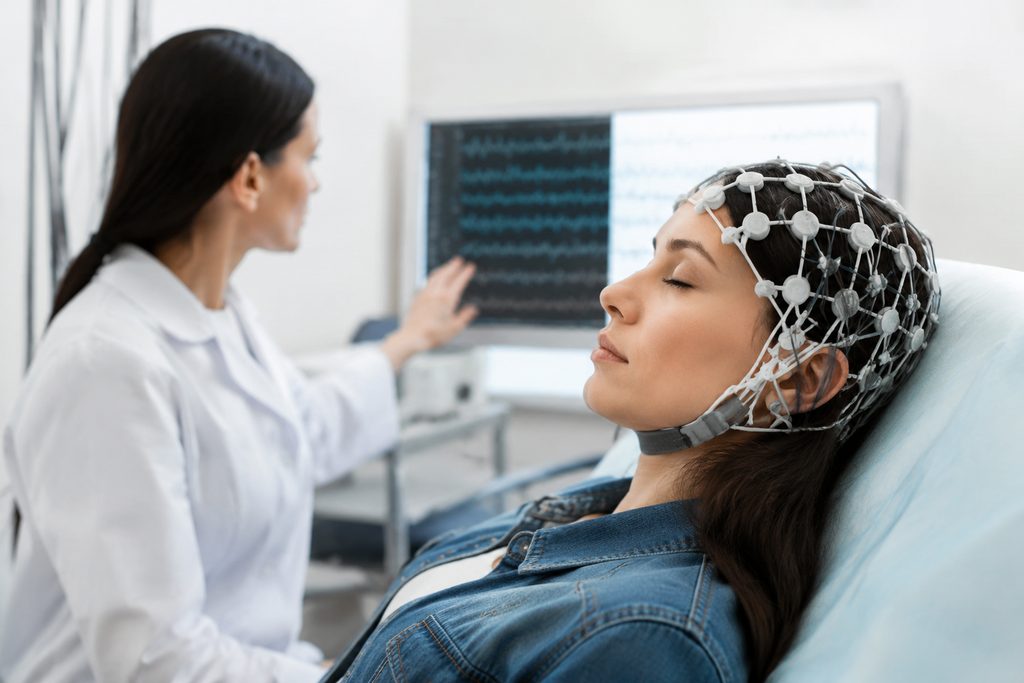
An EEG, or electroencephalogram, records the electrical activity of your brain using small sensors placed on your scalp. If you have been experiencing unexplained seizures, fainting spells, memory problems, or persistent headaches, a neurologist may recommend this test. The eeg test price China is often a fraction of what patients pay in the United States or Europe, which is why many international patients now look to Chinese neurology centers for diagnostic clarity.
While patients in the United States routinely face bills exceeding $1,500 for a routine outpatient EEG, the same test at a top-tier Chinese public hospital typically costs between $80 and $250. That gap is not a sign of lower quality. It reflects a fundamentally different healthcare financing structure. China’s leading neurology departments perform thousands of EEGs monthly, and their equipment often matches or exceeds what you would find in Western hospitals.
But cost is only one part of the equation. You also need to know whether an EEG is actually the right test for your symptoms, how to prepare for it, and what the results can and cannot tell you. This guide walks through all of that, with a focus on what international patients should know before booking a test in China.
How This Actually Works, Step by Step
Arranging an EEG in China as an international patient follows a clear sequence. You do not simply walk into a hospital and ask for the test. Here is the realistic path from where you are now to a completed EEG with a written interpretation.
Step 1: You send your existing medical records. This includes any previous neurology notes, imaging reports (MRI or CT if available), a list of current medications, and a description of your symptoms. Our team reviews these documents to confirm that an EEG is clinically appropriate for your case. If it is not, we tell you that directly and suggest what might be more useful.
Step 2: You choose between a written second opinion or a video consultation. A written second opinion costs from $300 and gives you a Chinese neurologist’s analysis of your records, including whether an EEG should be part of your diagnostic workup. A video consultation costs from $100 and lets you speak with the specialist directly before committing to any travel. Both options help you avoid flying to China for a test you may not need.
Step 3: We coordinate the appointment. Once a neurologist confirms that an EEG is indicated, we handle registration with the hospital’s international department or VIP channel. This is the only realistic way for a foreign patient to secure a scheduled appointment in advance. Public hospital walk-in registration is designed for local patients and requires same-day queuing in Chinese.
Step 4: You arrive, take the test, and receive results. A standard EEG takes 30 to 60 minutes. A sleep-deprived EEG, which is often more diagnostically useful for seizure disorders, requires you to stay awake the night before and takes 60 to 90 minutes. Results are typically available within 24 to 48 hours, and the interpreting neurologist provides a written report in English through our coordination service.
What Is an EEG and Do I Need One? Understanding the Test
An electroencephalogram measures the synchronized electrical firing of neurons in your cerebral cortex. Electrodes placed on your scalp detect voltage fluctuations, which are amplified and displayed as waveforms. Neurologists read these patterns to identify abnormalities such as epileptiform discharges, focal slowing, or generalized slowing.
So do you actually need one? An EEG is most useful for diagnosing and classifying epilepsy. If you have had two or more unprovoked seizures, an EEG is a standard part of the workup. The test can also help evaluate unexplained altered mental status, certain sleep disorders, encephalopathy, and brain death. It is sometimes used to monitor status epilepticus in intensive care settings.
But here is what many patients do not realize: a normal EEG does not rule out epilepsy. Up to 50% of people with epilepsy have a normal first routine EEG. That is why neurologists often order a sleep-deprived EEG or prolonged video-EEG monitoring when clinical suspicion remains high. Conversely, an abnormal EEG does not automatically mean you have epilepsy. Some patterns are benign variants or medication effects. This is exactly why you need a qualified neurologist interpreting the results, not just a technician running the machine.
EEG Test Price China: What You Actually Pay
| EEG Type | China Price Range (USD) | US Price Range (USD) |
|---|---|---|
| Routine EEG (20–40 min) | $80–$250 | $800–$2,500 |
| Sleep-deprived EEG | $120–$350 | $1,200–$3,500 |
| Ambulatory EEG (24–72 hrs) | $300–$800 | $2,000–$6,000 |
| Video-EEG monitoring (per day) | $150–$400 | $3,000–$8,000 |
These figures are ranges, and the final eeg test price China varies by hospital tier, city, and whether you use the standard public channel or the international department. International departments typically charge 1.5 to 2 times the standard rate, which still leaves you well below Western prices. Private international hospitals such as United Family or Jiahui charge more, often $300 to $600 for a routine EEG, but offer direct insurance billing and fully English-speaking staff.
For comparison, the question how much does an eeg cost abroad depends heavily on the country. In Germany, a routine EEG costs €150 to €400. In the UK through private providers, expect £250 to £600. Australia runs AUD $300 to $700. China’s public hospital pricing remains the most competitive among major medical destinations, particularly when combined with the cost of a neurology consultation.
A Realistic Timeline
| Stage | Duration | What Happens |
|---|---|---|
| Remote evaluation | 3–7 days | You send records; neurologist reviews and confirms EEG indication |
| Appointment booking | 5–14 days | International department schedules your EEG slot |
| Visa processing (S2) | 7–21 days | You apply with hospital invitation letter and medical documents |
| Travel and test | 2–3 days | Arrive, take EEG, receive preliminary read |
| Written report | 1–3 days | English report issued; video follow-up scheduled if needed |
The steps people forget are document translation and visa lead time. Your medical records need to be in Chinese or English before the hospital will review them. Translation adds 2 to 4 days if you do not already have English reports. And the S2 visa, which is the correct category for short-term medical treatment in China, requires an invitation letter from the hospital. That letter can only be issued after your appointment is confirmed. Plan for three to five weeks from first contact to completed test if you are traveling from Europe or North America.
Is EEG Safe in China? What Can Go Wrong and What Happens Then
The short answer: yes, an EEG is an extremely low-risk procedure anywhere it is performed properly. The test is non-invasive. No electricity enters your brain. No needles are involved unless the technician uses a light abrasion to improve electrode contact, which is standard practice worldwide. The main risks are discomfort, skin irritation from electrode paste, and the rare possibility of a seizure being triggered during a sleep-deprived or photic stimulation protocol.
So the question is eeg safe in China is really a question about hospital standards and equipment maintenance. At the hospitals in our network, the answer is consistently yes. These are institutions ranked in the top 5% of China’s 35,000+ hospitals by the Fudan University hospital rankings, and many hold JCI accreditation. EEG machines are typically from the same manufacturers used in Western hospitals: Natus, Nihon Kohden, and Compumedics.
What can go wrong? A few realistic failure modes. The technician may struggle to obtain a clean recording if you have thick hair or if you move during the test, requiring a repeat session. The interpreting neurologist may request a longer recording if the routine EEG is inconclusive, which means extending your stay. And if you attempt to navigate the public hospital system without Chinese language support, you may face hours of queuing and confusion. These are operational problems, not clinical ones, and they are exactly what a bilingual medical companion service addresses.
If a test is inconclusive, the recourse is straightforward: a sleep-deprived EEG or ambulatory recording. If the hospital’s equipment malfunctions, which is rare, the test is rescheduled at no additional charge. If you are unsatisfied with the interpretation, you can request a second read from another neurologist at the same hospital or a different one.
Neurology Hospital EEG Beijing and Shanghai: Where to Go
Choosing where to take your EEG matters more than the test itself. The machine is only as useful as the neurologist reading the output. China’s strongest neurology departments are concentrated in Beijing and Shanghai, with additional centers of excellence in Guangzhou, Chengdu, and Wuhan.
For neurology hospital eeg Beijing options, Xuanwu Hospital and Peking Union Medical College Hospital are the two names that come up most often in clinical circles. Xuanwu Hospital operates one of the largest epilepsy monitoring units in Asia and handles complex diagnostic cases that other centers refer onward. Peking Union Medical College Hospital, known locally as PUMCH, offers a fully staffed international medical department with English-speaking coordinators and a long history of treating foreign patients.
If you want to book eeg in Shanghai, Huashan Hospital affiliated with Fudan University is the standard answer. Its neurology department consistently ranks among China’s top three in the Fudan specialty rankings. The hospital’s international medical center handles scheduling for overseas patients and can arrange same-week EEG appointments in most cases. Ruijin Hospital, also in Shanghai, offers a comparable level of care with slightly different scheduling availability.
Our hospital database covers 340+ top-ranked hospitals across 37 Chinese cities, including dedicated pages for neurology departments. You can also browse specialty rankings for neurology and 44 other departments to see which institutions hold top-ten positions in the Fudan specialty reputation lists.
Practical Considerations: Records, Visa, Payment, and Follow-Up
Before you book anything, gather your records. You need any prior EEGs if you have had them, MRI or CT brain imaging reports, a medication list, and a concise symptom timeline. If your records are not in English or Chinese, get them translated. The quality of the remote evaluation depends entirely on what you send.
Visa category matters. Medical treatment in China falls under the S2 visa, which covers short-term private affairs including medical visits. Your accompanying family member applies for the same S2 category. The hospital’s international department will issue an invitation letter once your appointment is confirmed, and you submit that with your visa application. Processing times vary by country, so apply as soon as you have the letter.
Payment is straightforward but requires planning. Chinese public hospitals generally require prepayment at the time of registration. International departments accept major credit cards and sometimes international bank transfers. Private international hospitals such as those listed on our private hospital directory often bill insurance directly, which can simplify reimbursement if your policy covers overseas diagnostics.
Follow-up at home is the part most patients underplan. Your Chinese neurologist will provide a written report, but your home neurologist needs to integrate those findings into your ongoing care. Request both the raw EEG traces and the written interpretation. Some patients also arrange a post-test video consultation to discuss results with the Chinese specialist after they return home, which costs from $100 and can be credited toward future coordination services if you later return for treatment.
Frequently Asked Questions
An EEG is a recording of your brain’s electrical activity. For routine headaches or dizziness without loss of consciousness, an EEG is usually not the first-line test. Neurologists typically order it when seizures, unexplained blackouts, or altered awareness are in the differential diagnosis. A remote consultation can clarify whether an EEG is appropriate for your specific symptoms.
A routine EEG in a top Chinese public hospital costs $80 to $250, while the same test in the US typically runs $800 to $2,500 before insurance. Even at China’s private international hospitals, where prices are higher, you will generally pay $300 to $600. The exact figure varies by hospital and whether you use the international department.
Yes, when you go through a hospital’s international department or a vetted coordination service. The equipment and protocols at top-ranked Chinese neurology centers match international standards. The main challenges are logistical: language barriers, registration processes, and navigating large hospital campuses. That is where bilingual support makes the difference.
You cannot book through the standard public registration system from overseas. But the international departments at hospitals such as Huashan in Shanghai or Xuanwu in Beijing do accept advance bookings for foreign patients with a referral or remote evaluation. Our team handles this coordination, including document translation and appointment confirmation.
In most cases, yes, provided the report is in English and includes the raw waveforms. Chinese hospital reports are typically issued in Chinese by default, so request an English version through the international department. Some home neurologists may want to review the raw data themselves, which is why you should request the full recording files before leaving.
Your Next Step
An EEG is a simple, low-risk test that can provide crucial answers when your symptoms point to a neurological cause. The decision to travel for one depends on your home country’s wait times, your insurance situation, and whether you need a specialist interpretation that is hard to access locally. If you are considering China, start with a remote evaluation before booking any flights.
We are China Medical Services, a coordination team that connects international patients with top-ranked Chinese hospitals. We do not practice medicine and we do not guarantee clinical outcomes. What we do is handle the logistics: record review, appointment scheduling, bilingual accompaniment, and visa guidance. If you want to know whether an EEG in China makes sense for your case, request a free consultation and we will walk you through the options honestly.
For more medical information and treatment options in China, visit chinamedservices.com (China Medical Services).
