Inpatient Companion: Religious and Cultural Needs in Chinese Hospitals
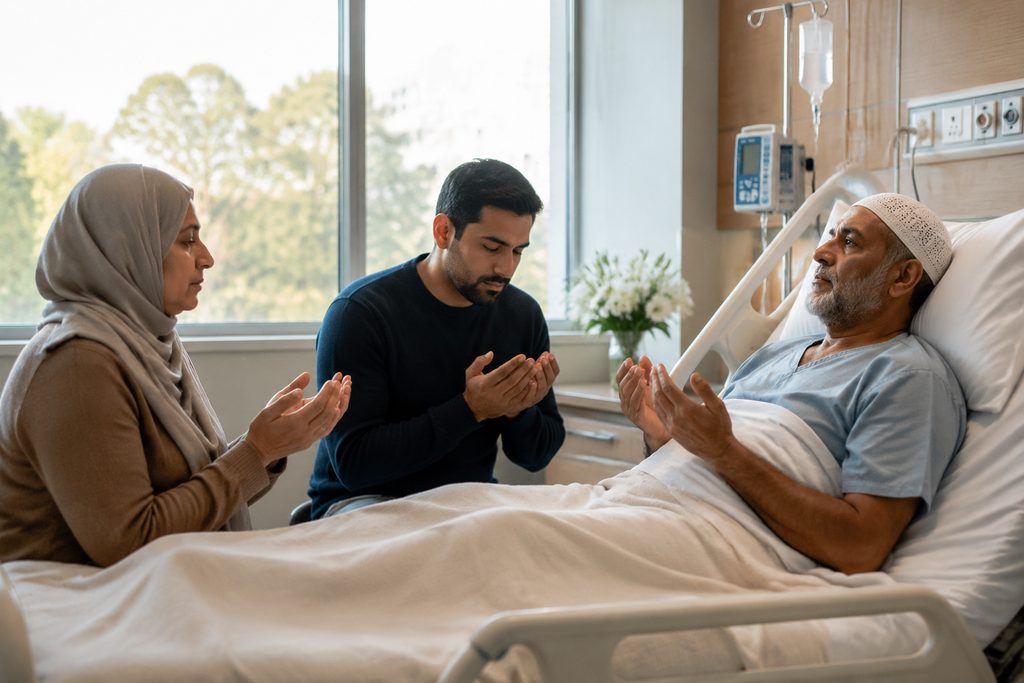
Inpatient Companion: Religious and Cultural Needs — The Short Answer
Most international patients arriving in Shanghai, Beijing, or Guangzhou ask one question before anything else: will my religious and dietary requirements be met? The honest answer is yes — but not automatically. A halal food hospital Shanghai price typically falls between $8 and $15 per meal when arranged through a hospital’s international department or a private vendor. Prayer space exists in many top-tier facilities. Kosher meals, Christian chaplain services, and Hindu vegetarian options require advance coordination. None of this happens by default in China’s public hospital system. It happens because someone plans for it.
That someone is often a bilingual inpatient companion who understands both the clinical environment and the cultural requirements that matter to you. The gap between what a hospital technically offers and what a patient actually receives can be wide. Bridging that gap takes preparation, direct communication with nursing stations and dietary departments, and follow-through during every meal service and worship time.
Who This Is Right For — and Who It Isn’t
Patients who benefit most from structured religious and cultural support during a hospital stay in China share a few characteristics. They observe strict dietary laws. They require daily prayer at fixed times. They come from families where caregiving duties are shared among relatives who cannot all be present. Or they simply feel anxious about navigating a large Chinese hospital without language support.
Typical good candidates:
- Muslim patients who need verified halal meals and a clean space for daily prayers
- Jewish patients who keep kosher and observe Shabbat
- Hindu patients who require strict vegetarian food without onion or garlic in some traditions
- Christian patients who want access to a chaplain or a quiet room for reflection
- Family groups where one relative coordinates care and needs cultural logistics handled
Who should not rely on this level of coordination? Patients who are comfortable with flexibility around food and worship. Those staying in private international hospitals with dedicated patient-relations staff. And patients whose medical condition does not require an inpatient stay at all. If you are coming for a one-day outpatient consultation, you do not need an inpatient companion. You need a standard bilingual escort for registration and translation.
The Options, Compared
Religious and cultural accommodation in Chinese hospitals varies by facility type. Public hospitals serve the largest patient volumes and offer the most affordable treatment. Private international hospitals provide more personalized service at a higher price. What each one delivers for halal, kosher, vegetarian, and chaplaincy needs differs significantly.
| Accommodation Factor | Public Grade-A Hospital (International Dept.) | Private International Hospital | Coordinated via Inpatient Companion |
|---|---|---|---|
| Halal meal availability | Limited; often requires external vendor | Usually available on request | Arranged and verified daily |
| Kosher meal availability | Rare; external catering needed | Sometimes available; advance notice required | Sourced from certified provider |
| Prayer room / quiet space | Occasionally available; not guaranteed | Often available | Located, reserved, or alternative arranged |
| Chaplain / spiritual care | Rare in-house; external clergy visit possible | Sometimes available via patient relations | Coordinated with local religious community |
| Vegetarian meal (Hindu) | Basic vegetable options; may contain animal broth | Customizable with notice | Confirmed ingredient-by-ingredient |
| Typical daily cost for coordination | Not offered by hospital | Included in premium room rate | From $300/day companion service |
Public hospital international departments sit in the middle. They charge more than standard wards but less than private facilities. Their dietary staff are familiar with foreign patient requests, though halal certification is not standard. Private international hospitals in Shanghai and Beijing handle religious dietary needs more routinely. The tradeoff is cost — often two to three times the public international department rate. A coordinated companion approach works across all three settings because the companion advocates for you inside whatever system you choose.
What “Religious Accommodation” Actually Looks Like Inside a Chinese Hospital Ward
A Chinese inpatient ward is not a hotel. Rooms are shared more often than not. Nursing schedules rotate around the clock. Meal delivery happens at fixed times. Prayer at dawn, midday, and evening will overlap with vital-sign checks, medication rounds, and physician visits. That is the reality.
An inpatient companion manages this collision. She speaks to the head nurse about your prayer schedule. He arranges a privacy screen or identifies an unused consultation room. She confirms with the dietary department that the chicken in your lunch was slaughtered according to halal standards — not just labeled “no pork” which is what many hospital kitchens assume halal means. And he handles the awkward moments: a well-meaning nurse offering you a cup of tea during Ramadan fasting hours, or a roommate’s family member curious about why you are praying on a mat.
Christian chaplain services Beijing hospital access works differently from what many Western patients expect. China does not have a hospital chaplaincy system like the United States or the United Kingdom. What exists instead is a network of registered religious communities — churches, mosques, temples — that send clergy to visit patients upon request. The request must go through the right channel. A companion who knows which local community serves which hospital can make that call. Without that local knowledge, a patient may wait days for a visit that never gets scheduled.
What It Costs and What Drives the Price
Meal costs are the easiest to quantify. A halal food hospital Shanghai price runs $8 to $15 per meal from an external halal-certified caterer. Kosher meals cost more — $15 to $25 per meal — because certified kosher ingredients are imported and preparation requires supervision. Hindu vegetarian meals fall between $6 and $12 per meal when the kitchen understands the requirements. All prices vary by hospital and case complexity, and by how strictly the dietary law is observed.
Companion service pricing starts from $300 per day for a bilingual medical companion. That covers an 8-hour day of advocacy, translation, meal verification, prayer-space coordination, and family communication. Half-day service is available. Airport transfer runs $200 round-trip. A written second opinion from a top hospital specialist costs $300–500. A top-specialist video consultation runs $500–800. These figures are reference points, not fixed quotes — every case gets priced individually based on hospital, city, and complexity.
What is not included: hospital treatment charges, medications, surgical fees, and the actual cost of meals. The companion service covers labor, translation, and coordination. It does not buy priority access or guarantee specific outcomes. Any coordination fee paid for a remote consultation can be credited in full toward on-the-ground coordination if you upgrade within 90 days.
Practical Considerations: Documentation, Visas, and Follow-Up
Religious dietary requests need documentation. A letter from your imam, rabbi, or priest explaining your requirements helps. So does a written list of prohibited ingredients in both English and Chinese. Your companion can translate this and deliver it to the dietary department before admission. Without written documentation, verbal requests get lost between shifts.
Visa category matters here too. Foreign patients coming to China for medical treatment apply for an S2 visa, with medical treatment noted as the purpose. Accompanying family members apply for their own S2 visas. The process requires an invitation letter from the hospital or a medical coordination service, plus proof of the treatment plan. S2 visas are issued at Chinese embassies and consulates abroad, subject to current requirements. Processing times vary by country.
Payment inside Chinese public hospitals is prepaid. You deposit funds at admission and the hospital deducts as services are used. International credit cards are not always accepted at every window. Your companion handles these transactions or guides you to an ATM that accepts foreign cards. Private international hospitals in Shanghai and Beijing typically accept major credit cards and some offer direct insurance billing.
After discharge, follow-up questions about diet or wound care do not stop. Your companion can relay questions to the medical team and get written answers. If you return home and need a prescription adjusted, a video consultation with the same specialist costs $100–300 for a standard international department visit.
Frequently Asked Questions
Yes, but “vegetarian” in a Chinese hospital kitchen often means vegetables cooked in a shared wok that previously held meat, or broth made from animal bones. Strict Hindu vegetarian requirements — no meat, no fish, no egg, sometimes no onion or garlic — must be communicated in writing before admission. A companion verifies each meal at the source rather than trusting the label.
You request them through the hospital’s international department at least 72 hours before admission, ideally longer. Most public hospitals cannot prepare kosher food on-site. The practical solution is an external kosher caterer — in Shanghai and Beijing this is workable; in smaller cities it may not be. Your companion coordinates delivery, storage, and reheating according to kosher standards. This is not something the hospital will figure out for you.
Some private international hospitals market packages that include prayer room access, particularly in Shanghai and Beijing. These packages bundle room, meals, and basic coordination. Read the fine print. A “prayer room” may be a curtained corner, not a dedicated space. And package pricing often excludes the specialist fees that matter most. A companion can negotiate the same access at a public hospital international department for less total cost.
Not through the public system. Standard public hospital rooms are assigned at admission, not reserved in advance. What you can do is book through an international department or a private hospital that accepts pre-arranged admissions. Your companion confirms the room setup — single versus shared, proximity to a quiet area, refrigerator for special meals — before you arrive. But the hospital makes the final assignment based on medical need and bed availability.
This happens more often than hospitals admit. A meal arrives with pork. A nurse schedules a procedure during prayer time. The response matters. Your companion escalates to the head nurse or the international patient coordinator immediately. In most cases, the issue gets fixed within hours. In a small number of cases, the hospital genuinely cannot accommodate the request — no kosher food exists in that city, no quiet room is available. Then the companion finds an external solution: a nearby restaurant, a local religious community, a family member bringing food. You need a plan B before you arrive, not after the first missed meal.
Your Next Step
Religious and cultural needs in a Chinese hospital are solvable. They are not automatic. The difference is preparation — written documentation, advance communication with the right department, and someone on the ground who can advocate for you in Chinese when it matters. China Medical Services connects international patients with top-ranked hospitals across 37 cities and provides bilingual companions who handle these logistics daily. We are not a hospital and we do not give medical advice. If you are planning treatment and want to know how your dietary and worship requirements will be handled at a specific hospital, tell us your situation and we will give you a straight answer before you commit to anything.
For more medical information and treatment options in China, visit chinamedservices.com (China Medical Services).
