Beijing Tongren Hospital ENT: Cochlear Implant & Skull Base Surgery for International Patients
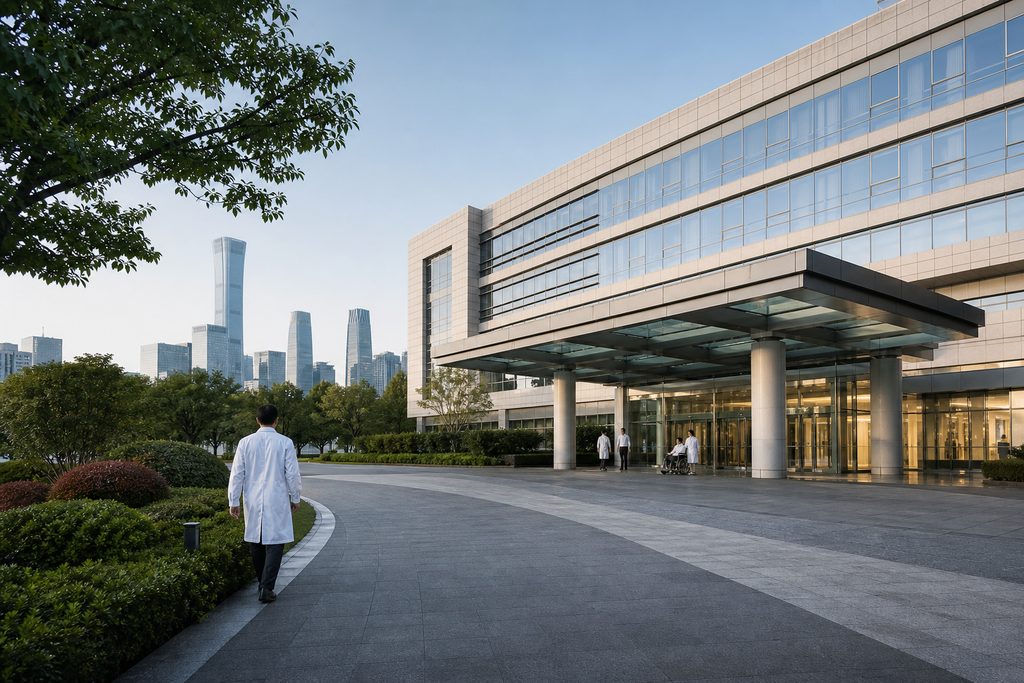
When 42-year-old Michael first heard the diagnosis—a vestibular schwannoma pressing against his brainstem—his local surgeon laid out the path. Surgery, then likely single-sided deafness. Maybe a cochlear implant later. The quote for the skull base tumor resection alone eclipsed $180,000. The implant, if needed, would be another $40,000. He had good insurance. It would still wipe out his savings. Lying awake that night, he typed a desperate search into his phone. Something he never imagined he would look for: skull base tumor surgery abroad China price.
That search path is more common than most people realize. Every year, thousands of patients from North America, Europe, the Middle East, and Southeast Asia begin quietly researching alternatives to their local healthcare systems. They are not looking for shortcuts. They are looking for survival without financial ruin. And for a specific subset of complex ear, nose, and throat conditions, one hospital name surfaces repeatedly in medical literature and patient forums: Beijing Tongren Hospital.
Key Takeaways
- Beijing Tongren Hospital’s ENT department is consistently ranked among China’s top programs, performing over 600 cochlear implant surgeries and a high volume of complex skull base procedures annually.
- The cochlear implant surgery cost at Beijing Tongren Hospital typically ranges from $18,000 to $35,000 USD for international patients—a fraction of the $40,000 to $100,000+ charged in the United States.
- Navigating China’s public hospital system without Mandarin fluency and local logistical support is genuinely difficult. Walk-in registration, cash-based prepayment, and language barriers are real obstacles that require planning.
- International patients should understand that surgical scheduling requires an in-person consultation first. No legitimate top-tier Chinese hospital will book a major surgery purely over email.
The Problem: When Advanced ENT Surgery Is Unaffordable or Out of Reach
Hearing loss severe enough to warrant cochlear implantation affects approximately 1 in 8 adults over age 65 in the United States, and roughly 5% of the global population has disabling hearing loss according to WHO data. Skull base tumors—acoustic neuromas, meningiomas, chordomas, paragangliomas—are rarer but devastating. An acoustic neuroma diagnosis lands on about 1 in 100,000 people each year. The surgery to remove one demands a neurotologic surgeon and a neurosurgeon working in tandem, often for 8 to 14 hours.
In the US, the average cash price for cochlear implant surgery (device plus surgical fees plus audiological mapping) runs between $40,000 and $100,000 depending on the hospital system and geographic region. Skull base tumor resections can easily exceed $150,000. Even insured patients face deductibles and out-of-network charges that climb into five figures. In Canada and the UK, the wait for cochlear implantation can stretch beyond 12 to 18 months in certain provinces and NHS trusts. For a child born with congenital hearing loss, every month of delay in receiving a cochlear implant matters. Language acquisition has a critical window. Waiting is not a neutral act.
These numbers are not theoretical. They are the reason patients search for alternatives. And they are why a growing number of medical travelers look toward Beijing.
Who We Are
We are not a hospital. We do not provide medical treatment, surgical procedures, or clinical diagnoses. Our team at China Medical Services functions as your logistical architects—we bridge the gap between you and China’s top-tier medical institutions. We handle hospital matching, appointment coordination, bilingual medical companion services, visa guidance, and on-the-ground support throughout your stay. We work with over 340 top-ranked hospitals across 37 Chinese cities. Our role is to make a complex foreign healthcare system navigable. Nothing more, nothing less.
Why Beijing Tongren Hospital for Cochlear Implants and Skull Base Surgery
Clinical Volume That Shapes Surgical Instinct
Beijing Tongren Hospital is not just “good” for ENT. Its Department of Otorhinolaryngology-Head and Neck Surgery is one of the largest and most influential in Asia. The hospital operates a dedicated cochlear implant center that has implanted thousands of devices since its inception. Annual implant volumes consistently exceed 600 cases. For context, many well-regarded US implant centers perform 50 to 100 cochlear implant surgeries per year. Volume matters in surgery. A 2017 study in The Laryngoscope demonstrated a clear inverse relationship between hospital cochlear implant volume and complication rates. High-volume centers simply have fewer adverse events.
Skull base surgery at Tongren follows the same pattern. The hospital’s neurotology and skull base division handles acoustic neuromas, glomus tumors, and complex temporal bone malignancies at a cadence that builds deep surgical instinct. When a surgeon performs a particular approach—say, a translabyrinthine resection of an acoustic neuroma—several dozen times a year rather than several times, the difference shows in outcomes. Facial nerve preservation rates. Hearing preservation rates when attempted. Gross total resection rates. These are the metrics that matter to patients.
Is Beijing Tongren Hospital Good for ENT Surgery? The Evidence
The question “is Beijing Tongren Hospital good for ENT surgery” deserves a straight answer. Yes. It is not merely good. It is one of the reference centers for the entire country. When complex ENT cases from across China need escalation, Tongren is frequently the destination. The hospital is affiliated with Capital Medical University and serves as a national clinical research center for otorhinolaryngologic diseases. It is ranked among China’s top-tier ENT programs in the Fudan University hospital rankings, which evaluate clinical reputation and research output across 45 specialties. The ENT department at Tongren has held that position for years.
For international patients specifically, the hospital’s International Medical Center provides a dedicated pathway. English-speaking coordinators, streamlined registration, and access to senior surgical faculty are all available through this channel. Walk-in registration through the standard public outpatient system is a different experience entirely—crowded, Mandarin-only, and not designed for foreign patients. The distinction matters enormously when planning a surgical trip.
Cochlear Implant Surgery Cost at Beijing Tongren Hospital: A Breakdown
The cochlear implant surgery cost at Beijing Tongren Hospital varies by device manufacturer, surgical complexity, and whether the patient goes through the standard public track or the International Medical Center. For international patients using the international department pathway, the all-inclusive surgical package—surgeon fees, anesthesia, operating room, hospital stay, and the implant device itself—typically falls between $18,000 and $35,000 USD.
That range includes the cost of a cochlear implant device from major manufacturers like Cochlear Limited, MED-EL, or Advanced Bionics. These are the same devices implanted in Western hospitals. The cost difference comes from structural factors, not quality compromises. Surgeon compensation in China’s public hospital system is lower than in the US. Hospital administrative overhead is leaner. Device pricing negotiated for the Chinese market reflects different regulatory and market dynamics. The result is a price point that is roughly one-third to one-half of what the same procedure costs in the United States.
| Procedure | Beijing Tongren (International Patient) | United States (Cash Price) |
|---|---|---|
| Cochlear Implant (unilateral, including device) | $18,000 – $35,000 | $40,000 – $100,000 |
| Acoustic Neuroma Resection (translabyrinthine) | $25,000 – $45,000 | $80,000 – $180,000 |
| Skull Base Meningioma Resection | $30,000 – $55,000 | $100,000 – $200,000+ |
These figures are estimates. Final pricing depends on tumor size, surgical approach, length of ICU stay, and whether any complications arise. But the magnitude of difference holds across the board. Patients regularly ask how much does cochlear implant cost in China for foreigners. The answer is consistently lower—substantially lower—than what they face at home.
The Skull Base Surgery Program: What International Patients Should Know
Skull base surgery is not one operation. It is a discipline. It involves accessing tumors and vascular lesions at the interface between the brain, the cranial nerves, and the structures of the head and neck. Tongren’s skull base team collaborates closely with neurosurgery, interventional neuroradiology, and radiation oncology. For an acoustic neuroma, the surgical decision tree alone—translabyrinthine versus retrosigmoid versus middle fossa approach—depends on tumor size, hearing status, and patient preference. These are nuanced conversations that require a surgeon who has seen the full spectrum of presentations.
Patients searching for the best skull base surgeon China international patients can access will find that Tongren’s senior skull base surgeons are internationally trained and published. Several have completed fellowships in Europe or North America. They present at international conferences. They publish in English-language journals. The language barrier exists at the hospital operations level, not typically at the senior surgical faculty level. This is an important distinction. Your surgeon will likely speak functional or fluent medical English. The nurse who brings you water may not. This is where having a bilingual medical companion changes the entire experience.
How to Book Cochlear Implant Beijing Tongren Hospital Package for International Patients
There is no Amazon checkout page for surgery. Patients who want to book cochlear implant Beijing Tongren Hospital package arrangements must follow a specific sequence. The hospital requires an in-person consultation before any surgical scheduling. This is non-negotiable. Medical records, imaging (CT temporal bone, MRI internal auditory canal with contrast, audiological evaluations), and a detailed medical history must be submitted for pre-review. But the surgeon will not book an operating room until they have examined the patient face-to-face.
The practical workflow looks like this. First, a remote pre-screening where the hospital’s international department reviews your case materials and confirms that you are a surgical candidate. Second, travel to Beijing for an in-person consultation, which typically includes repeat audiological testing and a surgical planning session. Third, surgery scheduling—usually within one to three weeks of the consultation, depending on surgeon availability and urgency. Fourth, post-operative care including initial device activation and mapping, wound checks, and clearance for travel. The entire stay in Beijing for a cochlear implant typically spans two to four weeks. Skull base surgery may require a longer stay given the need for ICU monitoring and gradual recovery.
Important: No legitimate top-tier Chinese hospital will schedule major surgery purely via email or phone. Any service claiming to “guarantee” a specific surgery date before you arrive is either misrepresenting the process or operating outside standard hospital protocols. Be wary.
What You Need to Know Before Going Alone
China’s top public hospitals are world-class clinically. They are also enormous, crowded, and built for a domestic patient population that speaks Mandarin and navigates the system instinctively. International patients walking in unprepared face real barriers.
- Visa Requirements: Medical treatment in China requires an S2 visa with a notation specifying the medical purpose. This is not a tourist visa. The hospital must provide an invitation letter and treatment confirmation documentation. Accompanying family members also need S2 visas. The M visa is for commercial business only and is not valid for medical treatment. Getting this wrong means denial at the port of entry.
- Payment Systems: Public hospitals in China operate on a prepaid balance system. You deposit funds at admission, and the hospital deducts charges daily. International credit cards are not universally accepted at hospital cashier windows. Alipay and WeChat Pay dominate. International patients often need to arrange large-sum wire transfers in advance or carry significant cash. Some international departments accept international cards, but this must be confirmed beforehand.
- Language and Navigation: Tongren Hospital’s main outpatient building sees over 10,000 patients daily. Signage is predominantly in Chinese. Registration kiosks, pharmacy queues, and lab result collection terminals all assume Mandarin literacy. A single missed step—failing to stamp a form at the right window—can cost hours. This is not hyperbole. It is the daily reality of China’s public hospital system.
How We Help You Navigate This
These barriers exist for structural reasons, not because anyone is trying to make it hard. China’s hospital system evolved to serve a domestic population of 1.4 billion people at high efficiency and low cost. It was not designed with international patients in mind. That is where our team enters the picture.
Before you travel, we handle the hospital pre-screening submission, translate your medical records into Chinese clinical terminology, and coordinate the invitation letter required for your S2 visa application. We confirm that the international department accepts your preferred payment method and provide a realistic cost estimate based on your specific case. During your stay, a bilingual medical companion accompanies you to every appointment—registering you at the correct window, interpreting clinical conversations in real time, collecting prescriptions, and troubleshooting the hundred small logistical problems that arise in any foreign medical journey. After discharge, we coordinate follow-up audiological mapping sessions for cochlear implant recipients and help arrange accommodations for the recovery period.
We do not perform surgery. We do not make clinical decisions. We make sure that when you need to focus entirely on your health, nothing else demands your attention.
Frequently Asked Questions
No. The surgical team requires an in-person consultation before scheduling. You can submit your existing audiological reports, CT scans, and MRI imaging for pre-review to confirm candidacy. But the final surgical decision and scheduling happen only after the surgeon examines you in Beijing. This is standard practice at every reputable surgical center worldwide.
This depends on your diagnosis. For acoustic neuromas and lateral skull base lesions, you want a neurotologic surgeon with a high annual case volume in the specific approach your tumor requires. For anterior skull base meningiomas or chordomas, a team with rhinologic and neurosurgical collaboration is essential. Our team can help match your case to the appropriate surgical subspecialty group at Tongren based on your imaging and pathology. We do not recommend individual surgeons. We recommend surgical teams based on case fit.
Beijing Tongren Hospital is a tertiary academic medical center with full neurosurgical, interventional radiology, and intensive care capabilities on-site. Skull base surgery inherently carries risk—facial nerve injury, cerebrospinal fluid leak, meningitis, hearing loss, balance dysfunction. These risks exist at every hospital in every country. Tongren’s complication rates are consistent with international benchmarks for high-volume centers. The hospital has the resources to manage complications when they occur. Medical evacuation insurance is still strongly recommended for international patients. We can advise on policy selection.
Most US and European health insurance plans do not have direct billing arrangements with Chinese public hospitals. You will likely need to pay upfront and seek reimbursement from your insurer afterward. Some international insurance plans and medical tourism policies do offer direct settlement or pre-authorization for treatment at JCI-accredited or internationally recognized centers. Check with your insurer before committing. We provide itemized receipts and translated medical documentation to support your reimbursement claim.
Plan for a minimum of two to three weeks. The surgery itself requires a hospital stay of three to five days. Initial device activation typically occurs two to four weeks post-operatively to allow the surgical site to heal. At least one or two mapping sessions should be completed before you fly home. Your local audiologist can handle subsequent programming, but the initial activation and baseline mapping should happen with the implant team that knows your surgery.
Your Next Step
A diagnosis that demands cochlear implantation or skull base surgery forces hard decisions under pressure. The financial weight is real. The clinical stakes are high. Beijing Tongren Hospital offers a legitimate, high-volume, internationally recognized alternative at a cost that makes treatment possible for patients who would otherwise face devastating bills or indefinite waits. The trade-off is complexity—language, logistics, a foreign system that does not bend for outsiders.
That trade-off is manageable with the right support. If you want to understand whether your case is suitable for treatment at Tongren, our team can review your medical records, provide a preliminary assessment, and walk you through exactly what the process would look like—step by step, with no obligation. Start with a free consultation to discuss your situation and get honest guidance on your options.
For more medical information and treatment options in China, visit chinamedservices.com (China Medical Services).
