Remote Specialist Review: What Happens in the 72 Hours After You Submit
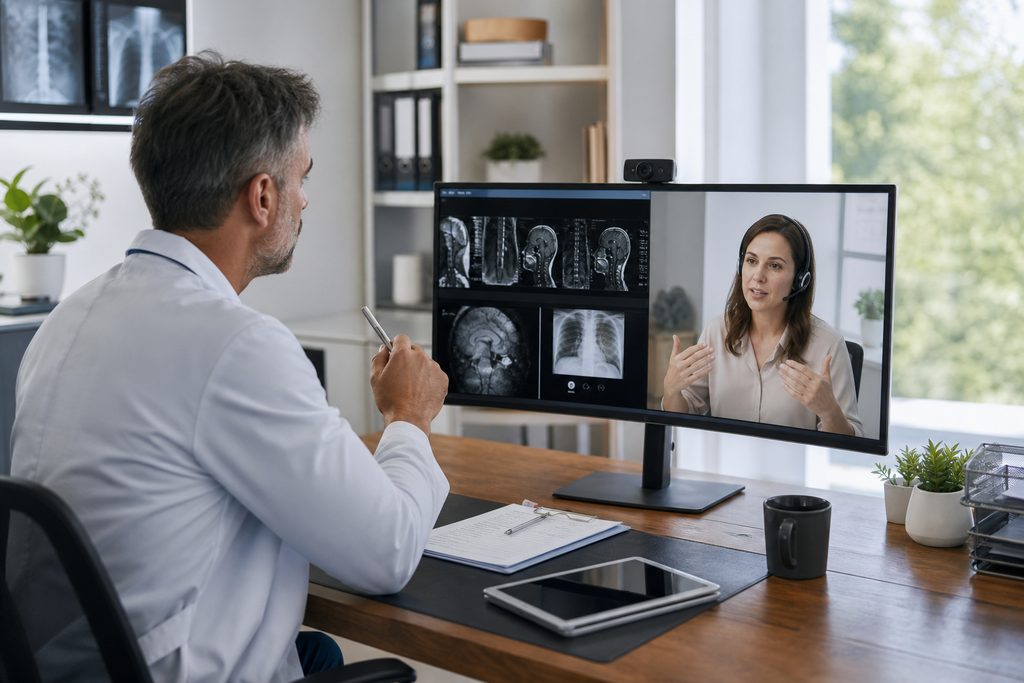
You have sent your MRI scans, pathology reports, and blood work into a system halfway across the world. Now you wait. The silence can feel heavy. What actually happens during a remote specialist review? The process is methodical, divided into three distinct 24-hour phases. Understanding the remote specialist review cost China and the timeline turns a black box into a clear, predictable path. Our team handles the logistics so the medical experts can focus purely on your case.
The 72-Hour Process: The Short Answer
Within 72 hours of a complete submission, you receive a written analysis, a proposed treatment direction, and a structured plan for the next physical steps. That is the promise. The reality inside those hours involves medical translation, multi-departmental review, and the drafting of a document that must be precise enough for you to act on. It is not a passive scan of your files. It is an active interrogation of your diagnosis.
The caveat is completeness. If a critical CD-ROM image fails to load or a pathology slide is missing a specific stain, the clock pauses. The 72-hour window starts when the clinical team confirms they have everything they need to form an opinion. That distinction matters.
Who This Is Right For — and Who It Isn’t
A remote review bridges a specific gap. It is not a universal solution.
Typically a strong candidate when:
- You have a complex or rare diagnosis and need to pressure-test the proposed treatment plan.
- Surgery has been recommended, and you want confirmation it is the only viable route.
- Your current plan feels like a dead end, and you need fresh therapeutic angles from a high-volume center.
- Travel is impossible right now due to medical instability or logistical barriers.
Not the right tool when:
- You need emergency intervention. A remote review is a planning document, not an ambulance.
- Your medical records are disorganized, incomplete, or exclusively in a non-English language without certified translations.
- You are looking for a prescription. A written second opinion is for reference only, never a direct medication order.
- The condition requires a physical hands-on examination to assess, such as certain complex orthopedic manipulations.
The Options, Compared
Not all remote consultations carry the same weight. The level of specialist, the format of the response, and the institutional depth behind it vary significantly. Understanding the remote specialist review cost China means mapping it against the depth of the review.
| Review Type | Typical Turnaround | What You Receive | Estimated Cost (USD) |
|---|---|---|---|
| Standard Department Review | 3–5 business days | Written opinion from a senior attending physician | $300 – $500 |
| Top-Specialist Video Consultation | 5–7 business days | Live discussion with a department head or named expert, plus a summary letter | $500 – $800 |
| Multidisciplinary Team (MDT) Review | 7–10 business days | Consensus opinion from oncology, radiology, surgery, and pathology combined | $1,500 – $2,000 |
A standard written review suits a patient who needs a directional check. The MDT review fits a case where two specialties disagree, and a unified verdict is needed before anyone moves forward. The video consultation sits in the middle—it adds the nuance of a live conversation, where you can ask the questions that keep you up at night. Every remote specialist review cost China we quote includes the full administrative bridge: records handling, certified translation, and coordination with the hospital’s international department.
Phase by Phase: What Happens After I Submit My Medical Records to a Chinese Hospital
Your files land in our system. A case manager immediately audits the submission. Missing sequences on a CT disc? Illegible lab values? We flag them now. Simultaneously, our medical translators begin converting your records into clinical Chinese. This is not a software translation. A bilingual medical professional renders your history of present illness, surgical notes, and pathology terminology into the precise equivalent used in Chinese academic hospitals. A mistranslated “clear margins” can derail an entire oncology review. We get it right.
By the end of this phase, your case exists as a structured, bilingual dossier ready for the reviewing department.
Phase 2: The Specialist Review (Hours 24–48)
The dossier reaches the assigned specialist or team. This is the core of the how does online medical consultation work China process. The physician reviews your original imaging, not just the reports. They compare your staging against the latest treatment guidelines used in their institution. In a high-volume Chinese center, a thoracic surgeon may see more complex lung cancer resections in a month than a general hospital sees in a year. That pattern recognition feeds directly into their assessment of your case.
They formulate an opinion. Sometimes it confirms your current path. Sometimes it offers a less invasive alternative. Occasionally, it identifies a contradiction—a treatment plan that does not match the pathology. The specialist dictates their findings.
Phase 3: Report Assembly and Delivery (Hours 48–72)
The dictated opinion is transcribed, edited for clarity, and translated back into polished medical English. A senior case manager reviews the final document for internal consistency. If the report recommends a specific surgical approach, we ensure the pre-operative requirements are explicitly listed. You receive the report via secure communication, and a window opens for follow-up clarification.
For those pursuing an international patient virtual consultation oncology China, this phase often includes a scheduled video call to discuss the written findings face-to-face with the specialist, rather than just receiving a PDF.
What a Fast Track Second Opinion from Shanghai Hospital Online Actually Delivers
A fast track second opinion from Shanghai hospital online is not a rushed opinion. “Fast track” refers to the elimination of administrative friction. Shanghai’s top hospitals, like Zhongshan Hospital Fudan University or Ruijin Hospital, operate international wings designed for this workflow. The process bypasses the general outpatient queue and enters a dedicated review channel.
What you get is a document that states the specialist’s name, department, and their direct clinical assessment. It will answer three questions explicitly: Is the current diagnosis correct? Is the proposed treatment plan appropriate? Are there alternative treatments available in this hospital that you should consider? The opinion may recommend further molecular testing before a final decision. That is not a delay tactic. It is a sign of precision medicine at work.
This report is the foundation of the medical tourism remote treatment plan timeline. Once you have it, the path to in-person treatment becomes measurable: visa processing, scheduling a physical consultation, and securing a surgery slot.
What It Costs and What Drives the Price
The remote specialist review cost China ranges from $300 to $2,000. The spread is wide for a reason.
A $300 review involves a single specialist reviewing a straightforward case. A $2,000 MDT review involves three or more department heads convening, debating your imaging around a table, and issuing a signed consensus statement. The complexity of your case, the number of imaging studies to be independently re-read, and the seniority of the requested expert all push the fee higher.
What is not included in the headline price: any hospital treatment charges, medication costs, or in-person consultation fees should you later travel. What is included: the administrative coordination, certified medical translation, and the secure delivery of your report.
A critical point on value: any remote consultation fee you pay is credited in full toward our on-the-ground coordination service if you proceed to treatment in China within 90 days. The remote review cost effectively becomes a deposit on the larger journey. It applies to the coordination fee only, never to hospital treatment charges.
Practical Considerations: Records, Visas, and the Path Forward
DICOM-format imaging is non-negotiable. JPEG photos of a computer screen showing a CT scan will be rejected. You need the original data on CD or a secure electronic transfer directly from your imaging center. Pathology slides may need to be physically shipped if a second-read is requested. That adds time.
Visa logistics sit downstream from the review. If the report confirms you should pursue treatment, the next step is an S2 visa for short-term private affairs, which covers medical treatment purposes. Our team provides the supporting documentation from the hospital, but approval rests with the Chinese embassy or consulate in your jurisdiction. We never guarantee visa issuance.
Payment for the review itself is handled via wire transfer or international credit card before the review begins. Hospital treatment later requires pre-payment or a deposit, with international insurance reimbursement handled after discharge. Private international hospitals in our network—like United Family or Jiahui—often offer direct billing, but public hospital international wings generally do not.
Language is the invisible barrier. The review process neutralizes it. But if you travel, a bilingual medical companion becomes essential. Navigating a hospital that sees 10,000 outpatient visits daily without Mandarin fluency is a logistical challenge. That is a separate service, one we coordinate when the time comes.
Frequently Asked Questions
Can a remote review guarantee that a Chinese hospital will admit me for treatment?
No. A remote review is a clinical opinion, not an admission ticket. The specialist may recommend treatment, but a formal admission requires an in-person evaluation. The hospital must physically assess you before scheduling surgery. The review makes that in-person visit far more efficient because the groundwork is laid.
What if the Chinese specialist contradicts my local doctor’s plan?
This happens. It is often the reason patients seek the review in the first place. You receive a detailed rationale for the disagreement. The next step is usually a conversation—either a video call with the Chinese specialist or a discussion with your local physician armed with the new opinion. You are not obligated to follow either path. You are simply better informed.
Is my medical data secure during this process?
We operate under strict data protection protocols. Records are transmitted through encrypted channels and stored on secure servers with access limited to the case manager and the reviewing clinical team. The data is used exclusively for the consultation you authorize. We do not retain or repurpose your medical information beyond the scope of your case.
How does online medical consultation work China for pediatric or rare disease cases?
The process is identical in structure but often requires more time. Pediatric cases frequently involve a multi-disciplinary review by default. Rare diseases may require the hospital to confirm internal expertise before accepting the case. We identify the right department—often at a specialized center like the Peking Union Medical College Hospital, which handles a high volume of rare disease referrals—before the review clock starts.
Your Next Step
A remote specialist review is a structured, evidence-based way to pressure-test a diagnosis or unlock a new treatment avenue. It replaces uncertainty with a document you can hold, question, and act upon. Our team at China Medical Services exists to build the bridge between you and the physicians who can make the difference. We are not a hospital, we do not diagnose, and we do not make clinical decisions. We handle the records, the translation, the coordination, and the clarity. If you are ready to see what a fresh set of eyes from a high-volume center can offer, the process starts with a single submission.
For more medical information and treatment options in China, visit chinamedservices.com (China Medical Services).
