Escort Service vs Flying to China for a Consultation vs Telemedicine: Which Approach Fits Your Case?
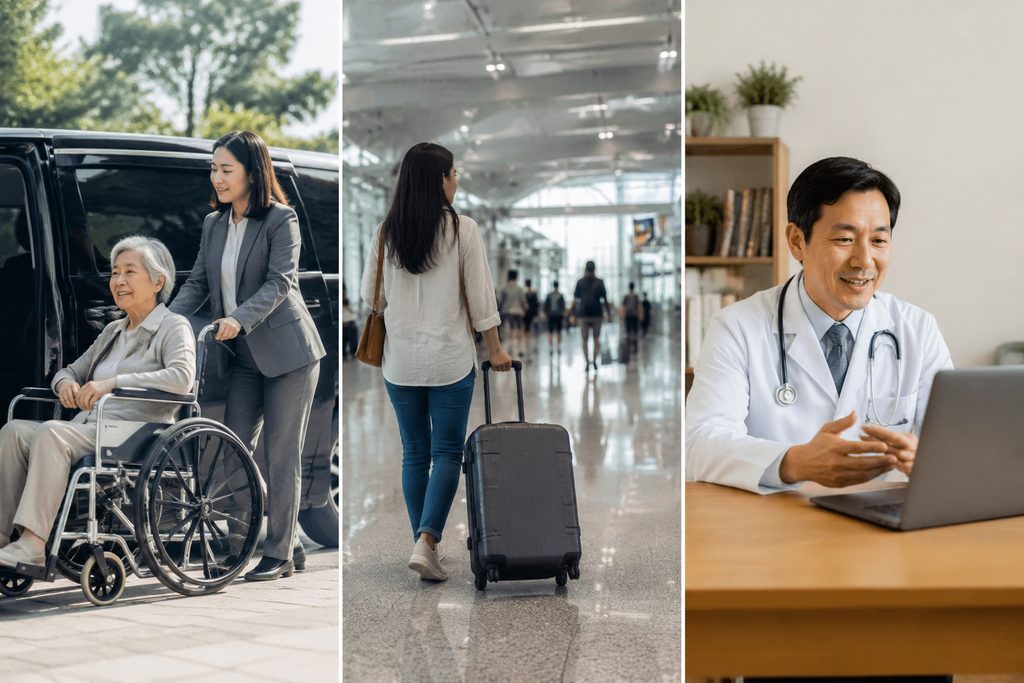
Escort Service vs. Flying to China vs. Telemedicine: The Short Answer
For most international patients, the most sensible first step is a telemedicine or written second-opinion consultation, with a cost of consultation in China vs telemedicine ranging from $100 to $800 for a remote review, compared to several thousand dollars in travel expenses for an in-person visit before you even know if a Chinese hospital can help. The real question is not which option is best in a vacuum, but which option matches where you are right now in your diagnostic journey.
If you have a confirmed diagnosis, complete imaging, and a clear surgical plan from your home doctor, flying to China for a face-to-face consultation makes sense. If your records are scattered, your diagnosis is uncertain, or you are still exploring whether Chinese medicine offers something your home country does not, starting with telemedicine avoids a costly dead end. An escort service—a bilingual medical companion who handles logistics on the ground—is not an alternative to either option. It is a layer of support that makes an in-person visit actually work. The three are not rivals. They are stages.
Who This Is Right For — and Who It Isn’t
A telemedicine-first approach fits patients who have a complex or rare condition and need to know whether a specific Chinese hospital department has relevant expertise before committing to travel. It also fits anyone whose home doctor has recommended a treatment plan but the patient wants a second look from a high-volume Chinese specialty center—cardiac surgery at Fuwai Hospital, for example, or liver cancer intervention at Zhongshan Hospital. Written second opinions work well for radiology and pathology reviews where the images and slides speak for themselves.
Flying to China for an in-person consultation is the right move when a remote review has already confirmed that the hospital can treat your condition, but the surgical plan requires a physical examination, a fresh set of institutional scans, or a multi-department evaluation that cannot be done over video. It is also necessary when you have decided to proceed with treatment and need to complete pre-operative clearance on site.
An escort service is valuable for any patient who does not speak or read Chinese and is visiting a public hospital. Without it, navigating a facility that sees over 10,000 outpatient visits daily is not merely inconvenient—it is functionally impossible. It is also valuable for patients with mobility limitations, for elderly patients traveling with family, and for anyone who wants to compress a multi-day diagnostic workup into as few hours as possible by having someone who knows exactly which window to visit and in what order.
Who should not pursue any of these options? Patients with unstable conditions that make long-haul air travel medically unsafe. Patients who have not yet exhausted diagnostic options in their home country and are looking for a miracle rather than a specific clinical pathway. And patients who expect a guaranteed outcome—no ethical service can promise that, and any that does should be avoided.
The Options, Compared
The table below lays out the three approaches side by side, but remember: these are not mutually exclusive. A typical patient journey moves from left to right—remote review first, then travel, with escort support layered in when the patient arrives.
| Factor | Telemedicine / Written Second Opinion | Fly to China for Consultation | On-Ground Escort Service |
|---|---|---|---|
| What you get | Remote review of your existing records; written analysis or video discussion with a specialist | Face-to-face evaluation with a Chinese specialist; fresh institutional scans if needed; physical exam | A bilingual coordinator who handles registration, payment, queueing, translation, and navigation inside the hospital |
| Typical cost | $100–$800 depending on specialist tier and format (written vs. video vs. MDT) | $3,000–$8,000+ including flights, accommodation, hospital international department fees, and living expenses for 1–2 weeks | From $300/day (half-day or full-day); part of a broader coordination package |
| Time commitment | 3–10 business days from record submission to report delivery | 1–2 weeks on the ground, plus visa processing time (2–4 weeks typical for S2 visa) | Aligned with your hospital visit days; no standalone time commitment |
| Best for | Patients who need to verify hospital capability before traveling; second-opinion seekers with clear imaging | Patients with a confirmed pathway who need pre-surgical evaluation or complex multi-department assessment | Any non-Chinese-speaking patient visiting a public hospital; anyone who needs logistical efficiency |
| Limitations | Cannot replace a physical exam; written opinion is for reference only, not a prescription | High upfront cost before treatment is guaranteed; no treatment can be promised based on consultation alone | Does not guarantee access to a specific specialist; cannot skip clinical queues—only navigate them efficiently |
If you are still unsure whether a Chinese hospital can treat your condition, the left column is where you start. If you already have a written opinion recommending a specific procedure and you are ready to move forward, the middle column becomes relevant. The right column is not a decision at all—it is a practical necessity that makes the middle column functional for anyone who does not speak Chinese.
Why “Compare Flying to China for Treatment vs Online Consultation” Is the Wrong Question
Patients often search for “compare flying to China for treatment vs online consultation” as if these are two competing paths to the same destination. They are not. One is a diagnostic step. The other is a treatment step. Conflating them leads to expensive mistakes.
We have seen patients book flights, secure an S2 visa, and arrive in Shanghai only to discover that their imaging was insufficient, their pathology slides needed re-staining, or the specialist they wanted to see does not handle their specific sub-condition. They spent $5,000 to learn something a $400 written second opinion would have told them from home. The smarter sequence is to ask the remote specialist: “Based on these records, would an in-person consultation at your department change the treatment plan my home doctor has proposed?” If the answer is no, you saved yourself a trip. If the answer is yes, you now have a specific reason to travel and a specific department to visit—not a vague hope.
Telemedicine is not a cheaper substitute for flying to China. It is a screening tool that tells you whether flying to China is worth doing at all.
What It Costs: Breaking Down the Numbers
The cost of consultation in China vs telemedicine is not a simple comparison because the two categories include fundamentally different things. A telemedicine consultation is a standalone service fee. An in-person consultation carries that same hospital fee plus a stack of travel and logistics costs that can easily multiply the total by a factor of ten or more.
For telemedicine, expect to pay $100–$300 for a video consultation with a specialist at a public hospital’s international department or a private international hospital. A written second opinion from a top-tier specialist at a Fudan-ranked hospital runs $300–$500. A video consultation with that same top-tier specialist costs $500–$800. A multi-disciplinary team (MDT) review, where surgeons, oncologists, and radiologists evaluate your case together, ranges from $1,500–$2,000. These fees cover the medical review and the coordination required to get your translated records in front of the right department. They do not cover treatment, prescriptions, or any guarantee of admission.
Flying to China for an in-person consultation adds international airfare (highly variable by origin, but budget $1,000–$3,000 for a round-trip ticket from North America or Europe), accommodation ($80–$200/night for a serviceable hotel near a major hospital in Beijing or Shanghai, over 7–14 nights), the hospital’s international department consultation fee (typically $200–$500 for the visit itself), any new scans or tests the hospital requires ($500–$2,000 depending on imaging type and quantity), and daily living expenses. An escort service adds from $300/day to the equation—a line item that often pays for itself by compressing what would otherwise be a 3-day diagnostic scatter into a single efficient day.
There is one financial mechanism worth knowing about. When a patient pays for a remote consultation and later decides to travel to China for treatment, that remote consultation fee is credited in full toward the on-the-ground coordination service—a one-time credit applied to the coordination fee, never to hospital treatment charges, and valid within 90 days. It means the diagnostic step is not a sunk cost if it leads to treatment.
Practical Considerations: Records, Visas, and What Happens After You Go Home
Every pathway—telemedicine, in-person consultation, or escorted visit—starts with the same bottleneck: your medical records. Chinese specialists need complete, recent, and well-organized documentation. That means imaging in DICOM format (not just printed films or JPEGs), pathology slides available for re-staining if requested, a clear summary of prior treatments with dates and outcomes, and all reports translated into Chinese or English. Incomplete records are the single most common reason a remote consultation stalls. If you are not sure whether your records are adequate, ask before you pay for a review.
For patients traveling to China, the visa category is S2—a short-stay visa for private affairs, with the purpose noted as medical treatment. Accompanying family members apply under the same category. Processing typically takes two to four weeks, and the application requires an invitation letter or supporting documentation from the Chinese hospital. Do not book flights until the visa is in hand. Do not assume a standard tourist visa (L) covers medical treatment—it does not, and presenting yourself at a hospital on the wrong visa category creates problems you do not need.
Payment inside Chinese public hospitals is almost universally pre-paid. You pay for a consultation, a scan, or a procedure before you receive it. International insurance is rarely accepted for direct billing at public hospitals—you pay out of pocket and seek reimbursement from your insurer afterward. Private international hospitals like United Family or Jiahui are the exception; they often handle direct insurance billing, but their specialist rosters are smaller and their fees are higher. Bring a payment method that works in China: a credit card with a high enough limit, a debit card that functions on Chinese payment networks, or a wire transfer arrangement set up in advance.
Follow-up after returning home is the most overlooked part of the equation. Chinese surgeons are often willing to correspond with your home physician, but they are not set up for long-term remote patient management. Before you travel, confirm that your home doctor is willing to handle post-operative care, wound checks, medication adjustments, and any complications that arise after you return. A successful surgery in China followed by a disconnected recovery at home is a recipe for poor outcomes. The handoff between the Chinese team and your local provider must be arranged before you leave—not after.
Frequently Asked Questions
A medical escort—more accurately called a bilingual medical companion—costs from $300 per day for a half-day or full-day service. They handle the practical navigation inside the hospital: registration, queueing at payment windows, collecting test results, translating conversations with doctors and nurses, and guiding you from one department to another. They do not provide medical advice, they cannot prescribe treatment, and they cannot jump you ahead of other patients in line. What they do is eliminate the friction that would otherwise make a Chinese public hospital visit unmanageable for someone who does not speak or read Chinese. For patients visiting hospitals outside the major international districts of Beijing or Shanghai, this service is not a luxury—it is the difference between completing your visit and giving up halfway through.
This question frames the choice incorrectly. Flying to China and using an escort service are not alternatives—they are complementary. You fly to China to access the surgeon and the hospital. You use an escort service to navigate that hospital once you are inside it. Asking “is it better to fly to China or use an escort service for surgery” is like asking whether it is better to drive to the airport or check your luggage. You need both. The real decision is whether to travel at all, and that should be answered by a remote consultation before you spend money on flights or escorts.
This is the risk that telemedicine exists to reduce. If you have not done a remote review of your records before traveling, you are gambling. The specialist may determine that your condition falls outside their sub-specialty, that your disease stage makes surgery inadvisable, or that the treatment you want is not appropriate for your specific presentation. In that case, you have spent thousands of dollars on travel to receive information that could have been delivered remotely. If you have done a remote review first and the specialist has indicated that an in-person evaluation is warranted, the risk of a flat rejection drops significantly—though it never reaches zero. No ethical doctor will guarantee treatment before examining you in person.
Medical travel concierge China packages do exist, typically bundling airport transfers, accommodation recommendations, hospital coordination, and bilingual escort services into a single fee. Comprehensive coordination packages range from $5,000 to $8,000 for end-to-end support, depending on the complexity of the case and the duration of the stay. These packages handle logistics—they do not include hospital treatment costs, which are paid directly to the hospital, and they do not guarantee clinical outcomes. A well-designed package reduces the administrative burden on the patient and family, but it is not an all-inclusive resort model. The medical decisions, the surgical risks, and the recovery process remain the patient’s responsibility.
A telemedicine second opinion costs $300–$800 as a standalone fee. An in-person second opinion at the same hospital might cost $200–$500 for the consultation itself, but the all-in cost—including flights, accommodation, visa fees, new scans, escort services, and two weeks of living expenses—typically lands between $4,000 and $10,000. The hospital’s consultation fee is the smallest line item in the in-person budget. That is why telemedicine vs in-person Chinese hospital second opinion price comparisons are misleading if they only compare the doctor’s fee. The real comparison is $500 from home versus $7,000 on the ground. The question is not which is cheaper. The question is whether the in-person visit adds $6,500 worth of diagnostic or treatment value that the remote review cannot provide. For many patients early in their search, it does not. For patients ready for surgery, it does.
Your Next Step
The most expensive mistake we see is patients who skip the remote step and fly to China hoping for answers. The most efficient path is the one that starts small: submit your records, get a specialist’s view, and only then decide whether travel makes sense. Our team at China Medical Services connects international patients with over 340 top-ranked hospitals across 37 cities—not by selling access, but by translating records, coordinating with hospital international departments, and making sure the right specialist sees your case. We are not a hospital, we do not employ doctors, and we do not offer medical advice or diagnoses. What we do is remove the logistical obstacles between you and a clear answer. If you are unsure where to start, begin with your records. The rest follows from there.
For more medical information and treatment options in China, visit chinamedservices.com (China Medical Services).
