Guangdong Provincial People’s Hospital Neurosurgery for International Patients: Costs, Process, and What to Expect
Key Takeaways
- Guangdong Provincial People’s Hospital (GDPH) is a Fudan-ranked top-tier public hospital in Guangzhou, with a neurosurgery department handling high volumes of complex brain and spine cases annually.
- International patients cannot simply book brain surgery online — a formal outpatient consultation must happen first, and the S2 visa is the correct category for medical travel, not the M visa.
- Neurosurgery package prices in China typically run 50-80% lower than comparable procedures in the US or Europe, but final quotes vary significantly by tumor type, surgical approach, and hospital ward class.
- Language barriers, hospital navigation, and post-discharge coordination are the biggest practical hurdles — planning for interpretation support before you arrive saves days of confusion.
The Problem: Brain Surgery Costs and Wait Times Are Crushing Patients in Western Systems
According to a 2023 analysis published in the Journal of Neuro-Oncology, the average cost of a craniotomy for brain tumor resection in the United States now exceeds $50,000 before rehabilitation, with complex skull-base procedures routinely crossing $150,000. For uninsured or underinsured patients, that number is not an inconvenience. It is a wall.
Wait times compound the financial strain. In Canada, the median wait from specialist referral to neurosurgical consultation for non-emergent brain tumors reached 11.6 weeks in 2023, according to the Fraser Institute’s annual wait-list survey. In the UK, NHS data shows that over 30% of patients referred for suspected brain tumors wait longer than the 62-day target from urgent referral to first treatment. For a glioma or meningioma, those months matter.
The result? A growing number of patients are looking outside their home countries. Not for experimental care. For the same microsurgical techniques, the same intraoperative MRI, the same neuronavigation — at a fraction of the price and a fraction of the wait.
Why Guangdong Provincial People’s Hospital Neurosurgery Delivers Results
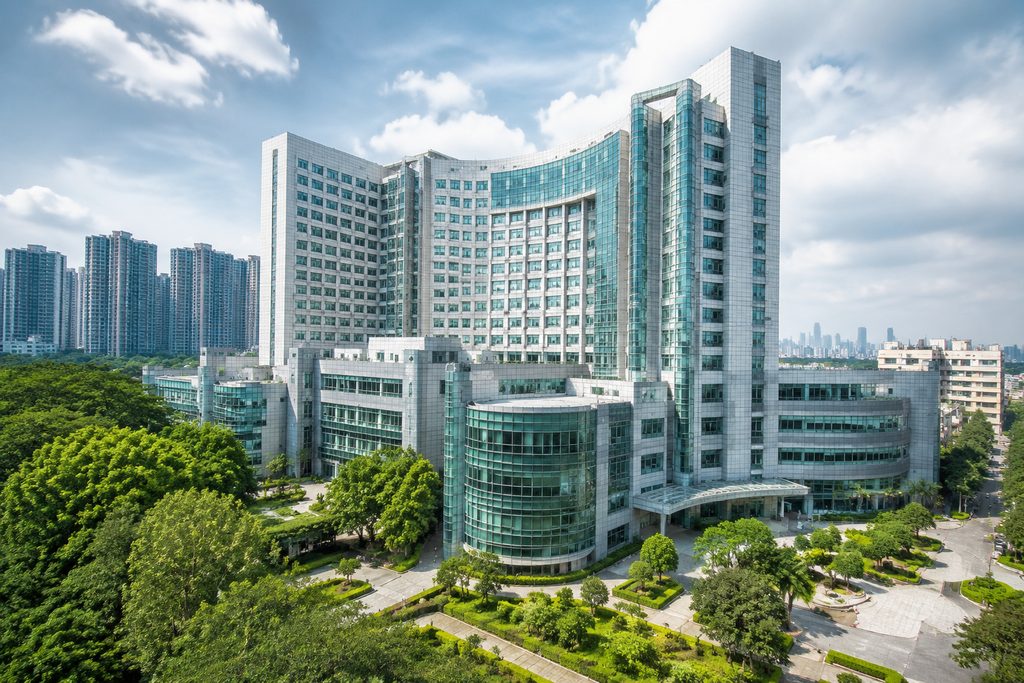
Guangdong Provincial People’s Hospital, located in the Yuexiu district of Guangzhou, is one of the largest public tertiary hospitals in southern China. Its neurosurgery department is consistently ranked among China’s top 10 for neurosurgery in the Fudan University hospital rankings — the country’s most authoritative independent hospital evaluation. For international patients weighing the best neurosurgery hospital in China, GDPH sits on a very short list.
Clinical Volume That Builds Surgical Muscle Memory
Volume is not a marketing slogan. It is a predictor of outcomes. A 2022 systematic review in Neurosurgery found that hospitals performing more than 50 craniotomies per year had significantly lower 30-day mortality rates than lower-volume centers. GDPH’s neurosurgery department operates at a scale that dwarfs most Western centers — the hospital as a whole handles over 4 million outpatient visits annually across all departments, and its neurosurgery wards routinely manage complex tumor resections, cerebrovascular interventions, and functional neurosurgery cases every single week.
What does that mean for a patient? The surgical team has seen your tumor type before. Many times. This month.
Technology Without the Tourist Markup
GDPH neurosurgery operates with intraoperative MRI, neuronavigation systems, endoscopic skull-base surgery platforms, and awake craniotomy protocols for eloquent cortex tumors. These are the same tools you would find at MD Anderson or Charité. The difference is structural: Chinese public hospitals amortize equipment costs across enormous patient volumes, and physician salaries are not tied to procedure billing the way they are in fee-for-service US systems. Lower overhead, not lower standards.
Cost Advantage Without Quality Compromise
Let us address the obvious objection directly. Lower cost does not mean lower quality. The structural reasons China’s neurosurgery prices are lower are well documented: significantly lower labor costs for nurses and support staff, state-subsidized hospital infrastructure, and a high-volume operational model. A craniotomy for tumor resection at a top-tier Chinese public hospital typically runs $15,000 to $30,000, compared to $50,000 to $150,000 in the US. The surgeons training at GDPH complete fellowships in Germany, Japan, and the US. The equipment is current-generation. The gap is economic, not clinical.
What Brain Tumor Surgery at GDPH Actually Looks Like: A Step-by-Step Timeline
If you are asking “is Guangdong Provincial People’s Hospital good for brain tumor surgery,” the honest answer starts with understanding the process. It is not like booking a hotel. Chinese public hospitals require a formal outpatient consultation before any surgical admission. Here is what the sequence looks like in practice.
Step 1: Remote Records Review (Week 0-1)
You send your existing MRI/CT scans, pathology reports, and clinical history. The neurosurgery team reviews them. This is where a written second opinion — typically $300-500 for a top-specialist review — helps you understand whether GDPH is the right fit before you spend money on flights. You can learn more about how our team facilitates this through the patient consultation service.
Step 2: S2 Visa Application (Week 1-3)
Medical travelers to China use the S2 visa, which covers short-term private affairs including medical treatment. You will need an invitation letter or supporting documentation from the hospital, proof of funds, and a valid passport. Processing times vary by consulate — typically 5 to 15 business days. Family members accompanying you apply for the same S2 category. The M visa is for commercial trade and is not appropriate for medical travel.
Step 3: In-Person Outpatient Consultation (Week 3-4)
You arrive in Guangzhou. The first hospital visit is an outpatient neurosurgery consultation. The surgeon reviews your scans in person, orders any additional imaging (often a fresh MRI with contrast), and discusses the surgical plan. Only after this face-to-face evaluation can a surgery date be scheduled. This is a hard rule at Chinese public hospitals — no exceptions for international patients.
Step 4: Pre-Operative Workup and Admission (Week 4-5)
Blood work, ECG, chest X-ray, anesthesia clearance. If surgery is confirmed, you are admitted — typically to the international ward or VIP ward if you want English-speaking nursing support. Standard ward admission is cheaper but comes with limited English.
Step 5: Surgery and In-Hospital Recovery (Week 5-7)
Length of stay depends on the procedure. A straightforward meningioma resection might mean 5-7 days in hospital. A complex skull-base tumor could mean 2-3 weeks. Post-operative ICU monitoring is standard for the first 24-48 hours.
Step 6: Discharge and Follow-Up (Week 7-12)
Before discharge, the hospital provides a detailed discharge summary in Chinese — you will need a certified translation for your home physician. A follow-up MRI is typically scheduled 4-6 weeks post-surgery, which can be done in Guangzhou or back home with remote review by the GDPH team.
What Neurosurgery at GDPH Costs: Real Numbers for International Patients
The question “how much is neurosurgery in Guangzhou for foreigners” does not have a single answer. Prices vary by tumor location, surgical approach, ward class, and whether you need additional interventions like embolization before resection. Below are reference ranges based on typical international patient cases at top-tier Guangzhou public hospitals, including GDPH.
| Procedure | China (Top Public Hospital, International Ward) | United States (Average) | United Kingdom (Private) |
|---|---|---|---|
| Brain tumor resection (craniotomy, uncomplicated) | $15,000 – $25,000 | $50,000 – $90,000 | $35,000 – $60,000 |
| Complex skull-base tumor surgery | $25,000 – $40,000 | $120,000 – $200,000+ | $80,000 – $130,000 |
| Endoscopic transsphenoidal pituitary surgery | $12,000 – $20,000 | $45,000 – $75,000 | $30,000 – $50,000 |
| Awake craniotomy with intraoperative mapping | $20,000 – $35,000 | $80,000 – $150,000 | $55,000 – $90,000 |
These figures are reference ranges, not quotes. Final pricing depends on hospital ward selection, length of ICU stay, implantable materials, and case complexity. What they show is the structural gap: Chinese neurosurgery prices run 50-80% below US equivalents for procedures of comparable technical sophistication.
It is worth noting that the “neurosurgery package price China” concept is often misunderstood. Chinese public hospitals do not sell all-inclusive packages the way some private hospitals in Thailand or India do. You pay for the consultation, the imaging, the surgery, the ward stay, and the medications — usually as separate line items, with a deposit required at admission. That means the final bill can be higher or lower than the initial estimate. Budget for a 20% buffer.
Practical Considerations: Documentation, Payment, and Language
Before you book a flight, get your paperwork in order. Chinese hospitals require original imaging discs (DICOM format), not just printed reports. Bring every MRI and CT you have ever had, plus pathology slides if a biopsy was done. If your records are not in English or Chinese, certified translation is required.
Practical tip: Create a single PDF with your medical history timeline, current medications, allergies, and prior surgeries. Chinese surgeons read dense clinical summaries quickly — a well-organized document saves 20 minutes of back-and-forth in the consultation.
Payment is another reality check. Chinese public hospitals require pre-payment for inpatient care. International credit cards are accepted at the international department of GDPH, but many smaller payment points within the hospital only accept WeChat Pay, Alipay, or Chinese bank cards. You will need a local payment method or a coordination service that handles deposits on your behalf. Insurance is usually reimbursement-based — you pay upfront and file a claim afterward. Private international hospitals in China offer direct billing, but GDPH is a public hospital, so expect to pay first.
Language is the biggest daily friction. Public hospital signage is in Chinese. Nurses on standard wards rarely speak English. Even in the international ward, the surgeon’s English may be limited — many senior Chinese neurosurgeons read English medical literature fluently but speak it less comfortably. A bilingual medical companion costs from $300 per day in Guangzhou and handles registration, queueing, payment, translation, and navigation. Whether you hire one or bring a Chinese-speaking family member, do not arrive without a language plan.
For more context on how GDPH compares to other top-ranked institutions across China, review our guide to Fudan-ranked hospitals by city. If you are still deciding between Guangzhou and other medical hubs, the Guangzhou city page provides a broader overview of what this medical ecosystem offers international patients.
Frequently Asked Questions
No. Chinese public hospitals require an in-person outpatient consultation before any surgical admission. You can arrange a remote records review or video consultation first to get a preliminary surgical opinion, but the final decision and surgery date happen only after you are physically present for the outpatient visit.
Yes. GDPH’s neurosurgery department is ranked among China’s top 10 for neurosurgery in the Fudan University rankings, which evaluate clinical reputation and research output across 45 specialties. For patients specifically seeking care in southern China, it is one of the strongest options available. Beijing and Shanghai have comparable centers, but Guangzhou offers a lower cost of living during recovery.
GDPH has a dedicated neurosurgical ICU with 24-hour intensivist coverage and immediate access to interventional radiology for post-operative complications like hemorrhage or vasospasm. That said, no hospital can guarantee outcomes. You should discuss specific complication rates for your tumor type with the surgical team during the outpatient consultation, and you should carry medical evacuation insurance that covers repatriation if needed.
For a standard brain tumor resection in the international ward, expect $15,000 to $30,000 in hospital charges, plus $3,000 to $5,000 for pre-operative imaging and consultations, plus travel and accommodation for 3-6 weeks in Guangzhou. A realistic total budget is $25,000 to $45,000 for the full episode of care, excluding any complication management.
The S2 visa is the correct category for short-term medical treatment in China, typically issued for stays up to 180 days. The M visa is for commercial and trade activities and is not appropriate for medical travel. You will need supporting documentation from the hospital — usually an invitation letter or treatment confirmation — to apply.
Your Next Step
The decision to travel to another country for brain surgery is not one to make alone. Our team at China Medical Services helps international patients navigate the process — from records translation and hospital matching to bilingual companionship during your stay. We are not a hospital and we do not provide medical advice or diagnoses. What we do is make a complex system navigable, so you can focus on the decision that matters. If you want to understand whether GDPH neurosurgery is the right fit for your case, start with a conversation.
For more medical information and treatment options in China, visit chinamedservices.com (China Medical Services).
