Nanjing Drum Tower Hospital IVF: Ranked 6th Nationally — What International Patients Must Know
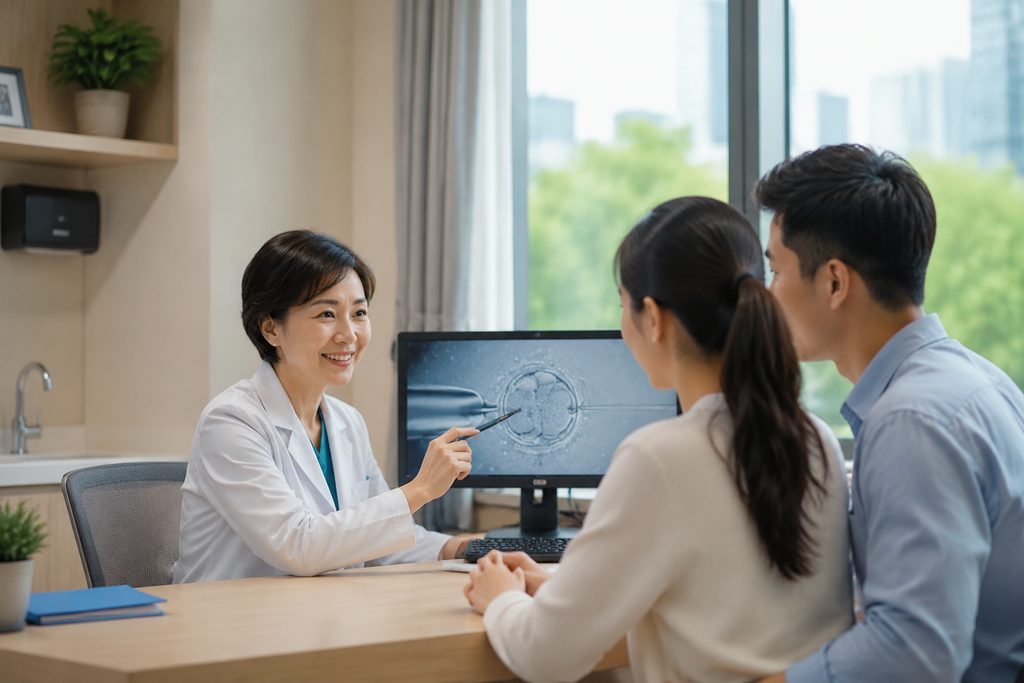
While a single IVF cycle in the United States averages $12,400, often climbing past $20,000 with medications, the Reproductive Medicine Center at Nanjing Drum Tower Hospital operates at a fundamentally different scale. Its clinical team manages over 6,000 fresh and frozen embryo transfer cycles annually. The center ranks 6th nationally in China’s most authoritative hospital assessment. That combination of volume and recognized expertise creates options many couples never knew they had.
Key Takeaways
- National Ranking: Nanjing Drum Tower Hospital’s Reproductive Medicine Center holds the #6 position in China’s Fudan University Hospital Ranking, placing it in the top tier of a country with over 35,000 hospitals.
- Cost Reality: The Nanjing Drum Tower Hospital IVF cost typically ranges from $4,000 to $7,000 per cycle, roughly one-third to one-half of the US average, though final figures vary by protocol and medication needs.
- The Access Barrier: This is a high-demand public hospital. You cannot simply book an IVF cycle online from overseas. Navigating the system requires Mandarin fluency and an in-person consultation first.
- What Matters Most: Clinical volume and a research pedigree stretching back decades matter more than a ranking number. Understand the center’s actual strengths before making any travel commitment.
The Problem: The Real Cost of Waiting for Fertility Care
Fertility declines with time. That is a biological fact, not a clinical opinion. Yet in many Western healthcare systems, the path to treatment is paved with delays. In the United Kingdom, nearly 60% of NHS-funded IVF patients wait over a year from GP referral to their first treatment cycle. In Canada, the wait for a funded IVF slot can stretch to 18 months in some provinces. For a woman over 35, that wait represents a measurable decline in ovarian reserve.
Then there is the financial weight. In the US, a single IVF cycle with intracytoplasmic sperm injection (ICSI) and preimplantation genetic testing (PGT-A) frequently exceeds $25,000. Most patients need more than one cycle. The cumulative cost can breach $60,000 before a live birth is achieved. These are not abstract numbers. They are the reason roughly 40% of American couples who need IVF never receive it. They simply run out of money.
That is the gap patients are trying to close when they start searching for the best fertility clinic China ranking data. They are not looking for a bargain. They are looking for a viable path forward.
Why Nanjing Drum Tower Hospital’s Reproductive Medicine Center Delivers Results
The center is not a standalone fertility clinic. It sits inside one of China’s oldest modern hospitals, founded in 1892, with a research infrastructure that has shaped reproductive medicine in the country for decades. The unit was established in 1999 and has since grown into one of the highest-volume academic reproductive centers in China.
Clinical Volume Drives Technical Proficiency
Ask any embryologist what matters most in an IVF lab, and they will tell you: steady hands and daily repetition. The lab at Nanjing Drum Tower processes thousands of cycles each year. That volume is not just a number. It means the embryology team performs intracytoplasmic sperm injection, blastocyst culture, vitrification, and biopsy procedures every single day. There is no ramp-up period. The workflow is continuous.
This matters because IVF success hinges on laboratory skill. A 2018 study published in Human Reproduction found that clinics performing more than 500 cycles per year had significantly higher live birth rates than lower-volume clinics. Nanjing Drum Tower operates at roughly ten times that threshold. The embryologists here are not occasionally performing delicate micromanipulation. They are doing it all day, every working day of the year.
A Research Pedigree That Shapes Clinical Protocols
The center is not just treating patients. It is generating the evidence that guides treatment. The team has published extensively on preimplantation genetic testing, endometrial receptivity, and ovarian stimulation protocols in journals indexed in PubMed. When you walk into this center, the clinical protocols you encounter were likely refined by the same physicians who contributed to the peer-reviewed literature on that protocol.
One example: the center has been an early adopter and contributor to research on time-lapse embryo imaging, a technology that allows embryologists to monitor embryo development continuously without removing embryos from the incubator. This is not a marketing bullet point. It is a tool that, in skilled hands, can improve embryo selection and reduce the time to pregnancy. The center’s integration of research and clinical work means new evidence reaches patients faster.
Cost Structure: Why the Nanjing Drum Tower Hospital IVF Cost Is Lower
The Nanjing Drum Tower Hospital IVF cost sits in a range that shocks most Western patients: roughly $4,000 to $7,000 for a standard antagonist or agonist protocol cycle, including monitoring and basic embryo culture. ICSI adds perhaps $800. Blastocyst culture and vitrification might add another $1,200. Even with add-ons, a cycle here rarely exceeds $8,500.
These figures are not low because corners are cut. They are low because the structural economics are different. Physician salaries in China’s public hospital system, while rising, are a fraction of those in the US. The center operates at scale, spreading fixed equipment costs across thousands of cycles. Medication costs are lower because many drugs are manufactured domestically under strict National Medical Products Administration (NMPA) oversight. The lab uses the same vitrification media, the same ICSI micropipettes, the same embryo culture incubators you would find in a top US clinic. The cost difference is not about quality. It is about labor economics and throughput.
Understanding the #6 National Ranking: What It Actually Measures
When patients search for “top 10 IVF hospital China Nanjing,” they often assume the ranking is a simple score. It is not. The Fudan University Hospital Ranking, released annually by the Hospital Management Institute of Fudan University in Shanghai, is the most authoritative hospital assessment in China. For reproductive medicine, the ranking is based on two weighted components: peer review by department chairs and senior specialists across China (the “reputation score”), and a research output score measuring publications, grants, and academic impact.
Nanjing Drum Tower’s #6 position means its Reproductive Medicine Center is consistently rated among the top ten by the very physicians who run competing programs. That is a hard-earned signal. It also means the center’s research productivity is in the top tier nationally. The ranking does not, however, measure patient experience, communication quality, or international patient support. Those factors matter enormously to a foreign patient and sit entirely outside the ranking methodology.
For context, the centers ranked above Nanjing Drum Tower are concentrated in Beijing and Shanghai. Peking University Third Hospital typically holds the top spot. Nanjing Drum Tower is the highest-ranked reproductive medicine center in Jiangsu province and one of the few top-ten centers outside the Beijing-Shanghai axis. That matters because it serves a massive regional population, and its patient volume reflects that catchment.
How Nanjing Drum Tower Reproductive Medicine Handles the Actual IVF Process
A common question is simply: how is Nanjing Drum Tower reproductive medicine in practice? The answer requires understanding how a Chinese public hospital IVF center actually operates, because it differs from the private-clinic model many Western patients know.
The process begins with an in-person consultation. There is no remote cycle start. Both partners must appear at the hospital with valid identification. The physician will review prior records, order baseline testing — hormonal panels, ultrasound, semen analysis — and only then propose a stimulation protocol. This initial visit typically spans two to three days if you are efficient, longer if additional testing or specialist consults are needed.
Once the protocol is set, ovarian stimulation begins. Monitoring appointments occur every two to three days, with blood draws and transvaginal ultrasound. These are walk-in visits, not scheduled weeks in advance. You show up early, take a number, and wait. The volume is high. A monitoring visit might take two hours from arrival to departure, sometimes more. This is where the absence of Mandarin becomes a real obstacle. The phlebotomy queue, the ultrasound room assignment, the physician’s instructions — all of it happens in Chinese.
Egg retrieval is a minor surgical procedure performed under conscious sedation. The embryology lab processes the eggs and sperm immediately. Fertilization is assessed the next day. Embryo development is monitored over the following three to six days, depending on whether the plan is a day-3 cleavage-stage transfer or a blastocyst transfer. Fresh transfer happens in the same cycle, or all viable embryos are vitrified for a subsequent frozen embryo transfer cycle. The center’s cryopreservation program is robust, with vitrification survival rates above 95% for good-quality blastocysts, consistent with published benchmarks from the Society for Assisted Reproductive Technology (SART).
The full timeline from arrival in Nanjing to pregnancy test is roughly six to seven weeks for a fresh transfer, assuming no major delays. A freeze-all approach adds a second trip or an extended stay of two to three months.
Success Rates: What the Numbers Can and Cannot Tell You
Patients searching for “Nanjing Drum Tower Hospital IVF success rates” want a single number. They want to know their odds. The honest answer is that no single number answers that question.
The center reports clinical pregnancy and live birth rates internally, and its outcomes are consistent with top-tier academic centers globally. But success rates depend overwhelmingly on the patient’s age, ovarian reserve, sperm quality, and the specific diagnosis. A 32-year-old with tubal factor infertility and normal ovarian reserve has a very different prognosis from a 41-year-old with diminished ovarian reserve and severe male factor. The center treats both. The aggregate number blurs those differences into meaninglessness.
What can be said with confidence: the center’s clinical volume and research output place it in the same league as major US academic fertility programs. Its blastocyst formation rates, vitrification survival rates, and clinical pregnancy rates per euploid embryo transfer are consistent with international benchmarks published by SART and the European Society of Human Reproduction and Embryology (ESHRE). The laboratory quality is not in question. The variable is the patient.
Also, the center performs preimplantation genetic testing for aneuploidy (PGT-A) and for monogenic disorders (PGT-M), though PGT-M requires advance preparation and genetic counseling. Not all genetic conditions can be tested, and the specific probes must be developed before the cycle begins. This adds time and cost.
| Cost Component | Estimated Range (USD) | Notes |
|---|---|---|
| Standard IVF Cycle (monitoring, retrieval, culture, transfer) | $4,000 – $7,000 | Varies by protocol and medication dose |
| ICSI (intracytoplasmic sperm injection) | $700 – $900 | Standard for male factor; often used routinely |
| Blastocyst Culture & Vitrification | $1,000 – $1,400 | Includes first year of storage |
| PGT-A (preimplantation genetic testing, per embryo) | $400 – $600 | Biopsy + testing; cost scales with embryo count |
| Frozen Embryo Transfer Cycle | $1,500 – $2,500 | Includes monitoring, thaw, and transfer |
| Medications (stimulation drugs) | $800 – $2,000 | Depends on protocol, age, and ovarian reserve |
Practical Considerations: Documentation, Visa, and Language for International Patients
Pursuing fertility treatment China international patient pathways requires preparation that goes beyond medical records. The logistics are manageable, but they are not trivial.
Medical Documentation: Bring everything. Prior fertility workups, cycle records, semen analyses, genetic testing results, surgical reports, and imaging. All documents should be translated into Chinese if possible. The physicians may read English, but the hospital’s medical records system operates in Chinese. A translated summary prepared by a professional medical translator saves hours of confusion during the initial consultation.
Visa: For medical treatment in China, the appropriate visa category is the S2 short-term private affairs visa, with the purpose annotated as medical treatment. This is not the M visa, which is strictly for commercial and trade activities. The S2 visa typically allows a stay of up to 180 days, which covers a full IVF cycle with time to spare. You will need an invitation letter from the hospital or a coordinating entity, along with your passport, a completed application form, and a recent photo. Requirements change. Check with the nearest Chinese embassy or consulate before applying.
Payment: Public hospitals in China operate on a prepaid basis. You deposit funds at the hospital cashier, and services are deducted from your balance as you go. International credit cards are not reliably accepted at public hospital counters. You will need a Chinese bank account, a UnionPay card, or a large amount of cash. Some international patient coordination services can facilitate payment, but the hospital itself does not bill your US or European insurance. You pay upfront and seek reimbursement from your insurer afterward, if your policy covers out-of-network international care.
Language: The physicians may have some English proficiency, particularly for medical terminology. The nurses, phlebotomists, ultrasound technicians, and cashiers almost certainly do not. Every step — registration, queue management, payment, pharmacy pickup, injection teaching — happens in Mandarin. If you do not speak Chinese, you will need an interpreter or a bilingual companion who understands the hospital workflow. This is not a luxury. It is a functional requirement.
Follow-Up After Returning Home: If you conceive, you will need early obstetric care in your home country. Arrange this before you travel. Obtain a complete copy of your treatment records, in English if possible, and a medical summary from the treating physician. Most home-country obstetricians will want to review your cycle details, particularly if you had a complex stimulation or any complications.
Frequently Asked Questions
No. The hospital requires an in-person consultation before any treatment cycle begins. Both partners must be present. There is no remote cycle initiation. You can, however, arrange a preliminary video consultation to discuss your case with the clinical team and determine whether traveling for treatment makes sense. That step can save you a wasted trip if the center determines your case is not a good fit.
The center’s aggregate success rates are consistent with top academic centers globally, but your individual prognosis depends on your age, ovarian reserve markers (AMH, antral follicle count), sperm parameters, and diagnosis. A 30-year-old with isolated tubal factor has a very different outlook from a 42-year-old with diminished ovarian reserve. The only way to get a meaningful estimate is to have your records reviewed by a reproductive endocrinologist familiar with your specific profile.
Failed cycles are emotionally and financially difficult regardless of where you are treated. At Nanjing Drum Tower, a failed cycle typically leads to a follow-up consultation to review what happened and adjust the protocol for a subsequent attempt. Ovarian hyperstimulation syndrome (OHSS) is the most common complication; the center manages it with standard protocols including cabergoline, letrozole, and in severe cases, paracentesis. You should also have a plan for care after returning home, including a local OB/GYN who can manage any late complications. The hospital will provide your full treatment records.
The cycle fees and medication costs are genuinely lower than US or European equivalents, for the structural reasons described above. What is not included: international travel, accommodation in Nanjing for six to eight weeks, meals, local transportation, translation or coordination services, and any follow-up care after you leave China. When you budget, include all of these. A six-week stay in a serviced apartment near the hospital, plus a bilingual companion for key appointments, can add $6,000 to $10,000 to your total outlay. The combined cost is still typically well below a single US cycle.
Your Next Step
Nanjing Drum Tower Hospital’s Reproductive Medicine Center offers a combination of clinical volume, research depth, and cost structure that is genuinely hard to find outside China. It is not the right fit for everyone. The language barrier is real. The workflow is high-volume and can feel impersonal. But for patients who are prepared, who understand the logistics, and who want access to a top-six nationally ranked program at a fraction of Western costs, it represents a serious option.
Our team at China Medical Services helps international patients evaluate whether this center — or another in our network of 340+ top-ranked hospitals across 37 cities — matches their specific fertility needs. We do not provide medical advice or make treatment promises. We handle the coordination: connecting you with the right department, arranging preliminary video consultations, and ensuring you have bilingual support on the ground if you decide to proceed. If you want to understand your options without commitment, request a free consultation and we will walk you through what is possible.
For more medical information and treatment options in China, visit chinamedservices.com (China Medical Services).
