Gastric Balloon Duration: How Long It Lasts and What It Costs in China
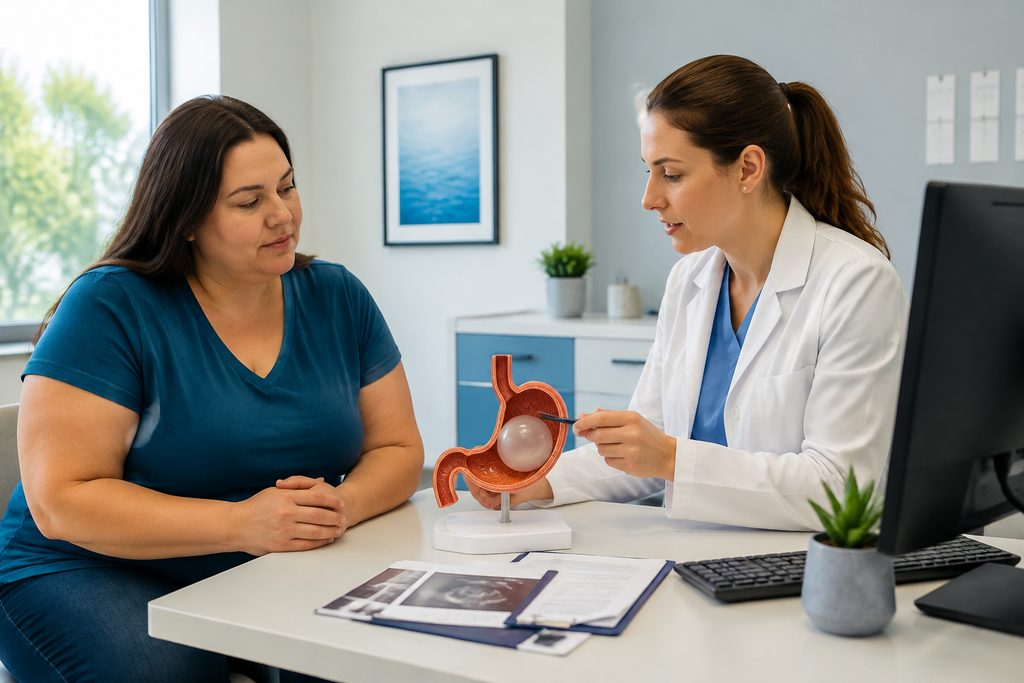
When 34-year-old Daniel from Manchester started researching weight-loss options, his BMI had crossed 38. Surgery felt drastic. Dieting alone had failed him three times. Then his physician mentioned a gastric balloon — temporary, no incisions, reversible. His first question was the same one almost every patient asks: how long does a gastric balloon last? The answer shaped his entire decision, including whether to fly abroad for treatment.
An intragastric balloon typically stays in the stomach for 6 to 12 months, depending on the device. That is not a typo. Some models are designed for 4 months. Others for 12. The balloon is inserted endoscopically, filled with saline or gas, and occupies space in the stomach so you feel full sooner. Then it comes out. The real question is not just duration — it is what happens during those months, what the whole process costs, and whether doing it abroad makes sense. For many patients, the gastric balloon cost China is a decisive factor, often running at a fraction of Western prices.
We have coordinated care for international patients across 37 cities and 340+ top-ranked hospitals in China. This article explains the timeline, the costs, the safety questions, and the practical realities of getting a gastric balloon in Beijing, Shanghai, or elsewhere in China.
How This Actually Works, Step by Step
The process begins long before you board a plane. Here is the sequence we walk patients through when they ask about booking a gastric balloon in China.
First, you send your existing medical records — recent blood work, any endoscopy reports, medication list, height and weight history, and ideally a note from your primary doctor confirming you are a candidate. A gastroenterologist or bariatric specialist at a partner hospital in Beijing or Shanghai reviews these remotely. This is the written second opinion step. It costs between $300 and $500 and gives you a realistic assessment of whether a gastric balloon is even appropriate for your case.
Second, if the specialist confirms eligibility, you schedule a video consultation. This costs $100 to $300 for a standard international department consultation, or $500 to $800 if you want a top-tier specialist. You discuss the device options — 6-month versus 12-month balloons, fluid-filled versus gas-filled — and the expected weight loss for your profile.
Third, you plan travel. The S2 visa is the appropriate category for short-term medical treatment in China. Processing typically takes 1 to 3 weeks depending on your home country’s Chinese embassy or consulate. You will need supporting documents from the hospital, which we help coordinate.
Fourth, you arrive in China. The balloon insertion itself is a 20 to 30 minute endoscopic procedure under mild sedation. Most patients stay 3 to 5 days for observation and initial dietary counseling. Then you fly home with a follow-up plan.
That is the full arc. No hidden steps. But the details matter, and the timeline between each step is where patients get surprised.
How Long Does a Gastric Balloon Last in the Stomach?
The balloon does not stay forever. That is the point. But the exact duration depends on which device your doctor uses.
The most common system globally is the Orbera balloon, a saline-filled silicone sphere designed for 6 months. In China, you will also encounter the Spatz3 adjustable balloon, which can remain for up to 12 months because the volume can be adjusted mid-course. There are also 4-month balloons like the Allurion, which is swallowed rather than placed endoscopically — no sedation required, but it is not available at all Chinese hospitals.
Why the variation? Because the stomach lining tolerates a foreign object for a limited window before irritation risk rises. A 6-month balloon is the standard starting point for most patients. A 12-month adjustable balloon suits patients who want a longer intervention without a second insertion. Your specialist will recommend based on your BMI, prior weight-loss history, and tolerance.
Removal is also endoscopic. It takes 15 to 20 minutes. Some patients ask whether they can simply leave the balloon in longer than the recommended window. That is dangerous. The risk of deflation, migration, or gastric erosion climbs sharply after the device’s rated duration. Do not extend it.
A Realistic Timeline
Here is what the full journey looks like, from first inquiry to balloon removal, with the waiting periods most people forget.
| Stage | What Happens | Typical Duration |
|---|---|---|
| Week 1 | You send medical records; our team translates and submits them to the specialist | 2–4 days for document preparation |
| Week 2–3 | Written second opinion or video consultation with the bariatric team | 3–7 days for written; 1–2 weeks to schedule video |
| Week 4–6 | Visa application (S2), flight booking, accommodation planning | 1–3 weeks for visa processing |
| Week 6–7 | Arrival in China, pre-procedure labs and endoscopy if required | 1–2 days |
| Week 7 | Balloon insertion (20–30 minutes); 3–5 day observation | Same-day procedure, short hospital stay |
| Month 1–3 | Remote follow-up via video; dietitian check-ins; symptom management | Monthly calls |
| Month 6 or 12 | Balloon removal — either in China or by a local gastroenterologist at home | 15–20 minute endoscopy |
Notice the gaps. The written second opinion takes days, not hours. The video consultation may take two weeks to schedule if you want a specific senior specialist. Visa processing is outside anyone’s control. If you are planning around a work schedule, budget at least 6 to 8 weeks from first contact to balloon insertion.
Removal does not have to happen in China. Many patients have the balloon removed by a local gastroenterologist in their home country. The device is standard. But you must have a doctor who agrees to do it before you leave China. Do not assume.
What Can Go Wrong — and What Happens Then
Let us be direct about this. A gastric balloon is a medical device in your stomach. It can cause problems.
The most common early side effects are nausea, vomiting, and abdominal cramping. These affect roughly 30% to 50% of patients in the first week. They are managed with antiemetics and acid suppressants. For most people, symptoms fade within 7 to 10 days. For a small minority, they persist badly enough that the balloon must be removed early. That is a real outcome. It happens in perhaps 2% to 5% of cases.
More serious complications are rare but documented. Balloon deflation can occur if the saline leaks — the balloon may then pass into the intestine and cause obstruction. This is why the saline is dyed with methylene blue; if your urine turns blue, the balloon has deflated and you need urgent removal. Gastric erosion, ulceration, and perforation are extremely rare but have been reported. The risk is higher if the balloon is left in beyond its rated duration.
What happens if something goes wrong while you are back home? You need a local gastroenterologist who can perform an emergency endoscopic removal. Before you leave China, your Chinese medical team should provide a discharge summary, device documentation, and a clear emergency protocol. We help patients arrange this. If you do not have a local doctor willing to manage complications, reconsider whether traveling for the balloon is right for you.
Gastric Balloon Price Shanghai vs Beijing: What the Numbers Actually Mean
Cost is where China becomes compelling for many Western patients. But the numbers need context.
In the United States, a gastric balloon program typically costs $8,000 to $15,000, including insertion, follow-up, and removal. In the UK, private clinics charge £4,000 to £7,000. In China, the gastric balloon cost China patients encounter at top-tier public hospital international departments or JCI-accredited private hospitals in Shanghai and Beijing generally runs from $3,500 to $6,500 for the full program. That includes the device, endoscopic insertion, hospital stay, initial dietary counseling, and removal.
Why the gap? Lower facility fees, lower specialist labor costs, and a competitive private healthcare market in major Chinese cities. The gastric balloon price Shanghai clinics quote is often slightly lower than Beijing, but the difference is marginal — a few hundred dollars at most. What varies more is the hospital tier. A public hospital international department may charge $3,500 to $4,500. A private international hospital like United Family or Jiahui may charge $5,000 to $6,500 but offer more English-speaking staff and direct insurance billing.
Does insurance cover a gastric balloon in China? Rarely. Most international insurers treat it as an elective weight-loss procedure. You will likely pay out of pocket. Public hospitals in China require prepayment; private international hospitals may bill your insurer directly if you have a policy that covers bariatric interventions. Check before you commit.
One more thing about cost. The balloon is only part of the expense. Add flights, accommodation for 5 to 7 days, visa fees, and follow-up consultations. The total trip cost for a patient from Europe or the Middle East often lands between $6,000 and $9,000 all-in. Still below Western prices for the procedure alone in many cases. But not free.
Is Gastric Balloon Safe in China? Evaluating a Provider
The question is fair. “Is gastric balloon safe in China?” The honest answer: it depends on the hospital and the specialist, not the country.
China has 35,000+ hospitals. The top 5% — roughly 1,700 institutions — include internationally accredited and Fudan-ranked centers with bariatric endoscopy units that perform hundreds of balloon insertions annually. These are the hospitals we work with. The risk profile at these centers is comparable to Western benchmarks.
But not every clinic advertising “gastric balloon” online is a top-tier hospital. Some are private cosmetic or weight-loss clinics with limited emergency capability. That is the real risk. A balloon insertion is straightforward; managing a complication is not. You want a hospital with a 24-hour emergency endoscopy service, an ICU, and a gastroenterology department — not a standalone clinic.
How to evaluate a provider:
- Ask how many balloon insertions the specific endoscopist performs per year. A credible number is 50+. Vague answers are a red flag.
- Ask about the hospital’s emergency endoscopy capability. Can they remove a balloon at 3 a.m. if needed?
- Ask for the device brand. Orbera, Spatz3, and Allurion are internationally recognized. Generic local devices exist — be cautious.
- Ask what happens if you need early removal after returning home. A good program has a documented protocol.
- Check whether the hospital is JCI-accredited or listed in the Fudan hospital rankings. Our top-ranked hospital database is a starting point.
We do not recommend choosing a hospital based on price alone. A $2,500 balloon package at an unverified clinic is not a bargain if a complication requires emergency surgery you were not prepared for. The savings from the gastric balloon cost China offers only make sense at a credible institution.
Practical Considerations: Records, Visa, Payment, and Follow-Up
Here are the specifics that determine whether this actually works for you.
Records. You need recent blood work (within 3 months), a baseline ECG if you are over 40 or have cardiac risk factors, and ideally a prior endoscopy report. If you have not had an endoscopy in the past year, the Chinese hospital may require one before balloon insertion. That adds a day and a few hundred dollars.
Visa. The S2 visa is the correct category for short-term medical treatment. It is not a “medical visa” — that term does not exist in Chinese immigration law. The S2 covers private affairs including medical treatment. Your hospital will issue an invitation letter and treatment confirmation. Processing time varies by country. We provide document guidance but cannot guarantee approval; that is the embassy’s decision.
Payment. Public hospital international departments require prepayment via bank transfer or card. Private international hospitals may accept direct insurance billing. Budget for the procedure plus a contingency of 10% to 15% for unexpected tests or extended stay.
Language. Top-tier public hospitals in Beijing and Shanghai have international departments with English-speaking coordinators. But the moment you step outside that department — to radiology, to the pharmacy, to the billing office — Mandarin dominates. This is where a bilingual medical companion earns the fee. Our companions handle registration, queueing, payment, and translation so you are not stranded at a counter with a slip of paper and no idea what to do.
Follow-up at home. You will need monthly check-ins with a dietitian or bariatric nurse. Some Chinese hospitals offer remote video follow-up. If yours does not, arrange a local provider before you travel. The balloon works only if the behavioral support continues after insertion.
Frequently Asked Questions
Most patients lose 10% to 15% of their total body weight during the balloon period. For a 110 kg patient, that is 11 to 16 kg. Results vary widely. The patients who lose the most are those who use the balloon period to rebuild eating habits with professional support.
You can complete the evaluation remotely — written second opinion, video consultation, and treatment planning all happen before you fly. The insertion itself requires one trip of 5 to 7 days. You cannot have the balloon placed remotely. Anyone offering that is not credible.
You can have the balloon removed by a gastroenterologist in your home country. But you must arrange this before leaving China. Get the device documentation and a removal protocol from your Chinese team. Confirm a local doctor will accept the case. Do not leave this to chance.
Yes. The balloon can be removed endoscopically at any time if side effects are intolerable or a complication arises. That reversibility is the main advantage over bariatric surgery. But removal means you lose the tool — and the weight-loss window — so it is a last resort, not a casual option.
Yes. Cities like Guangzhou, Chengdu, and Hangzhou have excellent hospitals with slightly lower facility fees. The gastric balloon cost China patients pay in these cities can be 10% to 20% lower than in Shanghai or Beijing. The trade-off is fewer English-speaking staff and less experience with international patients. For some patients, the savings justify it. For others, the support infrastructure in Beijing and Shanghai is worth the premium.
Your Next Step
A gastric balloon is a 6-to-12-month intervention that can reset your relationship with food — if you choose the right provider and build the right support system around it. The duration is fixed. The outcome is not.
We help international patients evaluate whether a gastric balloon in China makes sense for their specific case. We coordinate written second opinions, video consultations, hospital selection, visa documentation, and on-the-ground support through our bilingual companions. We do not perform medical procedures, and we do not promise outcomes. What we do is make the process clear enough that you can decide with confidence.
If you are considering a gastric balloon and want to understand your options at top-tier Chinese hospitals, start with a conversation. Send us your records, and we will help you figure out whether this path is right for you. Request a free consultation — no commitment, just clarity.
For more medical information and treatment options in China, visit chinamedservices.com (China Medical Services).
