Peking University Cancer Hospital Radiation Oncology: Costs & Access for International Patients
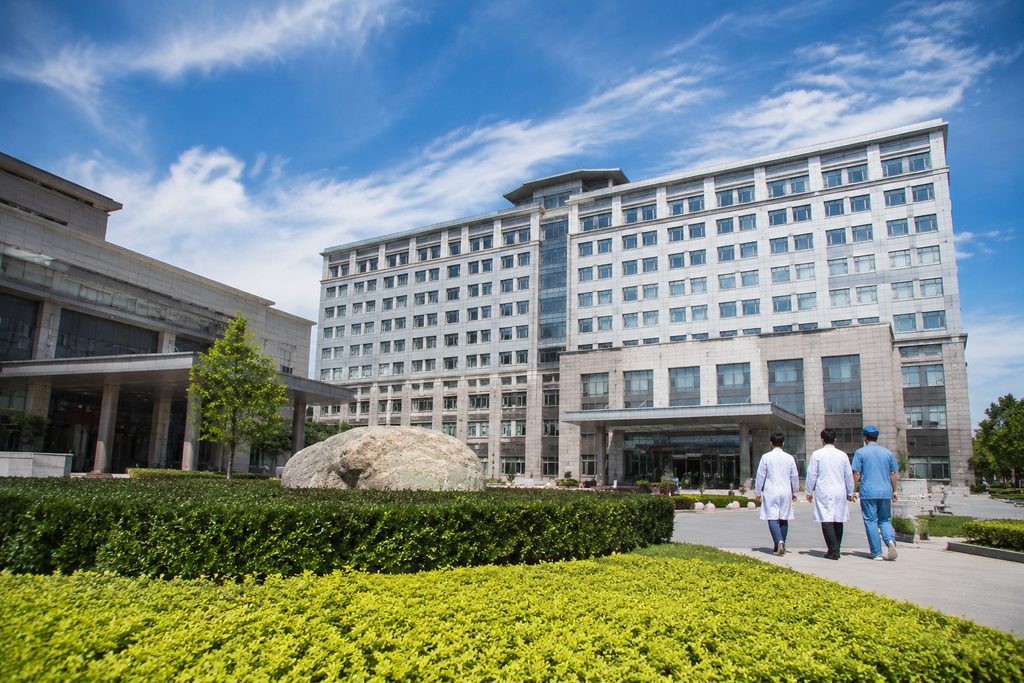
Have you ever been handed a cancer diagnosis and felt the ground shift beneath you — then realized the next battle is figuring out where to get treated, how fast, and at what price? For many international patients, Peking University Cancer Hospital (PUCH) in Beijing sits at the top of that list. The Peking University Cancer Hospital radiation oncology cost is a fraction of what Western hospitals charge, but accessing it requires navigating a system that does not bend easily to overseas inquiries.
This article breaks down the real costs, the actual process, and the hard truths about getting radiation therapy at one of China’s most respected oncology centers. No sugarcoating. No vague promises. Just what you need to know before you book a flight.
Peking University Cancer Hospital Radiation Oncology: The Short Answer
Radiation therapy at Peking University Cancer Hospital typically costs between $8,000 and $25,000 for a full course, depending on the technique and number of fractions. That compares to $40,000–$100,000+ in the United States for equivalent treatment. But the price tag is only half the story.
The harder part is access. PUCH is a public hospital. Its regular outpatient department does not accept advance bookings from overseas. You cannot email the radiation oncology department and lock in a start date. To secure a defined treatment timeline, international patients generally need to go through the hospital’s international medical services channel or work with a coordination team on the ground in Beijing. More on that below.
Who This Is Right For — and Who It Isn’t
Radiation oncology at PUCH suits a specific profile of patient. Knowing whether you fit that profile before you spend money on flights and consultations will save you weeks of frustration.
Typically a good candidate:
- You have a confirmed cancer diagnosis with imaging and pathology reports already in hand
- Your case is suitable for radiation — early-stage lung, esophageal, nasopharyngeal, cervical, or head and neck cancers, among others
- You are medically stable enough to travel and stay in Beijing for 4–8 weeks
- You have a family member or friend who can accompany you — or budget for a bilingual companion
- You can pay upfront and seek reimbursement from your insurer later
Who should not pursue this:
- Patients needing emergency intervention — radiation planning takes time, and PUCH is not a walk-in facility for foreigners
- Those with unstable cardiac or respiratory conditions that make long-haul travel risky
- Patients expecting a Western-style concierge experience at public hospital prices — the international channel helps, but this is still a high-volume Chinese public institution
- Anyone unwilling to gather, translate, and submit complete medical records before arrival
If you are in the second group, staying closer to home or choosing a private international hospital in China may be the better call.
The Options, Compared
You are not locked into one pathway. Here is how the main routes to radiation therapy in Beijing stack up for an international patient.
| Pathway | Typical Cost (USD) | Wait Time to Start | English Support | Best For |
|---|---|---|---|---|
| PUCH public outpatient (self-navigate) | $8,000–$15,000 | 2–6 weeks, unpredictable | Minimal | Fluent Mandarin speakers on a budget |
| PUCH international / VIP channel | $12,000–$25,000 | 1–3 weeks after records review | Improved, still limited | International patients who need defined timelines |
| Private international hospital in Beijing (e.g., United Family) | $30,000–$60,000 | 1–2 weeks | Full English | Patients prioritizing comfort and direct insurance billing |
| US / Western hospital | $40,000–$100,000+ | 1–4 weeks | Native language | Those with comprehensive insurance and no travel constraints |
Which column fits you? If your priority is the lowest possible cost and you speak Mandarin, the public route can work. If you want the PUCH medical team but need coordination, the international channel is the realistic middle path. If you want a fully Western experience, a private hospital in Beijing — or staying home — may serve you better.
What Makes PUCH’s Radiation Oncology Different
Peking University Cancer Hospital is consistently ranked among China’s top 10 for oncology in the Fudan University specialist reputation rankings. The radiation oncology department runs a high patient volume — thousands of treatment courses per year — which translates into operator experience that smaller centers simply cannot match. The department uses modern linear accelerators, including intensity-modulated radiation therapy (IMRT), volumetric modulated arc therapy (VMAT), and stereotactic body radiation therapy (SBRT) for appropriate cases.
And here is a number that matters: Chinese radiation oncologists at top centers see more esophageal and nasopharyngeal carcinoma cases in a single year than many Western radiation oncologists see in a decade. That volume is not a marketing line. It is a function of China’s population and cancer epidemiology. For certain disease sites, that repetition produces genuine clinical fluency.
But volume is not the same as luxury. Expect efficient, protocol-driven care. Do not expect long, unhurried consultations. The doctor will review your case thoroughly before you arrive — that is where the international coordination step earns its value — but the in-person interaction will be direct and time-boxed.
What It Costs — and What Drives the Variance
The Peking University Cancer Hospital radiation oncology cost breaks down into several components. Understanding what you are actually paying for helps you compare quotes honestly.
Treatment technique: Conventional 3D conformal radiation costs less than IMRT or VMAT. SBRT — used for small, well-defined tumors — is priced higher per fraction but requires fewer sessions. A typical IMRT course of 25–33 fractions runs $10,000–$18,000 at PUCH. SBRT for an early lung lesion might run $8,000–$15,000 for 3–8 fractions.
What that price typically includes:
- Treatment planning (CT simulation, contouring, physics planning)
- Radiation delivery (all fractions)
- Weekly on-treatment reviews with the radiation oncologist
- Basic positioning and immobilization devices
What it typically does not include:
- Initial consultation and records review fees
- Imaging before treatment if not already done (PET-CT, MRI)
- Concurrent chemotherapy, if prescribed
- Hospital accommodation or nearby housing
- Interpreter or bilingual companion services
- Any post-treatment follow-up imaging after you return home
Also worth knowing: public hospitals in China require prepayment. You deposit funds at admission or treatment start, and charges are deducted as services are rendered. Insurance reimbursement is your responsibility afterward. Private international hospitals, by contrast, often bill insurers directly — but their treatment prices run two to three times higher.
Practical Considerations: Records, Visa, Language, and Follow-Up
Radiation oncology is not a treatment you can walk into. The preparatory work is substantial, and skipping steps will delay your start date.
Medical records: You need complete documentation — pathology report, imaging studies (preferably DICOM files on a disc or upload link), prior treatment summaries, and a current medication list. These must be translated into Chinese for the PUCH team. A written second opinion from the department costs $300–$500 and is the most efficient way to confirm whether your case is even suitable before you travel.
Visa: Medical treatment in China falls under the S2 visa category — not the M visa, which is strictly for commercial and trade activities. You will need an invitation letter or supporting documentation from the hospital or a coordinating entity. Family members accompanying you also apply for S2 visas. Processing times vary by embassy, so start this early. Approval is never guaranteed.
Language: This is the single biggest practical barrier. PUCH is a public hospital. Most frontline staff do not speak English. Even in the international department, English capacity is limited. A bilingual medical companion — from $300 per day — handles registration, queueing, payment, translation during consultations, and navigation between departments. For a 6-week radiation course, that is a meaningful line item. Many patients also arrange a companion for the first week only, then manage independently once the daily routine is established.
Follow-up after returning home: Radiation side effects can emerge or peak weeks after treatment ends. Before you leave Beijing, request a complete treatment summary in English — total dose, fractionation, fields treated, and any concurrent therapy. Your home oncologist will need this. Arrange a follow-up schedule with your local team before you depart, not after you land.
Frequently Asked Questions
At top-tier centers like Peking University Cancer Hospital, the equipment and protocols meet international standards. The linear accelerators are modern, quality assurance procedures are in place, and the radiation oncologists are trained in current techniques. The risk is not the technology — it is the communication gap. Misunderstandings about side effects, medication instructions, or follow-up care are more likely when language support is absent. That is a manageable risk if you plan for it.
A full IMRT course at a top Chinese public hospital runs $10,000–$18,000. The same treatment in the United States typically costs $40,000–$100,000 or more, depending on the facility and insurance negotiations. Even adding flights, accommodation, and a bilingual companion for six weeks, most patients still spend less than half of the US price. But remember: Chinese public hospitals require upfront payment, and you handle insurance reimbursement yourself.
Not through the regular outpatient system. Public hospital registration in China is designed for domestic patients who show up in person. International patients who want a defined timeline need to go through the hospital’s international medical services channel or work with a coordination service that has established relationships with the department. The process starts with a records review — not a booking.
This happens. The PUCH team may recommend additional imaging, a biopsy, or a change in treatment approach after reviewing your full records in person. That can extend your stay and increase costs. Budget a 10–20% contingency above the quoted treatment price. Also confirm with the hospital what happens to your prepayment if treatment is cancelled or altered — refund policies vary.
It is among the best for radiation oncology specifically, and it ranks in China’s top tier for oncology overall. But “best” depends on your cancer type. For certain hematologic malignancies, other Beijing hospitals may be stronger. For a fully English-speaking environment, a private international hospital may suit you better despite the higher price. The right question is not “which hospital is best” but “which hospital is best for my specific diagnosis and my practical constraints.”
Your Next Step
Radiation oncology at Peking University Cancer Hospital offers a combination that is hard to find elsewhere: top-tier clinical expertise, high patient volumes that build genuine experience, and costs that undercut Western prices by 60–80%. The trade-off is operational complexity — records, visa, language, and logistics.
That is where China Medical Services fits. We are not a hospital, and we do not diagnose or treat. We handle the coordination layer: records translation and submission, hospital communication, appointment scheduling through official international channels, and bilingual companion support on the ground. If you want to know whether PUCH is a realistic option for your case, start with a written second opinion or a video consultation — both of which are credited in full toward on-the-ground coordination if you proceed within 90 days.
Take the first step with a free consultation. Send your records. Get an honest assessment. Then decide with real information, not guesswork.
Your diagnosis is already a heavy enough burden. The logistics don’t have to be.
For more medical information and treatment options in China, visit chinamedservices.com (China Medical Services).
