Pituitary Surgery and Hormones: What Actually Changes After Tumor Removal
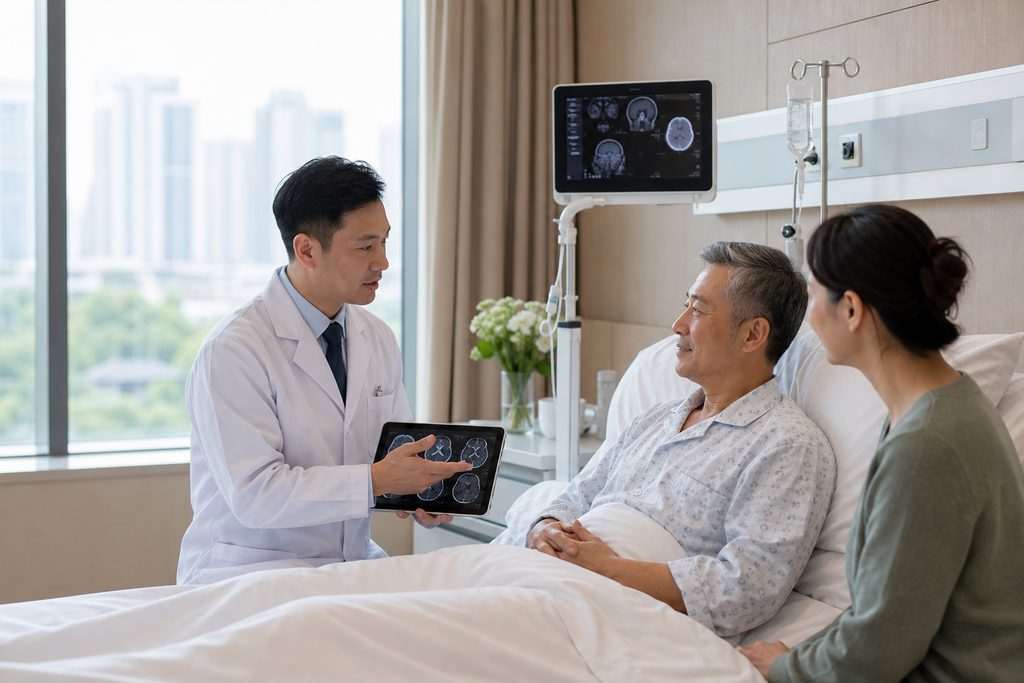
Around 1 in 1,100 people will be diagnosed with a pituitary adenoma at some point in their lives, according to data from large autopsy and MRI series. Most are benign. Many never cause symptoms. But for those that do — the ones pressing on the optic nerve or flooding the body with excess hormones — surgery becomes the clear path forward. And the first question patients ask is almost never about the incision. It’s about what happens after. Will pituitary surgery affect my hormones? The answer, from endocrinologists and neurosurgeons who manage these cases daily, is nuanced: yes, it often does, sometimes permanently, sometimes only for weeks, and the direction of change depends heavily on the type of tumor you started with and the surgical approach used.
This guide walks through the hormonal reality of transsphenoidal pituitary surgery, what the recovery timeline actually looks like, how to evaluate a surgical team, and what international patients should know about pituitary tumor surgery cost China and the logistical steps involved in receiving care there.
How This Actually Works, Step by Step
You don’t just show up and get scheduled for pituitary surgery. The sequence matters, especially if you’re traveling from abroad. Here’s the real flow.
First, you send your existing records — MRI images on disc, recent hormone panels, visual field testing if it was done, and any prior endocrinology notes. A neurosurgical team reviews them. If the images are older than three months, expect a request for a repeat MRI with and without contrast. That’s standard, not stalling.
Second, you have a remote consultation. This may be a written second opinion or a live video call with the neurosurgery and endocrinology team. They will ask about headaches, vision changes, fatigue, libido, menstrual irregularities, and whether you have acromegaly, Cushing’s disease, or a prolactinoma. The tumor type dictates the hormonal risk profile.
Third, if surgery is appropriate, the team maps out pre-operative testing. This includes a full pituitary hormone panel: prolactin, IGF-1, cortisol, ACTH, TSH, free T4, LH, FSH, testosterone or estradiol. You cannot skip this. Baseline values determine what “normal” means for you after surgery.
Fourth, you travel. For international patients coming to China, the S2 visa is the applicable short-stay category for medical treatment and private affairs, supported by hospital invitation documents. Visa processing typically takes one to three weeks depending on your consulate. You’ll need the hospital’s official letter, proof of accommodation, and sometimes a deposit receipt.
Fifth, you meet the surgeon in person. Chinese public hospitals require an in-person outpatient consultation before any surgery is scheduled. This is non-negotiable — even for patients who have already done remote consultations. The in-person visit confirms the plan, signs consent, and triggers the admission process.
Then surgery happens. Then the hormonal waiting game begins.
Will Pituitary Surgery Affect My Hormones? The Short and Long Answer
Yes. The pituitary gland is the master conductor of your endocrine system. Cutting into it — even with the most precise endoscopic technique — disturbs the orchestra. The real question is whether the disturbance is temporary or permanent, and whether it represents improvement or new deficiency.
For hormone-secreting tumors, surgery usually improves the excess. A prolactinoma that has been resistant to cabergoline, for instance, may be surgically debulked with the goal of dropping prolactin levels dramatically within days. In Cushing’s disease, successful removal of the ACTH-secreting adenoma leads to a rapid fall in cortisol — sometimes too rapid, which is why post-operative hydrocortisone coverage is standard. Acromegaly patients see IGF-1 and growth hormone levels decline over weeks to months, not hours.
But here’s the part many patients don’t anticipate. Removing the tumor can also remove or damage healthy pituitary tissue. The stalk that connects the pituitary to the hypothalamus is delicate. Manipulation during surgery can cause temporary or permanent diabetes insipidus — a condition where the body cannot concentrate urine, leading to intense thirst and frequent urination. This happens in roughly 10 to 20 percent of cases immediately after surgery, though most resolve within days to weeks. A smaller percentage require long-term desmopressin.
Anterior pituitary deficiencies — affecting thyroid hormone, cortisol, testosterone, or growth hormone — occur in a meaningful minority of patients. The rate depends on tumor size, whether it invaded surrounding tissue, and the surgeon’s experience. Macroadenomas, those larger than 1 centimeter, carry higher risk. A 2021 retrospective review published in the Journal of Neurosurgery found that new anterior pituitary deficiency after endoscopic transsphenoidal surgery occurred in approximately 8 to 15 percent of patients, with the highest risk in the first post-operative year.
So does pituitary surgery affect hormones long term? For many patients, yes — but the direction is often toward normalization rather than deterioration. The excess hormone drops. Some baseline function may be lost. Most patients end up on one or two replacement medications, taken daily, with normal life expectancy and quality of life.
A Realistic Timeline
| Stage | What Happens | Typical Duration |
|---|---|---|
| Remote record review | Neurosurgery and endocrinology teams assess MRI, hormone panels, visual fields | 3–7 days |
| Video consultation | Live discussion of surgical candidacy, risks, and hormonal expectations | 30–60 minutes, scheduled within 1–2 weeks |
| Document translation and visa preparation | Hospital invitation letter, passport copies, S2 visa application | 1–3 weeks |
| Travel and in-person consultation | Outpatient visit with neurosurgeon, pre-op labs, anesthesia clearance | 2–3 days before admission |
| Surgery | Endoscopic transsphenoidal resection, typically 2–4 hours | 1 day |
| Hospital stay | Monitoring for diabetes insipidus, CSF leak, electrolyte shifts | 3–7 days |
| Early hormone testing | Prolactin, cortisol, sodium, urine output monitored daily | First week post-op |
| First follow-up hormone panel | Full pituitary axis re-testing | 4–6 weeks after surgery |
| Hormone stabilization | Adjusting replacement medications, confirming remission of excess hormones | 3–6 months |
| Long-term surveillance | Annual MRI and hormone panels, often lifelong | Yearly |
People forget about the document translation step. It eats time. If your MRI report is in German, Arabic, or French, the Chinese hospital will require a certified translation before the surgical team signs off. Same for pathology reports if this is a re-operation. Budget one to two weeks for this alone.
And the visa. The S2 visa for medical treatment is not guaranteed. Consulates want a clear hospital letter, proof of funds, and sometimes a letter from your home physician explaining why treatment abroad is necessary. Start this process as soon as the hospital confirms your surgical plan.
What Can Go Wrong — and What Happens Then
Pituitary surgery is generally safe, but it is brain surgery. Being honest about failure modes matters more than reassurance.
Diabetes insipidus is the most common immediate complication. The patient suddenly produces liters of dilute urine. Sodium climbs. Thirst is unquenchable. Hospitals manage this with desmopressin and careful fluid replacement. Most cases resolve within days. Some linger for weeks. A minority become permanent, requiring a daily nasal spray or tablet.
Cerebrospinal fluid leak occurs in roughly 1 to 5 percent of transsphenoidal cases. The surgeon repairs it during the operation with fat, fascia, or synthetic materials, and the patient may need a lumbar drain for a few days. If a leak appears after discharge — clear fluid dripping from the nose, especially when leaning forward — that’s an emergency requiring immediate return to the hospital.
New anterior pituitary deficiency can happen. If the patient leaves surgery with low cortisol, they need hydrocortisone replacement immediately. Missing this is dangerous — adrenal crisis is life-threatening. Reputable centers test cortisol levels before discharge and prescribe emergency injectable hydrocortisone for patients at risk.
And sometimes the tumor isn’t fully removed. Cavernous sinus invasion makes complete resection impossible in some cases. Residual tumor may require radiation, continued medication, or a second surgery. This is not a failure of the surgeon — it’s the anatomy.
Does Pituitary Surgery Affect Hormones Long Term? Evaluating a Surgical Team
The single most important variable in hormonal outcome is the surgeon’s volume. Pituitary surgery is a high-volume specialty. A surgeon performing 50 or more transsphenoidal cases per year has complication rates dramatically lower than one doing 10. When evaluating a team — in China or anywhere — ask directly: how many pituitary cases does the surgeon perform annually? What is their rate of new hypopituitarism? What is their CSF leak rate?
Good centers track these numbers. They will share them. If a hospital hesitates to provide surgical volume data, that’s information too.
In China, the volume story is compelling. Major neurosurgical centers in Shanghai and Beijing perform pituitary cases at scale that few Western hospitals match. Fuwai Hospital in Beijing performs over 14,000 cardiac surgeries annually — a scale that reflects the broader Chinese hospital system’s capacity for high-volume, high-repetition procedures. For pituitary surgery specifically, the top neurosurgery departments in Shanghai and Beijing each perform hundreds of transsphenoidal resections per year. That repetition builds muscle memory.
For patients asking about the best neurosurgeon for pituitary surgery Shanghai, the answer usually involves the neurosurgery departments at major public teaching hospitals. These hospitals are ranked in China’s Fudan specialty reputation lists, and several Shanghai institutions appear among the top neurosurgery programs nationally. The key is not a single famous name — it’s a department with a dedicated pituitary team, integrated endocrinology support, and a documented case volume.
And what about pituitary adenoma surgery recovery time hormones? Most patients can expect the first meaningful hormone re-testing at four to six weeks. But full stabilization — where replacement doses are dialed in and the patient feels like themselves again — takes three to six months for most people. Some report fatigue for up to a year. That’s not unusual. The pituitary does not heal quickly.
How long for hormones to normalize after pituitary surgery? For prolactin and cortisol, the drop can happen within days. For thyroid and gonadal axes, normalization — if it occurs — takes weeks to months. Some patients never fully normalize and remain on replacement therapy. That’s not a surgical failure. It’s the reality of operating on a gland the size of a pea.
Practical Considerations: Records, Visa, Payment, and Follow-Up at Home
If you’re considering China for pituitary surgery, the practical layer matters as much as the medical one.
Records come first. You need a recent MRI — ideally within three months — with and without contrast, plus full pituitary hormone panels from the last six months. Visual field testing matters if the tumor touches the optic chiasm. Bring everything in digital form and prepare certified English translations. Chinese hospitals will not accept untranslated foreign reports.
Visa category is S2 for short-stay medical treatment. Not M. M is for commercial trade. The hospital’s international department will issue an invitation letter. Processing time varies by consulate, but two to three weeks is a safe planning window. Your accompanying family member also needs an S2.
Payment for public hospital international departments is typically pre-paid. The international or VIP channel costs roughly 1.5 to 2 times the standard public rate, but includes English-speaking coordination and faster scheduling. Private international hospitals in Shanghai and Beijing — JCI-accredited facilities like United Family or Jiahui — offer direct insurance billing, which can simplify matters if your insurer covers treatment abroad. Pituitary tumor surgery cost China varies by hospital tier and case complexity, but generally runs significantly below US or European private-pay rates for comparable neurosurgical care.
Follow-up at home is non-negotiable. You will need an endocrinologist in your home country who is willing to manage post-operative hormone replacement. The Chinese hospital will provide a discharge summary and hormone panel results. Your home endocrinologist takes it from there. Establish this relationship before you travel. Do not arrive home with a new pituitary deficiency and no local doctor.
Frequently Asked Questions
It can. The likelihood depends on tumor size, tumor type, and surgical technique. Hormone-secreting tumors often see the excess hormone normalize permanently after successful resection. New deficiencies — most commonly affecting cortisol, thyroid hormone, or testosterone — occur in a minority of patients and may be temporary or permanent. Long-term hormone replacement is manageable and common.
Prolactin and cortisol levels can shift within days. Thyroid and reproductive hormones take weeks to months to re-equilibrate. Full hormonal stabilization, including fine-tuning of any replacement medications, typically takes three to six months. Some patients need up to a year to feel fully recovered.
Hospital stay is usually three to seven days. Most patients can return to desk work within two to four weeks. Physical activity restrictions — no heavy lifting, no straining — last four to six weeks to protect the surgical site and reduce CSF leak risk. Hormonal recovery runs on a longer clock, often three to six months.
Yes, but not by clicking a button. The process requires remote record review, a video consultation, an in-person outpatient visit, and then surgery scheduling. International patients use the S2 visa. Working with a coordination service that handles document translation, hospital communication, and bilingual accompaniment can reduce the friction significantly. The consultation process starts with a free discussion of your case and goals.
At top-ranked public teaching hospitals with dedicated pituitary teams, the safety profile is comparable to high-volume centers in the US and Europe. The key is selecting a department with documented surgical volume and integrated endocrinology support — not just any hospital. China’s top 5 percent of hospitals, ranked by the Fudan system and JCI accreditation, represent a standard of care that meets international benchmarks.
Your Next Step
Pituitary surgery changes hormones — sometimes for the better, sometimes creating new needs, and the difference between the two depends heavily on the team holding the endoscope. Understanding the timeline, the risks, and the follow-up requirements puts you in a stronger position to make a clear decision. Our team at China Medical Services helps international patients navigate the logistics: hospital selection, remote consultation coordination, document translation, visa guidance, and bilingual accompaniment during hospital visits. We do not perform surgery, and we do not promise outcomes. We connect you with qualified neurosurgical teams and make the path to them less overwhelming. If you’re considering pituitary surgery in China, start with a free consultation to discuss your records and what’s realistic for your case.
For more medical information and treatment options in China, visit chinamedservices.com (China Medical Services).
