Xijing Hospital Gastroenterology for International Patients: Access, Costs, and Process
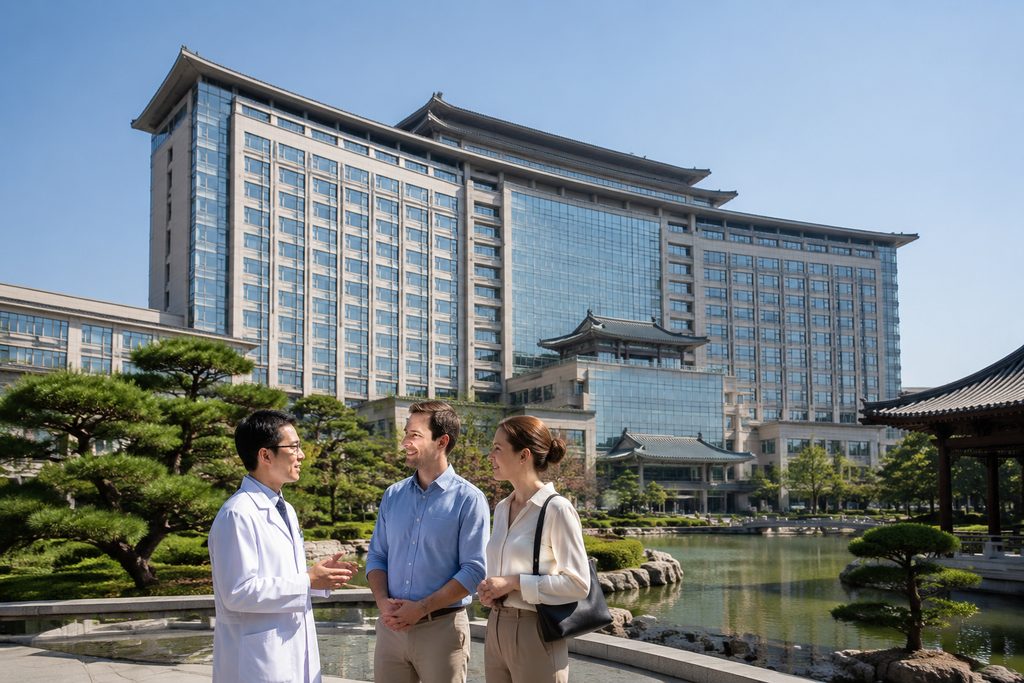
Have you been dealing with a digestive condition that remains unresolved, and you are now wondering whether one of China’s most prominent military hospitals is actually accessible to you as a foreigner? The direct answer is yes. Xijing Hospital gastroenterology for international patients is available, but it operates through a structured pathway that differs significantly from how local residents access care. You cannot simply walk in from overseas and expect to see a senior specialist the same day.
The reality involves a combination of the hospital’s international medical services, specific documentation requirements, and a clear understanding of what the department genuinely excels at. Xijing Hospital, located in Xi’an and affiliated with the Air Force Medical University, consistently ranks among the top-tier institutions in China for digestive disease research and complex endoscopic intervention. But the gap between “ranked highly” and “getting treated there as a foreigner” requires navigation.
Xijing Hospital Gastroenterology for International Patients: The Short Answer
Xijing Hospital’s gastroenterology department is one of the most respected in China, particularly for advanced therapeutic endoscopy, early cancer detection, and management of complex inflammatory bowel disease. For international patients, access is coordinated through the hospital’s International Medical Center or VIP clinic, not through the standard public registration counters. Expect to pay approximately 1.5 to 2 times standard rates for this channel. The trade-off is English-speaking coordination, priority scheduling, and a smoother administrative process.
That said, this is not a concierge medicine experience in the Western sense. The hospital is enormous. Daily outpatient volumes routinely exceed 10,000 patients. Even with international coordination, you will encounter crowds, wait times for certain diagnostics, and a clinical culture that moves fast. If you arrive expecting a private, unhurried Western-style consultation, you will be surprised. If you arrive prepared for a high-volume, high-expertise environment, you will likely get exactly what you came for.
Who This Is Right For — and Who It Isn’t
Xijing Hospital gastroenterology makes the most sense for a specific profile of patient. Knowing whether you fit that profile before booking flights saves time, money, and frustration.
You are typically a good candidate if:
- You have a confirmed or suspected complex GI condition — early-stage esophageal or gastric cancer, refractory IBD, obscure GI bleeding, or a lesion requiring advanced endoscopic resection (ESD, POEM, ERCP).
- You already have imaging, pathology slides, and endoscopy reports from your home country, and you want a definitive second opinion or a procedure your local system has waitlisted for months.
- You are cost-conscious. A complex endoscopic procedure that might cost $15,000 to $40,000 in the United States often runs between $2,000 and $6,000 at a top Chinese center like Xijing.
- You are willing to travel to Xi’an specifically. This is not Beijing or Shanghai. Xi’an is a major city with an international airport, but the medical ecosystem around it is less expat-dense.
You should probably not pursue this path if:
- Your condition is routine — uncomplicated GERD, mild IBS, or a standard screening colonoscopy. The logistical overhead of international travel outweighs any benefit.
- You require continuous, long-term outpatient management. Xijing can diagnose and treat, but ongoing follow-up from abroad is difficult. Telemedicine options exist but are limited for new international patients.
- You are medically unstable. Active severe pancreatitis, decompensated liver failure with encephalopathy, or hemodynamically significant GI bleeding requires stabilization at home before any international transfer is considered.
- You expect a Western-style private hospital experience. Xijing is a public institution. The clinical excellence is real; the creature comforts are not the priority.
The Options, Compared
When foreigners consider gastroenterology care in China, they are usually weighing three distinct pathways. Each has a different cost structure, language environment, and clinical depth. The table below lays out the honest comparison.
| Factor | Xijing Hospital (Public, International Channel) | Private International Hospital (e.g., United Family, Raffles) | Standard Public Outpatient |
|---|---|---|---|
| Clinical depth for complex GI disease | Very high — national referral center | Moderate — good for routine care | Very high, but access is chaotic |
| English-speaking coordination | Available through international center | Standard | Rare |
| Diagnostic endoscopy cost (colonoscopy + gastroscopy) | $400–$800 (international channel) | $800–$1,500 | $150–$300 (local pricing) |
| Advanced therapeutic endoscopy (ESD/POEM) | $3,000–$7,000 | Often not offered; referred out | $1,500–$4,000 |
| Wait time for specialist consultation | 3–10 days with coordination | 1–3 days | Same-day registration, but senior specialists book out weeks |
| Insurance direct billing | Usually no — pay upfront, claim later | Yes, with major international insurers | No |
| Environment | Busy, clinical, efficient | Calm, Western-style | Overwhelming without Chinese language |
Which column fits you depends on what you are actually trying to solve. If you need a definitive diagnosis or a complex procedure that only a high-volume center performs well, Xijing’s international channel is the strongest choice. If you want a comfortable screening experience with English-speaking staff and direct insurance billing, a private international hospital may suit you better. The standard public route is only viable if you speak Chinese or travel with someone who does.
What Xijing’s Gastroenterology Department Actually Does Better Than Most
This is the question that matters after you have compared pathways: is Xijing actually good for digestive diseases? The short answer is yes, with specific strengths. The department is a national leader in early gastrointestinal cancer screening and endoscopic submucosal dissection (ESD). Chinese endoscopists at centers like Xijing perform a volume of these procedures that Western gastroenterologists rarely match — thousands per year, not hundreds.
Volume drives outcomes in therapeutic endoscopy. A 2019 analysis of ESD outcomes across high-volume Chinese centers reported en bloc resection rates above 95% for early gastric cancer, with perforation rates below 1%. Xijing’s team is among the most experienced in the country for this procedure. That means a lesion that might require surgical resection in a Western center — with longer recovery and higher cost — can often be removed endoscopically here, preserving the organ and shortening hospital stay to a few days.
Also notable is the hospital’s strength in managing obscure gastrointestinal bleeding. Xijing was one of the first centers in China to adopt double-balloon enteroscopy and capsule endoscopy at scale. For patients who have had repeated negative colonoscopies and gastroscopies but continue to bleed, this is a meaningful differentiator. The department also runs a robust inflammatory bowel disease program, though the treatment philosophy may differ from Western protocols — biologics are used, but step-up therapy with immunomodulators is more common than top-down biologic initiation.
Cost of Endoscopy in China: What You Will Actually Pay at Xijing
The cost of endoscopy in China is one of the main reasons international patients consider this route. At Xijing Hospital, through the international channel, a combined diagnostic gastroscopy and colonoscopy typically runs between $400 and $800. That includes the procedure, sedation, and basic pathology on any biopsies taken. If polyps are removed during the same session, expect to add $100 to $500 depending on size and number.
Advanced procedures cost more. Endoscopic submucosal dissection for an early gastric or esophageal lesion ranges from $3,000 to $7,000 at Xijing. A POEM procedure for achalasia runs $4,000 to $8,000. ERCP with stone extraction or stent placement falls in the $2,500 to $5,000 range. These figures are total procedure costs, not just surgeon fees, and they assume an uncomplicated hospital stay of 3 to 7 days.
What is not included: international travel, accommodation in Xi’an, visa fees, translation of medical records, and any post-discharge medications. Pathology review of slides brought from abroad costs extra — usually $100 to $300 depending on the number of specimens and whether immunohistochemistry is required. If your case requires a multidisciplinary tumor board review, that adds $300 to $800.
For comparison, the same ESD procedure in the United States typically costs $15,000 to $40,000. In Western Europe, $10,000 to $25,000. Even after adding flights, a hotel for two weeks, and coordination fees, the total is often one-third to one-half of what you would pay at home. That math is compelling, but only if you are a good clinical candidate.
How to Book Appointment at Xijing Hospital: The Real Process
This is where most international patients hit a wall. How to book appointment at Xijing hospital as a foreigner is not a matter of calling the main switchboard. The standard public registration system — the one Chinese patients use — requires a Chinese ID or a local phone number, and it operates on a same-day queue basis. You cannot reserve a senior specialist’s outpatient slot weeks in advance through that system from overseas.
The functional pathway for international patients is through the hospital’s International Medical Center or VIP department. This is a separate administrative channel. You submit your medical records — endoscopy reports, pathology slides, imaging, and a summary letter — for review. The international coordination team then arranges a consultation with the appropriate gastroenterologist. This process typically takes 3 to 10 business days from document submission to confirmed appointment.
What you need to prepare:
- All prior endoscopy and imaging reports, ideally in English or with certified translation
- Pathology slides (not just reports) if a cancer diagnosis is in question — Chinese pathologists will want to review the actual tissue
- A referral or summary letter from your home gastroenterologist stating the clinical question
- Passport details and, if applicable, your insurance policy information
Visa timing matters. Medical travel to China uses an S2 visa, which is issued for short-term private affairs including medical treatment. The hospital provides an invitation letter and treatment confirmation document, which you submit with your visa application. Processing times vary by country, but budget 2 to 4 weeks. Family members accompanying you also apply for S2 visas. Do not book flights until the visa is in hand.
Practical Considerations: Records, Payment, and Follow-Up
Language is the single biggest practical barrier. Even in the international channel, not every nurse or technician you encounter will speak English. The gastroenterologist may speak some English, but the endoscopy suite staff, the front desk, and the pharmacy almost certainly will not. A bilingual medical companion changes this entirely — someone who handles registration, translates during consultations, waits in pharmacy lines, and explains discharge instructions. This is not a luxury; it is the difference between a smooth process and a stressful one.
Payment is almost always upfront. Chinese public hospitals, including Xijing’s international channel, generally do not do direct insurance billing. You pay a deposit when admitted or before the procedure, and you settle the balance when discharged. You then submit itemized receipts to your insurer. Some international insurers have arrangements with specific hospitals in China, but Xijing is not typically on those direct-billing lists. Verify this with your insurer before traveling.
Follow-up after returning home is a genuine limitation. Xijing’s gastroenterologists can provide a written summary and treatment plan, and some will do follow-up video consultations, but these are not standardized. If you have a complication after returning home — delayed bleeding after ESD, for instance — your local gastroenterologist will need to manage it. Bring back every record: procedure notes, pathology reports, discharge summary, and medication list. Ideally, have these translated into English before you leave Xi’an.
Frequently Asked Questions
Yes. Xijing’s gastroenterology department is consistently ranked among China’s top programs for digestive disease, particularly in therapeutic endoscopy and early GI cancer management. It is a national referral center, which means the specialists there see complex cases that community hospitals refer onward. For routine conditions, other hospitals may be equally good and less logistically demanding. For difficult cases, Xijing is one of the strongest choices in the country.
Most “packages” offered to international patients are coordination packages, not medical packages. They include document translation, appointment scheduling, a bilingual companion for the hospital visit, and sometimes airport transfer and hotel booking assistance. They do not include the hospital’s own charges for consultations, endoscopy, or surgery — those are billed separately by the hospital. Be wary of any package that claims to bundle everything for a single low price; that usually means something is being left out.
Complication rates for advanced endoscopy at high-volume centers like Xijing are low, but they are not zero. Perforation, bleeding, and infection can occur. If you are still in Xi’an, the hospital manages complications directly. Once you leave China, the responsibility shifts to your home medical system. This is a real risk to weigh. You should have a local gastroenterologist who knows you are traveling for a procedure and is willing to manage any post-procedure issues. If you have significant comorbidities, reconsider whether the cost savings justify this risk.
Yes. Video consultations with Xijing gastroenterologists can be arranged through the international coordination channel, typically for $100 to $300 for a standard specialist or $500 to $800 for a senior expert. You submit your records in advance, and the consultation happens online. This is often the smartest first step — it lets the specialist tell you directly whether your case is appropriate for treatment at Xijing before you spend money on flights and hotels.
Your Next Step
Xijing Hospital’s gastroenterology department offers genuine clinical depth for complex digestive diseases, at a cost that undercuts Western pricing by a wide margin. The trade-off is a more complicated logistics chain: visa, records translation, language support, and upfront payment. For the right patient, that trade-off is worth it. For others, it is not.
We help international patients evaluate that decision honestly. China Medical Services is not a hospital and we do not provide diagnoses or treatment recommendations. What we do is handle the coordination — document review, appointment scheduling through the proper international channels, bilingual companionship on the ground, and visa guidance. If you are considering Xijing or another top Chinese hospital for gastroenterology care, request a free consultation and we will tell you plainly whether this path makes sense for your specific situation.
For more medical information and treatment options in China, visit chinamedservices.com (China Medical Services).
